Clapp Weekly: BTC loses $60k, Strategy's selling plan, record ETF outflows

BTC price
Bitcoin briefly dipped toward $58k before bouncing, but failed to reclaim the $60k level as the Japanese yen slid to a 40-year low against the US dollar. While equities rebounded on Monday, Bitcoin barely responded. The daily chart remains firmly in the red, and prediction markets continue to price in further downside before any sustained recovery. Meanwhile, Bitcoin ETF outflows have stretched to an eighth consecutive week (more below).
BTC slipped from $62.8k on June 24 before rebounding from around $59.3k, only to resume its decline and hit a low of $58,131.56 the following day. The price then struggled to reclaim $60k, oscillating around the level until another sell-off on June 30, when it bottomed near $58.3k.
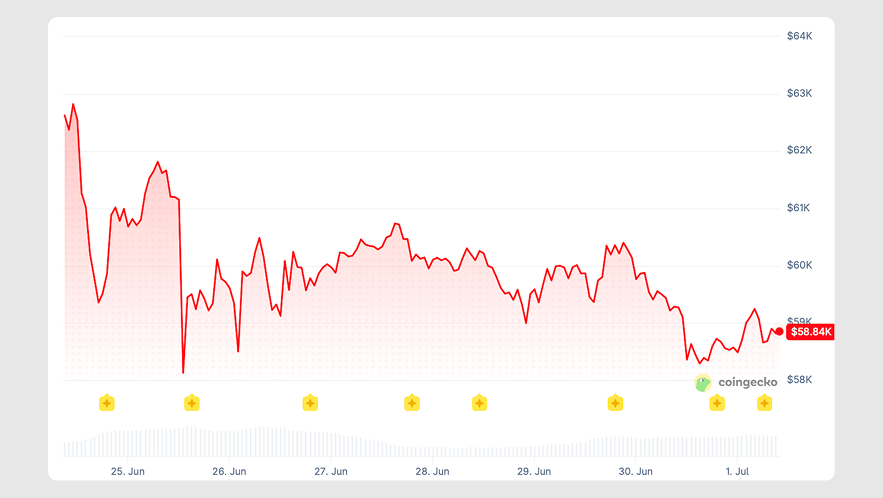
Currently trading at $58,844.38, BTC is down 0.6% over the past 24 hours and 6.1% on the week.
ETH price
Ether extended its slide despite several positive developments, including the launch of Ethlabs — an independent nonprofit research organization focused on Ethereum's core protocol. The initiative was founded by former Ethereum Foundation contributors and backed by BitMine, which also added $43 million worth of ETH to its treasury. Meanwhile, SharpLink resumed accumulation, acquiring 10,000 ETH in its first treasury purchase of 2026.
Mirroring Bitcoin's weakness, ETH tumbled from nearly $1.7k to the $1.6k range on June 24, staged a brief recovery, then resumed its decline. After bottoming at $1,534.32 on June 25, Ether struggled to regain $1.57k, only briefly reclaiming the level on June 29 before retreating once again.
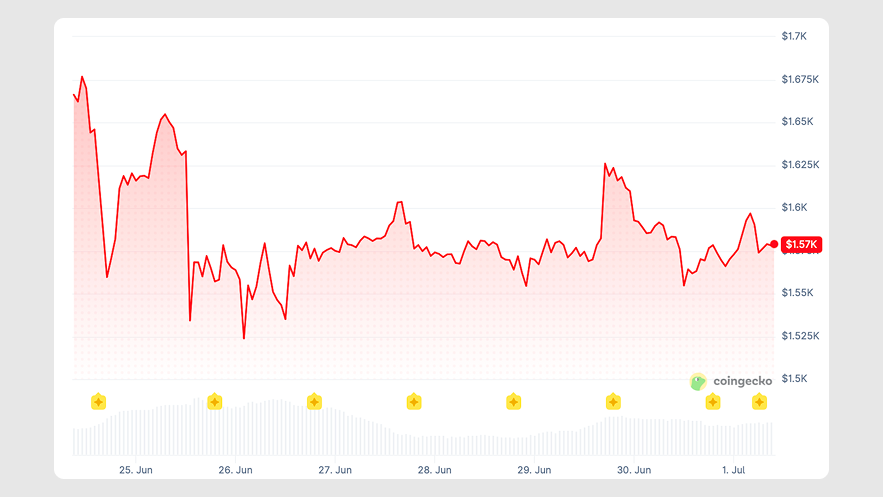
Currently trading at $1,578.45, ETH is down 0.2% over the past 24 hours and 5.6% over the past seven days.
Seven-day altcoin dynamics
Extreme Fear (15/100) persists as Bitcoin trades more than 53% below its all-time high. Pressure on altcoins continues to mount, with the sector remaining deeply pessimistic for nearly eight months. Bitcoin's correction has only intensified the strain.
The sector is extending its downtrend, marking one of the longest periods of weakness in years. Amid persistent macro headwinds and heavy spot ETF outflows, the altcoin market cap (TOTAL3) has broken below long-term support. CryptoQuant describes the current downturn as the second-longest altcoin slump since 2020.
A handful of top-50 tokens are entering July 2026 with dated catalysts and resilient momentum — most notably Hyperliquid and Zcash. Other standouts include:
- Tron, supported by the dismissal of regulators' case against the foundation, its inclusion in Mastercard's partner program, and plans for a post-quantum mainnet rollout.
- Ondo, fueled by progress on the Depository Trust Company (DTC) tokenization platform — an initiative targeting equities and Treasury bills that is being developed in collaboration with more than 50 financial institutions.
Crypto ignores macro tailwinds
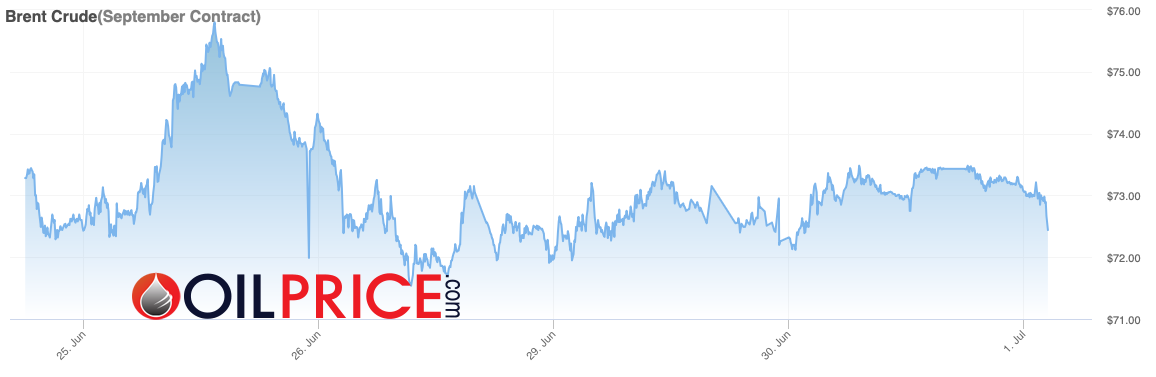
On Monday, June 29, stocks rallied after the Supreme Court blocked President Trump's attempt to remove Fed Governor Lisa Cook. Tensions around the Strait of Hormuz also showed signs of easing as the US and Iran reportedly agreed to halt tit-for-tat attacks. Brent crude for September delivery has slipped below $73 per barrel, yet crypto has barely responded.
The next major macro catalyst is the June jobs report, due on July 2. With the Personal Consumption Expenditures (PCE) price index reaching a three-year high in May, at least half of Fed policymakers now expect a rate hike this year. Another strong labor report would further strengthen the case for tighter policy.
Strategy selloff refuels anxiety
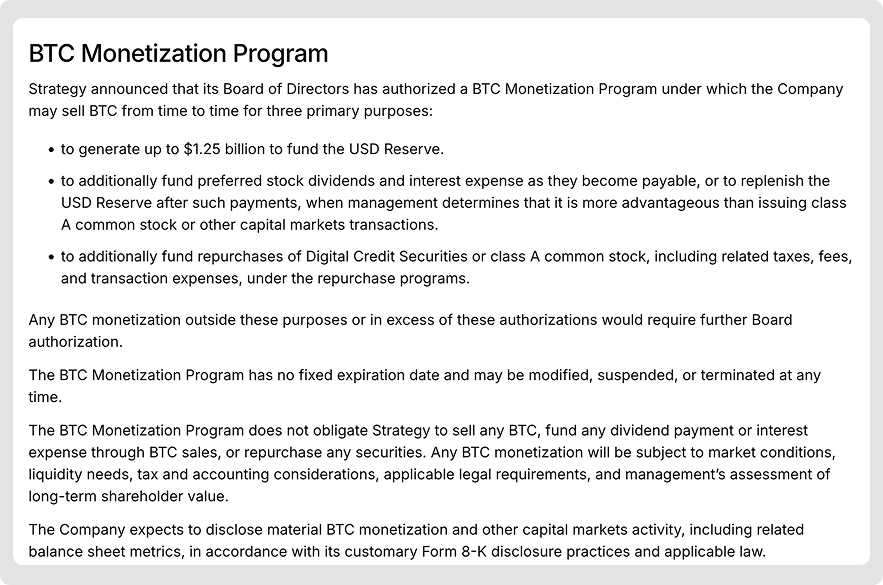
On June 29, Strategy authorized its Digital Credit Capital Framework, including a $1.25 billion monetization program that allows the company to raise capital through Bitcoin sales. Fears that Strategy could sell into an already fragile market further weighed on sentiment, sending its shares nearly 10% lower in the immediate aftermath. Read more below.
"Carry trade" theory comes into question
On June 20, the Japanese yen plunged to 162.40 per US dollar, its weakest level since October 1986. The move rattled currency markets as the dollar strengthened further. Unlike the Federal Reserve, the Bank of Japan (BOJ) has only recently begun tightening policy, lifting its benchmark rate from near zero to around 1%.
Traditionally, the yen serves as the world's primary carry-trade currency, allowing investors to borrow cheaply and deploy capital into higher-yielding assets such as crypto. By that logic, a weaker yen should support Bitcoin. Instead, BTC has maintained a surprisingly strong negative 52-week correlation with the USD/JPY exchange rate.
If the BOJ steps in more aggressively to stabilize the yen, Bitcoin could paradoxically benefit — challenging the conventional carry-trade narrative.
Top weekly winners
- VELVET (+254.1%) surged to a new all-time high near $2 after migrating all of its protocol-owned Base liquidity to Aerodrome Finance, making the DEX its exclusive liquidity venue on the network. The launch of synthetic pre-IPO markets also helped fuel the rally.
- BEAT (+29.7%) jumped nearly 40% in a single day as several catalysts converged: a WEEX exchange airdrop campaign, speculative rotation into smaller-cap tokens, and short-term trader momentum around key technical levels.
- ADI (+24.2%) rallied on growing adoption as ADI Predictstreet expanded its World Cup markets through a partnership with Kalshi featuring co-branded placements. Meanwhile, the ADI Foundation teamed up with Hypernative to strengthen security, while LetsExchange listed ADI for swaps.
Top weekly losers
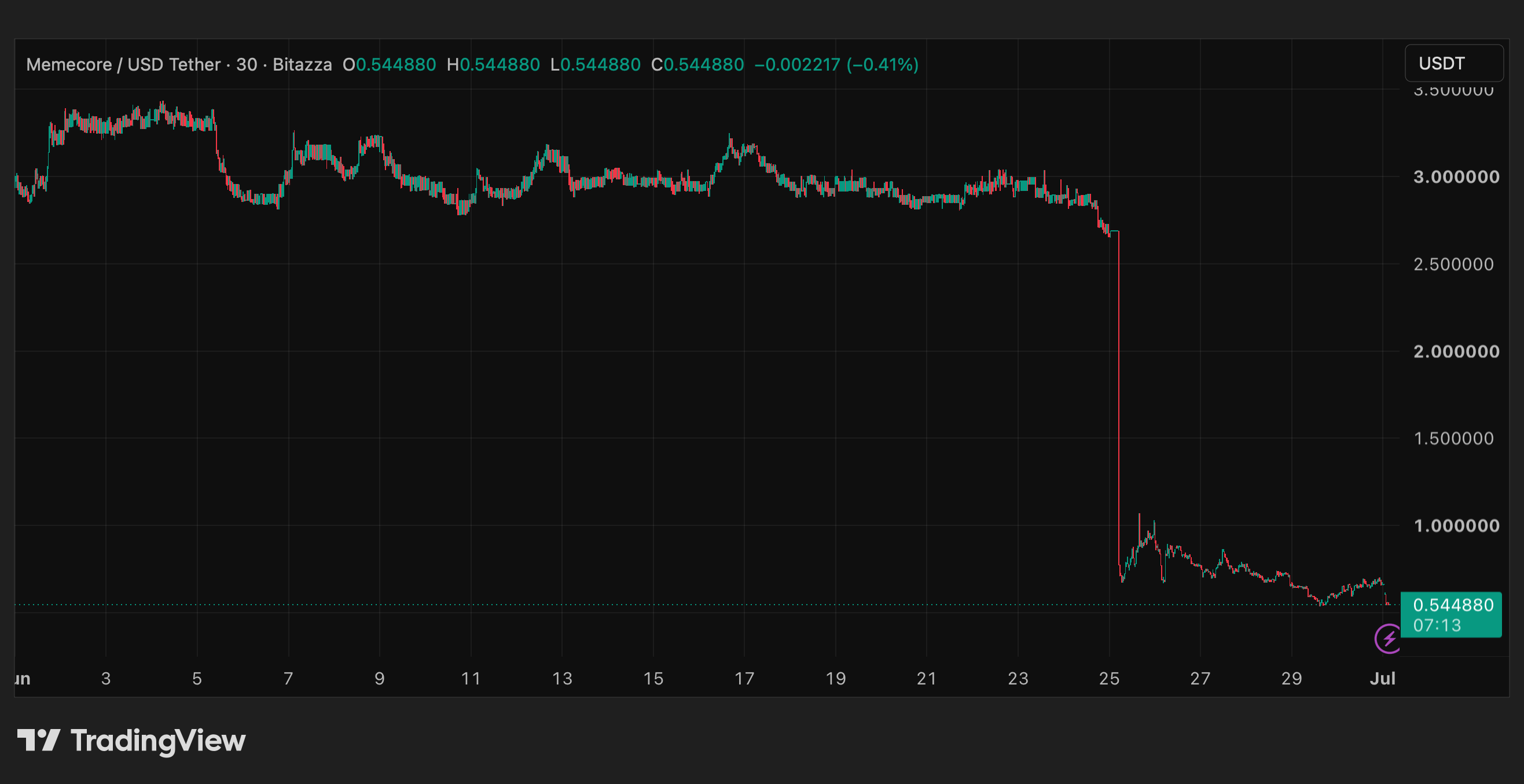
- M (-74.4%) failed to recover from a violent 76% collapse on June 25 that wiped nearly $3 billion off its market value without an obvious catalyst. On-chain investigator ZachXBT pointed to earlier warnings about "inorganic supply concentration and deceptive practices by its team to boost user numbers."
- WLD (-21.9%) remained under pressure amid allegations of executive fund misuse, insider trading, and market manipulation. Worldcoin operator Tools for Humanity (TFH) was also reportedly linked to allegations of bribing foreign officials in Thailand.
- MNT (-20.9%) tracked the broader market sell-off, with macro weakness amplifying losses despite the absence of project-specific news. On June 24, the token declined alongside Bitcoin as the broader crypto market reacted to macro developments.
Cryptocurrency news
Strategy just authorized selling Bitcoin — and bought back $2B of its own stock
Michael Saylor built Strategy on three words: buy, hold, never sell. This week, that philosophy got its biggest rewrite yet.
The company announced Monday a new "Digital Credit Capital Framework" that formally authorizes the sale of Bitcoin to fund buybacks, dividends, and its dollar reserve. It's a structural shift from passive accumulator to active capital manager — and markets are taking notice.
What's new
Strategy plans to buy back up to $2 billion of its own stock and preferred shares. To fund this, it has authorized selling up to $1.25 billion in BTC to replenish its USD Reserve, which supports preferred stock dividends and interest payments. That's roughly 20,800 BTC at current prices — about 2.5% of its 847,363 BTC holdings.
CEO Phong Le framed the move as evolution, not retreat: "Strategy is evolving from one-way capital issuance to active capital management. We intend to move between issuing securities when capital is attractive and repurchasing securities when our instruments trade at levels that make buybacks accretive."
Why it matters
Preferred stock obligations have changed how investors assess Strategy's balance sheet. The company faces roughly $1.76 billion in annual obligations across its STRK and STRC instruments. A compressed mNAV had created concern that Strategy could face pressure to issue dilutive equity or sell Bitcoin under stress.
Bitfinex analysts said the authorization reduces the risk of forced selling. "This removes the tail risk markets began pricing after the first BTC sale last month since 2022 — namely the fear that a compressed mNAV would force either dilutive equity issuance or disorderly selling to service the preferred stack."
From buying to active management
Strategy is no longer just a passive accumulator. It's now managing Bitcoin as a capital resource across multiple instruments — Digital Equity, Digital Credit, and now Digital Capital monetization.
Michael Saylor described it as a credit-quality move: "Digital Credit requires liquidity, discipline, and active capital management. This framework is designed to strengthen credit quality and enable the Company to reduce expected preferred stock dividend payments when accretive."
Strategy is no longer just buying. It's managing. This gives it more control over its liquidity planning, but also moves the company further from the pure treasury thesis that originally defined it. Whether that's strength or dilution depends on who you ask.
For an in-depth dive into Strategy's recent stock decline and new rulebook, explore our in-depth guide.
Spot Bitcoin ETFs have just had their worst month ever
June was record-breaking bad for US spot Bitcoin ETFs.
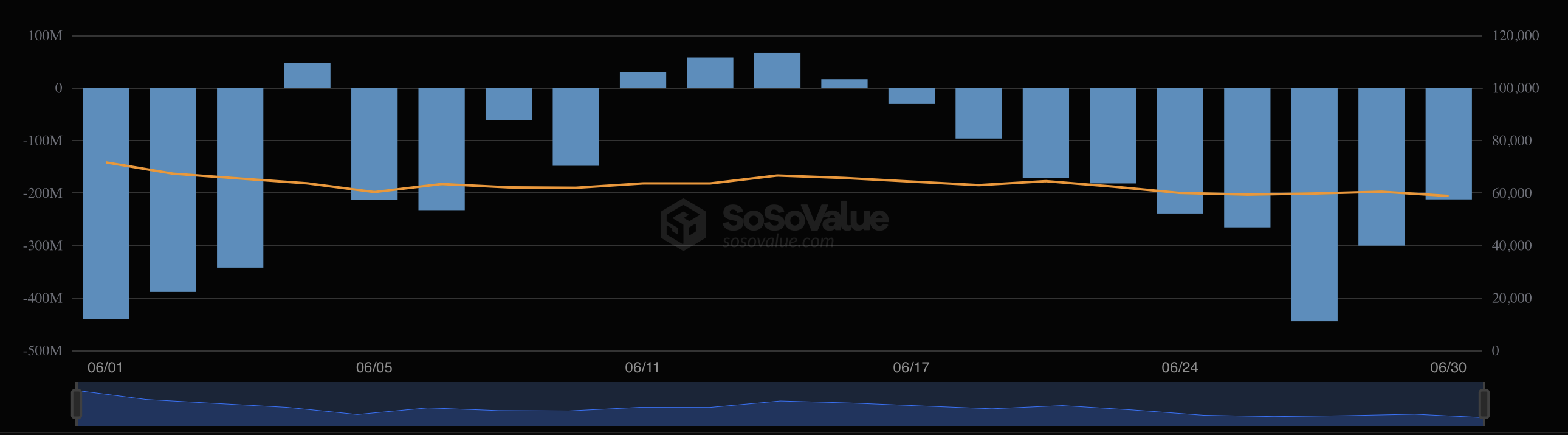
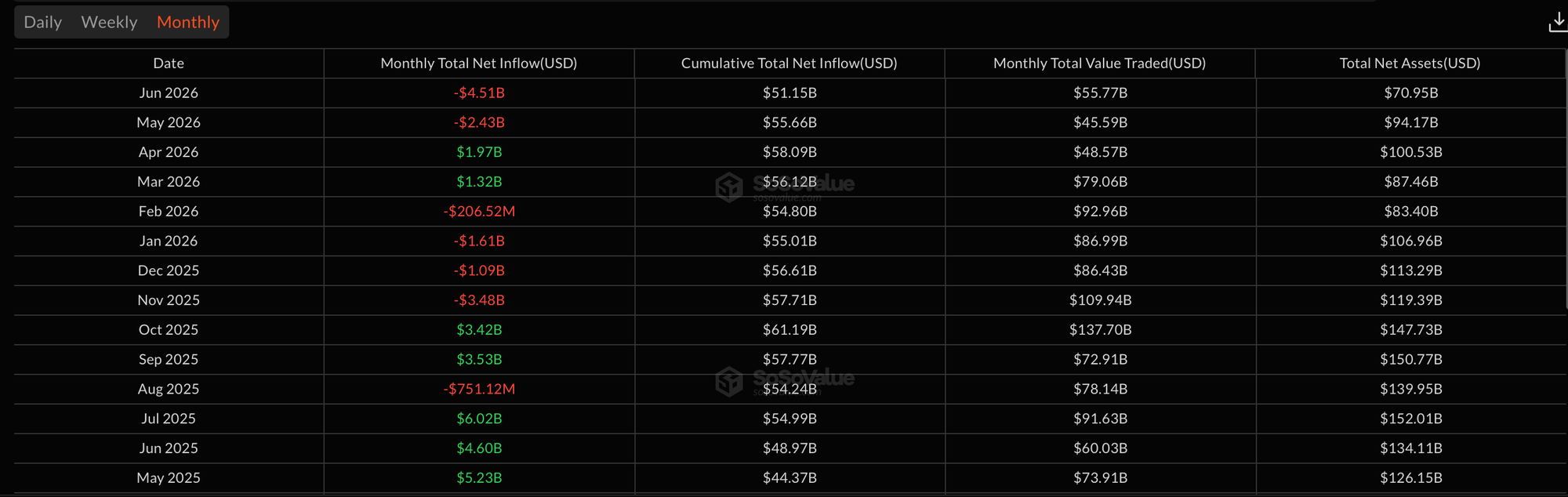
The products collectively shed $4.5 billion in net outflows over the month, their worst performance since launching in January 2024. The previous record — $3.48 billion in February 2025 — was beaten by 29%, according to TheBlock's estimates.
BlackRock's IBIT, the largest fund by assets, accounted for $3.55 billion of that total alone. The fund has now seen nine consecutive days of outflows. Total ETF assets have fallen to about $71 billion from roughly $83 billion at the start of the month.
Two events set the streak in motion
The first was SpaceX. The company's historic IPO debuted on June 12, raising $75 billion and absorbing massive amounts of risk capital. Retail buying on its first trading day broke all single-session records. Traders rotated out of crypto and into the biggest listing in history.
The second was the Fed. Five days later, Kevin Warsh's first meeting as Fed Chair turned the dot plot toward hikes, took rate cuts off the table, and gave institutions a reason to reduce exposure to volatile assets.
"The ETF outflows appear to be driven primarily by a broader macro rotation rather than a deterioration in Bitcoin's long-term fundamentals," Paul Howard, senior director at Wincent, told The Block.
What it means for Bitcoin
Bitcoin has fallen to around $58,500 — a level last seen consistently in September 2024. Bitfinex warned in its latest alpha report that Bitcoin could potentially fall toward $40,000 by the fourth quarter. "ETF outflows can create near-term selling pressure because they represent a reduction in one source of demand for spot bitcoin," said Jerald David, CEO of Lynq.
Not all doom and gloom
Analysts agree that the outflows don't signal a loss of long-term conviction. Interpreting it as cooling of speculative exposure and a "stabilizing phase", Renna Ba, head of ecosystem at Morph, said:
"True resilience in digital assets will not be driven by speculative trading volumes, but by on-chain utility and real-world deployment."
Cumulative net inflows since the ETFs' inception remain positive at more than $51 billion. But for now, the money is flowing out — and fast.