Clapp Weekly: Macro relief surge, CLARITY Act compromise, Saylor breaks 'never sell' vow

BTC price
Bitcoin broke above $80k amid a mix of regulatory optimism around the CLARITY Act, strong April ETF inflows ($2.44B), and short-covering momentum. Improving macro sentiment, including news of easing tensions around the Strait of Hormuz and Trump's Project Freedom escort operation also supported the move. Since the conflict started, the coin has pulled ahead of stocks and gold, gaining about 20%.
After sliding below $75.5k on April 29, BTC kicked off a gradual ascent that carried it to its current level of roughly $81.8k. The price briefly retreated on May 4, but the dip below $79k lasted merely a couple of hours.
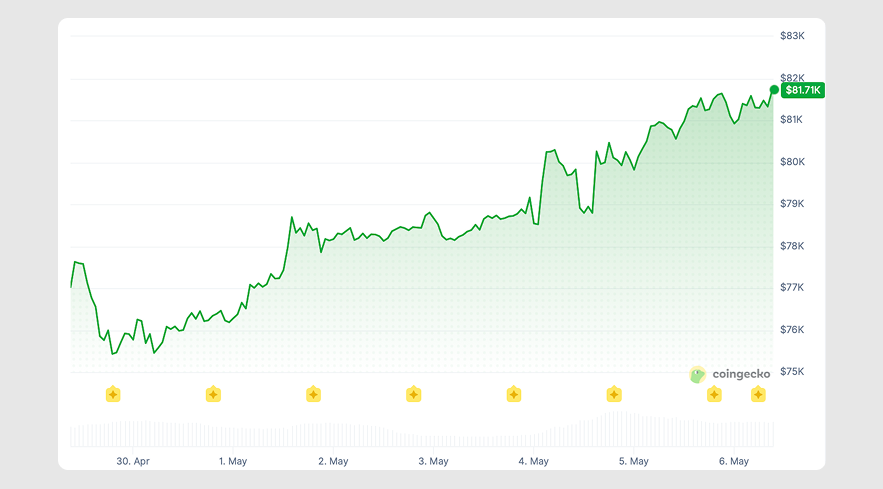
Changing hands at $81,717.31, BTC is up 1.4% over the past 24 hours with a 7-day gain of 6.2%.
ETH price
Tracking Bitcoin’s rally, Ether has jumped 15% over the past month — but weakening volume and network activity suggest the move may be fragile. Active users are down 33% since January, while exchange net flows flipped positive on May 1, signaling a shift from accumulation to potential selling pressure. Previously, daily outflows averaged around 300,000 ETH. Still, spot ETF flows have snapped a four-day losing streak.
The ETH price has followed a choppier path than BTC. After tumbling from $2.3k to roughly $2.2k on April 29, it peaked at $2,390.09 on May 4, retreated slightly, and kept seesawing.
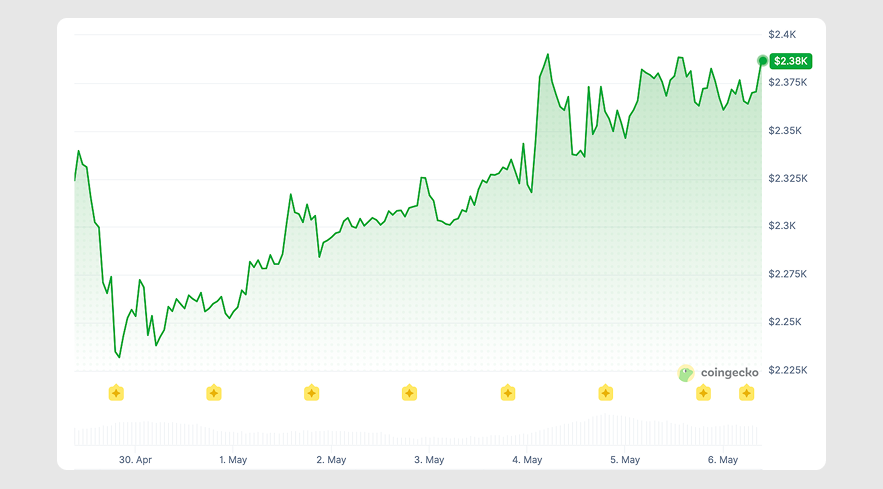
Currently at $2,386.21, ETH is up 0.7% over the past 24 hours but just 2.9% over the past 7 days — less than half of Bitcoin's gain.
Seven-day altcoin dynamics
The Crypto Fear & Greed Index briefly jumped into "Neutral" (50/100) yesterday before tumbling back to "Fear". Bitcoin's surge past $80k lifted spirits as investors digested developments in the Middle East, signs of a CLARITY Act breakthrough, and Strategy's potential pivot to selling Bitcoin.
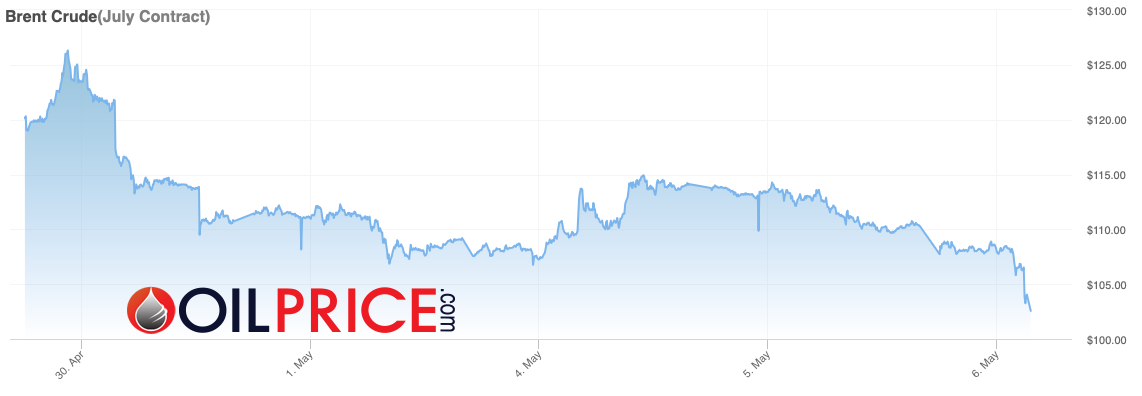
Washington's "Project Freedom" — an initiative to escort neutral ships through the Strait of Hormuz — gave markets a boost earlier in the week. Brent crude tumbled closer to $100 a barrel as this critical trade route remains the flashpoint of the conflict.
The CLARITY Act isn't law yet, but hope is back — for the first time in months (more below).
Tokenization play gathers steam
Tokenization assets are stealing the show, according to CoinDesk. Beyond the lift from Bitcoin's rebound, the sector is finding its own legs — as more institutions race to bring traditional assets on-chain.
Shares of Bullish and Galaxy Digital got a lift from their own news. The former dropped $4.2 billion to buy transfer agent Equiniti; Galaxy Digital unveiled a tokenized cash-management fund for big investors.
Meanwhile, Centrifuge's CFG exploded on a major partnership. Coinbase took a stake in the protocol — and picked it to help tokenize ETFs, credit, and structured products.
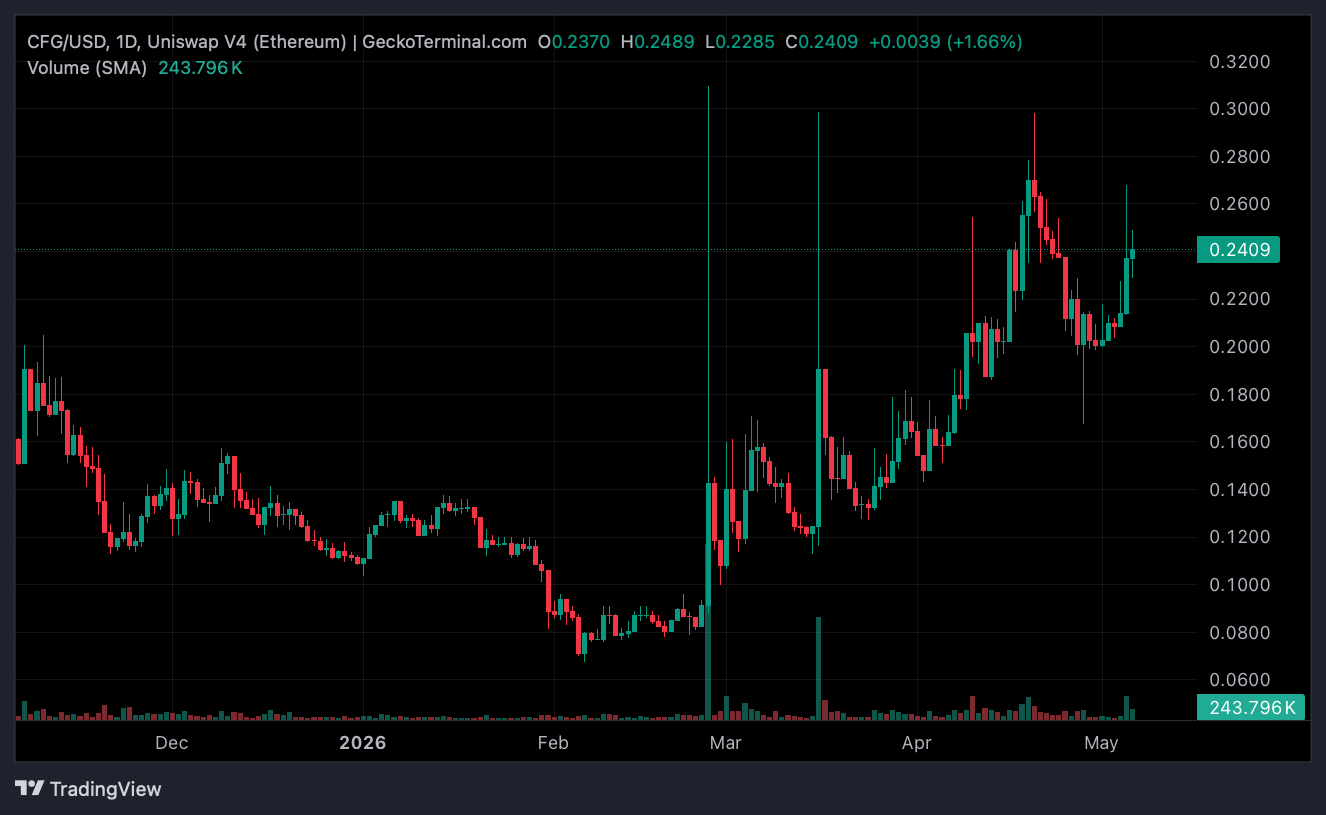
Tokenization remains one of the fastest-growing sectors at the crossroads of blockchain tech and TradFi. Ripple and BCG project this market to reach an $18.9 trillion valuation by 2033.
On the whole, altcoins lag behind
Fidelity's Q1 2026 Signals Report shows altcoins are going nowhere fast — investors remain heavily concentrated in Bitcoin. Caution is trumping speculation, with alts bleeding since late 2024.
BitMEX co-founder Arthur Hayes expects most altcoins to collapse by year-end, despite Bitcoin potentially rallying to $125,000 on global liquidity. But the altcoin ecosystem as a whole will survive. He called this potential crash a healthy market cleansing, comparing it to the constant churn of businesses in the S&P 500 since 1929.
Top weekly winners
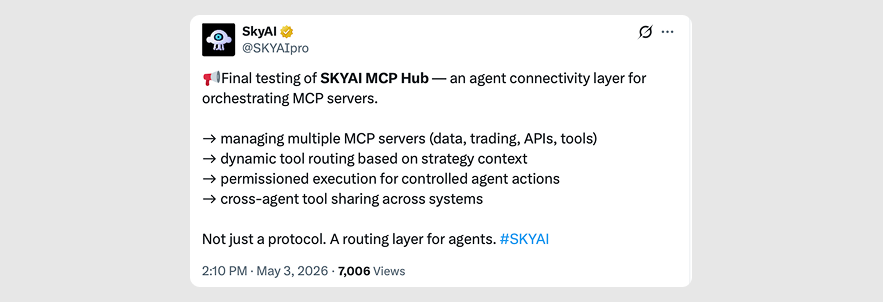
- SKYAI (+267.7%) skyrocketed as news about the final testing of the SKYAI MCP Hub— an agent connectivity layer from SKYAIpro — triggered speculative buying. Accumulation may keep the rally going if the hype holds.
- LUNC (+72.2%) hit a 15-month high amid supply reduction efforts, including Binance's burn of over 3 billion tokens in May 2026. The looming anniversary of the 2022 Terra ecosystem collapse is also thought to be adding to the momentum.
- TON (+67.1%) surged on a dramatic structural shift: Pavel Durov announced that Telegram will officially take the reins of The Open Network, replacing the TON Foundation and becoming its largest validator. Meanwhile, network fees plunged 6x to near-zero levels.
Top weekly losers
- WLFI (-10.5%) is reeling from a transparency and governance crisis amid a "legal war" with Tron founder Justin Sun. An undisclosed sale of 5.9 billion WLFI and a proposal to restructure 62.28 billion locked tokens with coercive mechanics have further poisoned sentiment.
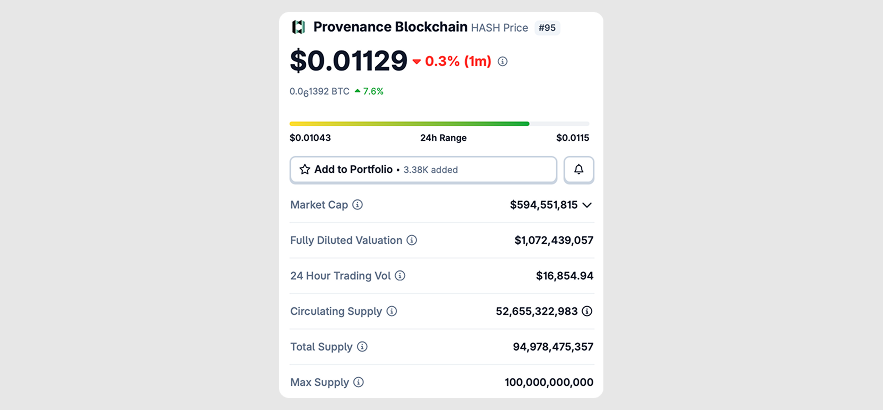
- HASH (-8.6%) is suffering from "catastrophically low" trading volume, often generating $10,000–$20,000 in 24 hours despite a market cap over $550 million. Investors are also pricing in future dilution risk from around 42 billion locked or unvested tokens (~$420 million).
- SKY (-7.9%) tumbled amid a strategy shift that favors strategic stability over short-term token holder rewards. The project pivoted to using its record Q1 2026 revenue of $124 million — mainly tied to institutional demand — to build a $150 million solvency reserve ("Sky Reserves").
Cryptocurrency news
CLARITY Act breakthrough: Stablecoin rewards survive
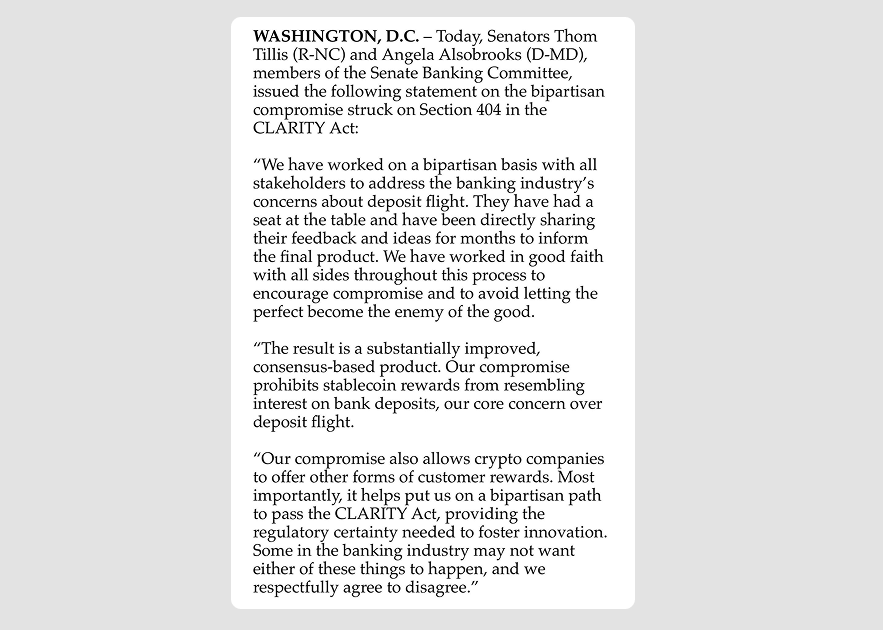
After months of gridlock, Washington finally delivered something the crypto industry could celebrate. On May 2, lawmakers struck a compromise on the CLARITY Act — the long-awaited market structure bill — preserving stablecoin reward programs under specific conditions.
Coinbase, the main distributor of USDC, gained 6.1%. Even Bitcoin briefly cracked $80,000 for the first time since January.
What they agreed on
The updated language restricts crypto firms from paying savings account-like interest on passive stablecoin deposits. That function stays with traditional banks. But rewards tied to activity — trading, transactions, or staking — are allowed.
It's a relative win for Circle and Coinbase, which have spent months lobbying for clarity. Meanwhile, smaller platforms that leaned heavily on high-yield deposit products may feel the squeeze.
Banks weigh in
Most banks have stayed quiet, but Bank of America called it a net positive for the sector. Analyst Ebrahim Poonawala wrote Monday:
"Across bank sub-sectors, the CLARITY Act's resolution of the stablecoin yield debate is a net positive. It should alleviate concerns tied to deposit flight, reduce regulatory uncertainty, and allow banks to engage with digital-asset infrastructure on more controlled terms."
Not everyone is thrilled. A coalition of banking groups said this week the deal "falls short." But crypto insiders have largely accepted the tradeoffs.
The next two weeks are crucial
Ripple CEO Brad Garlinghouse, speaking at Consensus 2026 in Miami, put the stakes bluntly: "Do I think it's perfect? Hell, no. There's tradeoffs and compromises, but I do think clarity is better than chaos."
He warned that the next two weeks are pivotal. The Senate Banking Committee needs to schedule a hearing to mark up the bill. "If it doesn't happen then, I think the likelihood is going to drop precipitously," he said.
Garlinghouse emphasized that without codified law, whatever the SEC is doing today can be undone tomorrow. "There will be another Paul Atkins after Paul who we don't know which side of this argument they're going to fall on."
Strategy's $12.5B loss — and Saylor just broke his 'never sell' vow
Michael Saylor built Strategy into the world's largest corporate Bitcoin holder on a simple promise: buy, hold, never sell. This week, that promise cracked.
The company reported a staggering $12.54 billion net loss for the first quarter of 2026 — driven almost entirely by a $14.46 billion unrealized markdown on its BTC stash as prices slumped toward $62,000 in February. For comparison, Strategy posted a $12.4 billion loss in Q4 2024. The hits keep coming.
Yet on the Q1 earnings call, Saylor dropped something far more surprising than another massive paper loss:
"We will probably sell some bitcoin to pay a dividend just to inoculate the market and send the message that we did it."
The numbers behind the pivot
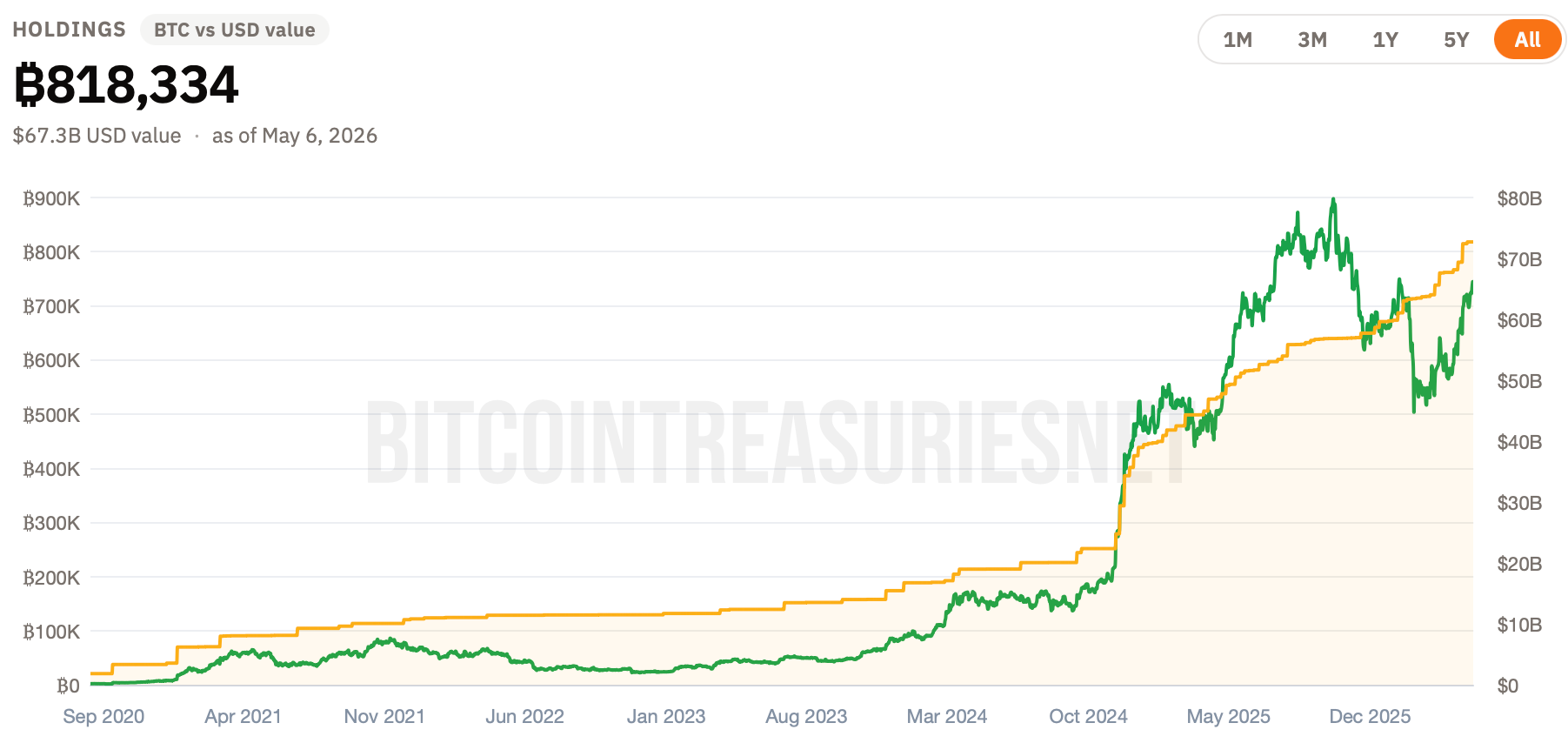
Strategy now holds 818,334 BTC at an average cost of $75,537 per coin. At current prices near $81,600, that stash is worth roughly $66.8 billion — a modest profit on paper, but a far cry from the billions in unrealized gains the company once boasted.
The firm faces about $1.5 billion in annual obligations across its preferred stock instruments: STRK paying 8% dividends, and STRC paying roughly 10-11.5%. Strategy has about 18 months of dividend coverage remaining.
CEO Phong Le tried to frame any potential sale as disciplined, not desperate. "Our ability to sell bitcoin either to buy U.S. dollars or sell bitcoin to buy debt if it's accretive to bitcoin per share is something that we would consider doing going forward."
Market reacts
The market didn't wait for clarification. Strategy's stock fell more than 4% in after-hours trading. Bitcoin itself briefly slipped below $81,000.
Saylor described the model as leveraging credit to acquire Bitcoin, letting it appreciate, then selectively selling to meet commitments. "You buy bitcoin with credit, you let it appreciate, and then you sell bitcoin to pay the dividend."
The underlying business
Amid the crypto chaos, Strategy's original software business remains modest but stable. Total revenue reached $124.3 million for the quarter — up 11.9% year-over-year — with a gross margin of 67.1%. It's a drop in the bucket compared to the billions flowing through its Bitcoin treasury, but it's something.
What now?
For years, Saylor's "never sell" mantra was gospel to Bitcoin maxis. Now, facing real dividend obligations and a volatile market, even the most devout holder is leaving the door open.
The company has made 23 consecutive on-time dividend distributions on its preferred products, totaling more than $693 million. But with 818,334 BTC in the vault and a shifting strategy, the question isn't whether Saylor believes in Bitcoin anymore. It's whether belief alone can cover the bills.