Ethereum's North Star: Hard forks to 10,000 TPS by 2029

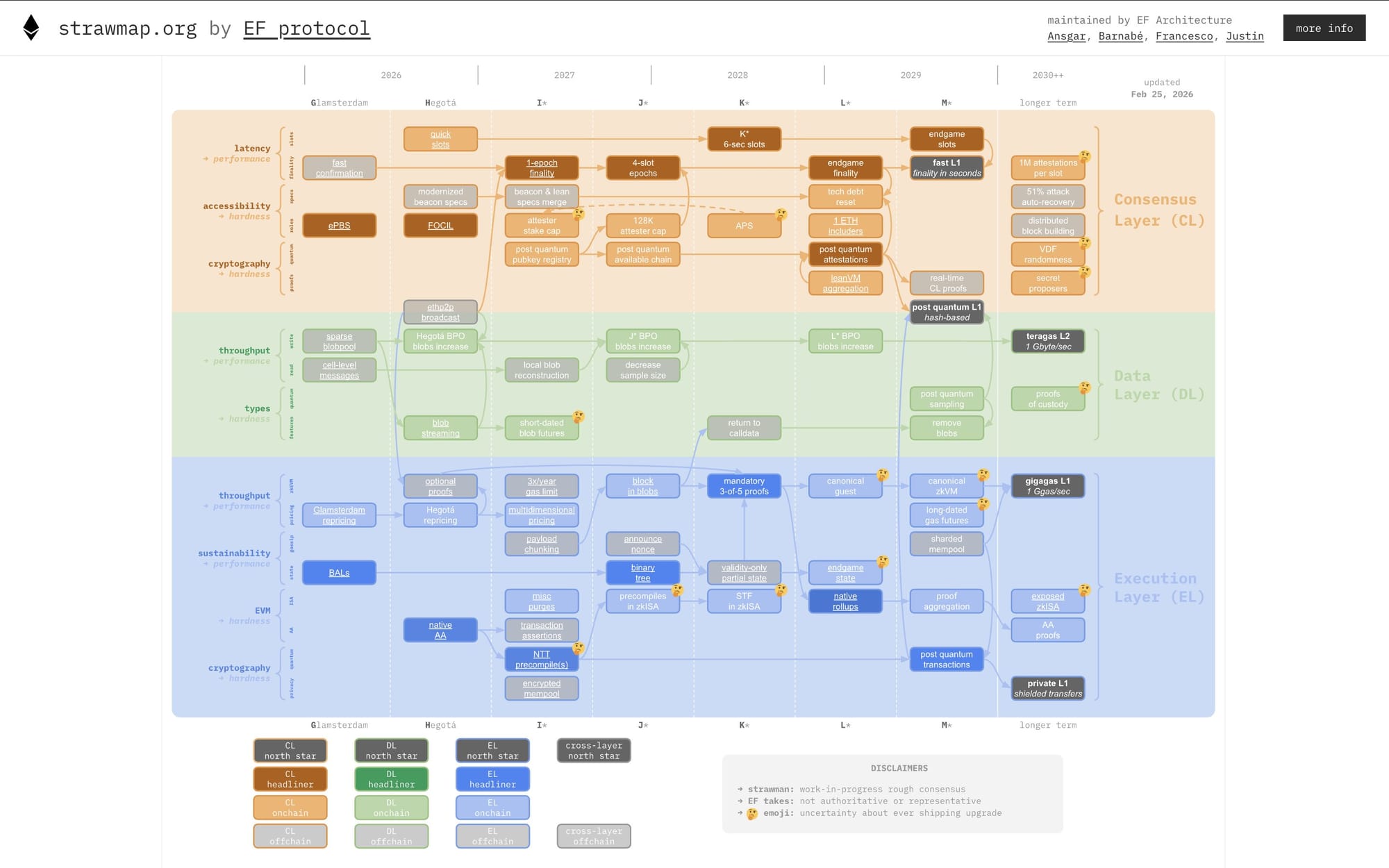
Ethereum is preparing for major upgrades to its scalability, speed, security, and privacy. A preliminary development roadmap — often referred to as the “Strawmap” — outlines seven hard forks expected over the next three years.
The era of relying heavily on Layer-2s while the base layer lags is starting to shift. The network's core is being upgraded to handle more throughput and settle transactions faster.
If successful, these changes could help Ethereum maintain its position as a leading smart contract platform — and compete more directly with traditional financial infrastructure. Here’s what to know.
What is the “Strawmap”?
Earlier this year, Ethereum Foundation researcher Justin Drake dropped a preliminary development roadmap that sketched out around seven Ethereum hard forks between 2026 and 2029.
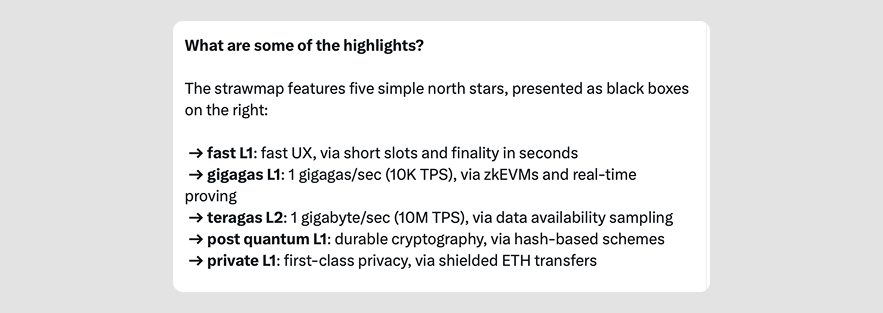
Coming roughly every six months, these upgrades aim to bring a high-throughput settlement layer, with finality reduced from around 16 minutes to seconds, targeting 1 gigagas per second directly on Layer 1.
Gigagas measures computational throughput — 1 gigagas means 1 billion units of gas per second, a massive leap from today's capacity. It translates into significantly higher effective TPS.
Why now?
Layer-2 solutions helped Ethereum scale — but they’re not enough on their own. To handle real-world financial flows, the base layer needs to step up. As Vitalik Buterin puts it, rollups only reach millions of TPS if L1 keeps pace.
This means Ethereum is positioning itself as a settlement hub capable of moving heavy traffic without congestion. The planned upgrades aim to ramp up transaction throughput, cut confirmation times, and improve overall network efficiency.
10,000 TPS and instant finality
Reaching 10,000 TPS on Layer 1 is an ambitious milestone for the network, where transactions currently take around 15 minutes to reach finality. According to the Strawmap, zkEVMs and real-time proving could help unlock Ethereum's ability to handle around 1 gigagas per second, with finality taking just 6–16 seconds.
Slot times — the windows between blocks being produced — could gradually narrow from 12 seconds to 8, and eventually get down to single-second blocks. This would dramatically level up user experience across dApps, DeFi platforms, and blockchain-based payment systems.
The acceleration will hinge on the hard forks, making their success make-or-break for Ethereum's ability to back serious financial use.
Balancing L1 velocity and L2 scale
Scaling on L2 will continue, while L1 will turn up the heat enough to eliminate its bottlenecks. With faster finality, the new, more competitive Ethereum will make room for emerging AI-driven use cases.
Near-instant settlement is critical for autonomous AI agents with complex on-chain strategies that must be executed in real time. Faster finality and lower latency are key to opening the door to novel categories of decentralized automation, algorithmic trading, and financial infrastructure driven by AI.
Up against fierce competition, Ethereum is drilling down on data propagation and network efficiency. The success of this evolution could make or break whether it becomes a high-speed settlement layer — or hands performance perception to faster, more centralized rivals.
Future-proofing and quantum resistance
A recent paper from Google Quantum AI warns that quantum breakthroughs may be closer than they appear — with large-scale computers potentially cracking Ethereum's encryption (256-bit elliptic curve cryptography) by 2029. This would take 20 times fewer physical qubits than previously thought.
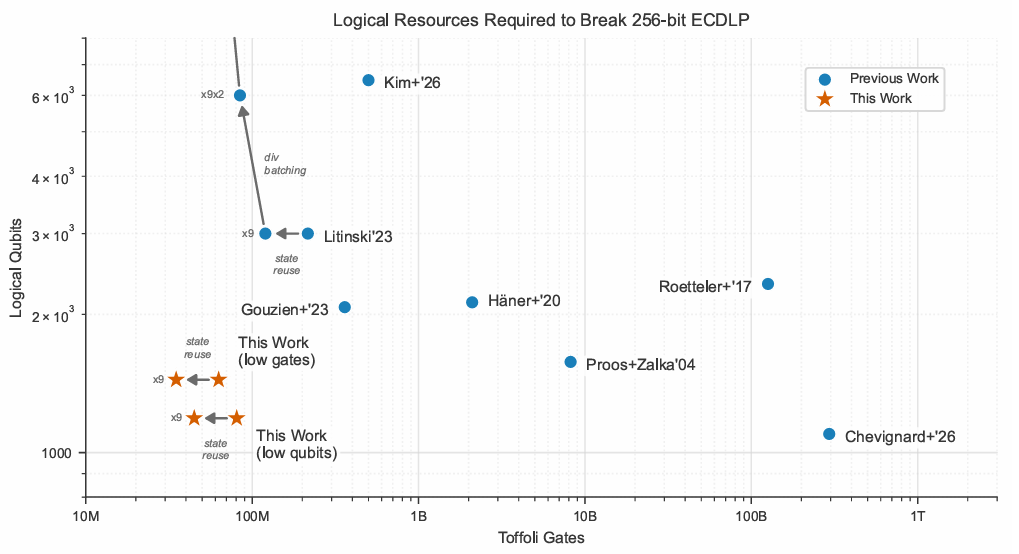
Quantum computers can solve certain math problems way faster than conventional machines. To shield the network, Ethereum developers are digging into hash-based cryptography with upgrades in four primary areas:
- Consensus signatures (BLS)
- Data availability (KZG)
- Account signatures (ECDSA)
- ZK-proofs on the application layer
In early 2026, the Ethereum Foundation set up a Post-Quantum Security Team, sharing its work publicly at pq.ethereum.org. Teaming up with research groups and client teams, it's currently hammering out the transition strategy.
The centerpiece is EIP-8141, a proposal bringing native account abstraction — likely as part of Hegota (see below). This means individual users will be able to pick their own signature verification method without waiting for a protocol-wide migration.
Built-in privacy
Right now, privacy is mostly an app-level feature. The goal is to bake it into the protocol itself — potentially opening doors for enterprises, financial institutions, and decentralized identity systems.
Proposals for shielded ETH transfers are moving forward in 2026. Leading the charge is EIP-8182, a draft by developer Tom Lehman, backed by the Ethereum Foundation's Strawmap. It focuses on using zero-knowledge (ZK) proofs to hide sender, receiver, and transaction amounts.
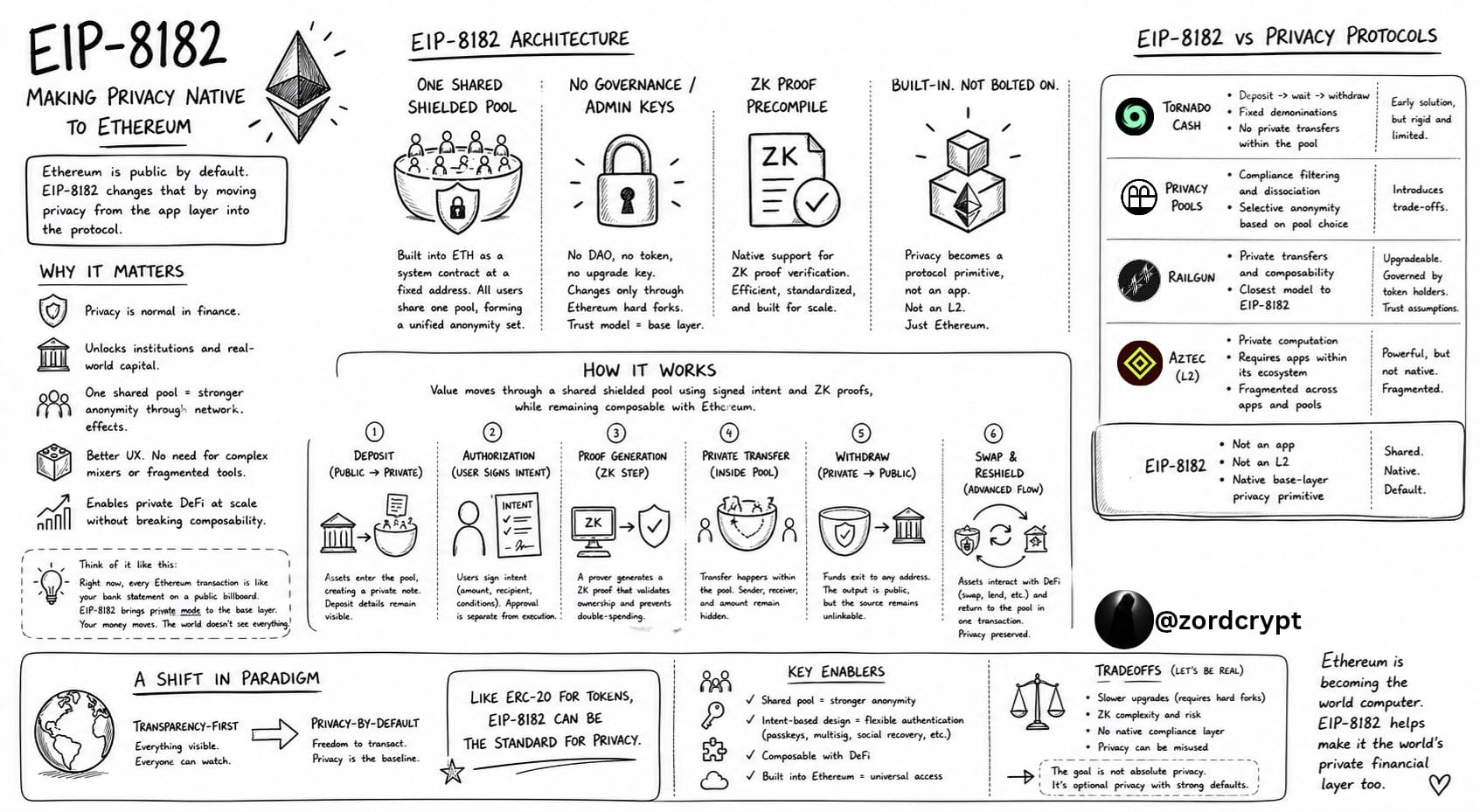
The key innovation: a single, unified pool for all users. This solves the "anonymity set chicken-and-egg" problem — where small, isolated pools offer weak privacy because there just aren't enough users. With everyone in one pool, the anonymity set is massive from day one.
Users would be able to deposit ETH or ERC-20 tokens into the pool, move them around privately, and withdraw them — all while using existing wallets and ENS names. Native, protocol-level privacy could become the feature that finally bridges crypto from "internet money" to global financial infrastructure.
Other planned improvements
Aside from the above-mentioned milestones, the official roadmap identifies three other pain points to be addressed:
High transaction costs
Layer-2 chains (rollups) reduce costs for users by batching transactions together and sending them to Ethereum's Layer 1. Until the Dencun upgrade in March 2024, Ethereum stored rollup data permanently — a pricey habit.
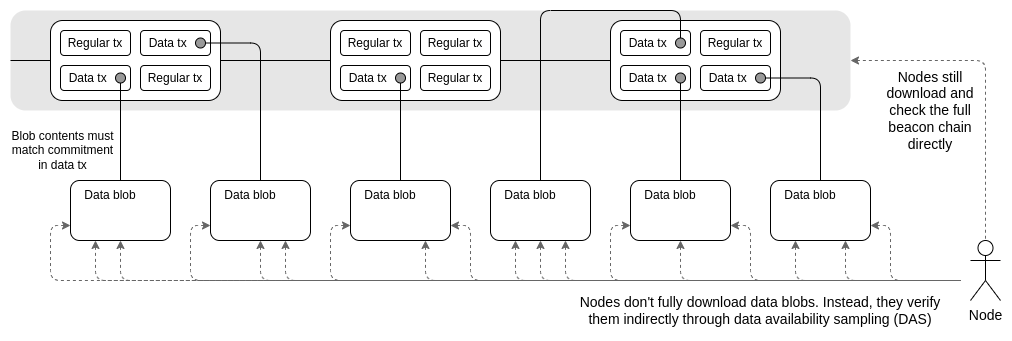
Via proto-danksharding (EIP-4844), Dencun introduced temporary blob storage, slashing costs for users. Now, the team is setting the table for the second phase of blob data expansion — Danksharding. It will ramp up capacity from 6 to 64+ blobs and introduce data availability sampling (DAS).
Here's how DAS changes things: nodes will no longer need to download the entire block just to confirm that transaction data is out there and reachable.
But DAS also demands new infrastructure. It requires fresh ways to verify rollup data availability, split block building and block proposal duties between validators, and cryptographically prove they've checked small data subsets.
Room for security improvements
While Ethereum "is the most secure and decentralized smart-contract platform in existence," there's still wiggle room for improvement to make it "even stronger, locked and loaded to withstand all kinds of assaults far into the future."
On the roadmap: Ethereum clients will get better at handling competing blocks, and the network will shorten the time it takes to consider blocks "finalized" — meaning unchangeable without costing an attacker a fortune. These upgrades are far along in research, but their implementation will likely take a while.
On another front, new changes will make censorship harder. While the current design already prevents any single validator or group from getting too much power, new staking technologies should strike a balance between decentralization and protecting against hardware, software, and network failures.
At the heart of these changes are:
Distributed Validator Technology (DVT)
Baked into the protocol, DVT would let validators register multiple independent keys that act together as a single grouped validator identity. This would dramatically lower the risk of a single failure or hack taking a validator offline.
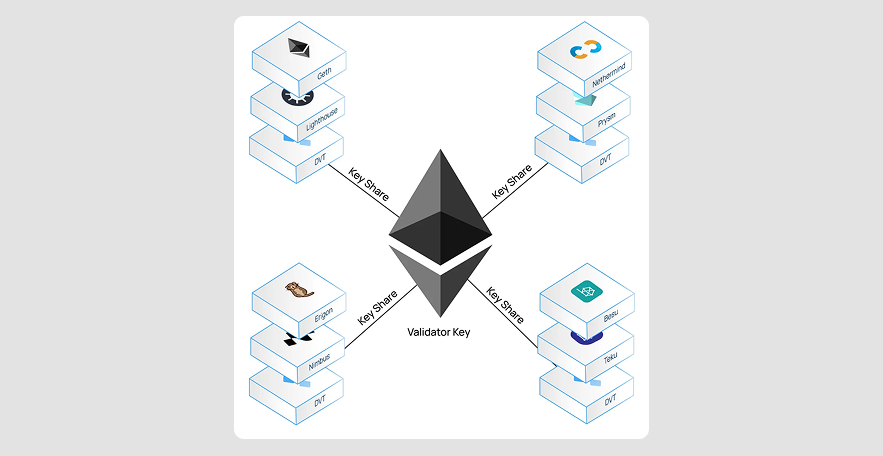
For any block proposal or attestation to go through, a set threshold of participating identities would need to sign off. Fault-tolerant staking mechanics could nudge individuals and institutions to run their own setups rather than handing over assets to large providers — which would boost overall measurable decentralization.
Proposer-Builder Separation (PBS)
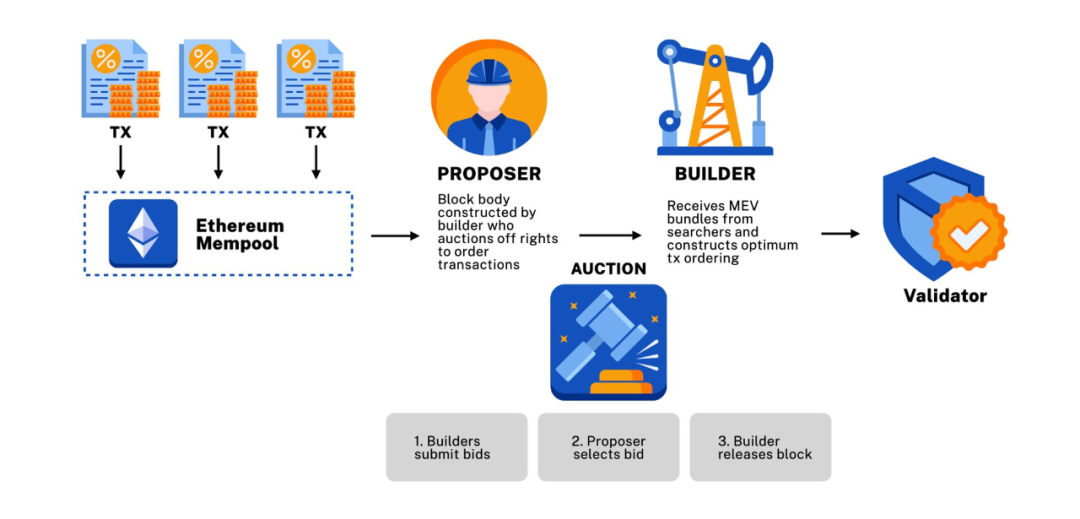
Letting one validator create a block and another broadcast it across the network should dramatically strengthen built-in defenses. To censor a block, a rogue proposer would have to pick a less profitable block — an obviously economically irrational decision that would get spotted immediately by other validators.
Finally, attackers could try to spam upcoming validators through denial-of-service attacks to stopthem from proposing blocks. Ethereum's best defense here is Secret Leader Election (SLE) — because it will be impossible for block proposers to be singled out in advance.
A set of cryptographic commitments representing candidate proposals would be constantly reshuffled so only the validators themselves will know their order in advance.
On top of that, profits from professional block-building algorithms will be split more fairly, keepingthe highest-performing institutional stakers from hoarding all the stake.
Complexity of use
For mass adoption to take off, Ethereum must become "as frictionless as using a traditional web2 app." The ease of use — from wallet and key management to pulling the trigger on transactions — should be boosted "drastically."
Ethereum accounts use a key pair — public to identify, private to authorize. Think of a private key as a master password: whoever holds it controls the account. For people used to banks managing accounts for them, this is a whole new ballgame.
Enter smart contract wallets. They protect accounts if keys are lost, enable fraud defense, and unlock new functionality. However, they're clunky to build as Ethereum doesn't fully support them yet. That extra support is called account abstraction.
Everyone can run a node
Running your own node means no third-party trust, but it takes technical know-how. As a result, most people trust intermediaries instead.
Several upgrades are about to change that:
- Verkle Trees will switch to space-efficient storage.
- Statelessness will slash disk space requirements.
- Light nodes will run on phones or in browsers.
With these changes, barriers drop to nearly zero. Users get permissionless access without sacrificing disk space or relying on third parties.
Smart contract wallets are already live (EIP-4337), and Verkle Tree testnets are already running. However, full statelessness — when validators do not need to store the entire "state" (account balances, contract code, and data) to verify new transactions — is "likely several years away from being implemented."
Confirmed hard forks
As of May 2026, only two of the upcoming forks have been officially named, while the complete technical specifications are still in motion. The remaining forks have working titles and are expected to be locked in as research and development progress.
Glamsterdam
A mashup of Amsterdam and Gloas — an execution layer upgrade and a consensus layer upgrade — this upcoming fork aims to "clear the path for the next generation of scaling." It will set up Ethereum for high-throughput parallelization, building on the foundation laid by Fusaka in three crucial directions:
- Faster processing through parallelization
- Expanded capacity
- Long-term sustainability via prevention of database bloat
The fork will shake up how blocks are created and verified, locking in speed, affordability, and decentralization as activity rises. With gas becoming more predictable, users will also spend less gas for using state-heavy apps.
While Fusaka introduced blobs, Glamsterdam will push them further and draw a hard line between block proposers and builders. The separation will let validators juggle more data and hand off block assembly safely without depending on external software.
Despite higher efficiency, the bar for at-home node operators will remain doable.
What about Hegota?
The subsequent fork, Hegota, was named after two consensus and execution layer upgrades — Heze and Bogota, respectively. According to the official roadmap, this upgrade is planned for the second half of 2026, but the proposals are still being hashed out.
The road ahead
Seven hard forks in three years is an aggressive pace by any standard — but the stakes couldn't be higher. Faster finality, built-in privacy, quantum resistance, and account abstraction are the difference between Ethereum staying the smart contract leader or slowly ceding ground to rivals.
Ethereum is done waiting for Layer-2s to solve its problems. The base layer is getting a serious upgrade. If the roadmap holds, by 2029, Ethereum will be faster, tougher, harder to censor, and ready for whatever comes next — whether that's AI agents trading on-chain, global financial rails, or something nobody's even imagined yet.