What Is Crypto Lending?

How Borrowing Against Crypto Works
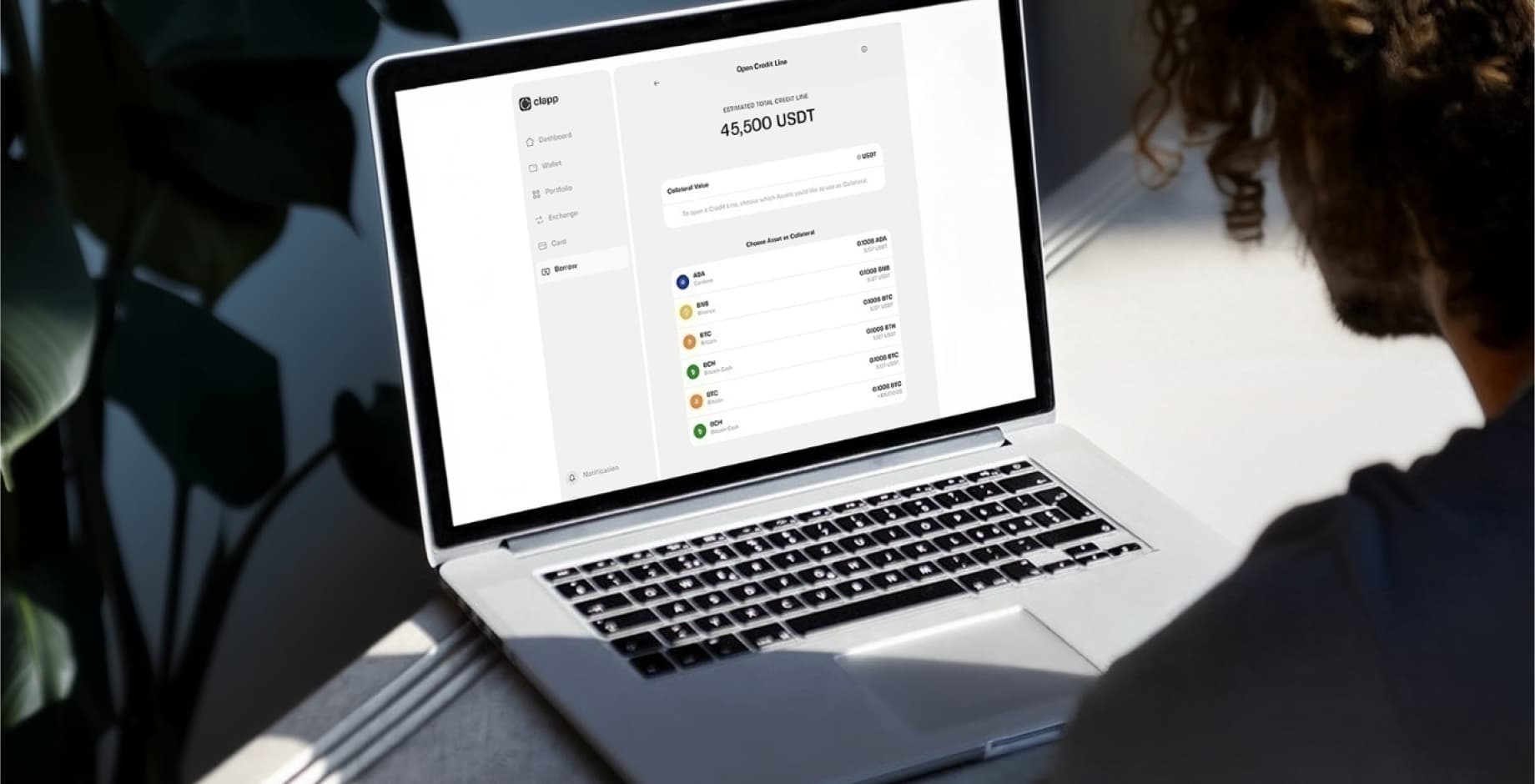
Deposit and borrow up to the limit
You deposit collateral — say BTC — and can borrow up to that asset's limit. Loan-to-value, or LTV, is simply your loan measured against what your collateral is worth: borrow 3,000 EUR against 10,000 EUR of BTC and you are using less than a third of it.Your LTV moves with the market
While the loan is open, your LTV moves with the market. If it climbs to the platform's liquidation threshold, part of the collateral is sold automatically to protect the position. Repay what you borrowed and your collateral is released back to you.Secured lending, simpler access
Because the loan is secured, there is no credit check, and rates are typically far below unsecured consumer credit.
CeFi vs DeFi Lending
Neither model is safer in the abstract — they concentrate risk in different places. The practical question is which risks you can evaluate and which features you actually need.

Centralised (CeFi)
Operated by companies: they hold collateral in custody, offer customer support, and can pay out in fiat — euros to a bank account, for example. You are trusting an operator, so its custody model and transparency matter.
Decentralised (DeFi)
Smart contracts replace the operator: you keep self-custody until funds enter the contract, and rates are set algorithmically. In exchange you take on smart-contract risk, have no support desk, and no fiat rails.
How Crypto Lending Rates Form
Both sides of the market price the same two things: risk and demand.


Borrowing: LTV first
Borrowing rates depend mainly on the loan-to-value ratio: the lower your LTV, the cheaper the loan, because the lender's risk is smaller. Asset type and demand to borrow it matter too — stablecoins are usually the most in demand.
Earning: the mirror side
Savings-side rates mirror the same market: platforms pay more on assets there is strong demand to borrow, and more for fixed terms than for flexible access.
Live reference: Clapp today
You can watch both sides of that in one place. Borrowing on Clapp runs 0–21.9% APR depending on your LTV, dropping to 0% once it stays under 20%. On the earning side, flexible savings pay up to 5.2% APY and fixed terms up to 8.2% APR.
The Risks, Honestly


Checklist Before Using a Lending Platform
Custody
Who holds the assets, and is a named institutional custody provider involved?
Segregation
Are client assets separated from the company's own funds?
Liquidation Rules
Is the threshold published, and can you monitor your LTV in real time?
Fee Schedule
Are all fees public — origination, withdrawal, early repayment?
Track Record
How has the platform behaved in past market stress?
Terms on Asset Use
Do the terms state clearly whether and how your deposited assets may be used or lent out?
Both Sides of Crypto Lending on Clapp

Borrow: a flexible credit line
Earn: flexible or fixed savings
Still Have Questions?
The Clapp support team is there in the app to explain any part of crypto lending before you commit funds.
Frequently Asked Questions
Is crypto lending safe?
It carries real risks on both sides: liquidation risk for borrowers and platform or smart-contract risk for savers. The checklist above covers what to verify; conservative LTV and transparent custody remove most of the avoidable risk.
Is crypto lending legit?
Lending against collateral is a standard financial mechanism, and legitimate regulated operators exist alongside opaque ones. The difference shows in checkable facts: custody model, asset segregation and published terms.
What is the difference between a crypto loan and a credit line?
A loan pays out a lump sum you repay on a schedule. A credit line gives you a pre-approved limit you draw from as needed, paying interest only on what you use. For ongoing liquidity, a credit line is usually the more flexible structure.
Why are stablecoin rates higher than BTC rates?
Because demand to borrow stablecoins is the strongest — they are the working cash of the market. Platforms therefore pay savers more for them.
Do I pay tax on crypto lending?
Tax treatment differs by country and by whether you are borrowing or earning. Confirm the rules for your jurisdiction with a local tax adviser.
Can I borrow and earn at the same time?
Yes — the two sides are independent. You can keep assets earning interest in savings while borrowing against separate collateral; on Clapp both live in one app, with a credit line on the borrow side and Flexible or Fixed Savings on the earn side.