Bear market survival guide: How to trade crypto's darkest days

Bull runs dominate headlines, but fortunes can also be made in downturns. Feared by many, bear markets are just as much a part of every crypto cycle — and they reward a very different set of skills.
With Bitcoin now down over 50% from its all-time high, we are roughly five months into the current bear market. Below are several time-tested approaches to navigating it, backed by market intelligence data.
TL;DR
- Crypto winters are normal. Bitcoin is down 50% from its peak — the fifth major bear market since 2011.
- Historically, they always end. Previous cycles bottomed after 9–18 months, signaled by capitulation, extreme fear, smart money accumulation, and MVRV Z-scores below zero.
- Buying the dip pays off — if you get the timing right. 2018 and 2022 buyers saw 2,110% and 715% gains at the next peak. But catching the exact bottom is nearly impossible.
- Multiple strategies work. Short selling, range trading, accumulation, stablecoin yields, options, and scalping each suit different risk profiles.
- Patience beats prediction. Success isn't about calling the bottom — it's about managing risk and staying disciplined when fear takes over.
What is a bear market?
According to Investopedia, a bear market is “a market condition where investors are more risk-averse than risk-seeking, defined by some as when prices have fallen more than 20% from previous highs.” In crypto, those drawdowns can escalate to 70–80%.
This is the phase where pessimism takes hold and fuels panic-driven selling, producing lower highs and deeper lows. Market participants rush to unwind positions or retreat to the sidelines. Thinning liquidity further amplifies volatility and sharpens price swings.
History suggests that every crypto winter has eventually given way to recovery, even if the path has been long and painful. Extended downcycles have typically lasted between 9 and 18 months.
The current phase fits this definition closely, as Bitcoin trades roughly 50% below its all-time high of $126,080, reached on October 6, 2025. This year alone, the asset has fallen from nearly $97,000 to around $63,000.
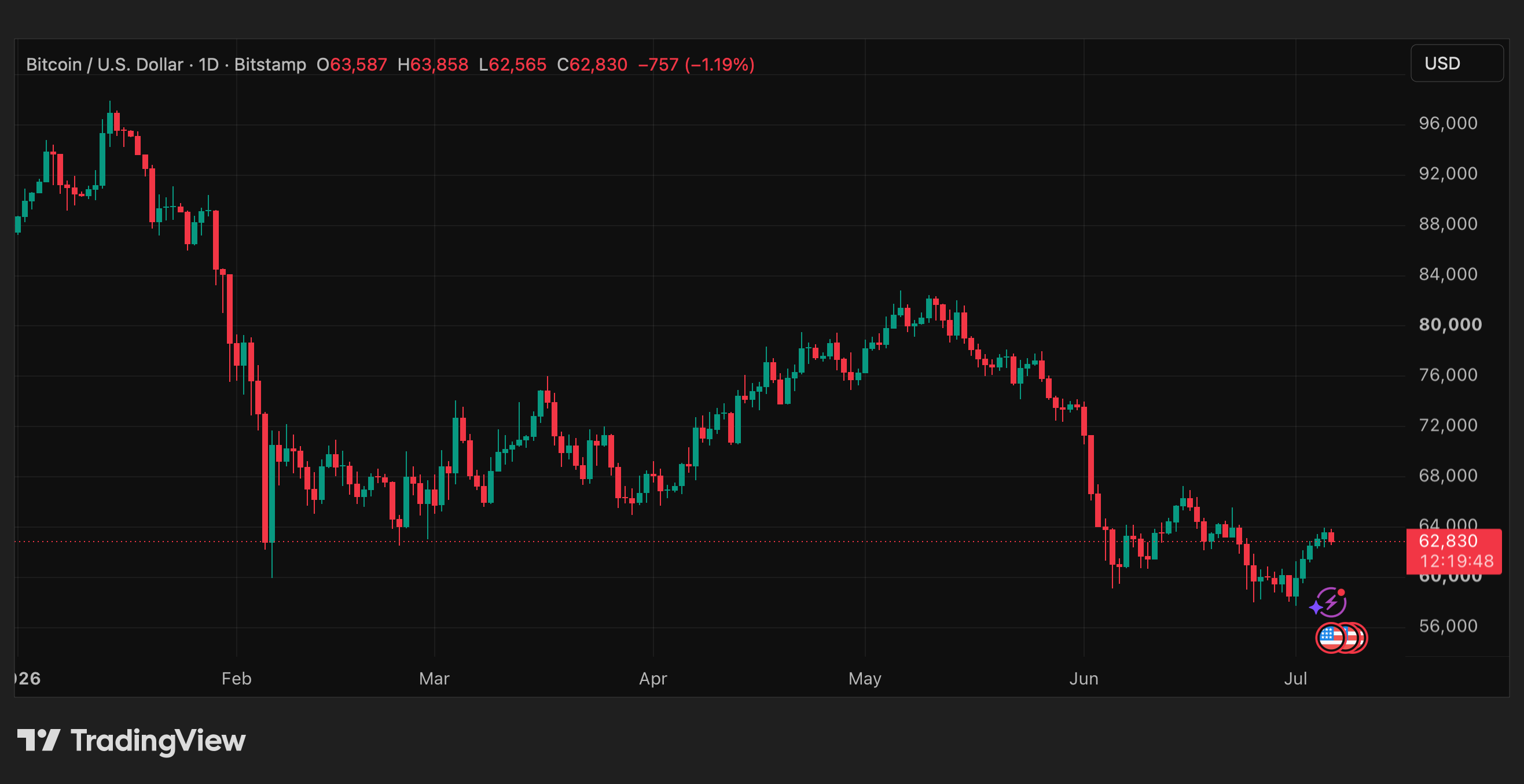
This marks the fifth major bear market (or crypto winter) in the industry’s history, following:
- 2011–2012, when the first major speculative bubble collapsed, triggering Bitcoin's 90% drop in just five months.
- 2013–2015, when the hack and bankruptcy of the Tokyo-based Mt. Gox exchange left a lasting scar on market trust. Bitcoin had just reached $1,000; the ensuing downturn led it to bottom out near $170.
- 2018, during the unwinding of the ICO boom that started in December 2017. Bitcoin shed roughly 80% of its value in 12 months, plunging from nearly $20,000 to roughly $3,200.
- 2021–2022, defined by a wave of insolvencies after the Terra-Luna collapse, alongside Fed tightening pressure. A year after peaking at an all-time high of nearly $69,000 in November 2021, Bitcoin plummeted roughly 77% to a cycle bottom of around $15,500 as over $2 trillion in total market value exited crypto.
When does a bear market end?
It took Bitcoin roughly one year to find a bottom in the 2018 cycle, and another two years to reclaim its prior all-time high. In 2022, the pattern rhymed: a 76% drawdown from November 2021 to December 2022, followed by a gradual recovery into 2023.
Typically, a bear phase is considered complete when prices stage a sustained 20% rebound from lows. Confirmation, however, depends on both quantitative and qualitative signals:
- Trader capitulation, where aggressive selling exhausts weaker hands
- Extreme pessimism, reflected in deeply depressed “fear” readings and subdued social sentiment
- Smart money accumulation, as informed investors absorb supply from forced sellers
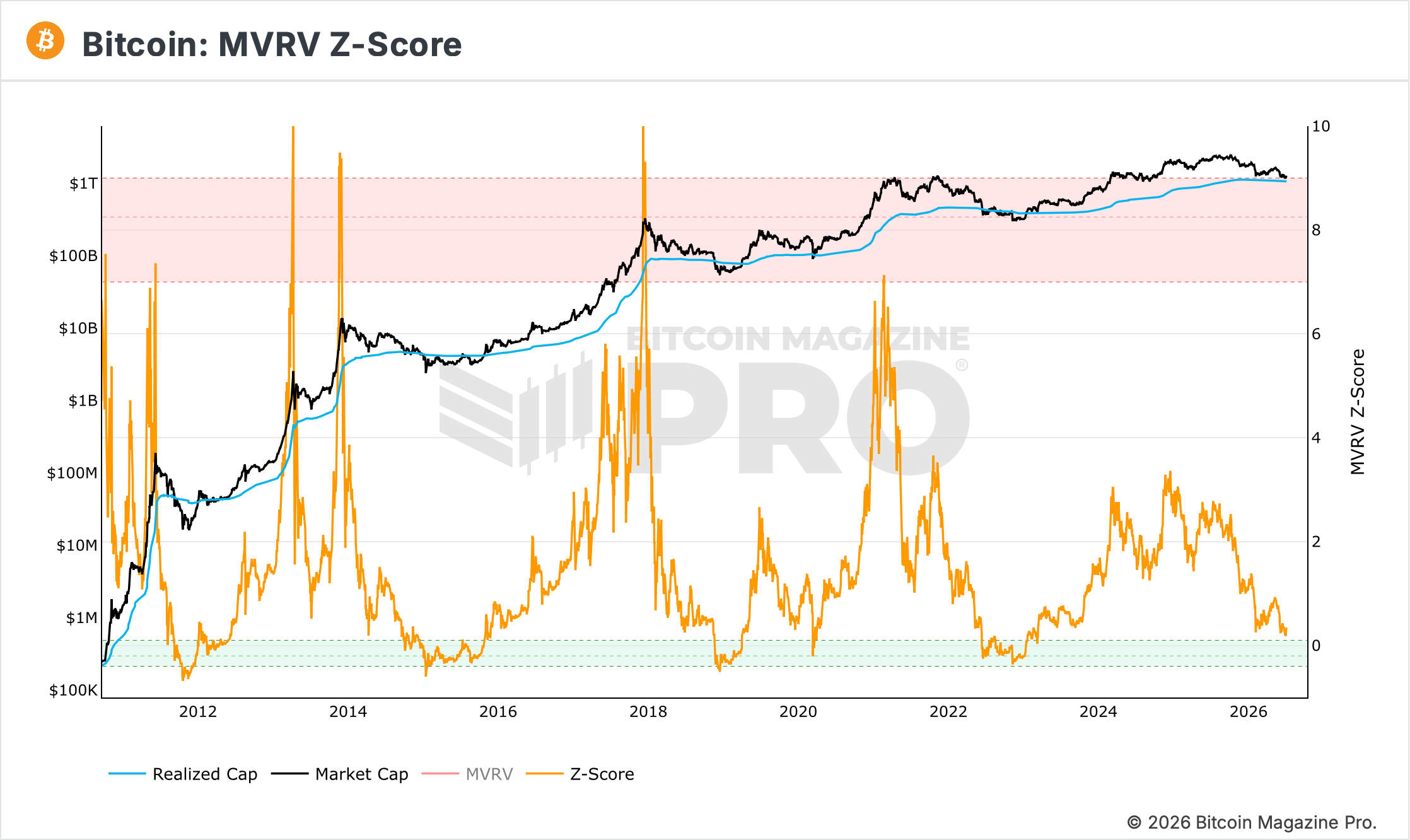
- MVRV Z-score below zero, indicating widespread unrealized losses and historically undervalued conditions
Using MVRV to find bottoms
The Market Value to Realized Value (MVRV) ratio compares Bitcoin's market capitalization with its realized capitalization. Historically, major BTC cycle bottoms have often coincided with MVRV readings between roughly 1.0 and 0.8.
- An MVRV reading around 1.0 suggests the market is trading near aggregate cost basis, meaning investors are, on average, breaking even. This threshold is often referred to as the "Green Zone."
- When MVRV falls below 1.0, the average holder is sitting on unrealized losses.
- Readings below 0.8 indicate widespread capitulation and historically rare levels of undervaluation. Known as the "Blue Zone," this range has historically coincided with some of Bitcoin's strongest long-term accumulation opportunities.
To filter out short-term price noise, many traders rely on the MVRV Z-Score, which adjusts the ratio using statistical standard deviation. Deeply negative readings have historically aligned with previous cycle bottoms, including those in 2015, 2018, and 2022.
Still, neither MVRV nor the Z-Score can pinpoint the exact moment a market will reverse. They work best alongside other on-chain and technical indicators, such as short-term holder cost basis and unrealized losses, which often help identify periods of peak capitulation before a recovery begins.
Should you “buy the dip”?
Sharp market declines often carry a counterintuitive opportunity: accumulation zones. But these depend heavily on time horizon, risk tolerance, and capital structure.
High-conviction traders have historically used these dislocations to build positions in assets previously inflated during bull-market euphoria.
By Arkham’s estimates, investors who accumulated Bitcoin at cycle lows in 2018 and 2022 would have earned 2,110% and 715% respectively if they exited at the next peak.
The challenge is that timing bottoms is notoriously difficult — assets can still lurch another 30–50% lower before stabilizing. There is no precise signal that marks the end of oversold conditions.
To mitigate this, many investors rely on dollar-cost averaging — deploying fixed amounts at regular intervals regardless of price direction. However, several factors remain critical:
- Only invest capital you can afford to lock away or lose
- Conduct thorough due diligence — discounted prices do not guarantee quality
- Accept that recoveries are slow, uneven, and often emotionally testing
Top 6 bear market strategies
Bear markets offer multiple tactical approaches, each suited to different risk profiles and time commitments. Combining them can help reduce portfolio volatility while maintaining exposure to asymmetric opportunities.
1. Short selling
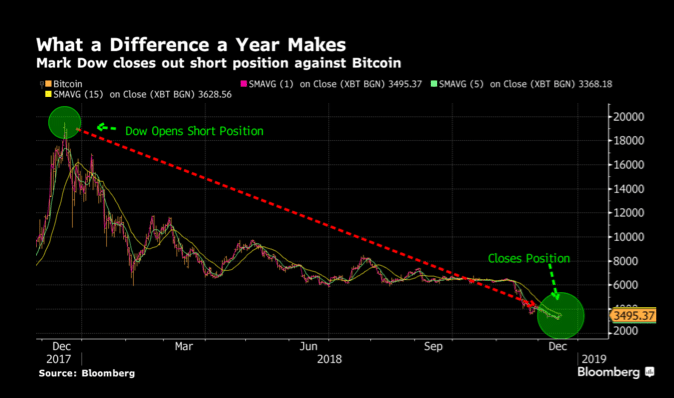
The most direct — and most hazardous — way to profit from declines involves borrowing, selling, and repurchasing assets at lower prices. Most exchanges support this via margin trading.
Short sellers aim to sell high and buy back lower, capturing the spread as profit. But if prices move higher instead, losses can theoretically be unlimited. This makes disciplined risk controls and stop-loss levels essential.
2. Range trading
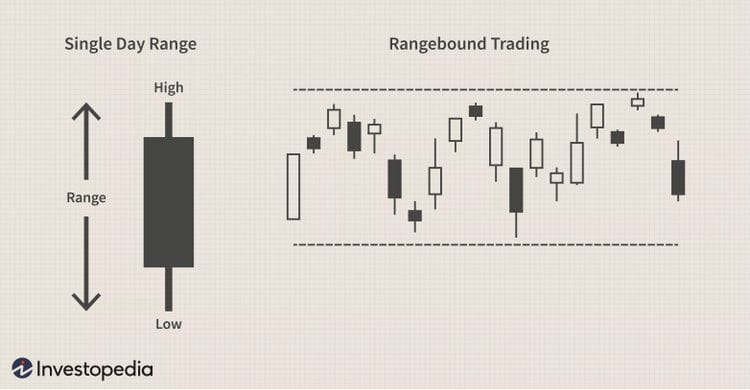
This strategy performs best in low-volatility, sideways markets. Traders identify support and resistance zones and trade between them.
The “floor” is where buying pressure stabilizes price declines. The “ceiling” is where selling pressure caps upward momentum. Traders aim to buy near support and sell near resistance — until volatility expands and the range breaks. Risk management is crucial when that shift occurs.
3. Accumulation
This approach appeals to long-horizon traders focused on positioning for the next expansion phase. Bear markets allow investors to accumulate quality assets at discounted valuations — a strategy that has historically rewarded patience.
The key challenge lies in distinguishing durable assets from those that are simply cheap for structural reasons.
4. Stablecoin yields
Stablecoins are often described as a trader's "dry powder" — capital kept on the sidelines, ready to be deployed when opportunities emerge. But that cash reserve doesn't have to sit idle. Yield products allow investors to earn returns on stablecoin holdings through flexible or fixed-term strategies while they wait for more attractive market conditions.
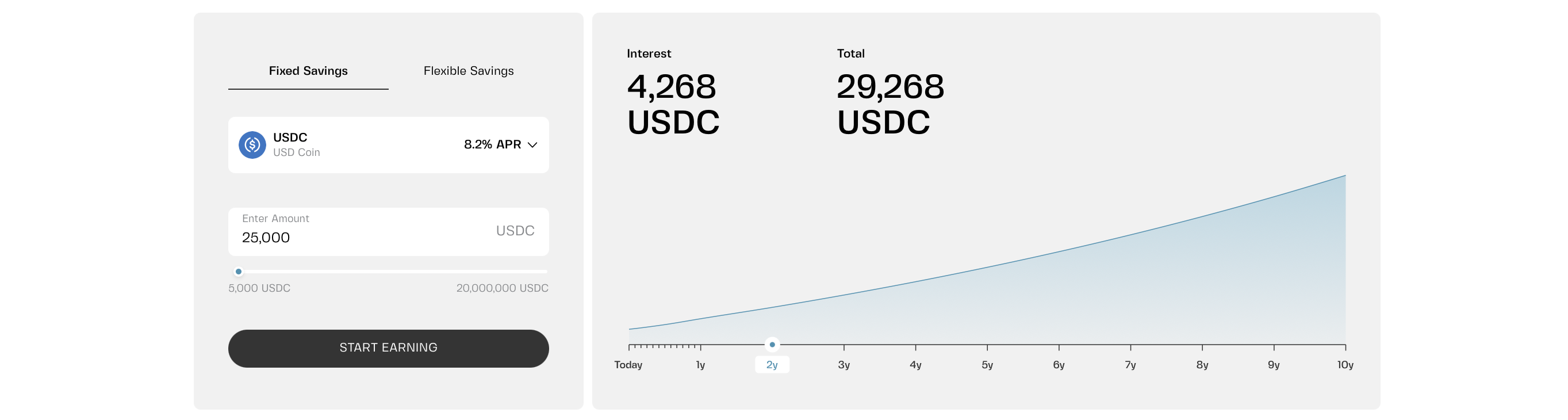
Instead of chasing trades in a weak market, many investors prefer to let idle capital generate yield while waiting for more attractive entry points. Although the returns are modest — around 8.2% annually in some products — compared with the outsized gains of a bull market, they can comfortably outperform traditional bank deposits.
In extended bear markets, patience often pays. Yield-bearing stablecoins help investors preserve purchasing power, improve portfolio efficiency, and ensure capital is ready to deploy when the next wave of opportunities emerges.
5. Put options and inverse products
These instruments provide built-in downside exposure, increasing in value as markets fall.
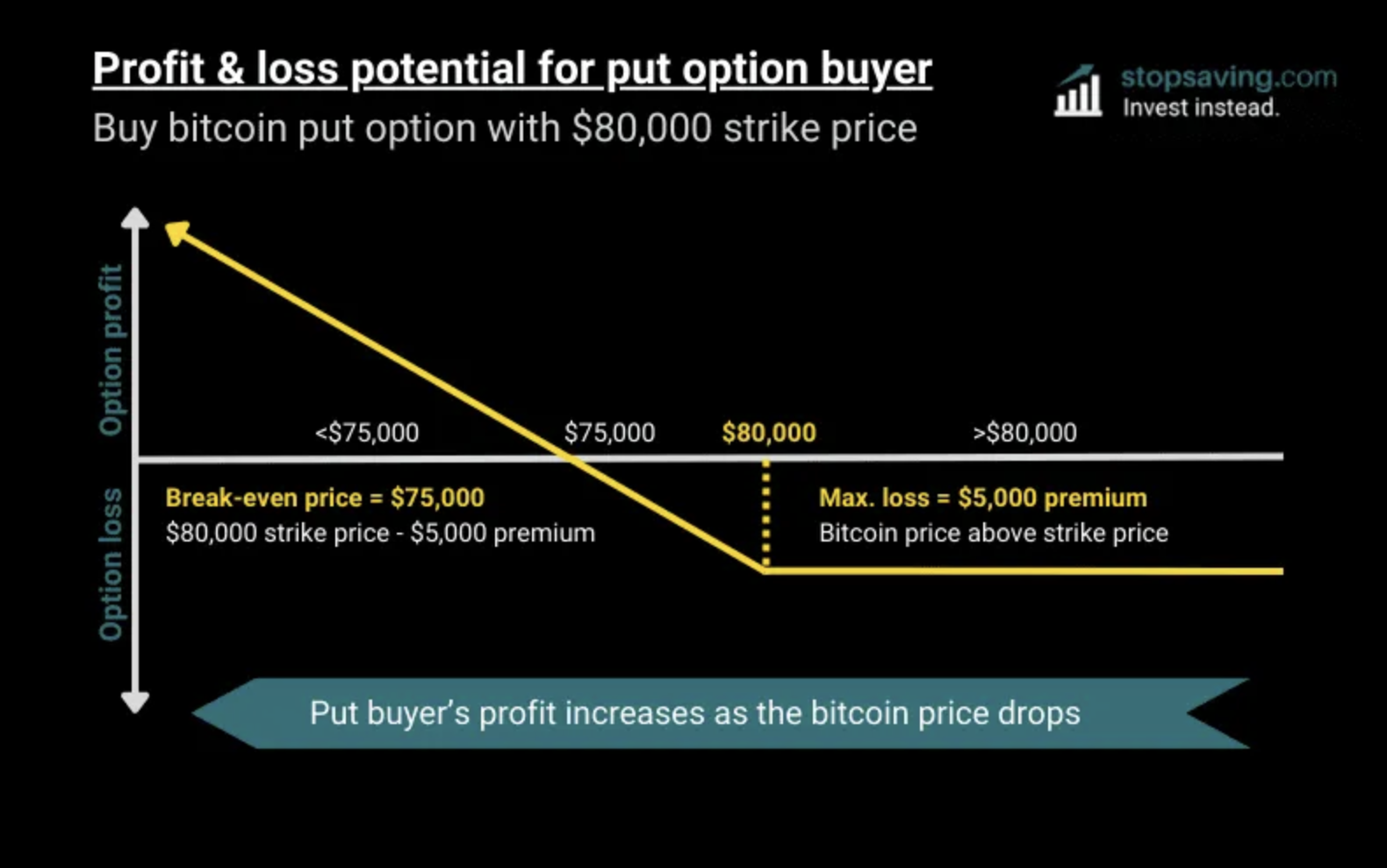
- Put options give holders the right — but not the obligation — to sell an asset at a predetermined strike price before expiration. The buyer pays an upfront premium, which becomes profitable if the market trades below that level. The seller, by contrast, is obligated to purchase the asset if the option is exercised.
- Inverse products, such as inverse exchange-traded funds (ETFs) and inverse perpetual contracts, are designed to move in the opposite direction of the underlying asset. They allow traders to benefit from declining prices without opening a traditional short position, although they are generally intended for short-term use.
6. Scalping and day trading
Experienced short-term traders exploit intraday volatility to extract frequent, small gains without holding overnight exposure.
- Scalpers execute dozens of rapid-fire trades per day, holding positions for seconds or minutes to capture micro-movements. Returns often rely on spreads or short bursts of volatility, with leverage commonly used to amplify gains — significantly increasing liquidation risk.
- Day traders operate on a slightly longer horizon, opening and closing positions within the same trading day to avoid overnight swings and event risk.
Wrapping up
Bear markets are uncomfortable by design. They test conviction, expose weak risk management, and make even experienced traders question their strategy. Yet every major crypto downturn has eventually given way to a new cycle, rewarding those who stayed disciplined.
There is no universal playbook for navigating a bear market. Some investors accumulate gradually, others focus on capital preservation or seek opportunities through short-term trading. Whatever the approach, success depends less on predicting the exact bottom than on managing risk, remaining patient, and avoiding decisions driven by fear.