Black gold, digital gold: How oil shocks ripple into crypto markets

Smoke over the Strait of Hormuz, oil futures surging, Bitcoin sliding — this year has just brought another reminder that crypto doesn't exist in a bubble. When geopolitical tensions flare, the connections run deeper than most realize.
What just happened
On February 28, things escalated quickly. The US and Israel launched joint military strikes on Iran. Two days later, Iranian drones reportedly hit Saudi Aramco's Ras Tanura refinery — a major supplier of diesel to European markets — causing it to halt operations.
Continuing attacks on energy facilities forced several Gulf states to suspend oil and gas production. Furthermore, the Strait of Hormuz — a vital waterway for roughly 20% of the world's crude oil and natural gas — is practically closed after drone strikes in its vicinity.
Despite the absence of a de facto blockade, traffic is severely limited as of early March — foreign insurers refuse to underwrite ships. Due to this near-closure, Kuwait, Iraq, and the UAE have implemented oil output cuts as they run out of storage space.
Immediate market reaction
As the US-Israel attack started, oil markets reacted instantly.
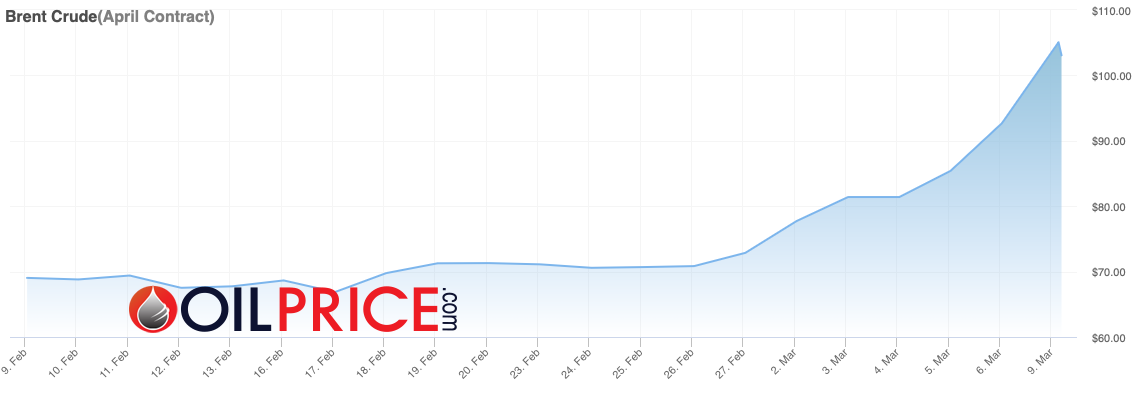
- Brent crude jumped to $83, its highest level in over a year.
- West Texas Intermediate gained more than 13%, pushing past $77.
- Following reports of disrupted tanker traffic, the prices surpassed the $100 mark for the first time since mid-2022.
- At press time, April futures contracts for both grades are trading at $101.28 and $98.50, respectively.
Gold, the old-school safe haven, did what it always does in times of trouble — climbed 2.2% to $5,395 an ounce.
And Bitcoin? It dipped to $63,000.

None of this is random. And if you've been in crypto long enough, you've seen this before.
- When US sanctions hit Russia's oil sector in January 2025, crude surged to $80.50. Bitcoin dropped to $89,300 on Jan. 13 — and then ripped 22% higher to $109,300 by Jan. 20.
- Libya shutting down oil fields in August 2024 pushed crude from $74 to $80. Bitcoin fell to $56,150, then rebounded 16% within days.
- After the Oct. 7 attacks on Israel in 2023, oil jumped from $68 to $77.50. Bitcoin initially corrected from $28k to roughly $26,500, but then rebounded to $35k by October 25, 2023.
- When the Russia-Ukraine war broke out in 2022, oil spiked 50%. Bitcoin dropped 18% initially — then rallied 40% over the following two weeks.
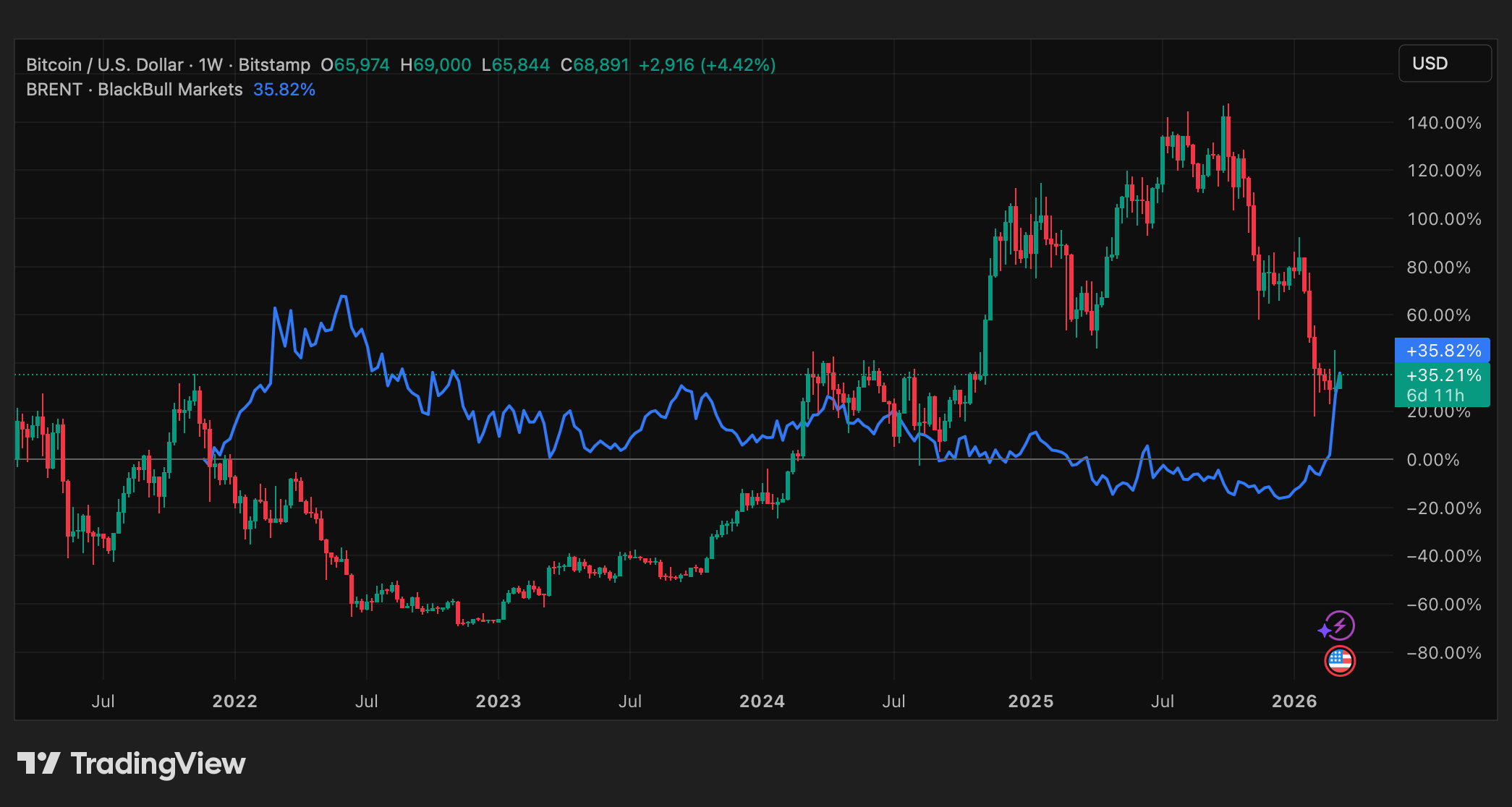
Oil spikes. Bitcoin stumbles. Then, days later, it climbs back. The question is whether these short-term moves tell us something deeper about what Bitcoin actually is in 2026 — digital gold, risk asset, or something in between.
The inflation connection
The Middle East remains the world’s primary source of hydrocarbon reserves and a powerful driver of crude oil and natural gas output.
Here's the simple version: oil gets into everything, from the ships that deliver your phone from Asia to trucks stocking supermarket shelves, to central heating in winter. When oil prices spike, transportation and manufacturing get more expensive.
Those costs pass through to consumers. Inflation ticks up. Central banks respond — or don't respond — based on what the numbers say. And that's where crypto enters the conversation.
Bitcoin maximalists love to talk about it being "digital gold" — a hedge against the very inflation that oil shocks create. The theory is solid: 21 million coins, nobody can print more, governments can't seize it easily.
But reality is messier than theory.
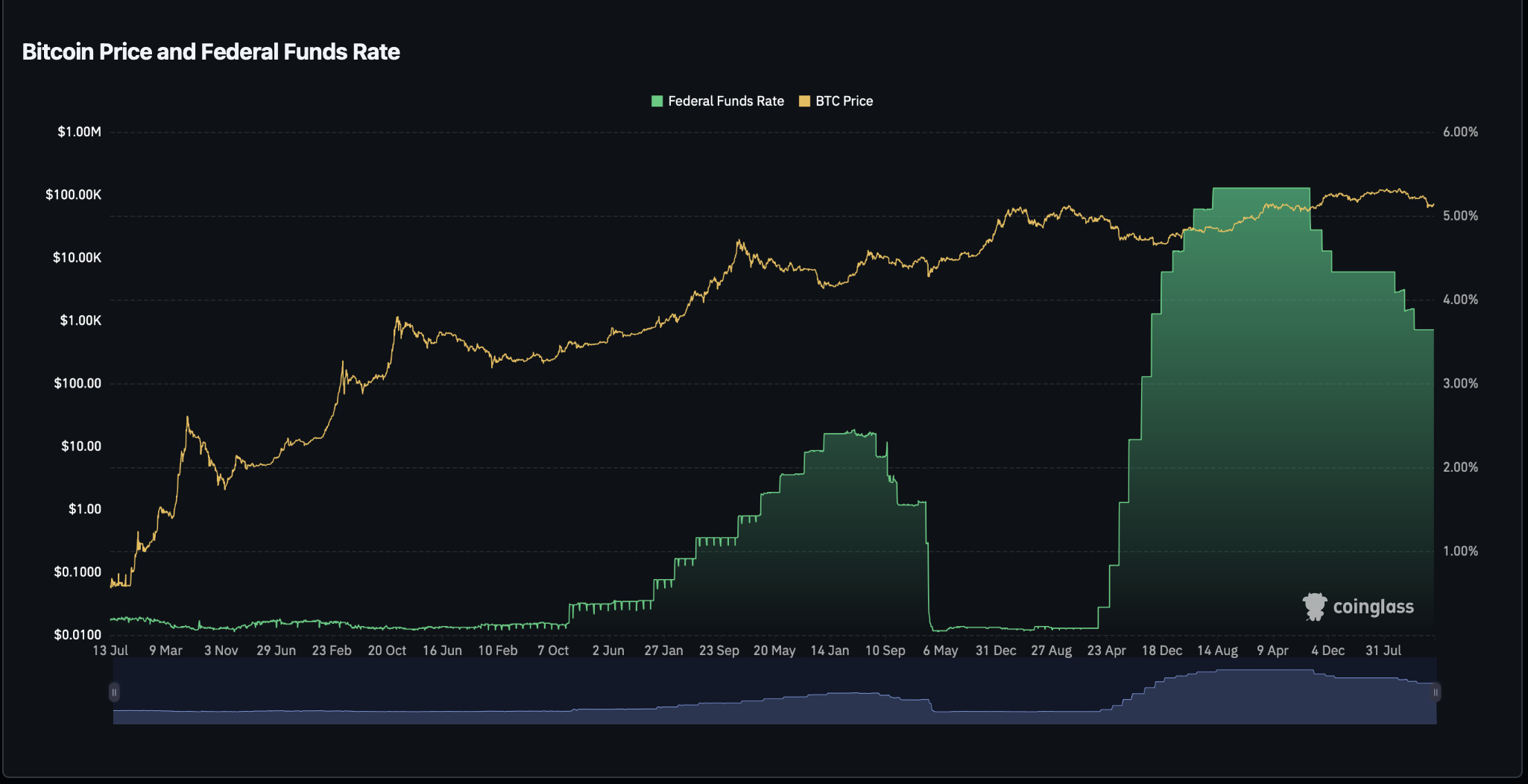
Rising inflation leads central banks (like the Fed) to raise interest rates to cool the economy, making borrowing more expensive. As liquidity becomes tighter, investors rotate away from "risk-on" assets into safer, yield-bearing alternatives like US Treasuries.
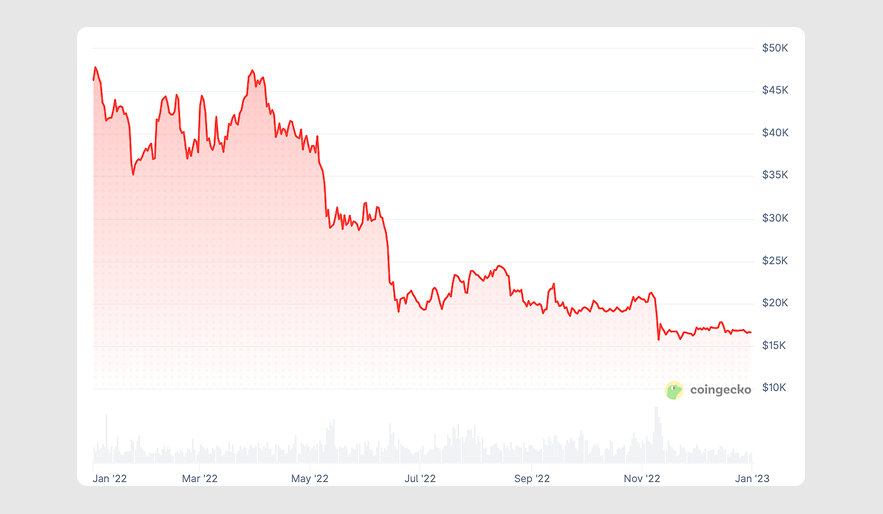
High-inflation periods coincide with BTC price dips precisely because they trigger aggressive rate hikes. This happened during 2022 — as the Fed hiked rates to fight inflation, BTC sank from roughly $47k to under $20k.
On the other hand, interest rate cuts and quantitative easing (like during COVID-19 in 2020) boost liquidity, which may push the Bitcoin price higher as capital flows into riskier, high-growth investments.
Right now, the market is pricing almost no chance of a rate cut at the next Fed meeting (2.6% on CME FedWatch). Higher oil prices reinforce that view.
Key takeaways from Bitcoin's reaction
When the news broke on February 28, Bitcoin didn't act like a safe haven. It acted like a risk asset — the kind of thing traders sell when uncertainty hits. It moved more like tech stocks than gold.
This pattern keeps repeating because most investors still treat crypto as a speculative bet, not a store of value. The hedge narrative isn't wrong necessarily. It's just not how the market behaves when fear takes over.
The risk-off reflex
Cognitive biases drive a lot of trading, especially during geopolitical shocks. Loss aversion kicks in — the fear of losing money overpowers the potential for gains. People sell first and ask questions later.
Smaller altcoins get hit hardest because they're perceived as riskier. Bitcoin takes a hit too, but usually recovers faster. We've seen this before.
The 2023 study “Non-linear relationship between oil and cryptocurrencies: Evidence from returns and shocks” found something interesting: the two move together when markets are calm and bullish. But throw in some uncertainty, and the correlation flips negative.
In plain English: when things get scary, oil and crypto part ways temporarily. Then crypto tends to bounce back.
This is exactly what happened this month. On March 4, 2026 — merely four days after the initial shock — BTC revisited $73k, supported by strong ETF inflows and a rebounding stock market. It is currently trading at roughly $68k.
Bitcoin vs stocks
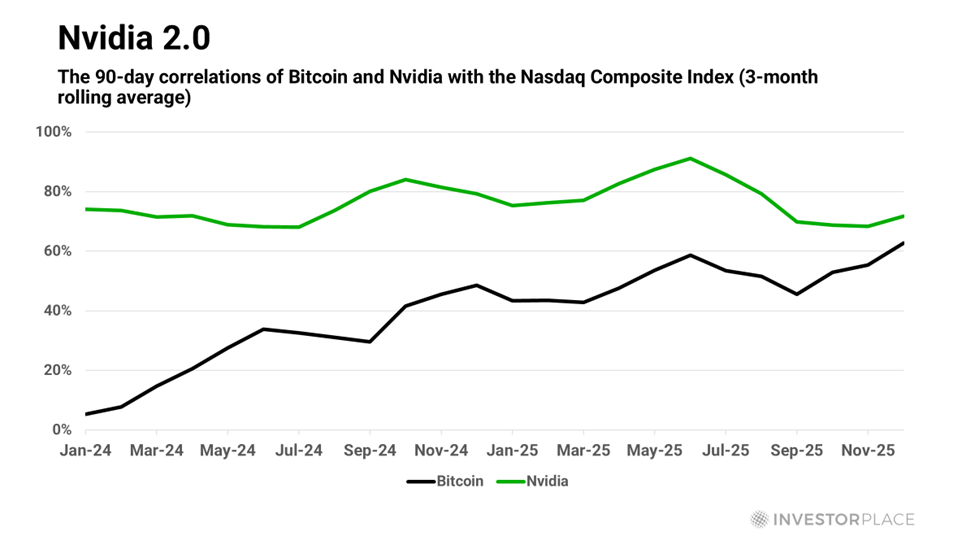
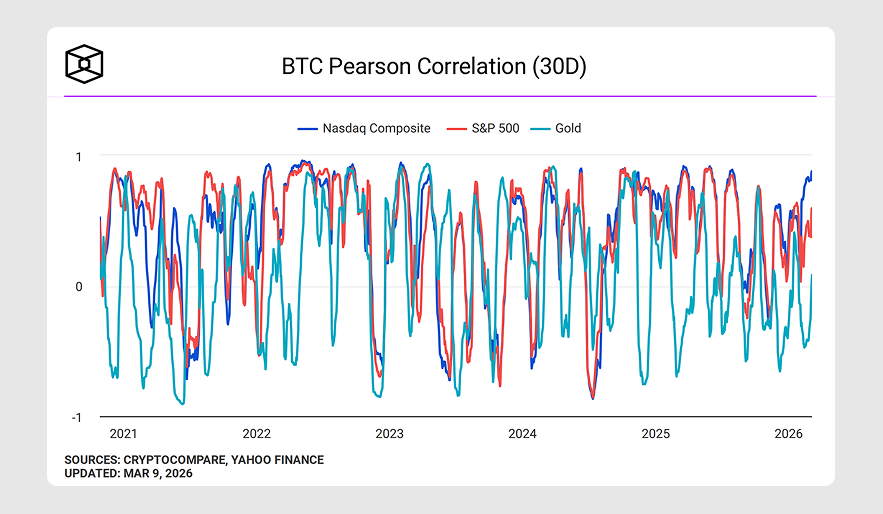
Over the past decade, Bitcoin has shown a clear correlation with US tech stocks — particularly the Nasdaq. During market downturns, they often move in tandem. The 30-day correlation charts bounce around, but the direction is consistent enough that institutional investors notice.
The daily price correlation with the tech-heavy Nasdaq Composite index is particularly telling. Over the past two years, it has been rising significantly, as noted by Eric Fry of InvestorPlace. It's no surprise that Nvidia's share price has closely tracked that index — it accounts for the largest weighting — but Bitcoin has also mirrored its behavior.
Stocks are vulnerable to oil price swings. When crude spikes, it raises input costs across the economy. Transportation gets more expensive. Manufacturing margins shrink. Corporate earnings face pressure.
Those concerns spill into crypto for a simple reason: the same institutions trading Nasdaq stocks are also trading Bitcoin. They don't silo their portfolios into completely separate mental buckets. When inflation fears mount and rate cut expectations shift, the reaction ripples across both markets.
Historically, Bitcoin has shown correlation with the S&P 500 during risk-off periods — moving in the same direction as stocks when uncertainty hits. Despite all the talk about Bitcoin being a hedge, the data says investors largely perceive it as a risk-on asset.
That perception drives the initial selling when oil shocks hit.
The mining angle that matters
There's also a more direct connection that doesn't get enough attention. Mining Bitcoin consumes enormous amounts of energy. As of early 2026, mining a single BTC requires about 1.2 million kilowatt-hours on average.
In regions where that electricity comes from fossil fuels, higher oil prices mean higher mining costs. Some operators get squeezed. Hashrate can dip. The flow of new coins slows slightly.
This doesn't crash the market overnight, but it influences supply dynamics at the margins. Another 2023 study (“Oil Price and the Bitcoin Market”) found that traders who pay attention to oil price movements when making crypto decisions tend to see better returns.
Energy costs affect miners, miners affect supply, supply affects price.
Iran adds another dimension
Social media users speculate that this war could force the collapse of Iran's mining industry — with hundreds of thousands of rigs going offline and billions of dollars in BTC being dumped.
Mining experts dismiss these suggestions, saying the scale is incomparable to global shocks like the 2021 crackdown on mining in China. Iran's mining industry has faced major structural hurdles, from unstable power supply to prohibitive import costs to regulatory complexities. Iran’s actual share of global hashrate is likely below 1%.
The OPEC factor
These dynamics do not happen in a vacuum, and cartel policy is another driver to factor in. OPEC+ has been actively managing supply for years now, cutting production to keep prices supported. The cartel's goal as of late 2025 was balancing weak demand, high interest rates, and rising US production.
When OPEC+ pledges cuts, prices spike. If those cuts don't actually happen in reality, prices settle back down. But the threat of supply disruption — especially from a region as volatile as the Middle East — keeps a risk premium baked into oil futures.
What to actually do about it
So you're holding crypto, you see headlines about Middle East tensions, and oil futures are lighting up. What now?
- Don't panic-sell when Bitcoin drops 3-5% on geopolitical news. The pattern suggests a bounce is likely within days or weeks.
- Broaden what you're watching. Crypto-only news feeds won't tell you about oil shocks or central bank policy shifts. Those things matter more than most exchange listings.
- Check your risk exposure. If geopolitical uncertainty keeps you up at night, maybe dial back the leverage or diversify into assets that behave differently. Some people add gold or gold proxies. Some just hold more stablecoins.
- Try to think in terms of years, not hours. Geopolitical events cause sharp swings. Fundamentals and adoption drive long-term trends. The two aren't the same thing.
Where we land
The Iran war is still unfolding as of this writing. Oil markets are nervous. Crypto markets are nervous. That's the nature of interconnected systems.
But here's what stands out after watching this pattern repeat: Bitcoin's short-term moves often look like weakness during shocks, but its medium-term moves tell a different story. Again and again, it takes a hit, then climbs back stronger within a week or two.
That doesn't make it digital gold necessarily. Gold doesn't drop 5% when a refinery gets hit. But it does suggest that crypto's relationship with macro forces is more complicated than either the maximalists or the skeptics want to admit.
The cleanest takeaway might be the simplest: pay attention to what's happening in the world, not just what's happening on-chain. Oil shocks, rate decisions, geopolitical tension — they all find their way into crypto prices eventually.
The trick is recognizing the pattern before reacting to the noise.