Clapp Weekly: BTC hits $78k on ceasefire boost, Tether outruns Circle, KelpDAO hack

BTC price
Bitcoin surged to $78,100 following a combination of geopolitical relief and renewed institutional demand, including Trump's ceasefire extension and Strategy's $2.5 billion buy — its third-largest ever. The move reversed earlier weakness driven by stalled Iran talks and hawkish signals from the Fed chair nominee.
BTC cracked $75k on April 16 — for the first time since mid-March — and hit a peak of $77,956.91 the next day before drifting down to $73,856.06 on April 20. After rebounding, the price neared $76.5k, pulled back, and surged higher earlier today.
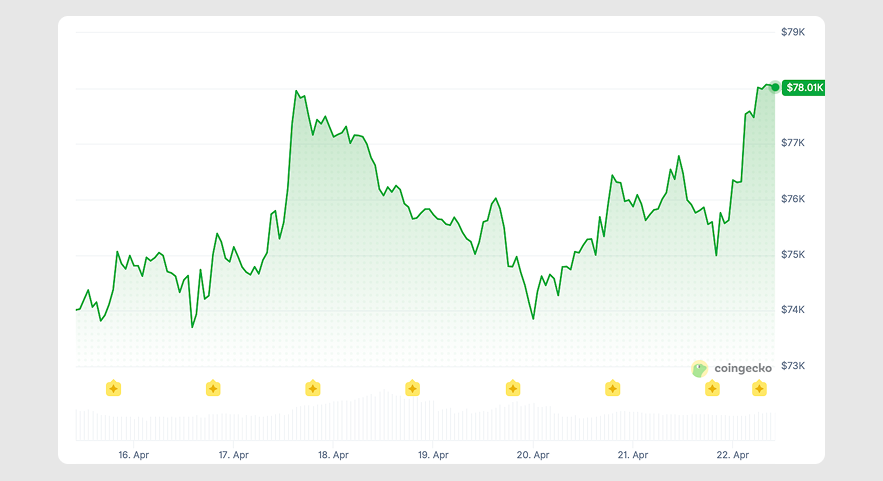
Currently at $78,105.05, BTC has gained 2.4% over the past 24 hours and 5.4% over the past 7 days.
ETH price
Ether is holding above $2.3k, but the rebound feels shaky. On-chain activity remains patchy, with no clear uptrend in active addresses. Still, Ethereum ETFs hit a 9-day inflow streak — their longest since October 2025 — a remarkable run for any ETF product.
After holding firmly above $2.3k, ETH topped out at $2,451.21 on April 17, then drifted lower for two days before finding a floor at $2,264.81 on April 20. The rebound accelerated earlier today with a peak of $2,397.71.
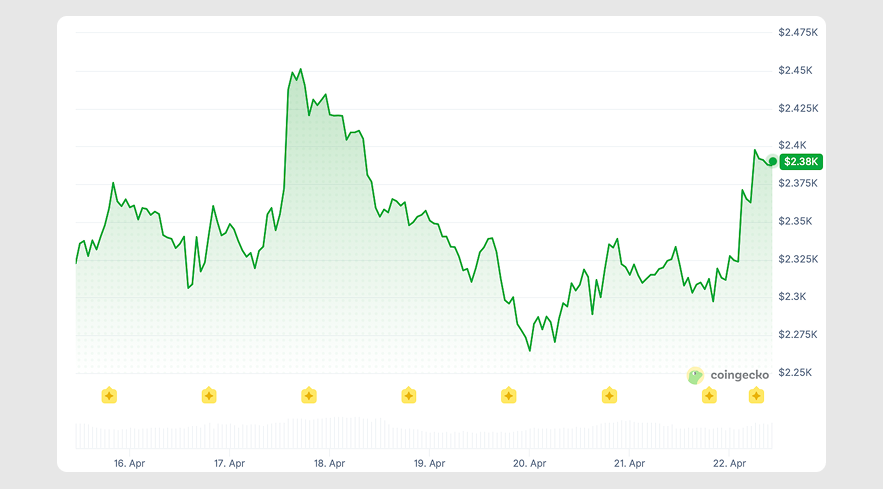
Changing hands at $2,391.08, ETH is up 3.0% over the past 24 hours and 2.7% over the past week.
Seven-day altcoin dynamics
Sentiment is brightening after President Trump's decision to extend the Iran ceasefire, supporting a broader risk-on shift. Bitcoin's surge past $78k unleashed $418 million in liquidations and pushed the total crypto market cap to $2.7 trillion.
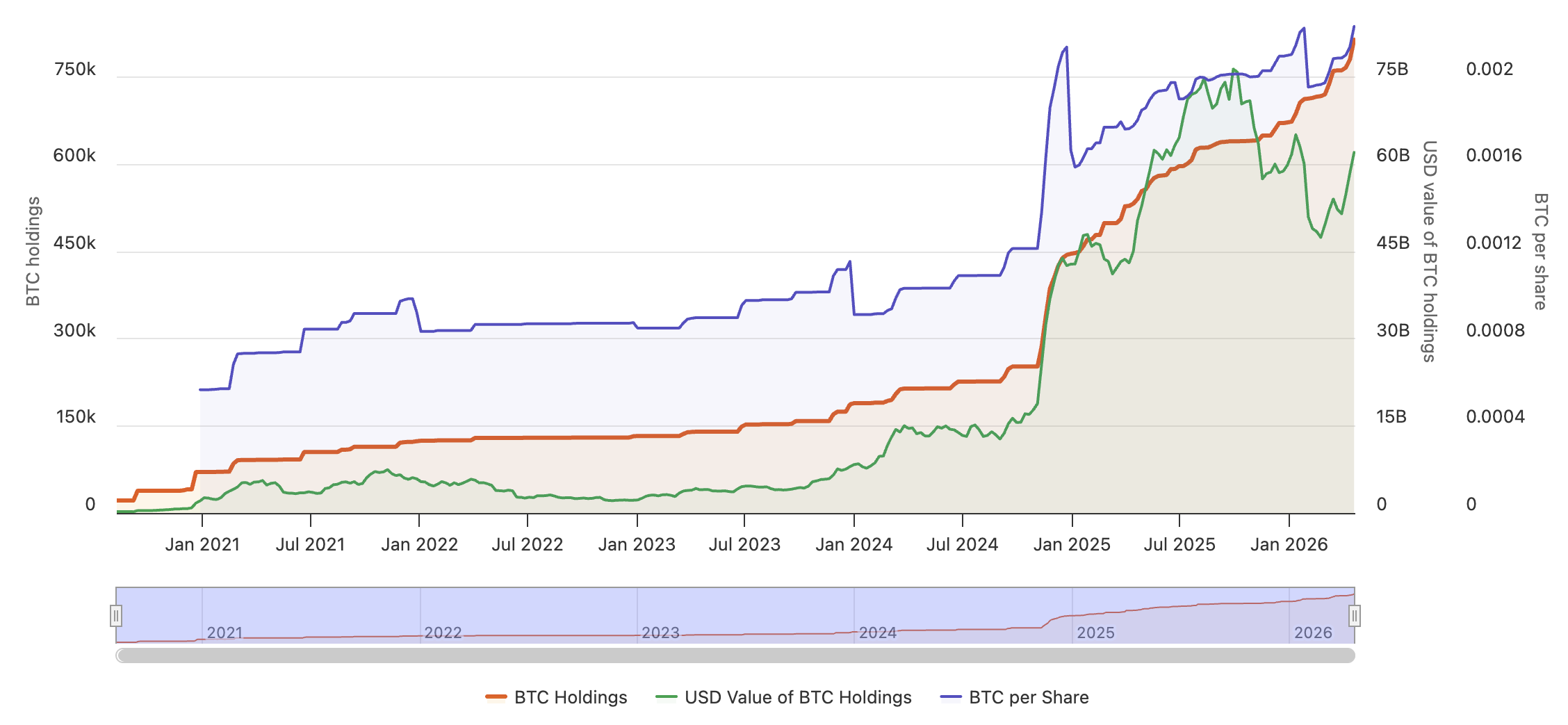
Meanwhile, Strategy's $2.54 billion purchase of 34,164 BTC made it the world's largest institutional BTC holder for the first time since Q2 2024 — with treasury holdings edging past BlackRock's iShares Bitcoin Trust (815,061 BTC vs. 806,178.4 BTC).
Yet beneath Bitcoin's jump past $78k lies a more fragile picture. The Altcoin Season Index has tumbled back to 36/100, a clear sign of waning altcoin momentum.
Adding to the unease: the $290 million KelpDAO exploit — this year's largest crypto heist so far. North Korea's Lazarus Group is suspected of orchestrating the attack last weekend.
US-Iran ceasefire prolonged
On April 22, President Trump announced an extension of the Iran ceasefire despite previously saying he wouldn't move the deadline. The blockade of Iranian ports will stay in place until Tehran submits a proposal for talks, and "discussions are concluded, one way or the other."
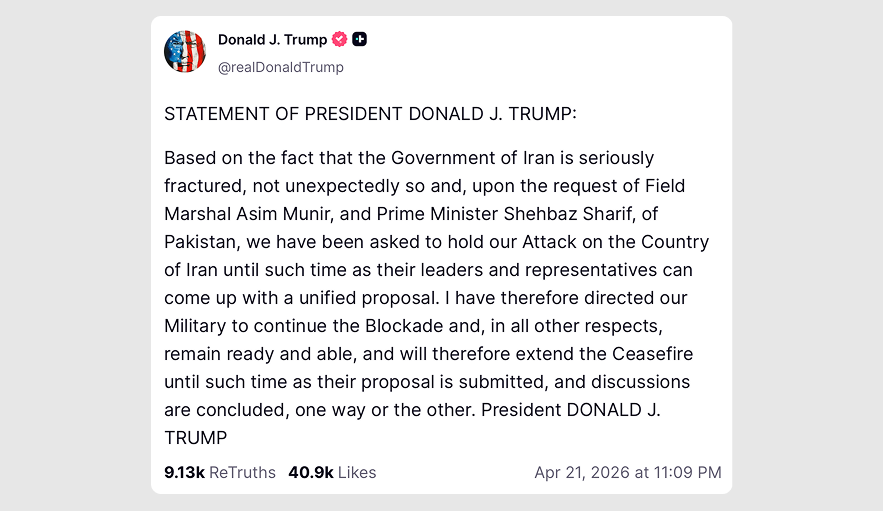
The post reduced immediate geopolitical pressure on markets. Earlier, Trump had threatened to resume bombing Iranian infrastructure. The broader crypto market drifted higher, but trading remained jittery, reactive to every headline.
Fed nominee hearing dims easing hopes
On April 21, crypto prices sagged as Fed Chair nominee Kevin Warsh pushed back on speculation about political pressure on rate decisions. Speaking at his confirmation hearing before the Senate Banking Committee, Warsh stressed the importance of central bank independence, dampening expectations of near-term rate cuts.
Since retaking office in 2025, Donald Trump has repeatedly clashed with the Fed for refusing to approve rate cuts — to the point of calling current chair Jerome Powell a "jerk" and "a stubborn MORON." Responding to Senator Elizabeth Warren's suggestion that he would be a "sock puppet" for Trump, Warsh said,
“Monetary policy independence is essential. Monetary policymakers must act in the nation’s interest . . . their decisions the product of analytic rigour, meaningful deliberation, and unclouded decision-making.”
Top weekly winners
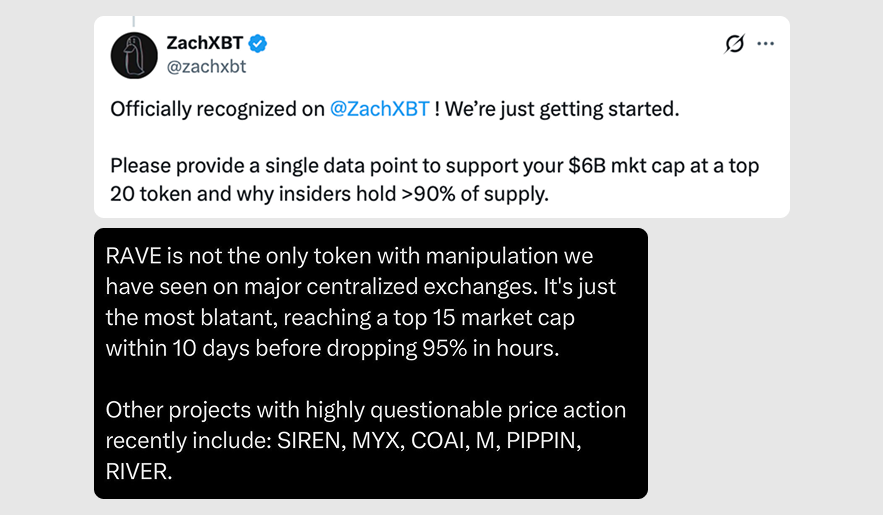
- M (+51.3%) soared despite allegations from on-chain investigator ZachXBT, who accused the team of insider trading on Kraken. Bubblemaps data suggests a significant supply is held by a few large — likely insider — wallets.
- XLM (+15.3%) has tagged along with BTC's run, supported by massive whale orders under mostly neutral conditions, pointing to a bullish outlook.
- ENA (+14.6%) is getting a lift from whale accumulation and the recent integration of Ethena's synthetic dollar, USDe, into Singapore Gulf Bank's institutional settlement platform. A proposal to back USDe with tokenized gold assets like PAXG has also burnished the network's appeal.
Top weekly losers
- WLD (-11.9%) continues its downward spiral since the start of the year, possibly due to a "sell the news" reaction. Reports of Worldcoin's recent deals with Zoom, DocuSign, and Tinder came as it unveiled "full-stack proof of human" infrastructure — a major upgrade to World ID.
- ZEC (-10.6%) extended its slide amid declining retail interest and growing short positions. Profit-taking after last week's sharp rally is likely behind the latest sell-off.
- HYPE (-9.5%) saw a whale unload $8.15 million worth of tokens after the price fell from $45 to a local low of $40 in a broader crypto pullback. Based on exchange data, sellers have controlled the market over the past week.
Cryptocurrency news
Tether wins the hack aftermath: USDT flies high as Circle takes a hit
When a major DeFi protocol gets hacked, stablecoins get tested. This time, one emerged looking stronger than the other.
The $285 million exploit of Solana-based Drift Protocol earlier this month has become an unlikely catalyst for Tether's continued dominance over Circle. Since the attack, USDT's market cap has grown 2.1% to nearly $188 billion — an all-time high ahead of USDC's 1.4% growth to $78 billion.
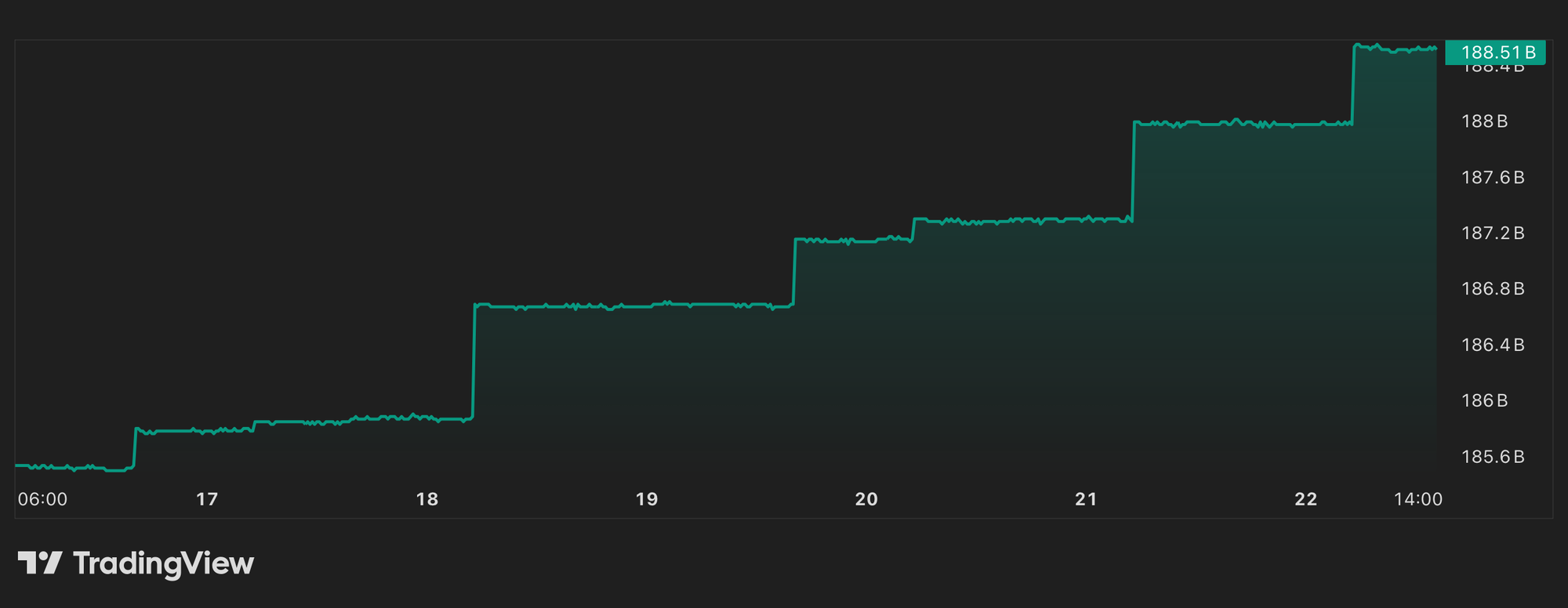
The gap isn't random. When fear spikes, liquidity matters.
"USDT's deeper liquidity across centralized venues provides a more immediate 'flight to safety' path during DeFi stress events," Jake Kennis, senior research analyst at Nansen, told Decrypt. Users fleeing on-chain positions want speed. Tether offers it.
Drift moves off USDC entirely
The most telling signal came from Drift itself. The protocol unveiled a $148 million recovery plan last week — backed by Tether — and announced it will replace USDC with USDT as its settlement layer at relaunch.
Tether is putting up $127.5 million of that package, structured as a revenue-linked credit facility, ecosystem grant, and loans to market makers. The message to the market: we've got your back.
Circle's legal headache
Circle's problems are compounding. The company was hit with a class action lawsuit last week over its alleged failure to freeze funds moving through its infrastructure during the Drift hack. CEO Jeremy Allaire pushed back, arguing that unilaterally freezing user funds opens a "significant moral quandary."
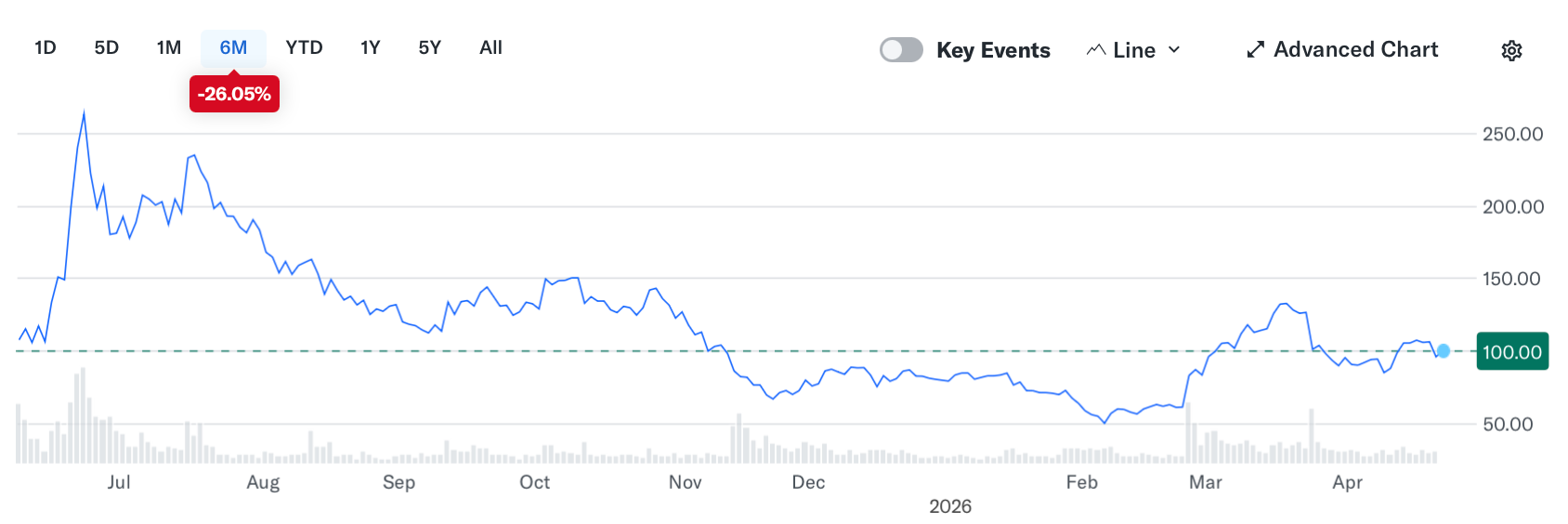
But the market is voting with its feet. Compass Point analysts assigned Circle shares a "Sell" rating with a $77 price target. The stock is trading near $96 at press time, down over 9% on the day.
What it means
Analysts suggest DeFi outflows may push users to offramp USDC or hold it on exchanges with yield-sharing arrangements. Either outcome pressures gross profit for both Circle and Coinbase.
For now, Tether looks like the winner of this stress test. Deeper liquidity, faster response, and a willingness to backstop a major protocol — all while Circle defends itself in court.
DeFi's Lehman moment? Kelp DAO hack triggers a crisis of faith
At $293 million stolen, the Kelp DAO-LayerZero exploit on April 18 ranks as the 10th largest in DeFi history — far smaller than last year's $1.4 billion Bybit heist. Yet the mood is somehow darker.
Across crypto X, developers and investors are posting with a tone that suggests something has cracked. Not just about this hack. About the entire premise of decentralized finance.
"Man, I know DeFi is not fully over, but it feels over," wrote crypto investor Jon Wu. "Not in the normal bear market kind of apathy... in the 'I don't know, maybe atomic composability of arbitrary financial instruments secured by one-of-ones was a mistake' kind of way."
The Solana Foundation's Seraphim Czecker put it even more bluntly: "Feels like DeFi's Lehman moment."
How it happened
The attack exploited a single point of failure — a 1-of-1 verifier configuration. Kelp DAO relied on just one node to check cross-chain messages via LayerZero. The attackers compromised two RPC nodes, then launched a DDoS attack to knock the honest nodes offline.
With the verifier trapped in an echo chamber, they forged a message and walked away with 116,500 rsETH — about 18% of the token's entire circulating supply.
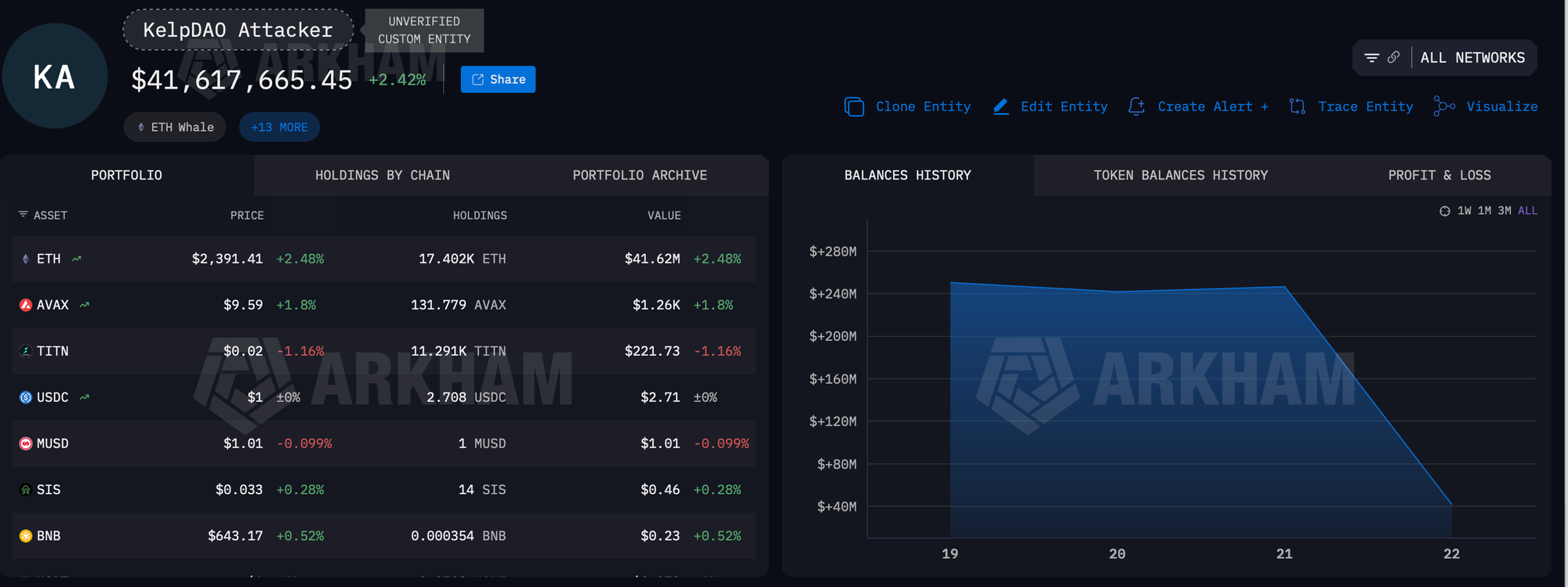
The stolen funds are now moving. Onchain sleuth ZachXBT tracked transfers bridging to Bitcoin via Thorchain and routing through privacy protocols. The patterns resemble North Korea's Lazarus Group.
Arkham Intelligence has identified multiple addresses that received the stolen funds, noting that as "a big chunk of the stolen funds have been frozen, the attacker is actively attempting to bridge the remaining funds into more difficult-to-track territory before further intervention."
Contagion spreads
The damage extends beyond Kelp. The hacker used stolen rsETH as collateral on Aave, SparkLend, and Fluid, leaving the lender holding bad debt. Users have fled — deposits on Aave fell nearly 40% in a week, and it lost its title as the largest DeFi protocol to Lido.
Arbitrum froze $71 million in ether linked to the hack, a rare intervention that underscores how far DeFi is from its permissionless ideals.
The reckoning
Investor Simon Dedic called security "one of the most underfunded and least exciting verticals to work in." He added: "The risk-reward ratio of DeFi simply isn't attractive enough anymore... DeFi was actually supposed to eliminate the risk of a middleman... But it feels like we've achieved the exact opposite."
For a sector built on trustlessness, the irony is brutal. When push comes to shove, users still run. And the technology meant to protect them just failed.