Clapp Weekly: Bitcoin hostage to macro, Ethereum bleeds DeFi TVL, Saylor's credit pivot

BTC price
Bitcoin slipped toward $75k on May 26, held hostage by macro uncertainty. With buyers failing to absorb available supply, the market remains vulnerable. US spot ETFs have seen seven consecutive days of outflows, losing $1.34 billion so far in May — while the coin's three-month uptrend against gold broke down, highlighting a renewed bias for hard assets.
BTC reversed after touching $78k, sliding into a sell-off that culminated in a low of $74,051.45 on May 23. Rebounding, the coin reclaimed $77k the next day and briefly climbed above $77.6k on May 25 before losing momentum again.
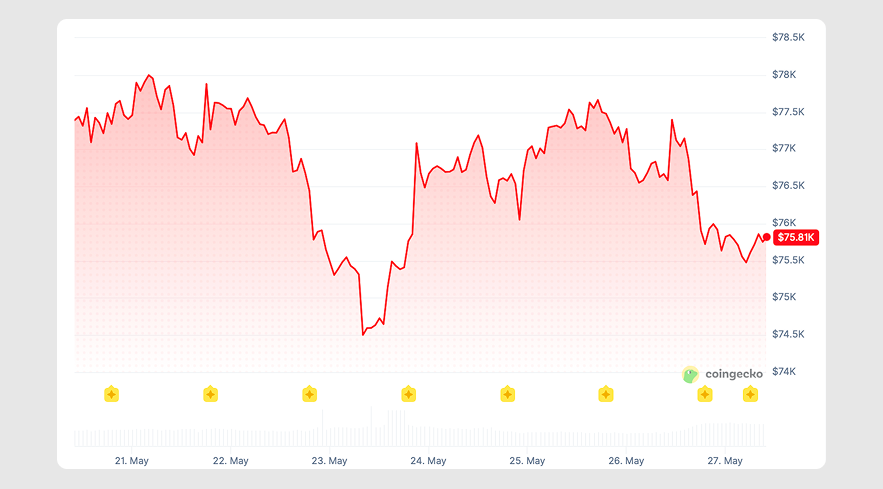
After recovering from a low near $75.5k, BTC is currently trading at $75,834.26, down 1.0% over the past 24 hours and 2.0% on the week.
ETH price
Ether has been more vulnerable than Bitcoin as higher-beta assets usually weaken faster amid tightening global liquidity. Meanwhile, spot ETH ETFs have bled capital for 11 straight sessions, totalling $334.47 million. However, BitMine bought almost 112,000 ETH (around $237 million) in its largest ether acquisition yet this year — just weeks after saying it might slow down the buys.
Mirroring BTC’s price volatility, ETH lost its grip on $2.1k on May 22 before plunging to $2,025.15 the following day and snapping back. The rebound faded near $2,125, with ETH eventually drifting back toward the $2k mark.
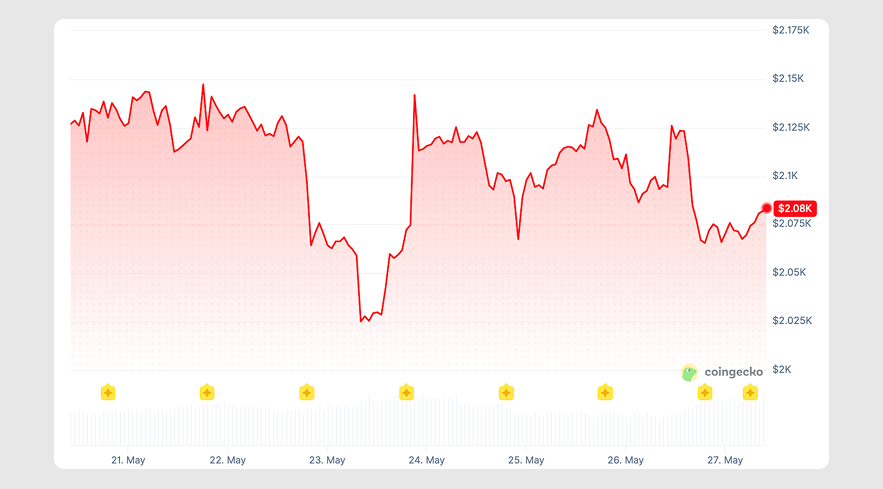
After a modest recovery, ETH is now trading at $2,083.19, down 0.5% over the past 24 hours and 2.2% over the past seven days.
Seven-day altcoin dynamics
Crypto has entered a fragile, liquidity-starved phase as renewed geopolitical stress fuels institutional caution. Sentiment has slipped back into "Extreme Fear" (25/100) after briefly edging up for two days.
US-Iran turmoil continues
Fresh US strikes on Iran have cast a shadow over Trump's promised peace deal. On May 25, the US military announced it had carried out "self-defense" strikes after Iran deployed mine-laying boats in the Strait of Hormuz and flew attack drones near American ships.
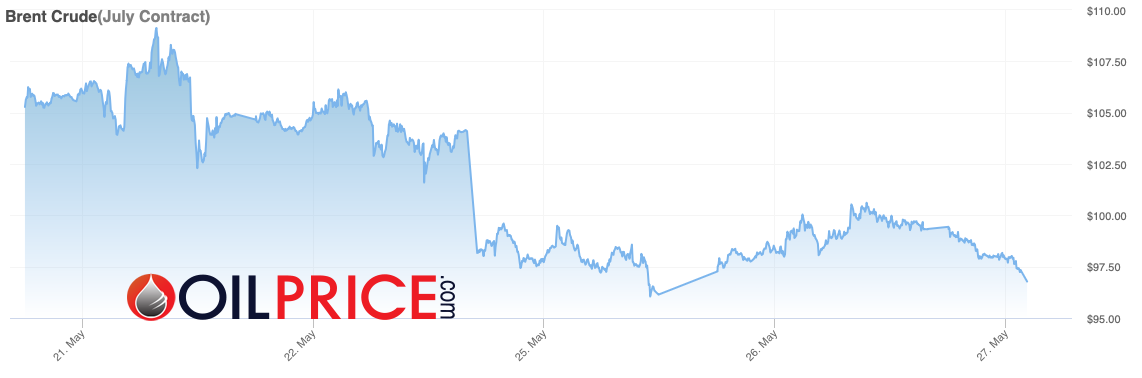
Iran’s Revolutionary Guards Corps (IRGC) fired back with a stern verbal warning, vowing the right to retaliate. Global oil prices roared back toward $100 a barrel as instability intensified. At press time, Brent is trading close to $98 per barrel, easing slightly.
HYPE ETFs shine
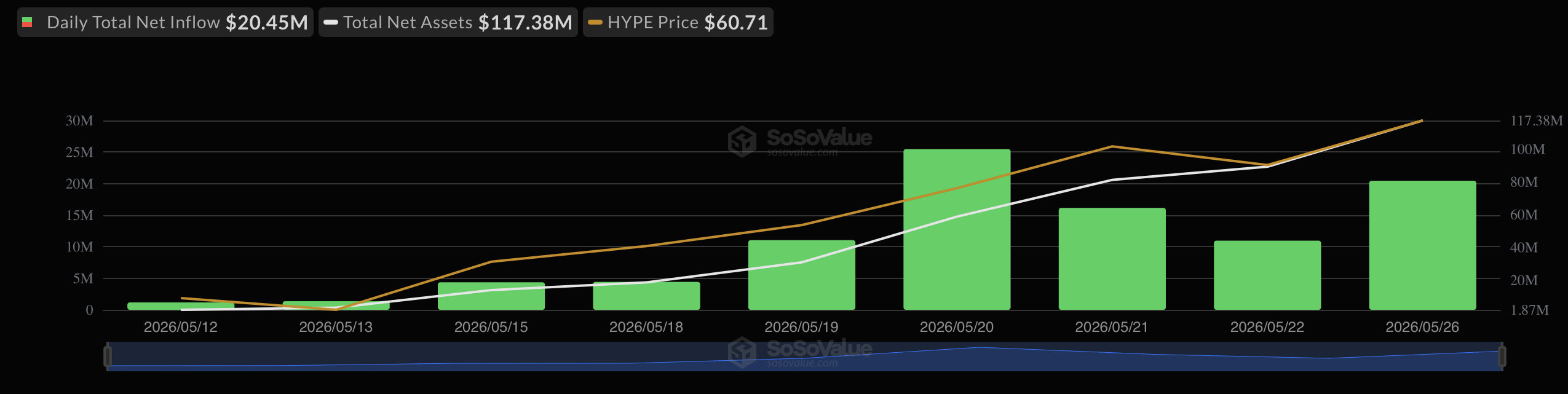
In stark contrast to Bitcoin and ether counterparts, Hyperliquid ETFs posted an 8-day inflow streak as the network’s HYPE token hit a new all-time high on May 24. Two products collectively added $10.95 million on May 25, following an $25.5 million inflow last week.
The gap reveals a growing split in big-player sentiment. Macro uncertainty is driving legacy crypto funds to shed capital; meanwhile, newer ETFs tied to high-growth infrastructure continue attracting inflows.
Altcoin Index reflects broad de-risking
The CMC Altcoin Season Index fell 7.89% over the past week to 35, pointing to capital rotation out of altcoins and into Bitcoin or cash. This risk-off shift within crypto is amplifying selling pressure on tokens during broader downturns.
Market braces for US inflation data
On May 28, the Bureau of Economic Analysis will release April PCE data. The Fed's preferred inflation gauge came in well above target in March — and economists expect another jump driven by rising oil prices.
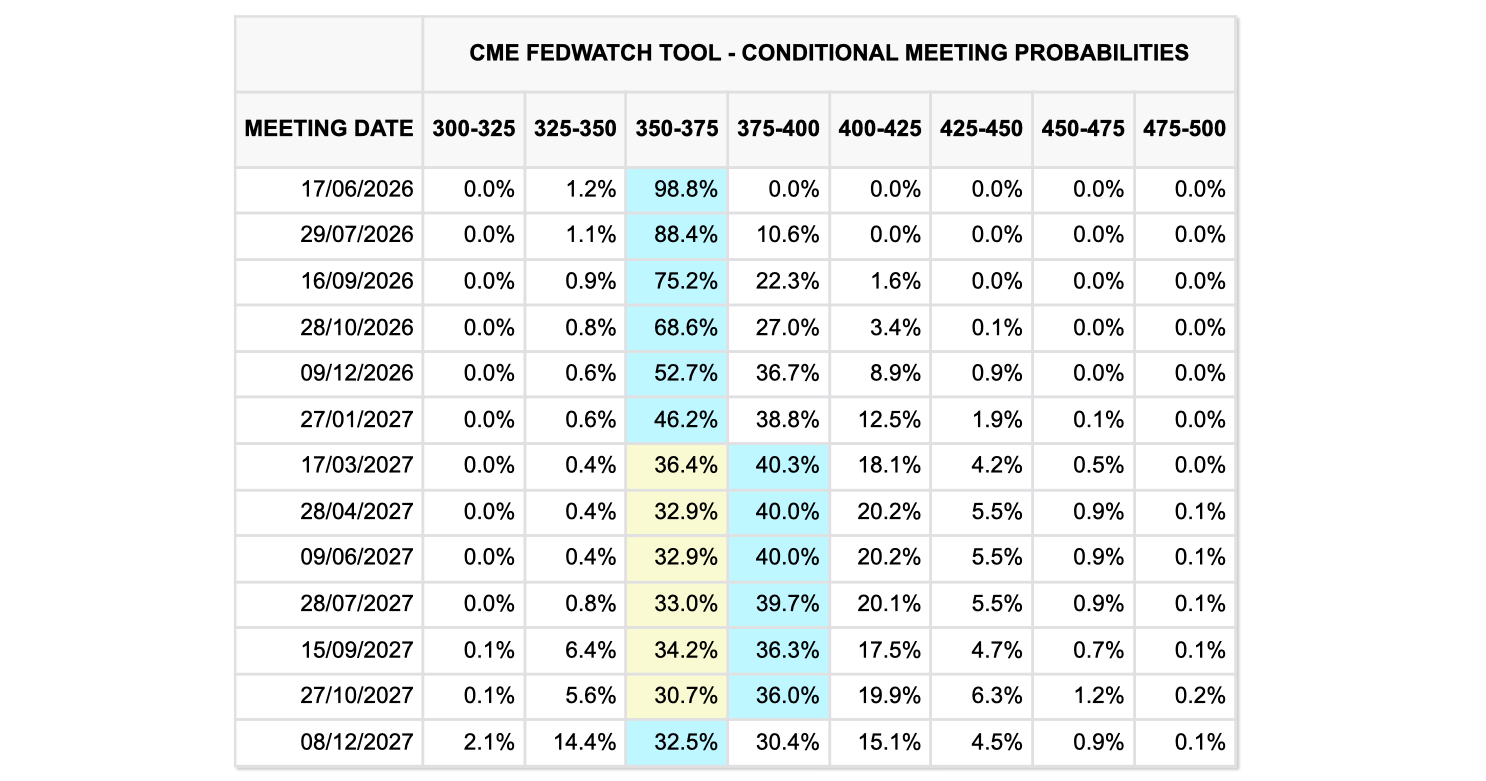
This report is the final major macro release before the FOMC meeting on June 16–17. Month-over-month growth above 0.3% could erase market hopes for a rate cut this year — currently, just 33% of Polymarket users expect a Fed rate cut by December, while CME FedWatch probabilities rule it out until March 2027.
Markets will also watch for signals from new Fed Chair Kevin Warsh, who took office on May 22. Softer inflation and hints at earlier easing could boost crypto. Hotter figures, especially if combined with a stronger Q1 GDP reading (also May 28), would reinforce a higher-for-longer rate view.
CLARITY Act optimism dims
According to investment bank TD Cowen, the crypto market structure bill is becoming less likely to pass this year. The political climate around the legislation is deteriorating, while major hurdles remain, particularly around conflict-of-interest provisions.
The issues include a recently settled legal case between Trump and the IRS, and a New York Times investigation into how prediction markets and crypto interests pushed their agenda with the CFTC.
Top weekly winners
- NEAR (+56.8%) extended its month-long rally as NEAR Intents, the cross-chain system that has processed over $19 billion in volume, unveiled $32 million in generated fees. Investors are also eyeing a June network upgrade with dynamic resharding that should further boost scalability.
- RAIN (+54.9%) is riding a $100 million liquidity commitment ahead of its V2 launch and the FIFA World Cup cycle, helping propel it into the world’s top three prediction markets by TVL. The initiative is designed to deepen liquidity and scale infrastructure.
- WLD (+54.9%) is powered by the integration of Oku Trade into World App, introducing structured trading user incentives in the form of weekly swap competitions where participants can earn up to 100 WLD.

Top weekly losers
- M (-13.1%) keeps struggling after a dramatic plunge on May 21, driven by a rotation of speculative capital out of the memecoin sector.
- BCH (-7.7%) got left behind as traders rotated away from underperforming alts into BTC itself. The newly introduced ARMA Act, proposing to enshrine a strategic Bitcoin reserve into law under the US Treasury, added to the case.
- ALGO (-7.4%) is moving in lockstep with a cautious crypto market, reflecting a beta-driven sell-off; Bitcoin's potential break below $75k could intensify selling pressure on such alts.
Cryptocurrency news
Strategy just burned through its cash — but didn't touch its Bitcoin
Michael Saylor built Strategy into the world's largest corporate Bitcoin holder on a simple promise: buy, hold, never sell. Last week, that promise got its first real test.
The company slashed its dedicated cash reserves by 61% — from $2.25 billion to $871 million — to repurchase $1.5 billion in convertible notes. The move left Strategy with fewer funds on hand to pay preferred stockholders, but its 843,738 BTC stash remained untouched.
For months, the market had been bracing for worse. On the prediction platform Myriad, traders had priced in an 85% chance that Strategy would sell Bitcoin this year. After the announcement, that probability dropped to 71%.
"The company has gone a long way toward putting to bed any lingering questions around its ongoing access to capital markets," TD Cowen analysts wrote when Strategy first built up its cash buffer back in December.
From buyer to builder
Saylor's ambitions have evolved far beyond simply stacking sats. In a recent interview, he described Strategy's transformation from a corporate treasury experiment into something closer to a financial engineering lab.
"We became the biggest issuer of convertible bonds in the world," he said. "Then we outgrew that market."
The company now issues a preferred stock called "Stretch" (STRC), which offers an 11.5% annual dividend paid monthly. That yield has ballooned to a market cap of $10.4 billion, creating roughly $1.71 billion in yearly obligations.

Saylor's vision is simple: treat Bitcoin as "digital capital" — a block of pure economic energy that can be carved up into different products for different investors.
"Bitcoin is digital capital," he said. "You have a block of pure digital economic energy. You can carve out anything you want from that, just like a barrel of crude oil."
The bigger game
Saylor isn't thinking small. He estimates the global credit market at roughly $300 trillion. His goal: turn Bitcoin into a yield-generating machine that rivals traditional fixed income.
"For every dollar of digital capital we have, we can create 10 to 20 cents of credit," he said.
So far, Strategy has issued $8.2 billion in such instruments. Scaling beyond that depends on three things: continued access to capital markets, sustained demand for yield, and Bitcoin continuing to appreciate.
Everything else flows from that.
"I'm the Colonel Sanders of crypto," Saylor said. "At least I found a mission at some point in my life."
The mission: drive Bitcoin into the millions, expand the capital network to $100 trillion, and create trillions in digital credit.
DeFi TVL slides 14% — and Ethereum is feeling every bit of it
Five weeks after the KelpDAO exploit, DeFi still hasn't healed.
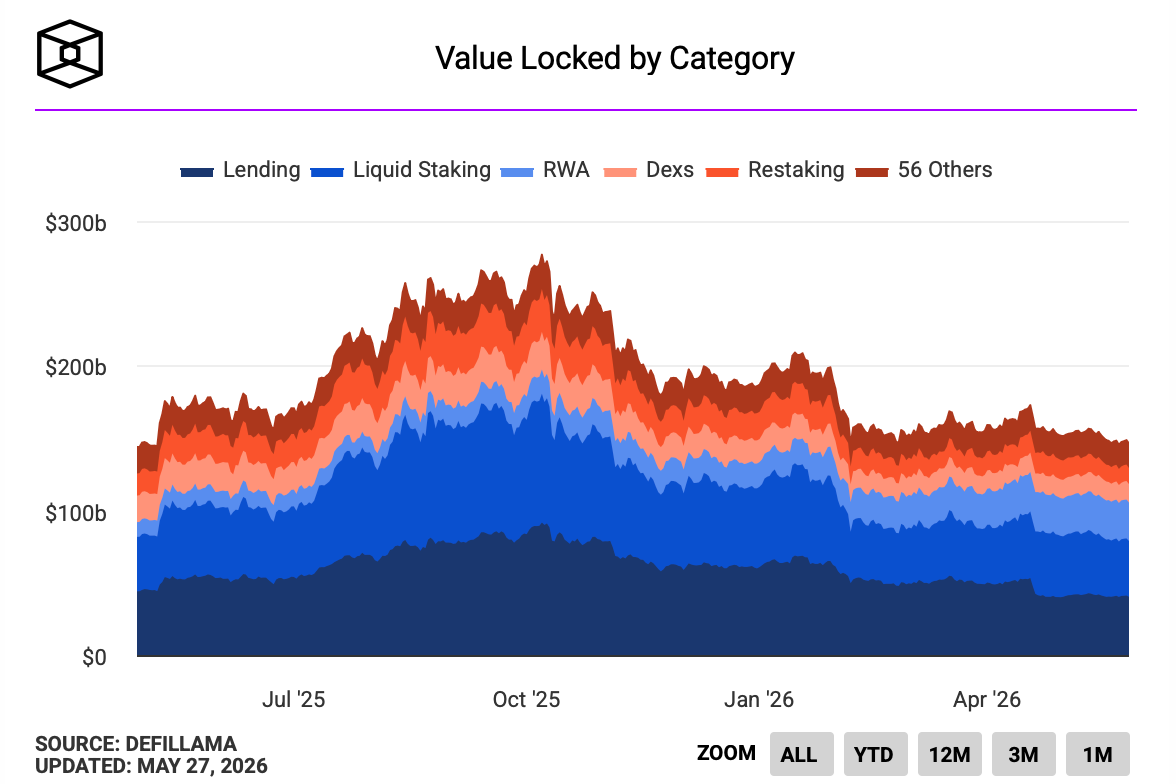
Total value locked across the sector has fallen roughly 14% since mid-April, dropping from $172 billion to $148 billion. The outflow isn't just a technical re-rating of specific protocols. It's a broader withdrawal of marginal capital, and users who exited after the hack largely haven't returned.
The KelpDAO attack, which stole roughly $292 million through compromised off-chain infrastructure rather than a smart contract bug, exposed a vulnerability that existing monitoring frameworks are still catching up to.
DeFi's largest category — lending — has taken the hardest hit, sliding from $53 billion to $40 billion.
Ethereum's inverted cup
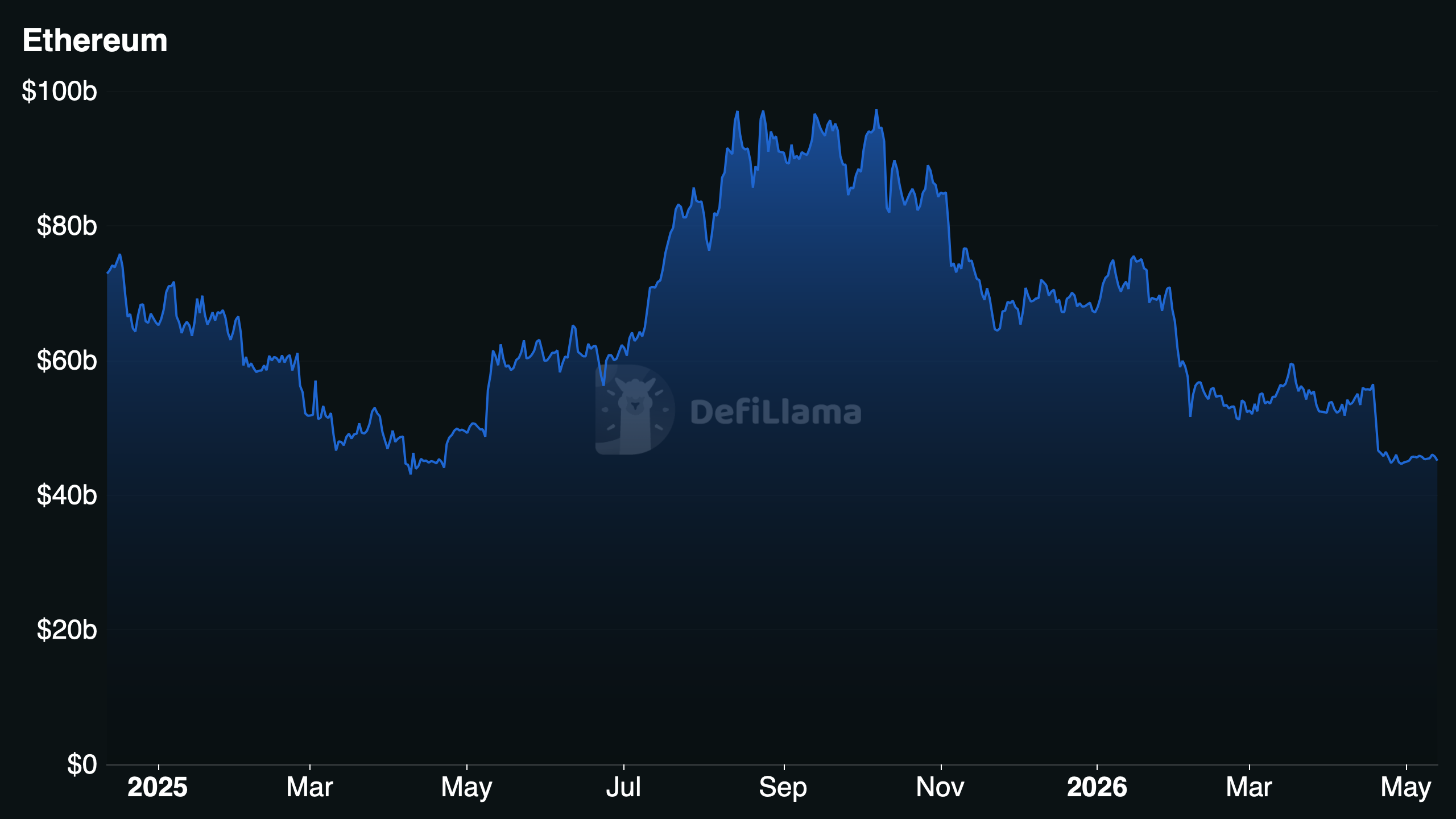
Ethereum's price has mirrored the bleeding. Since January 15, the network's DeFi TVL has fallen from $106.7 billion to $63 billion — a drop of nearly 41% in just four months.
Bitcoin is actually up 2% month-on-month. Ethereum is down 8%. That 10% lag is the DeFi TVL collapse showing up in the price.
Mid-term holders are bailing
Glassnode's HODL Waves data tells the same story. The 3-month to 6-month holder cohort has dropped from 18.63% of total ETH supply on April 7 to just 12.73% as of May 18.
That matters because these are mid-term holders — typically a steadier base than short-term speculators. Their decision to spend or not rebuild their positions suggests a loss of conviction tied directly to DeFi's struggles.
What this means for DeFi investors
For now, the drop in TVL signals a temporary erosion of trust — especially in lending protocols, which are highly sensitive to security events. The KelpDAO exploit wasn't a smart contract failure, but an off-chain infrastructure breach, a reminder that "audited" doesn't mean invincible.
For retail and institutional investors alike, the incident underscores the importance of due diligence: protocol audits, insurance coverage, and risk management frameworks matter more than ever. That said, DeFi has historically rebounded from similar shocks.
The current decline could be an entry point for investors with a longer time horizon, offering a chance to accumulate beaten-down protocols while others flee.