Clapp Weekly: Iran tensions bite, SEC's 'safe harbor,' Strategy sells 3,588 BTC

BTC price
Bitcoin slipped back toward $62k as renewed US-Iran tensions and a tech sell-off overshadowed the boost from weak US jobs data. After climbing to $64,660 — its highest level since June 22 — BTC reversed in tandem with a slump in US equity indexes. Institutional demand, however, remains resilient: US spot Bitcoin ETFs recorded three consecutive days of net inflows, building on the $221.7 million that snapped a ten-day outflow streak on July 2.
Rebounding from around $58.3k on July 1, the BTC price climbed steadily toward $64k by July 6 before momentum stalled. The coin briefly pulled back to roughly $61.5k, then quickly rebounded to a seven-day high of $64,433.66 the following day. From there, BTC surrendered its gains as macro headwinds returned.
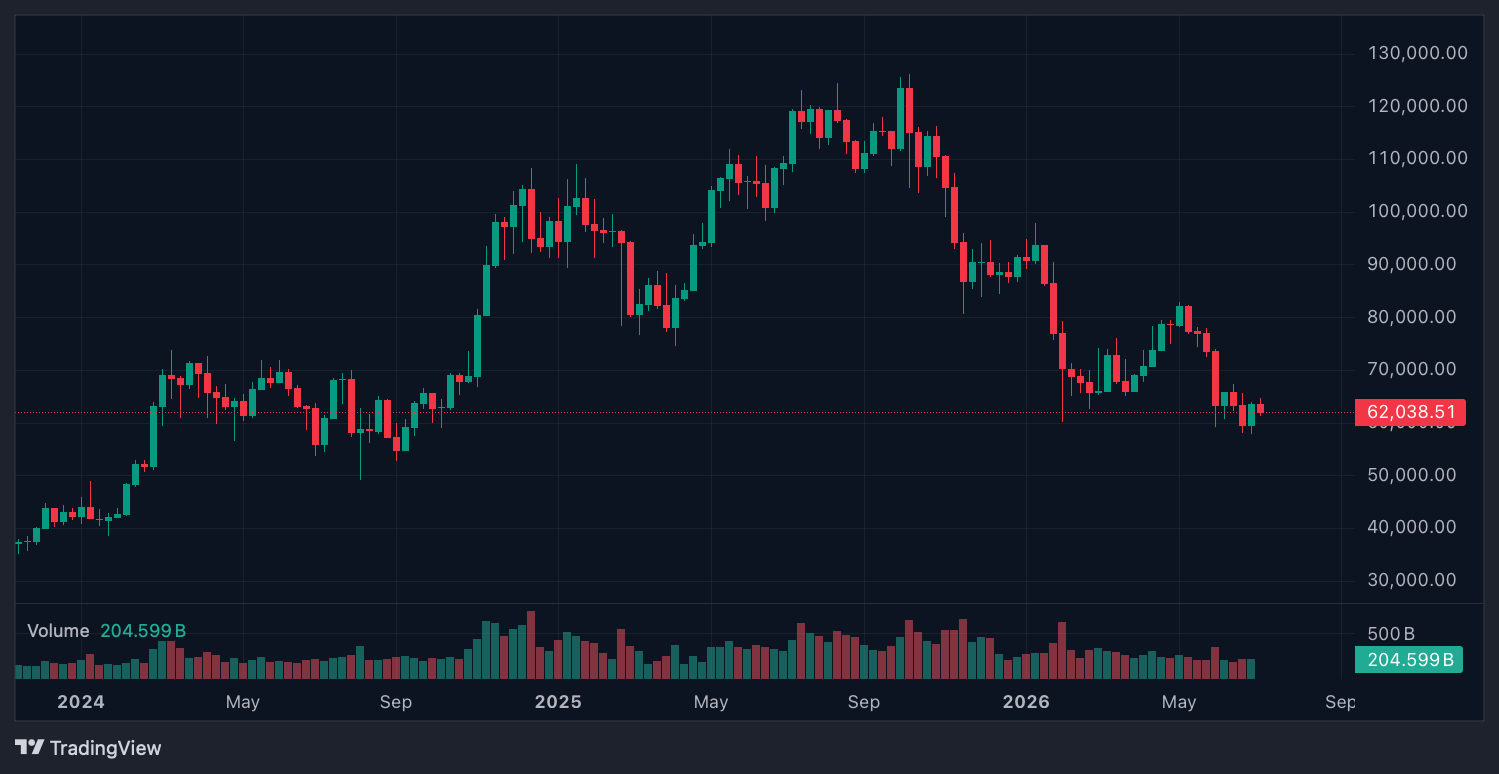
Currently trading at $62,022.52, BTC is down 2.27% over the past 24 hours but remains up 5.33% on the week.
ETH price
Ether outperformed Bitcoin on the back of development updates and continued corporate accumulation. On July 7, Vitalik Buterin unveiled the Lean Ethereum roadmap, sparking a sharp rally that lifted ETH more than 12% within hours. Meanwhile, BitMine added another 40,000 ETH (about $71.6 million), bringing its holdings to 5.74 million ETH — roughly 4.8% of the circulating supply.
Recovering from a low of $1,574.90, ETH climbed toward $1.8k on July 4 and briefly broke above the level on July 7, peaking at $1,822.12 before gradually giving back some gains. It has since tracked Bitcoin lower amid renewed macro pressure.
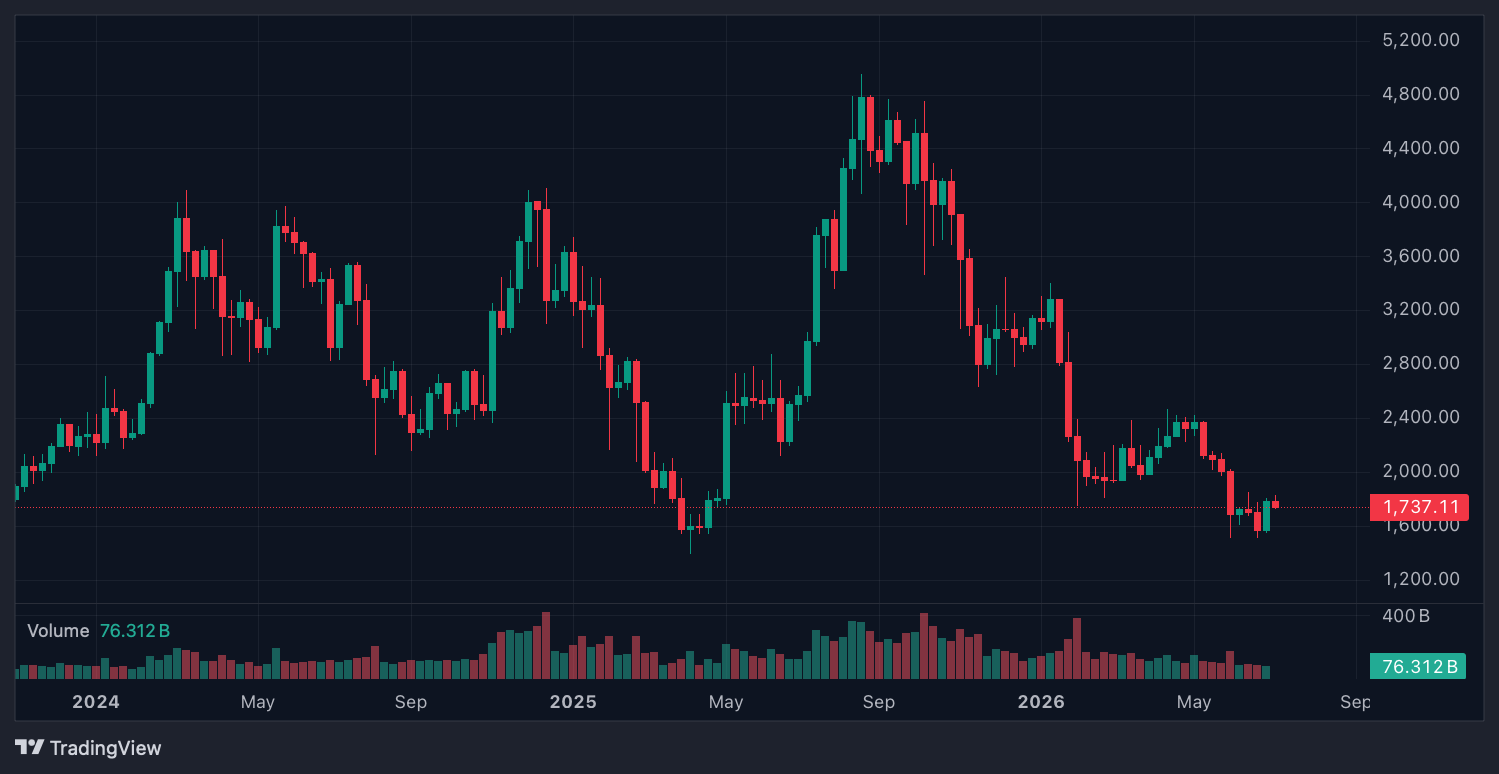
Currently trading at $1,736.38, ETH is down 2.27% over the past 24 hours but remains up 10.02% over the past seven days.
Seven-day altcoin dynamics
Resurgent US-Iran airstrikes dragged sentiment back into Extreme Fear (20/100), erasing the optimism sparked by weaker-than-expected US jobs data. Major tokens slid into the red as oil prices surged, with September Brent jumping from $72 to $76 per barrel within hours.
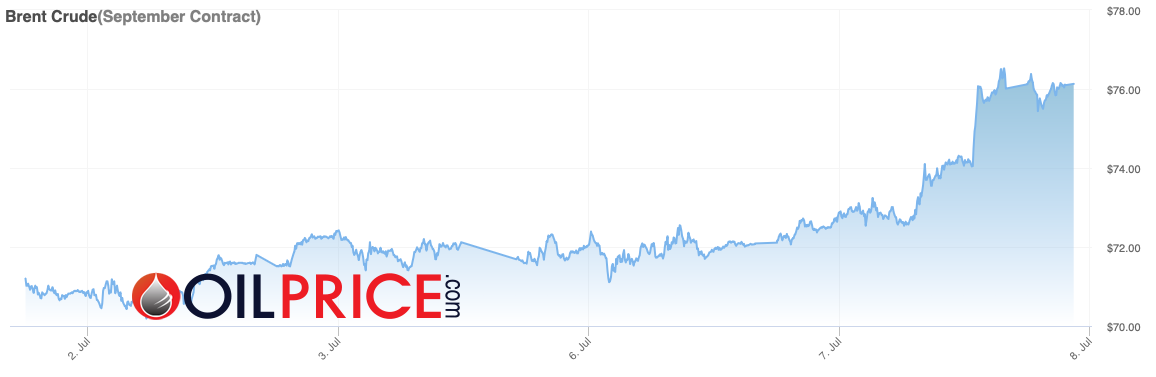
The US resumed strikes early on July 8, claiming Tehran had attacked three ships in the Strait of Hormuz, including Saudi and Qatari tankers. Washington also reimposed sanctions on Iranian oil exports. Iran responded by targeting 85 US military installations.
The re-escalation raises the risk that the two countries' interim agreement could unravel, reigniting fears of a broader Middle East conflict. Markets quickly shifted back into risk-off mode, as higher oil prices fueled concerns over inflation and renewed speculation about additional Fed rate hikes ahead of today's release of the June FOMC meeting minutes.
Fed minutes in focus after weak jobs report
The June jobs report showed just 57,000 new nonfarm payrolls — half the consensus forecast of 114,000 — while April and May payrolls were revised down by a combined 74,000. The weaker-than-expected data helped Bitcoin rally more than 11% before renewed geopolitical tensions reversed the move.
Traders are now looking to the minutes from the Fed's June 16–17 policy meeting, due today at 2 PM ET, for clues about September's rate decision. However, they may offer fewer insights than usual: Chair Kevin Warsh withheld his own rate projections this cycle.
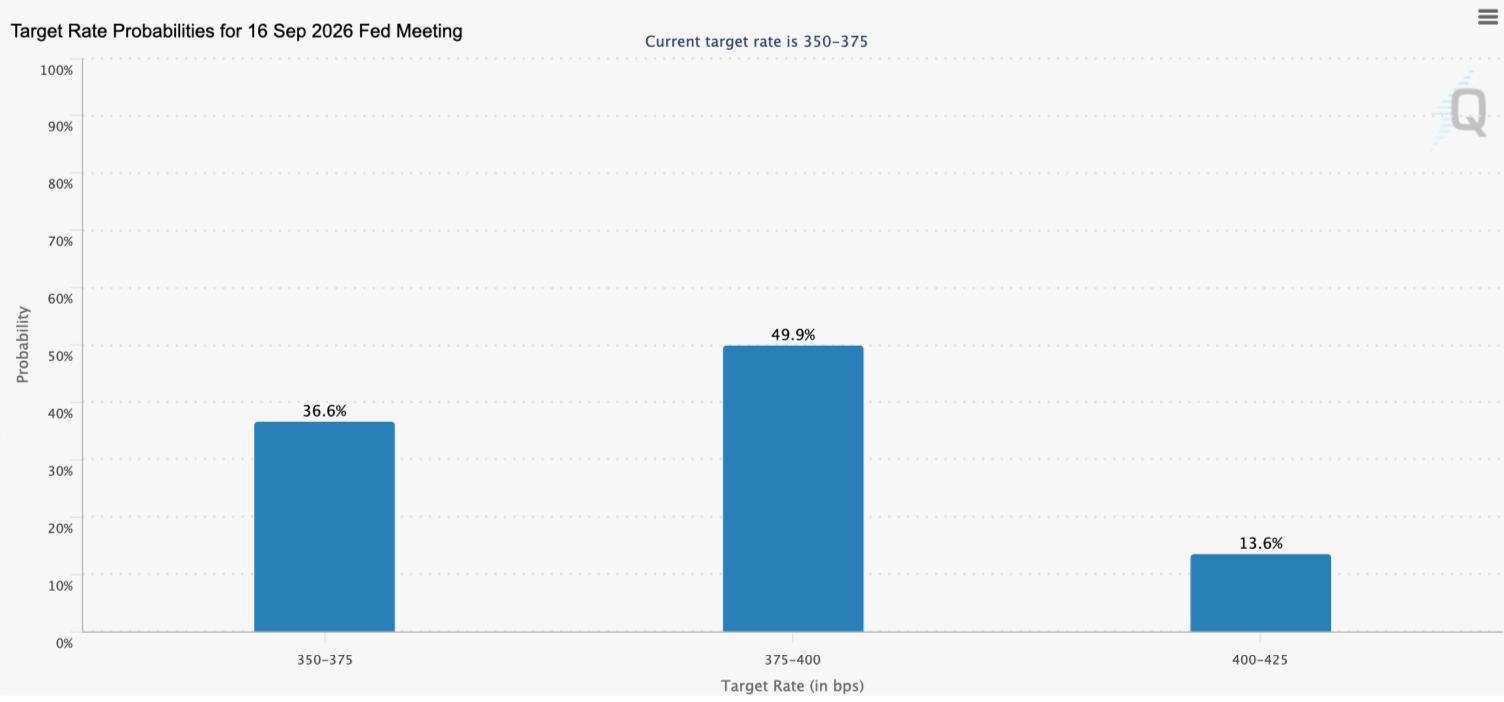
The FOMC left rates unchanged at 3.50%–3.75%, marking a fourth consecutive pause. Half of policymakers still projected at least one rate hike this year. Since the weaker jobs report arrived after the meeting, however, any hawkish tone in the minutes may carry less weight than usual.
At press time, CME FedWatch assigns nearly a 64% probability to either a 25- or 50-basis-point rate hike at the September 16 meeting.
AI trade cools off
Weeks after SpaceX's record-breaking IPO turbocharged AI stocks and related cryptocurrencies, the rally is showing signs of fatigue. Investors are beginning to question whether the torrid pace of spending on chips and data centers is sustainable. Some fear hyperscalers could slow AI infrastructure investment.
Despite reporting record Q2 profit, Samsung shares fell nearly 7% after the results. Rival SK Hynix has also retreated roughly 25% from its all-time high ahead of its US listing this week. Earlier this year, the AI infrastructure boom sent SanDisk soaring more than 525%, while Micron more than doubled.
For crypto, however, a cooling AI trade could prove supportive: if enthusiasm for AI equities continues to fade, some capital may rotate back into digital assets.
Top weekly winners
- M (+92.5%) rebounded after losing more than 80% of its value in late June. Buyers returned following security updates and broader market stabilization, while a short squeeze accelerated the recovery. The team also addressed concerns over insider activity and alleged price manipulation.
- LIT (+28.0%) rallied after its Q2 Investor Update Call, where the team announced that future buybacks funded by 100% of exchange revenue would be permanently burned. The platform also programmatically repurchased roughly 15.5 million LIT during the second quarter.
- DEXE (+27.7%) extended its rally on the back of a technical breakout, record whale activity, and a short squeeze that liquidated roughly $390,000 in bearish positions within 24 hours on July 7. The protocol's growing role in AI and DAO infrastructure further supported the move.
Top weekly losers
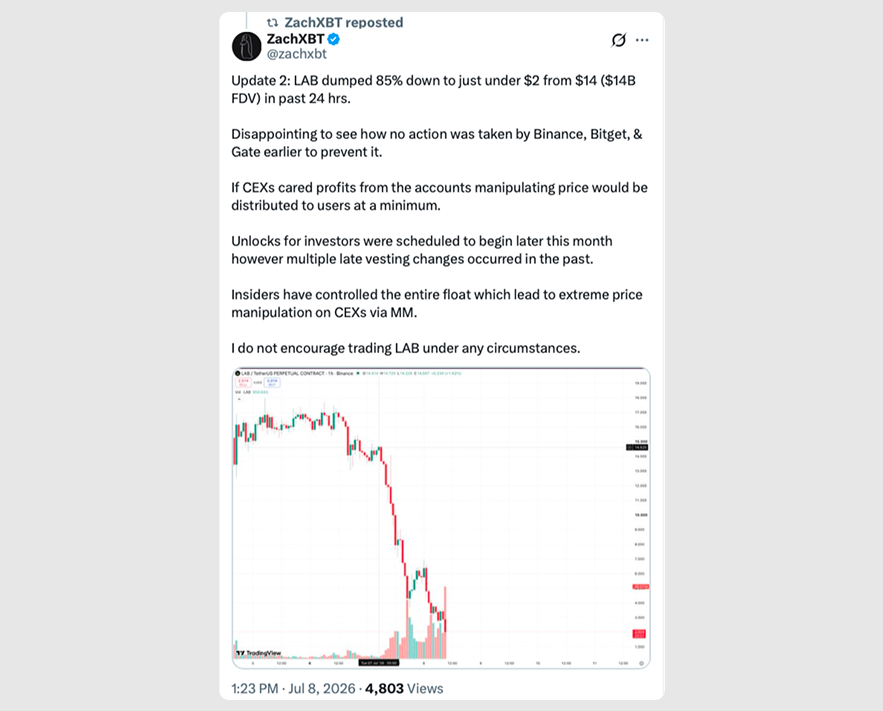
- LAB (-67.4%) plunged nearly 70% in a single day as allegations resurfaced that insiders control more than 95% of the token supply, reigniting concerns over tokenomics, liquidity, and potential market manipulation. The sell-off snowballed into a wave of panic selling and leveraged long liquidations.
- BEAT (-18.5%) entered a consolidation phase as traders locked in profits following a 793% rally over the past 90 days. Falling trading volume points to cooling momentum, suggesting the market is digesting recent gains rather than signaling a broader trend reversal.
- STABLE (-10.5%) remained under pressure amid thin liquidity and selling tied to today's unlock of 888.8 million tokens (0.89% of total supply). An 83% drop in trading volume suggests fresh capital inflows remain scarce.
Cryptocurrency news
SEC set to unveil crypto safe harbor as soon as this month
The Securities and Exchange Commission's updated agenda shows the long-awaited "Regulation Crypto" proposal could drop as soon as this month. The proposal would establish temporary exemptions and safe harbors for certain crypto activities, giving companies a clear guarantee that they won't face enforcement action for experimenting in areas like tokenized securities and DeFi.
The update marks the clearest indication yet that the SEC is preparing to formally unveil its proposal, which Atkins initially said would be rolled out back in January.
What's in it
Atkins previously outlined three key pillars.
- Startups worth up to $5 million seeking to experiment with crypto assets in their first four years could qualify for exemptions.
- Entrepreneurs raising up to $75 million via investment contracts could also benefit.
- Certain crypto assets could receive safe harbor status once their creators have ceased all essential managerial efforts — essentially allowing them to become more decentralized without regulatory risk.
"To deliver on President Trump's goal to ensure that the United States is the crypto capital of the world, we are embracing innovation to bring more products onshore, creating clear rules of the road for capital raising with crypto assets," Atkins said in a statement on July 7.
Why now
The timing matters. The CLARITY Act has been stuck in Congress for months — and it's just missed its July 4 signing target. If it doesn't pass by August, stakeholders agree it's unlikely to become law this year due to the looming November midterms. The SEC's rulemaking could fill some of that void — providing clarity that the legislative branch has failed to deliver.
The proposal is still under review at the White House Office of Information and Regulatory Affairs. But the updated SEC agenda has it penciled in for July, meaning we could see a draft within weeks.
This would be the first major crypto-specific rulemaking under Atkins' leadership. Unlike staff statements or guidance, a full rule carries legal weight — and won't be as easily undone when future leaders arrive with different agendas.
For an industry that has spent years begging for clarity, the safe harbor can't come soon enough. Whether it actually arrives this month — or slips further — will be the next test.
Strategy sold Bitcoin again, but Grayscale says that's a good thing
Strategy disclosed Monday that it sold 3,588 Bitcoin for roughly $216 million between June 29 and July 5 — about one hundred times larger than the 32-coin sale in late May that had the market on edge. Furthermore, it took a 20% loss to pay dividends.
The sale barely dents the stack — the firm still holds 843,775 BTC — about 4.2% of all Bitcoin that will ever exist. But the change in direction matters far more than the size of the sale. The company sold at average prices near $59,256 and $60,773, against an average purchase cost of $75,476.

A covenant ends
Strategy's annual dividend load across its preferred stock complex is roughly $1.5 billion. The company's software business generates only a fraction of that. For years, it covered the gap by issuing new securities. But with Bitcoin grinding to 21-month lows near $57,750 in June and record ETF outflows draining demand, the issuance window slammed shut.
The company had two choices: sell coins or break its promise. It chose the former.
The sale executed under the Digital Credit Capital Framework unveiled on June 29 — a formal shift from passive accumulator to active capital manager. The framework authorizes BTC monetization to fund the company's USD Reserve, support preferred dividends, and finance up to $2 billion in stock buybacks.
Grayscale's take
Zach Pandl, Grayscale's head of research, sees the move as a net positive.
"On the surface there is nothing wrong with Strategy's balance sheet. The company owns ~$52 billion worth of Bitcoin and has just ~$7 billion worth of debt. Its annual dividend obligations on its preferred equities are less than $2 billion. Strategy clearly has sufficient financial resources to service its debt and dividend obligations."
Following the sale, Strategy's cash reserves stand at about $2.55 billion — enough to cover roughly 17 months of dividend payments.
"Strategy is selling more bitcoin. But this will restore confidence in its financing structure and help bitcoin find a more durable bottom, in our view," Pandl said.
The other side
JPMorgan views it differently. Analysts there said the possibility of Strategy becoming both a buyer and seller introduces "two-way risk" into crypto markets, increasing uncertainty and volatility. They argued Strategy should raise enough equity to cover 24-36 months of dividends instead of the current 17 months.
What it means
The old machine ran on a premium that funded issuance that funded buying that fed the premium. That loop required the market to believe the coins only moved in one direction. That belief is no longer recoverable.
Strategy is now managing its balance sheet like a credit structure — selling assets when needed, disclosing the sales, and moving on. It's a viable business model, but the myth that made it legendary is gone.