Clapp Weekly: BTC cracks $66k as AI booms, Strategy's sale, Sui's reliability crisis

BTC price
Bitcoin plunged below $66k for the first time since April as macro fears intensified and bearish catalysts piled up. Strategy's BTC sale, a $739 million Mt. Gox transfer, and persistent ETF outflows weighed on sentiment, with US spot Bitcoin ETFs shedding more than $2.3 billion since May 15. Meanwhile, Bitcoin dominance slipped to 58.5%, surrendering gains that had pushed it above 61% in April and early May.
After losing the $76k level, the BTC price consolidated in a tight $73k–$74k range until June 1, when selling pressure intensified. The decline accelerated over the following days, eventually flushing BTC to a low of $65,748.90 earlier today.
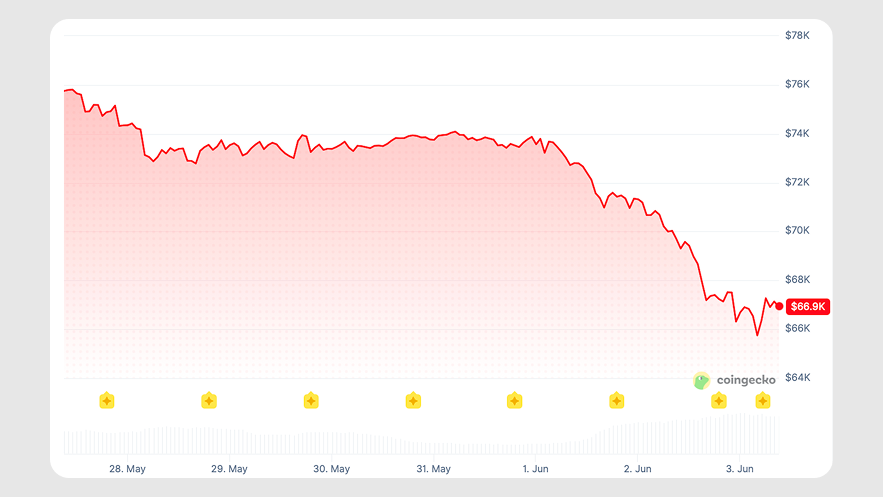
Recovering modestly, Bitcoin is currently trading at $66,961, down 3.9% over the past 24 hours and 11.6% on the week.
ETH price
Ether fell below $2k, finally succumbing to broader market pressure after initially holding up better than Bitcoin following news of Strategy's sale. Despite continued weakness in spot ETH ETFs, Standard Chartered's head of digital asset research Geoffrey Kendrick argued the sale could accelerate a structural shift in which ETH outperforms BTC, as institutions can stake ether for yield instead of liquidating holdings.
Mirroring BTC's downturn, ETH slipped below $2,080 and hovered around the $2k level until June 1, when bearish momentum began to build. The sell-off intensified the following day, eventually driving the price to a low of $1,825 earlier today.
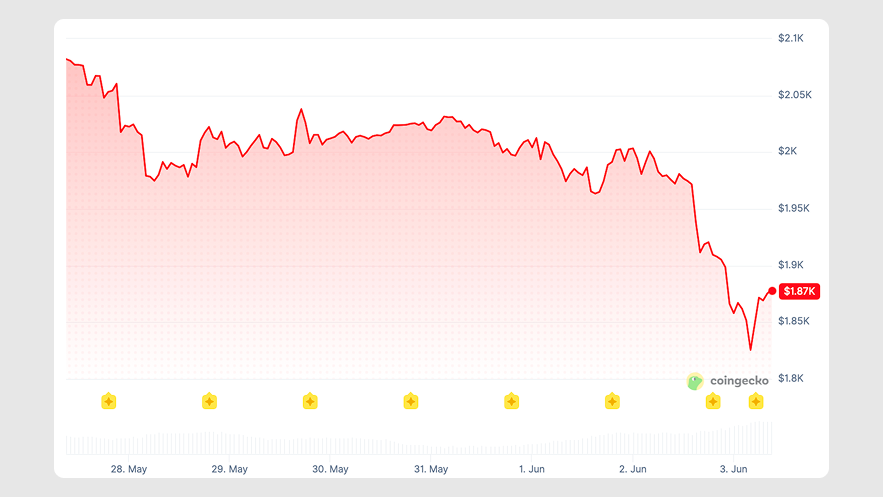
Attempting to stabilize, ETH is currently trading at $1,877, down 5.0% over the past 24 hours and 9.5% over the past seven days.
Seven-day altcoin dynamics
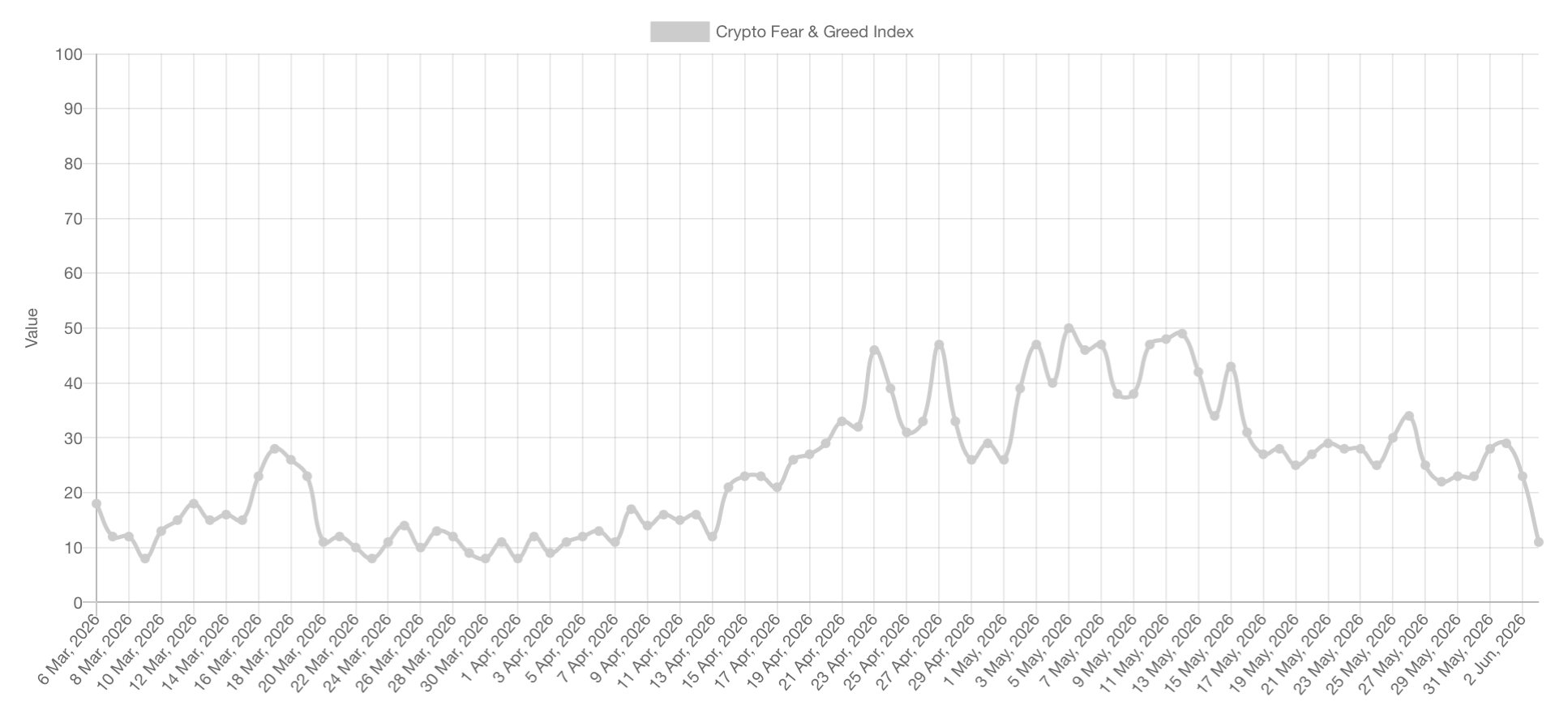
While Strategy sold only a sliver of its holdings, news of its first Bitcoin sale since 2022 added to a sell-off already driven by ETF outflows and macro fears. The total crypto market cap has retreated toward $2.3 trillion, while the Fear and Greed Index dropped to "Extreme Fear" lows (11/100) last seen in April.
Oil prices surged as renewed US-Iran tensions rocked global markets yet again. The escalation dashed hopes of a breakthrough in peace negotiations. Iran halted ceasefire talks with the US, vowing to keep the Strait of Hormuz closed. Concerns over energy supplies pushed Brent closer to $98 per barrel after a dip to $92 on June 2.
While Mt. Gox's transfer of more than 10,000 BTC also grabbed headlines, analysts say ETF flows and macro pressure remain the primary drivers of the downturn. The move by the defunct exchange does not indicate an intention to sell or signal the start of new creditor repayments.
Stocks and AI plays soar
This plunge stands in stark contrast to global equity markets, which have continued grinding higher as the AI trade continues to roar ahead, fueled by excitement around SpaceX's upcoming IPO. The MSCI All Country World Index, the Philadelphia Semiconductor Index, Tokyo Electron, and Taiwan Semiconductor Manufacturing have all hit new peaks.
SpaceX is reportedly seeking $135 a share for a $75 billion IPO — a valuation that would make it the largest-ever offering. With OpenAI and Anthropic also poised for IPOs, the frenzy has supercharged the speculative bid, alongside falling bond yields and softer oil prices earlier this week.
That broader move pushed tokens like Humanity (H), Worldcoin (WLD), Fetch.ai (FET), and Venice Token (VVV) into the top performers. Over the past week, the sector has largely tracked the strength of large-cap AI stocks.
Investors rotate into stablecoins
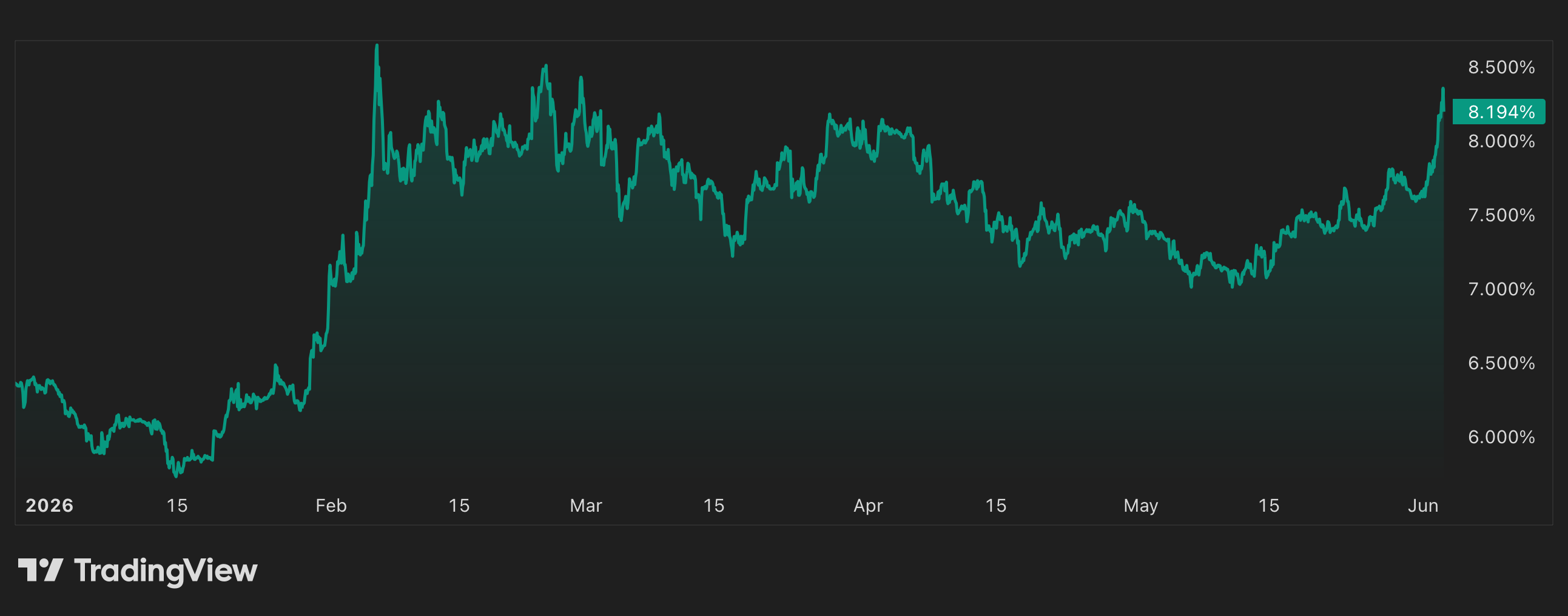
As Bitcoin tumbled toward April lows, the market saw capital rotate into dollar-linked stablecoins — a pattern echoing previous sell-offs. This time, however, it stands in contrast to soaring stocks and a rangebound US Dollar Index.
Both USDT and USDC saw their market share expand to multi-month highs. The rotation began last week as BTC pulled back from early-May highs above $80k — an early sign that risk appetite was beginning to crack. At roughly 8.20%, USDT dominance is now at its highest level since late February.
Top weekly winners
- LAB (+215.9%) soared despite allegations of price manipulation. On-chain investigator ZachXBT and Bubblemaps have warned that more than 95% of the token's supply is controlled by insiders, while a suspicious $300 million transfer to an entity labeled "Aster" preceded the rally.
- H (+161.3%) is riding a short squeeze and momentum-driven trading amid the AI sector rally, with no clear project-specific catalyst behind the move.
- 币安人生 (BinanceLife) (+58.2%) is benefiting from improving sentiment across Chinese crypto communities at home and abroad. Optimism around the Chinese-themed memecoin has helped stabilize existing positions and attract fresh dip-buying interest.
Top weekly losers
- BCH (-28.1%) remained under pressure as ETF outflows and deteriorating macro sentiment drove capital away from non-AI risk assets. A break below key technical support levels likely accelerated the sell-off.
- SUI (-19.4%) suffered a confidence shock after a postmortem of last week's triple mainnet outage revealed critical bugs and validator synchronization issues. The incidents marked Sui's third major reliability failure since its 2023 mainnet launch.
- TAO (-18.9%) was swept lower by the broader market sell-off. The price action suggests leveraged unwinding rather than a project-specific catalyst, reflecting TAO's high-beta profile in a risk-off environment.
Cryptocurrency news
Strategy sold 32 BTC — and Crypto X lost its mind
Strategy offloaded 32 Bitcoin for roughly $2.5 million between May 26 and May 31 — its first sale since a December 2022 tax-loss transaction. The disposal was minuscule, roughly 0.0038% of the company's 843,706 BTC stash. But the market reacted as if Michael Saylor had sold the whole stack.
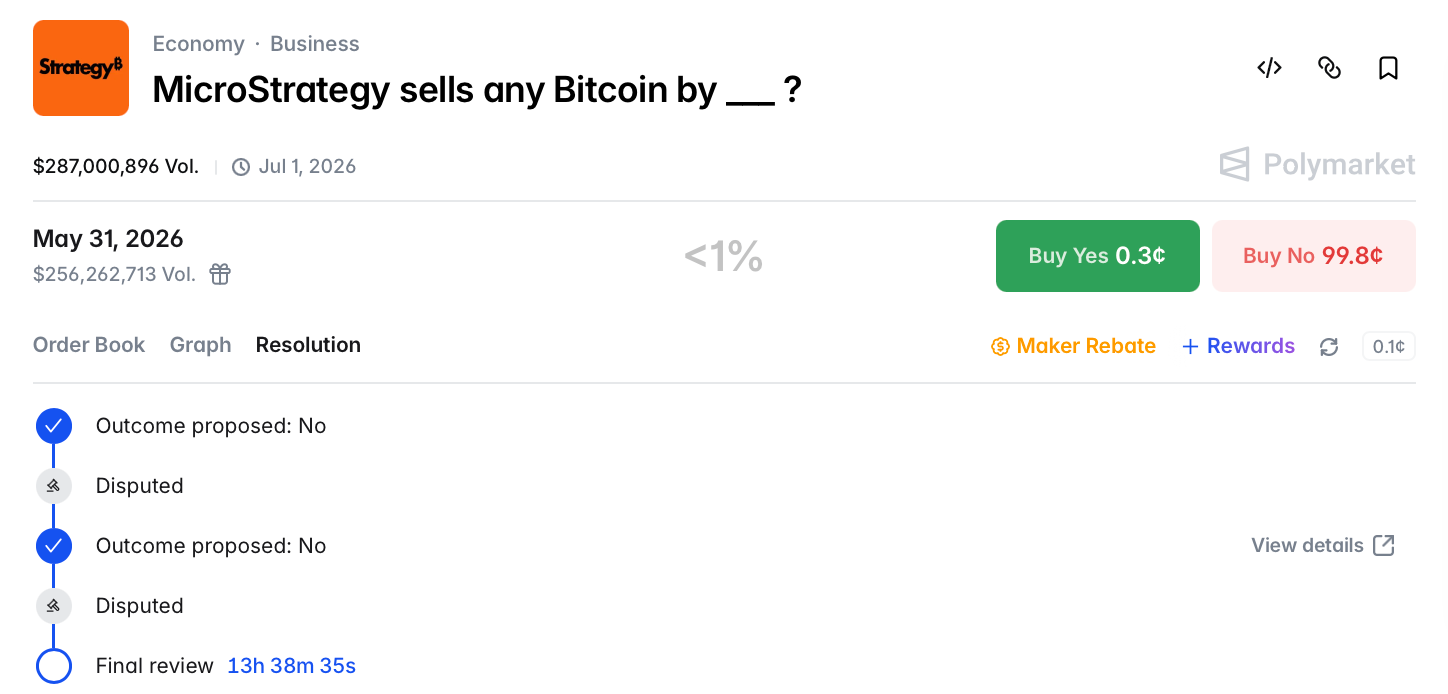
Strategy's stock fell about 5% on June 1. Bitcoin slid to a near two-month low around $71,000. And a Polymarket contract on whether Strategy would sell any BTC by May 31 — which sat at 81% "yes" — got flagged for review, triggering a roughly $15 million resolution dispute.
All because Saylor had built a cult around three words: buy, hold, never sell.
Why they sold
The proceeds are expected to fund distributions on STRC, Saylor's high-yield perpetual preferred stock known as "Stretch." Saylor himself focused his first public comment on the instrument rather than the sale.
"Our goal is to make STRC the best credit instrument in the world," he wrote on X.
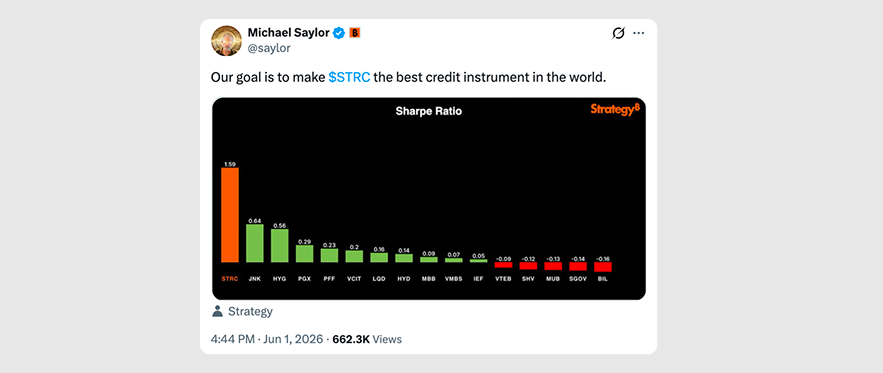
He has previously said Strategy will buy 10 to 20 BTC for every one it sells, framing the pledge to never sell as remaining a net accumulator. The company also needs Bitcoin to rise just 2.3% a year to cover STRC dividends without selling common stock.
Market observers are divided
Not everyone sees the sale the same way. Benchmark's Mark Palmer doesn't expect Bitcoin sales to become the primary source of dividend funding. TD Cowen's Lance Vitanza dismissed the dramatic headlines as misleading, calling the trade economically immaterial.
CoinShares' Luke Nolan echoed the same sentiment: "The market treated a tiny sale the same way it would have treated a large one. That tells you the sensitivity is to the fact that they sold at all, not to the amount."
But others read the move differently. Risk Dimensions CIO Mark Connors perceives it as more significant as "Strategy has shown it will prioritize the health of its capital structure over a strict refusal to sell."
No domino effect — yet
If other treasury companies were going to panic-sell, they didn't get the memo. Tom Lee's BitMine and BTC treasury Strive bought a combined $237 million in digital assets — dwarfing Strategy's $2.5 million sale.
Bitwise analyst Camran Khosravi said the sale wasn't for survival — it echoed Saylor's words during the firm's Q1 earnings call: "We'll probably sell some Bitcoin to fund a dividend just to inoculate the market—just to send the message that we did it." That was a deliberate signal that the holdings are one of several funding tools alongside equity, preferred stock, debt, and cash.
"The likelier read," Khosravi said, "is that Strategy is showing its Bitcoin holdings are one of several funding tools it can use."
Polymarket mess
A contract asking whether Strategy would sell any Bitcoin by May 31 sat at 81% "yes" before the disclosure. Now it's locked in a resolution dispute — traders are fighting over whether sales made before the deadline but disclosed on June 1 should count. Polymarket's UMA oracle will issue the final call, but the damage to sentiment is already done.
Sui went down three times in 48 hours. For a chain that sells speed, that's a problem.
Sui's pitch has always been simple: blazing fast, rock-solid reliable, a next-gen L1 that doesn't choke. Last week, that pitch took a direct hit.
The Sui network suffered three separate outages over 48 hours between May 28 and May 29, tallying more than 15 hours of downtime. The price of SUI slid about 17% over the week to around $0.86 — but the real damage was measured in trust.
What broke — three times
The first two outages traced back to crash bugs in Sui's 1.72 software upgrade, which had introduced a new address balances feature. The bug appeared when two transactions tried to spend from the same address balance at the same time, and one got cancelled.
Even though the transaction was dead, the network still tried to debit the fee, creating an impossible negative balance. Crash.
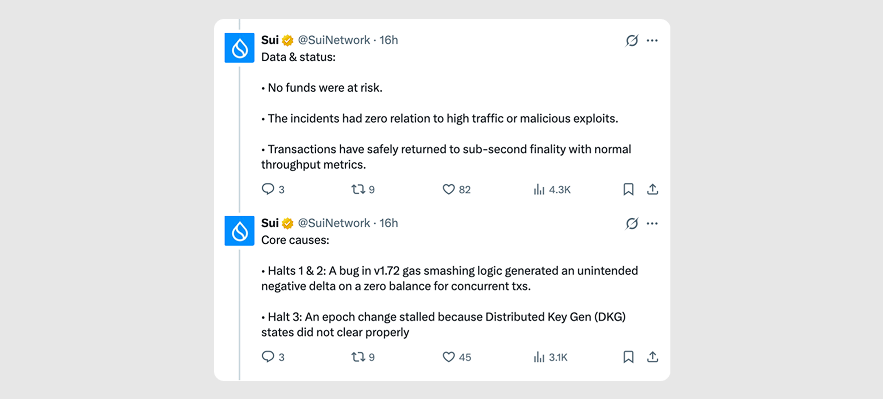
Validators rushed out an interim fix to get things moving again, but it had a known edge case. That edge case materialized the next morning. A different error code overwrote the original cancellation reason, bypassed the guard, and triggered a second halt.
The third outage was a different beast entirely. During a scheduled epoch change, validators restarted to adopt the morning's fix — but a latent bug meant they had no memory of a failed setup process. They kept waiting for a result that would never come. The network stalled again.
Why it matters more than the price drop
Plenty of tokens fall 17% in a bad week. The reason this story cuts deeper is because of what Sui claims to be.
Built by former Meta engineers around parallel transaction execution, Sui is supposed to be one of the fastest and most reliable chains in crypto. That reliability is the entire selling point against rivals like Solana, which has its own well-documented history of outages.
So when Sui halts three times in two days, it undercuts the core marketing claim. A chain that sells uptime cannot afford to look like it has an uptime problem.
The path forward
No funds were stolen, and the chain was not compromised. The team has since outlined three areas for investment: strengthening end-of-epoch resilience, refactoring gas charging logic to make it more modular and testable, and building failure containment so a single bad input cannot halt the entire network.
For now, SUI sits in a tricky spot. The technology ambition is real, and the ecosystem still has momentum with upgrades like Deepbook v3 and gasless payments. But reliability is the foundation everything else is built on. Sui just reminded the market that the foundation has cracks.
Whether it seals them quietly or they widen is the story to watch from here.