Clapp Weekly: Macro mess, Cardano's collapse, SpaceX tightens the squeeze

BTC price
Bitcoin plunged below $61k earlier today as the Iran-Israel military conflict rattled global markets yet again. Bernstein blames weakening capital flows rather than Strategy's recent sale — corporate treasuries and ETFs have pulled in roughly $12 billion this year, just 20% of 2025's inflows. 10x Research's Markus Thielen points to April's red-hot CPI report as the trigger for institutional selling.
The Bitcoin price collapsed from $67.1k on June 3 to the $62k mark the next day, and tumbled lower after a brief recovery on June 5. After bottoming at $59,353.42, it clawed back to almost $64k on June 8, and then retreated yet again.
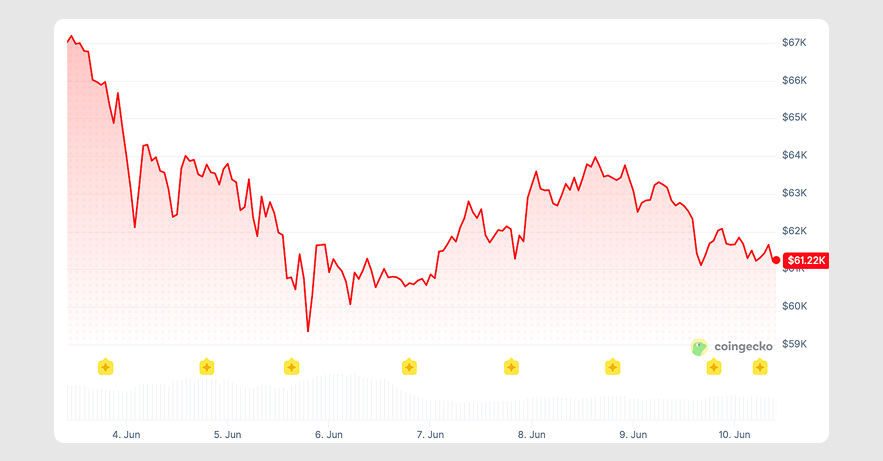
Currently at $61,203.95, BTC is down 2.3% over the past 24 hours with a weekly loss of 8.5%.
ETH price
Ether dove below $1.6k for the first time since April 2025, despite continued hoarding by a major holder. BitMine bought another $213.57 million worth of ETH, with its holdings now edging toward $9.32 billion. According to Glassnode, just 11% of the ETH supply remains more than 3x in profit. Spot ETF outflows returned after a break on June 8, when $82.37 million poured in.
Tracking Bitcoin's nosedive, ETH crashed from nearly $1.9k on June 3 to $1,522.58 on June 6, then gradually rebounded to $1.7k on June 9. Since then, the price has been sliding again.
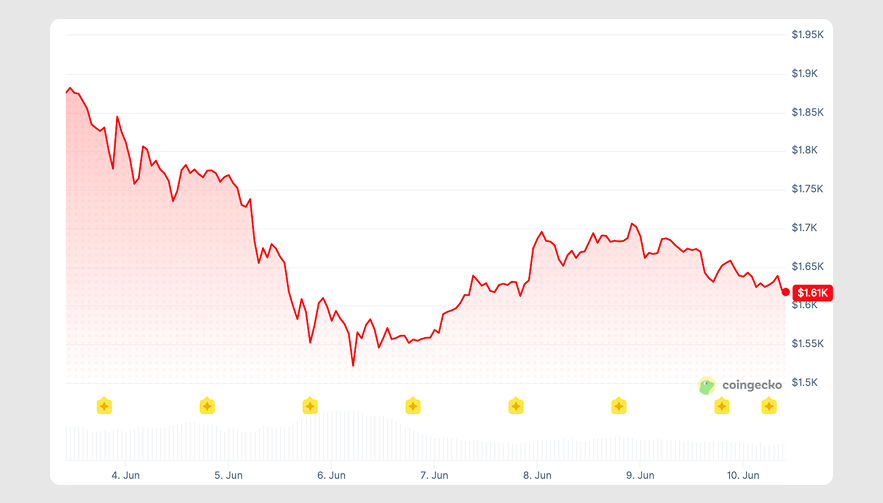
At $1,618.28, ETH has lost 3.0% over the past 24 hours and 13.7% over the past 7 days.
Seven-day altcoin dynamics
Sentiment has collapsed to Extreme Fear levels (9/100) last seen in early April. (9/100). The total market cap has shrunk to $2.2 trillion — a sharp drop from mid-May's $2.8 trillion peak. Opinions about the culprit vary — while asset managers like Bernstein blame the ETF exodus, other analysts point the finger squarely at Michael Saylor's Strategy.
Altcoin movement is wildly mixed. While a handful of AI-related tokens lead gains (BEAT, SIREN, WLD), others face brutal liquidations. ADA continues languishing near its five-year low of $0.16 as the community reels from Charles Hoskinson stepping away (more below).
Last week's culprit: Strategy or AI?
Lekker Capital CIO Quinn Thompson argues that unresolved questions about the STRC preferred stock added fuel to the challenges facing the market. In his reading, digital asset treasury (DAT) concerns and quantum fears worsen the pressure from rising energy costs stoking fears of Fed tightening — all while an onslaught of record IPOs threatens to suck liquidity away from digital assets.
Thompson's multi-month outlook is negative, citing deteriorating consumer health.
While Michael Saylor blamed "AI buildout... absorbing capital at a historic scale," Arca's Chief Investment Officer Jeff Dorman called this "gaslighting":
"The selling pressure last week was clearly due to the Saylor/MSTR news."
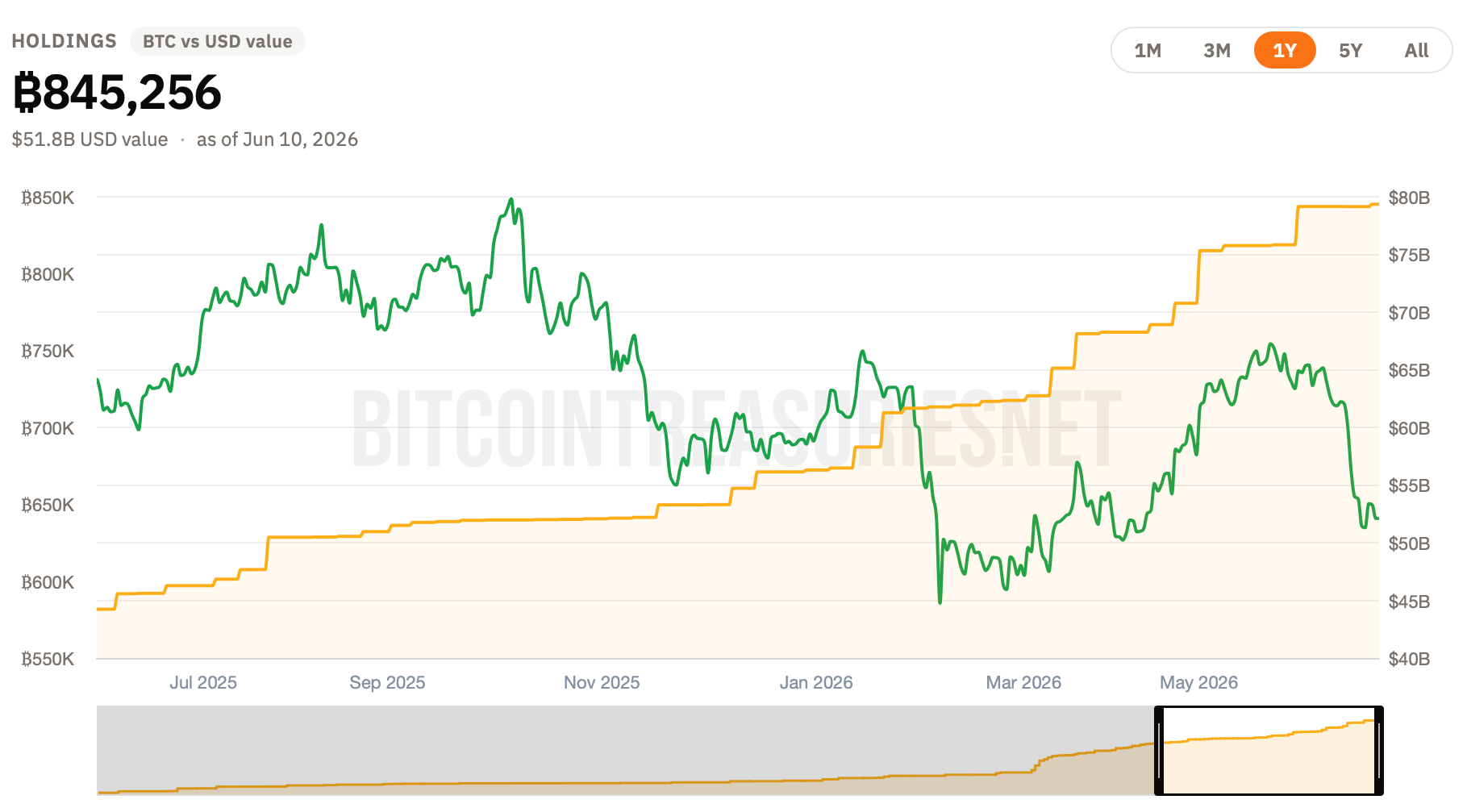
Strategy snapped up 1,550 BTC ($101 million) one week after it sold 32 BTC for roughly $2.5 million, spooking crypto bulls. The company now holds 845,256 BTC acquired for just under $64 billion — while the current value of those holdings is roughly $51.6 billion. The latest move failed to boost sentiment — apparently as macro concerns overshadow other drivers.
Inflation updates in focus
The May CPI report on June 10 is a stress test of how energy costs from the Strait of Hormuz closure are feeding into prices. Economists expect a 4.2% headline rise year-over-year, the hottest reading since April 2023. Core inflation is forecast to tick up to 2.9% from 2.8%.
This reading would land well above the Federal Reserve's 2% target, boosting the odds of rate hikes. BlackRock Investment Institute commented:
"We look to May U.S. inflation figures for a clearer read on how the Mideast conflict energy shock is impacting already sticky inflation. The full breadth of the shock has yet to show and will depend on how it evolves."
US oil inventories are near four-decade lows — and a prolonged closure of the critical waterway would spark an even sharper energy-driven inflation spike. Higher-for-longer Fed funds rates would likely pile bearish pressure on crypto prices.
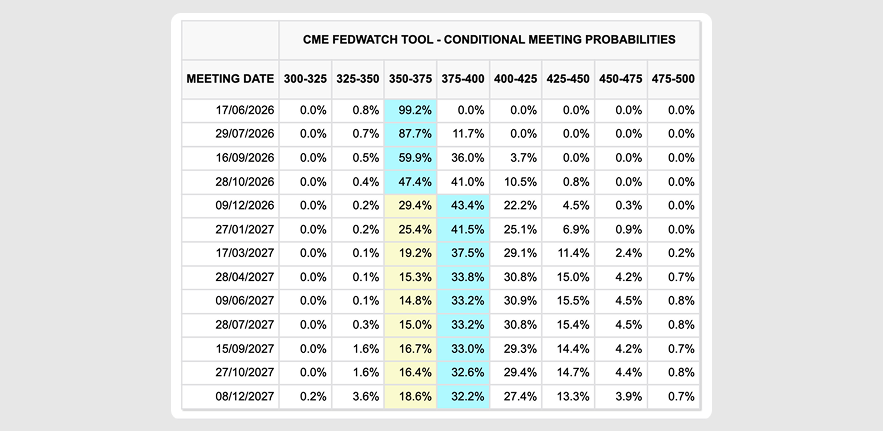
On CME Fedwatch, the probability of a rate hike in October is now 41%. The next FOMC meeting, concluding June 17, is almost certain (99.2%) to hold current rates unchanged.
Top weekly winners
- BEAT (+310.9%) is defying the broader downturn in spectacular fashion as buyers accumulate aggressively; exposure in the Binance Alpha Spotlight and continued hunger for AI-related projects are driving the rally.
- SIREN (+37.0%) has also ridden the AI hype, though the price is now retracing after a 36% gain over the prior week. Traders aggressively leveraged up in the absence of project-specific catalysts.
- WLD (+20.5%) jumped immediately after OpenAI filed a confidential S-1 form with US regulators. As Worldcoin was co-founded by its CEO Sam Altman, crypto investors treat WLD as a direct proxy for OpenAI's momentum.
Top weekly losers
- LAB (-37.4%) is down as investors take profits after it hit an all-time high of $27.30 on June 2. On-chain controversy regarding insider manipulation and a failed hedge fund trade add to the pressure.
- ZEC (-28.9%) sank amid panic selling after Shielded Labs disclosed a critical 4-year-old security flaw in Zcash's Orchard privacy pool. There is no cryptographic way to check if anyone has exploited it to mint unlimited, counterfeit tokens undetected.
- ICP (-25.8%) is caught in the broader crypto market sell-off driven by intense macro fear; as a high-beta asset, its price magnifies losses whenever sentiment turns sour.
Cryptocurrency news
As Cardano crashes to 2020 lows, Hoskinson says he's powerless
Cardano just hit its lowest price since late 2020, tumbling about 27% over the past week. The coin is struggling to recover from a five-year low of $0.15 on June 6 — but the price isn't even the worst part. The ecosystem is crumbling underneath.
A wave of infrastructure failures
TapTools, the leading analytics platform for Cardano, announced it will wind down after losing five senior executives this year — including both co-founders. JPG.Store, the network's largest NFT marketplace, shut down in May. Two critical pillars gone in weeks.
Founder Charles Hoskinson has stepped back from public engagement, citing online toxicity. A failed community vote canceled the 2026 summit. And in a moment that sent shockwaves through the community, Hoskinson admitted he is tired of "managing a decline" and feels powerless to stop it.

Decline at a staggering pace
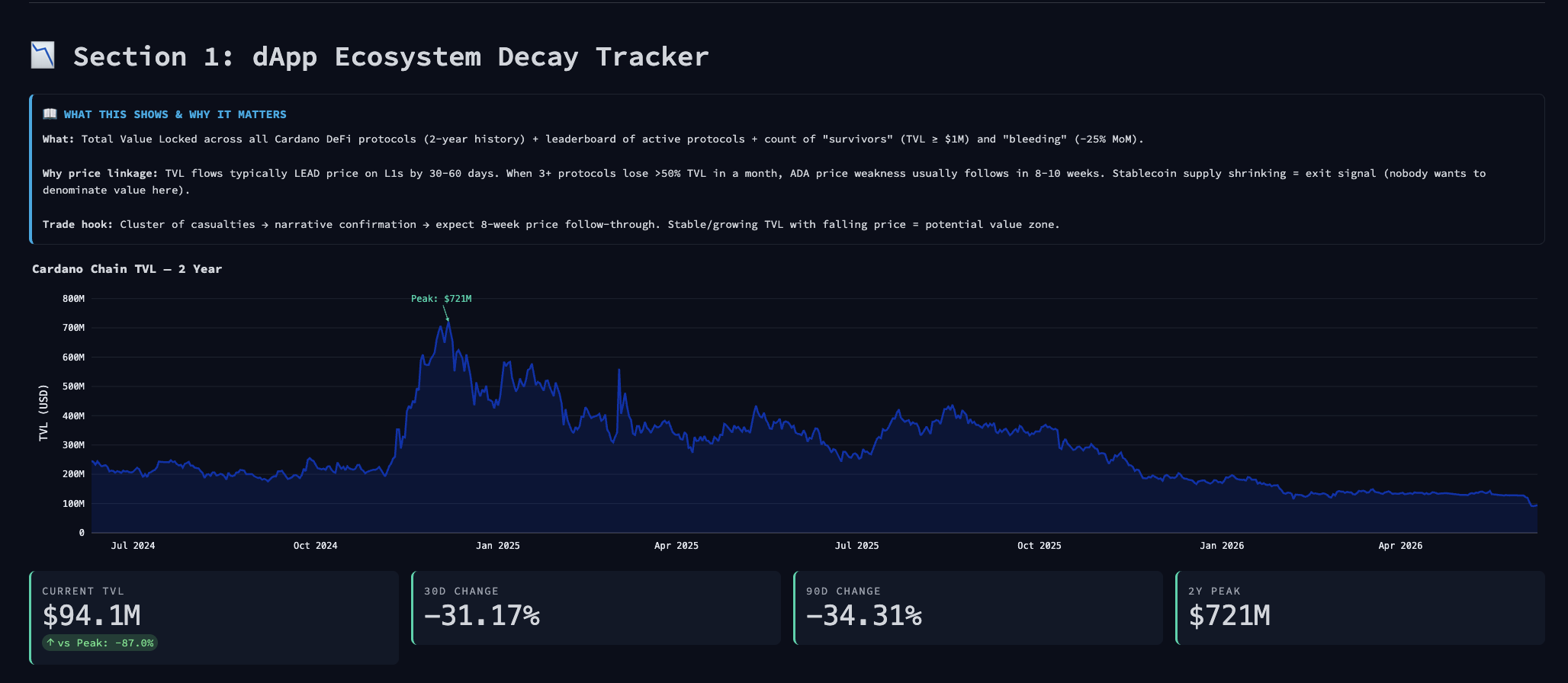
Cardano's DeFi TVL has collapsed from about $905 million in late 2024 to just $140 million — an 85% drop. Weekly DEX volume has fallen from a peak near 19 million ADA to roughly 1.9 million. Daily active addresses have slipped from a late-2025 peak near 17,600 to about 14,900.
Even the whales have given up. ADA futures open interest has collapsed from about $1.6 billion in September 2025 to roughly $324 million. Smart money positioning is underwater across the board.
One green flag in a sea of red
Not everything is dead. Surf Lending, a lending protocol, grew its locked value by about 98% over the past month. But at a TVL of just $4.62 million, it is a drop in a very empty bucket.
Cardano Foundation CEO Frederik Gregaard urged investors to look past short-term price action, pointing to governance running at scale and real-world asset work. But with Hoskinson floating a nuclear option — launching a new Cardano with a proof-of-burn to leave hostile holders behind — the community is bracing for the worst.
What's next?
By his own admission, Hoskinson is not the one to help stop ADA's downfall. While shaming those claiming "Cardano is dead," the co-founder explained,
“If you want a leader that can make the price of ADA go back up to the all-time high, I’m just not your person for that. I’ve never joined this game to make cryptocurrencies more valuable.”
Amid all the noise and FUD, key whale wallets holding between 1 and 100 million ADA have been aggressively buying the dip since late 2025. These cohorts hold nearly 20 billion ADA, or 52% of the overall supply.
For now, Cardano’s DeFi value, network use, and positioning all point to an outright collapse. It remains to be seen if the altcoin can bottom out at the same level it did in 2019 and 2020.
SpaceX IPO is sucking the air out of crypto: $180B gone in a week
Elon Musk's SpaceX hasn't even started trading, yet it has already squeezed crypto. Analysts are pointing fingers at a "pre-mega-IPO liquidity squeeze."
The long-awaited IPO is nearly four times oversubscribed, with over $250 billion in demand chasing a $75 billion raise. At a $1.8 trillion valuation, it would be the largest public offering in history. Pricing is expected Thursday, with trading set to begin Friday.
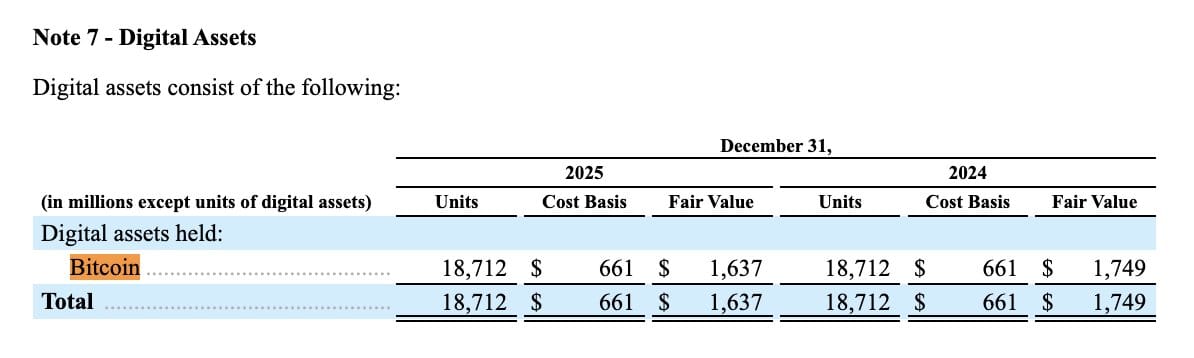
But the damage is already done — even though SpaceX is the third-biggest private BTC holder. Crypto markets have shed more than $180 billion over the past week. The Nasdaq posted its steepest single-day decline in more than a year last Friday. Bitcoin sits 51.4% below its January high.
The 'IPO tax'
Bitrue Research Institute lead Andri Fauzan Adziima described this sell-off as a direct "IPO tax" from the SpaceX deal. Investors are selling risk assets — crypto and tech stocks — to free up cash to participate in the offering.
"The tanking in crypto and tech stocks right now isn't random. This excitement is sucking liquidity out of correlated risk assets today, hitting crypto hardest because it's the most retail-driven and sentiment-tied to growth narratives."
He described the pullback as a "temporary rotation," not the start of a broader bear market. But for now, the bleeding is real.
Exchanges move fast
Binance, Coinbase, Kraken, and Bybit all launched pre-IPO perpetual futures for SpaceX this month. The products let traders gain exposure before the stock officially trades. Binance alone has seen $2.1 billion in cumulative trading volume over 18 days, spanning more than 130 countries.
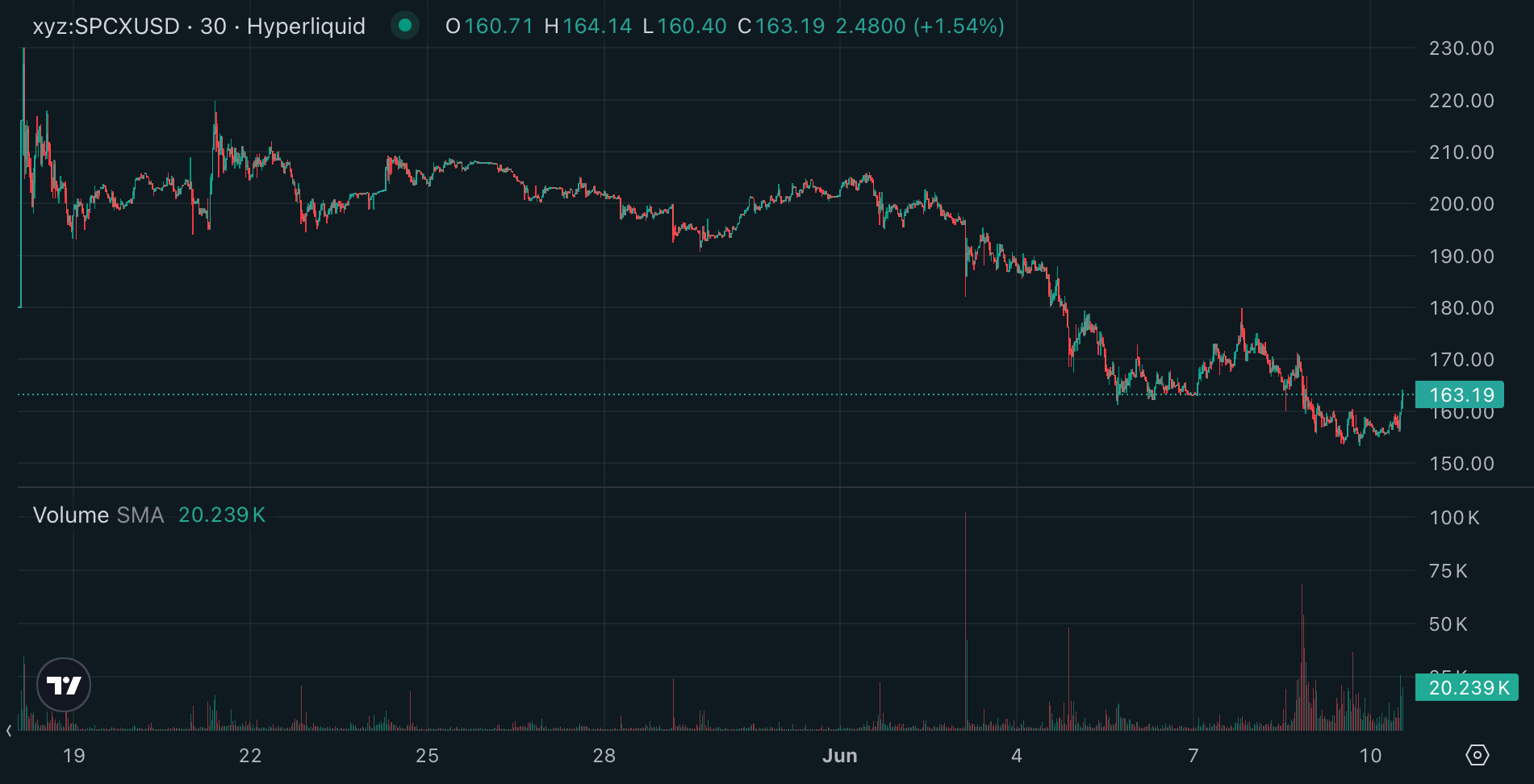
Decentralized exchange Hyperliquid has seen $70 million in trading volume in the past 24 hours alone. Its synthetic SpaceX pre-IPO perps (SPCX) are currently priced at $157, down from $210 at launch — an implied first-day premium of roughly 16%, down from about 60% in May.
Bad timing for crypto
Crypto was already bleeding from ETF outflows, macro fears fueled by the Middle East conflict, and a string of negative headlines. The SpaceX IPO has poured gasoline on the fire.
On the flipside, once the IPO dust settles, some of that liquidity could rotate back. The question is how much damage is done in the meantime — and whether crypto can hold its ground while the world's most hyped stock grabs all the attention.