Beyond HODL: How sophisticated investors use crypto differently

Most people think about crypto investing the same way: buy an asset, hold it, and wait for the price to go up.
Sometimes that works. Bitcoin has created some of the strongest long-term returns in modern markets. But holding is only one part of managing a portfolio.
Experienced investors think about what happens between market cycles. What is their capital doing while they wait? Where does liquidity come from if an opportunity appears? What happens if they need cash without wanting to sell their long-term holdings?
Instead of letting assets sit idle, they use different tools for different purposes: some assets aim for growth, some generate yield, and others provide liquidity when opportunities or unexpected needs appear.
Let's look at what that approach looks like.
TL;DR
- Holding is only one part of investing. Long-term investors still need liquidity, yield, and a plan for different market conditions.
- Idle assets have an opportunity cost. Crypto that sits unused misses the chance to generate yield or support other strategies.
- Selling isn't the only way to access cash. Crypto-backed loans and credit lines can provide liquidity while keeping long-term holdings invested.
- A portfolio works better when each part has a purpose. Growth assets capture upside, stablecoins provide flexibility, and credit lines create additional liquidity.
- The goal isn't just higher returns. It's building a portfolio that can adapt when markets change.
The beginner's mindset
Most people treat their crypto portfolio as a single bet: buy an asset, hold it, and wait for the price to go up. Their entire strategy depends on one outcome: the asset price increasing.
There are plenty of HODL success stories. But they often leave out two important details.
First, there's survivorship bias. For every investor who bought Bitcoin early and held through multiple cycles, there are many others whose timing, asset selection, or risk management didn't work out as well.
Second, even a successful long-term holder can run into a practical problem: liquidity.
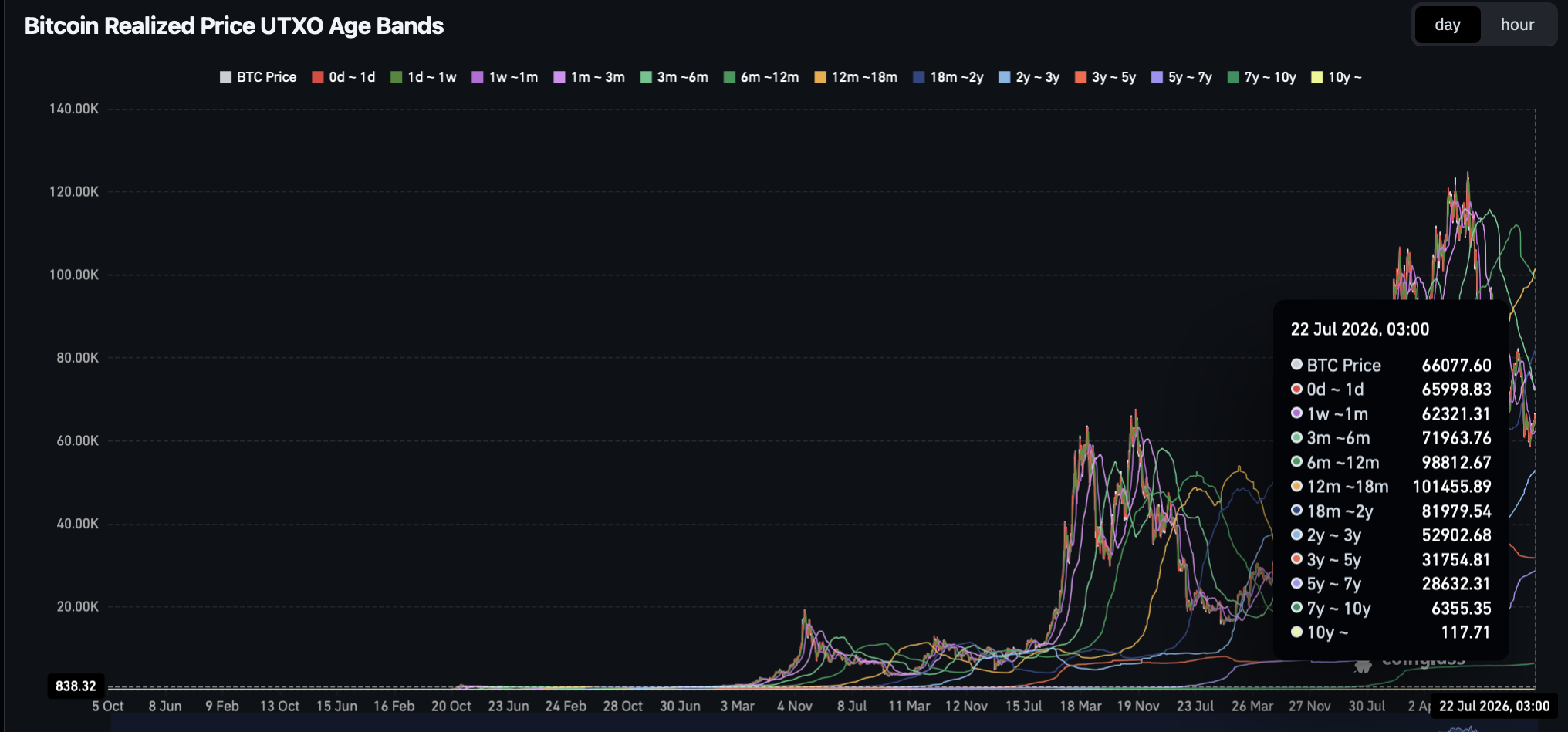
Long-term holding has historically rewarded patience, but entry timing still matters. Bitwise research shows that Bitcoin holders who stayed invested for three years historically had a very low probability of being at a loss. However, different market cycles create very different outcomes for different entry cohorts.
For example, on July 22, 2026, holders who entered 2–3 years earlier were sitting on unrealized gains (+24.9%), while those who bought only 1–2 years later were still underwater (-34.87%). The difference was not the asset — it was the timing.
This doesn't mean long-term holding doesn't work. The lesson is that a strong portfolio needs both conviction and flexibility.
The sophisticated approach
Disciplined investors think beyond individual assets. They ask how each part of their portfolio can serve a specific purpose to handle different market conditions.
A balanced crypto portfolio often includes:
- Large-cap assets like Bitcoin — to capture long-term market upside.
- High-utility altcoins — for exposure to different crypto sectors and growth opportunities.
- Emerging narratives and sectors — for higher-risk, higher-potential opportunities.
- Stablecoins — as liquidity reserves and dry powder.
Each asset has a different job. Volatile assets can remain invested for long-term growth. Stablecoins can generate yield while staying available for opportunities or emergencies. Credit lines can provide liquidity without forcing investors to sell at the wrong time.
The result is a portfolio designed for different scenarios, built around three key ideas:
1. Earning yield on idle cash
Idle capital has an opportunity cost. Even funds waiting for the next move can generate value.
Instead of leaving stablecoins idle, experienced investors put them into savings products that generate yield while keeping funds accessible.
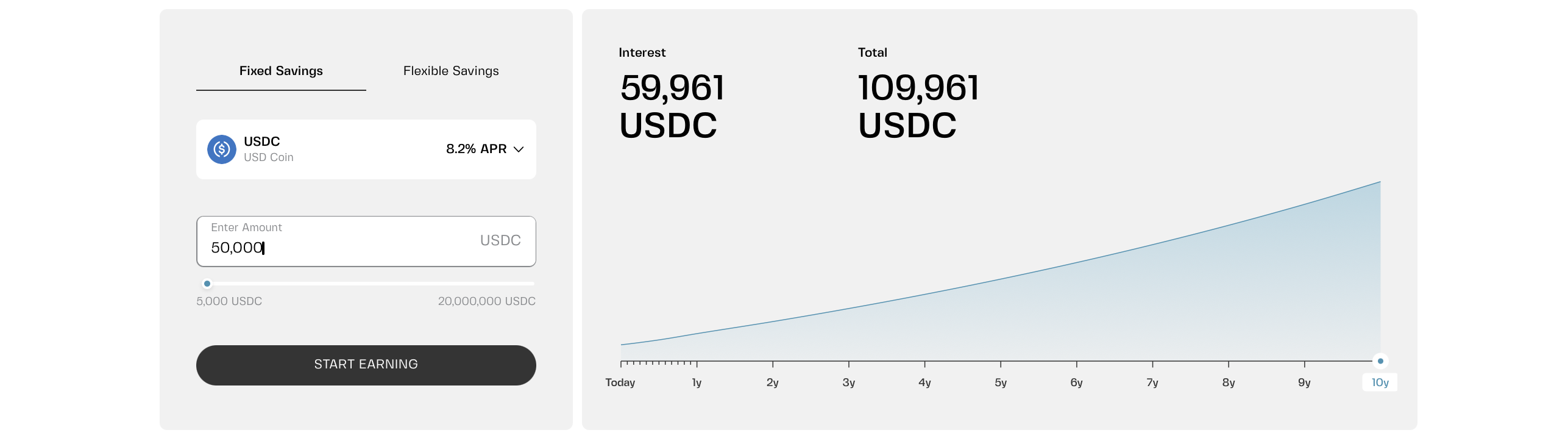
On Clapp, Flexible Savings lets users earn up to 5.2% APY with daily compounding while maintaining access to their funds. Fixed Savings offers higher rates — up to 8.2% APR — for funds they are comfortable locking for a chosen term.
2. Borrowing without selling
Selling isn't the only way to access liquidity. Crypto-backed credit lines allow investors to use their assets as collateral.
For example, someone holding Bitcoin may not want to sell during a market downturn or before a potential rally. A credit line can provide access to cash while keeping the underlying position intact.
This preserves long-term exposure while providing liquidity — and in many jurisdictions, borrowing itself doesn't trigger a taxable event.
The key is responsible borrowing.
A $10,000 loan against $50,000 of Bitcoin represents a 20% LTV — leaving a large buffer against price volatility. On Clapp, maintaining LTV at 20% or below qualifies for 0% APR.
3. Keeping a buffer
Markets move quickly. Seasoned investors don't assume every position will go according to plan, so they keep liquidity available.
That buffer can serve several purposes:
- Adding collateral if LTV rises.
- Taking advantage of market opportunities.
- Covering expenses without selling long-term holdings.
For example, stablecoins held in Flexible Savings can continue generating yield while remaining available if needed. When markets fall, they can be moved into collateral. When opportunities appear, they provide ready capital.
The hidden advantage: optionality
The biggest advantage of a well-structured portfolio is having optionality — the ability to make decisions because you have room to act.
When markets fall, many investors are forced into difficult choices. They may need cash at exactly the wrong time, leaving them with one option: sell.
A portfolio built with liquidity in mind creates more flexibility. Instead of selling long-term holdings during a downturn, investors can access credit, use available savings, or wait for better conditions.
The same applies during opportunities. When the market moves quickly, available liquidity lets you act without first selling assets or rearranging your portfolio.
What this looks like in practice
Consider two investors with similar starting capital. The second portfolio structure gives each part a specific role, combining long-term market exposure, yield, and liquidity.
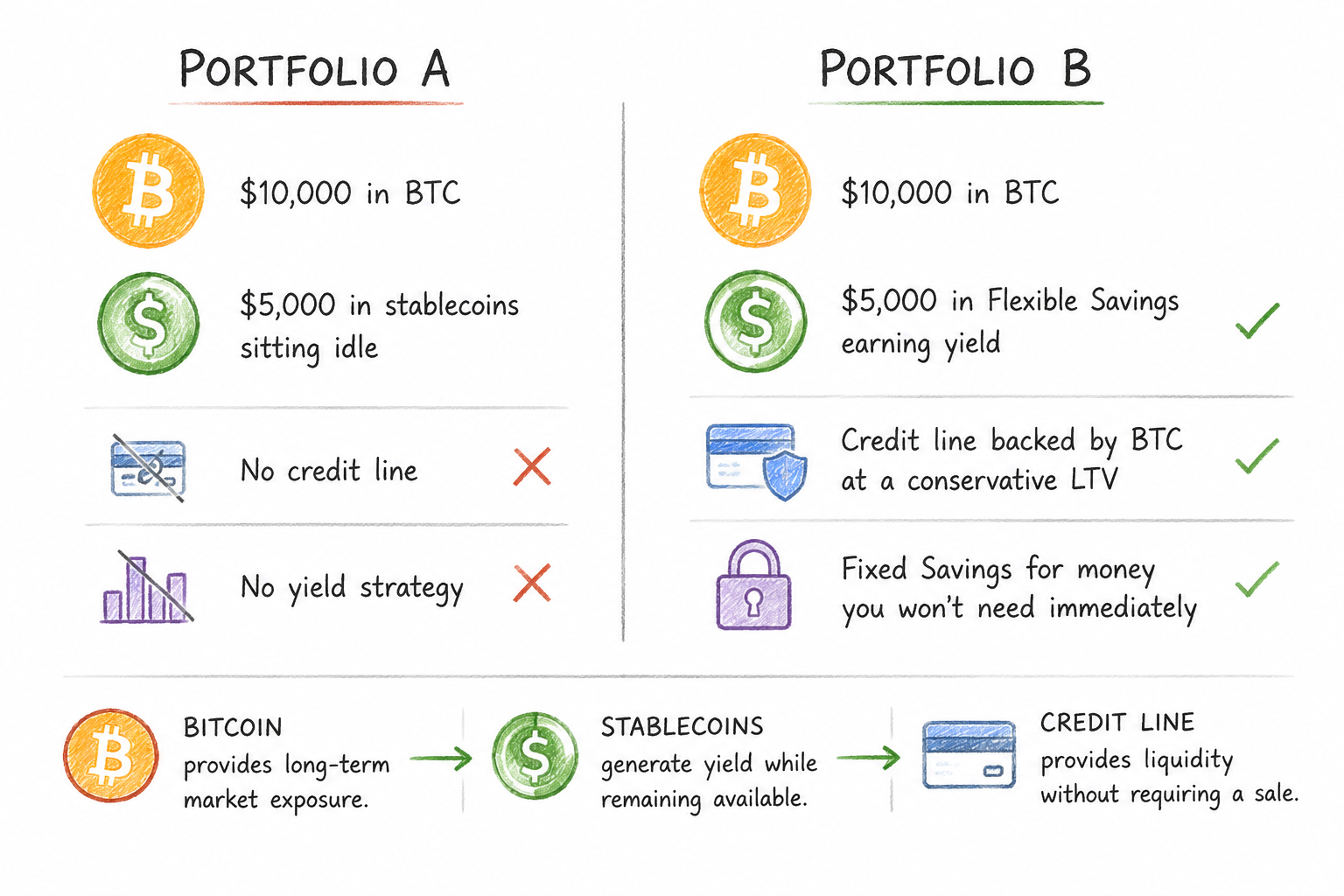
Both investors may hold the same assets, but the way those assets are organized changes what they can do during different market conditions.
The system behind the strategy
The real advantage appears when these tools support each other.
Beyond yield, stablecoins also act as a liquidity buffer. That buffer can strengthen your position if your LTV rises during volatility, while a credit line provides access to cash without forcing you to sell long-term holdings.
Such portfolios stays invested while still remaining flexible. For example:
- Market drops? You can move savings into collateral to reduce LTV.
- An opportunity appears? You can access liquidity without selling.
- Conditions improve? Your savings continue generating yield.
How to start building this approach
You don't need a six-figure portfolio to get started — the idea works at any scale.
Step 1: Put idle stablecoins to work.
Instead of leaving cash unused, consider Flexible Savings or similar products that allow your assets to generate yield while staying accessible.
Step 2: Keep access to liquidity.
A credit line can be valuable even when you never draw from it. Having one available gives you another option when you need cash.
Step 3: Maintain a buffer.
Not every dollar should be locked away. Keep enough flexible capital for unexpected expenses and opportunities.
Step 4: Think of your portfolio as a system.
Your savings, investments, and credit line should support each other rather than exist as separate pieces.
What Clapp makes possible
Clapp brings these tools together in one place.
- Flexible Savings allows idle stablecoins to generate yield while remaining accessible.
- Fixed Savings offers higher rates for funds you don't need immediately, with terms from 1 to 12 months.
- Credit lines provide liquidity without selling your crypto. Borrowers who maintain LTV of 20% or below can qualify for 0% APR. Combine up to 25 collateral assets and reshuffle that pool at any time without closing your credit line.
The result is a single platform where savings, liquidity, and long-term holdings can work together.
It's not what you hold. It's how you structure it.
A sophisticated crypto strategy isn't about having the biggest portfolio or predicting every market move. It's about making your assets work together.
Some assets capture long-term growth. Some generate yield. Some provide liquidity when you need it.
The difference is that every part of the portfolio has a job to do. Some assets pursue long-term growth. Some generate income. Some provide liquidity when it's needed most.
Markets rise, markets fall, and life rarely follows a script. You can't control what happens next — but you can decide how prepared your portfolio will be when it does.
Frequently asked questions
1. Do I need a large crypto portfolio to use this approach?
No. The same principles work at different scales. Even a small amount of savings, a conservative credit line, and long-term holdings can create a more flexible portfolio structure.
2. Can I earn yield while keeping access to my funds?
Yes. Flexible Savings products are designed for this purpose, allowing users to earn yield while maintaining access to their assets.
3. What if I never use my credit line?
A credit line can still provide value as a backup liquidity option. If you maintain a low LTV and don't borrow, there may be no borrowing cost.
4. Should I use Flexible or Fixed Savings?
It depends on your timeline. Flexible Savings is better for funds you may need access to. Fixed Savings can suit money you plan to leave untouched for a set period.
5. Is this strategy complicated?
It doesn't have to be. The idea is simple: keep some assets growing, keep some liquidity available, and use each tool for its intended purpose.