Clapp Weekly: Converging headwinds, Ethereum's RWA crown, Polymarket opens $5T door

BTC price
Bitcoin reclaimed $77K, ending a multi-day slide as the Senate voted to curb President Trump’s Iran war powers. Spot Bitcoin ETFs shed another $648.6 million on May 18 — their largest single-day net outflow since January 29 — following last week’s $1 billion in redemptions. While institutions are de-risking amid the Middle East conflict, on-chain metrics point to waning investor conviction.
BTC dipped from $81k to roughly $78.8k on May 13 before regaining momentum the next day and touching a weekly peak of $81.7k. The rally quickly reversed, with a prolonged sell-off culminating in a low near $76.2k on May 19. After briefly slipping below $77k, Bitcoin snapped higher earlier today.
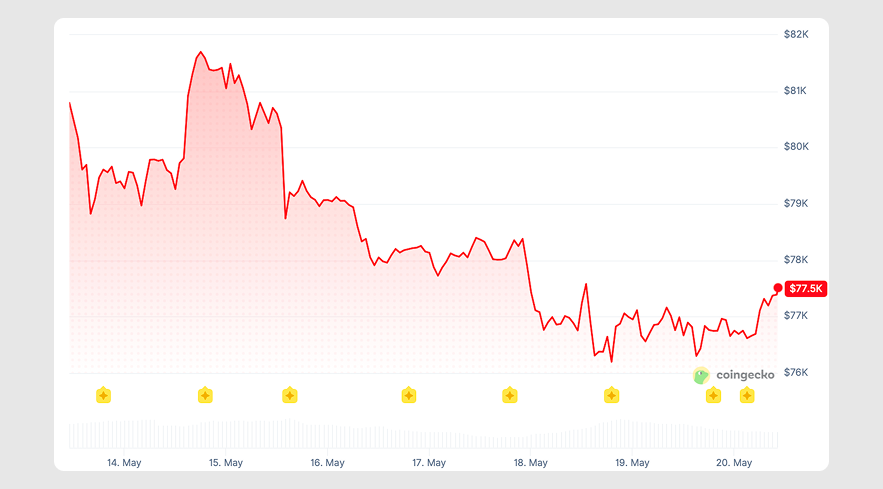
Currently trading at $77,439, BTC is up 0.9% over the past 24 hours but remains down 4.3% on the week.
ETH price
Ether fell well below $2.3k, triggering more than $700 million in long liquidations over the past week — surpassing Bitcoin’s wipeout. Spot ETH ETFs extended their outflow streak to seven days, shedding another $62.3 million on May 19 as institutions turned more cautious. BitMine chairman Tom Lee blamed rising oil prices for the pullback, calling it an “attractive opportunity” as the company added 71,672 ETH ($157 million) to its treasury.
ETH briefly recovered after slipping below $2.3k on May 14, but continued drifting lower through May 18 before plunging to $2,081.33. The rebound struggled to gain traction until Bitcoin reversed higher earlier this morning.
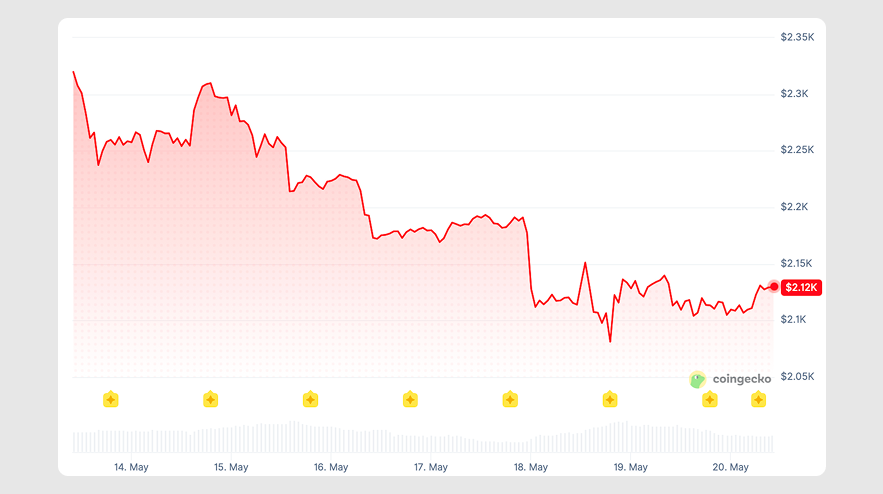
Currently trading at $2,128.82, ETH is up 0.8% over the past 24 hours but remains down 8.0% over the past seven days.
Seven-day altcoin dynamics
Inflation, rising Treasury yields, and geopolitical unrest are weighing on crypto, fueling broad de-risking moves. Tuesday's Senate vote curbing President Trump’s Iran war powers eased some of the uncertainty, pushing oil prices and Treasuries down.
Senate vote and Fed review ease anxiety
The 50-47 Senate vote marked the ninth attempt to advance the bill since the conflict began in February. However, even if the resolution passes the House, The Guardian reports that Trump is expected to veto it.
Adding to the improved sentiment, President Trump signed an executive order directing the Fed to review how depository institutions may gain access to payment services. The order calls on regulators to ensure existing frameworks can integrate “digital assets and innovative technology into traditional financial services and payment systems.”
The move is potentially crucial for the crypto industry, as firms have long struggled to secure stable banking relationships and broader integration into traditional finance.
Trump's "calm before the storm" spooks markets
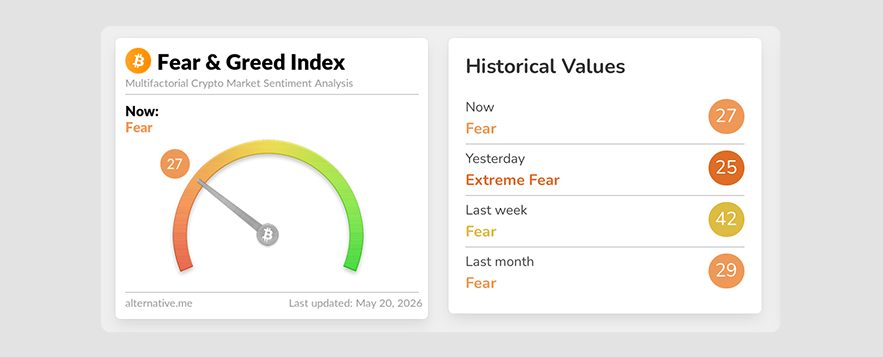
The Fear and Greed Index briefly slipped into “Extreme Fear” on May 19 after a new post from Donald Trump fueled concerns that the US-Iran conflict could re-escalate.
The Truth Social post featured an AI-generated image of Trump standing before warships with the Iranian flag fading into the background, captioned: “The calm before the storm.”
On May 19, Trump said planned strikes on Iran had been postponed at the request of regional allies. Meanwhile, Iran announced that its state-backed maritime insurance platform, “Hormuz Safe,” would allow sanctioned shippers to pay premiums in BTC for instant coverage — bypassing traditional banking rails.

Altcoins take a breather
The altcoin market remains highly selective amid a lack of sustained inflows. The sector is scrambling for direction after briefly rebounding on optimism around the CLARITY Act and last week’s summit between Donald Trump and Chinese President Xi Jinping.
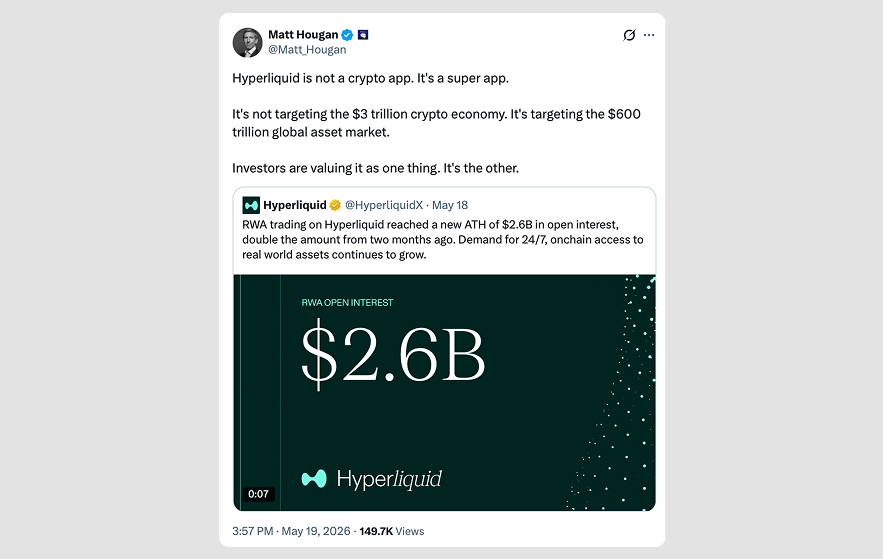
Smaller-cap tokens like KITE and VVV are leading gains alongside Hyperliquid, supported by a Bitwise endorsement, ETF launches, and accelerating USDC growth. Bitwise CIO Matt Hougan argued that Hyperliquid remains deeply undervalued, saying the market still mistakenly treats it as a crypto-native derivatives exchange rather than a broader financial “super-app.”
Top weekly winners
- KITE (+27.5%) rallied as traders rotate back into mid-cap momentum plays. Buying accelerated after the team confirmed its mainnet launch — built for an “agent-first internet” — on April 29.
- HYPE (+17.8%) defies the broader market weakness after Coinbase became Hyperliquid’s official USDC treasury deployer. Optimism around newly launched HYPE-linked ETFs from Bitwise and 21Shares also continues to fuel optimism.
- DEXE (+8.7%) appears to be benefiting from technical momentum amid sector rotation within DeFi; traders are moving capital away from weaker-performing protocols.
Top weekly losers
- ICP (-22.9%) tumbled after Coinbase delisted key trading pairs, including ICP/USDT and ICP/GBP, hurting liquidity and sentiment amid the broader crypto pullback.
- JUP (-19.4%) tracked the wider market decline after rallying on treasury growth and institutional DeFi expansion. Last week, Jupiter added a dedicated Ethena market curated by Bitwise — the first major institutional partnership for Jupiter Lend.
- ARB (-19.2%) remains under pressure following last week’s unlock of 92.65 million tokens (roughly $13 million) amid a weakening crypto market. Still, network growth remains strong: tokenized RWAs on Arbitrum have climbed to $840 million, nearly tripling over the past year.
Cryptocurrency news
The $65B RWA race: Ethereum leads, but the fight is just getting started
The tokenization of real-world assets has officially hit escape velocity. The total RWA market cap has surged past $65 billion, up 44% since the start of the year, as traditional finance giants race to bring everything from Treasuries to equities onchain.
Ethereum remains the king of the castle, commanding roughly 33% of the market. Its deep liquidity, mature smart contract tooling, and familiarity among TradFi firms make it the default venue for institutional tokenization.
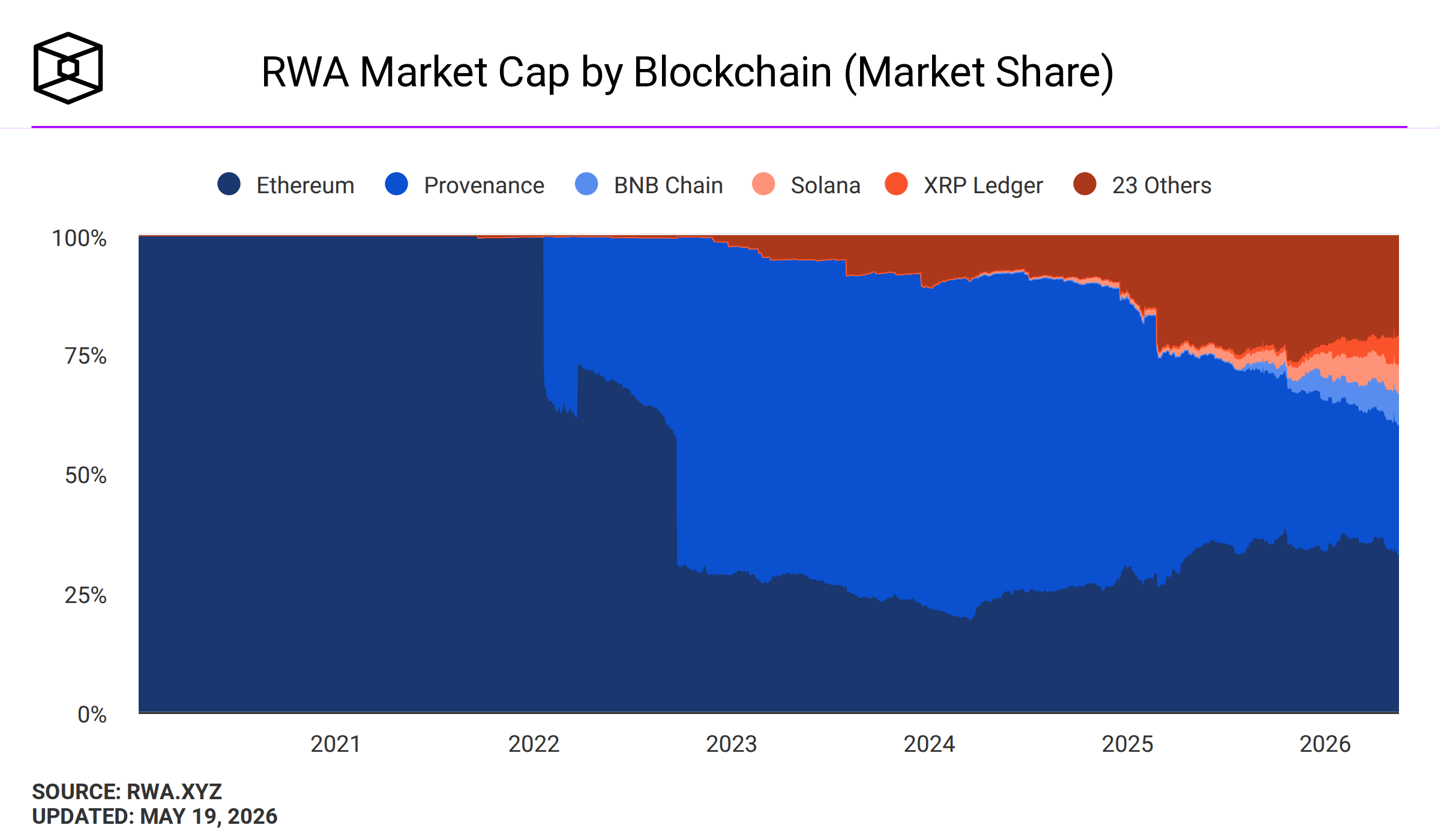
But the throne isn't secure. Provenance Blockchain holds about 27% market share, built around Figure Lending's RWA suite. BNB Chain, XRP Ledger, and Solana each sit at roughly 6% — and all are hungry for more.
The distributed market structure means no clear winner has emerged. And given how sticky RWA flows are — asset managers face serious switching costs once they pick a chain — the next few months could determine who wins the long game.
Tokenized equities just had their biggest day ever
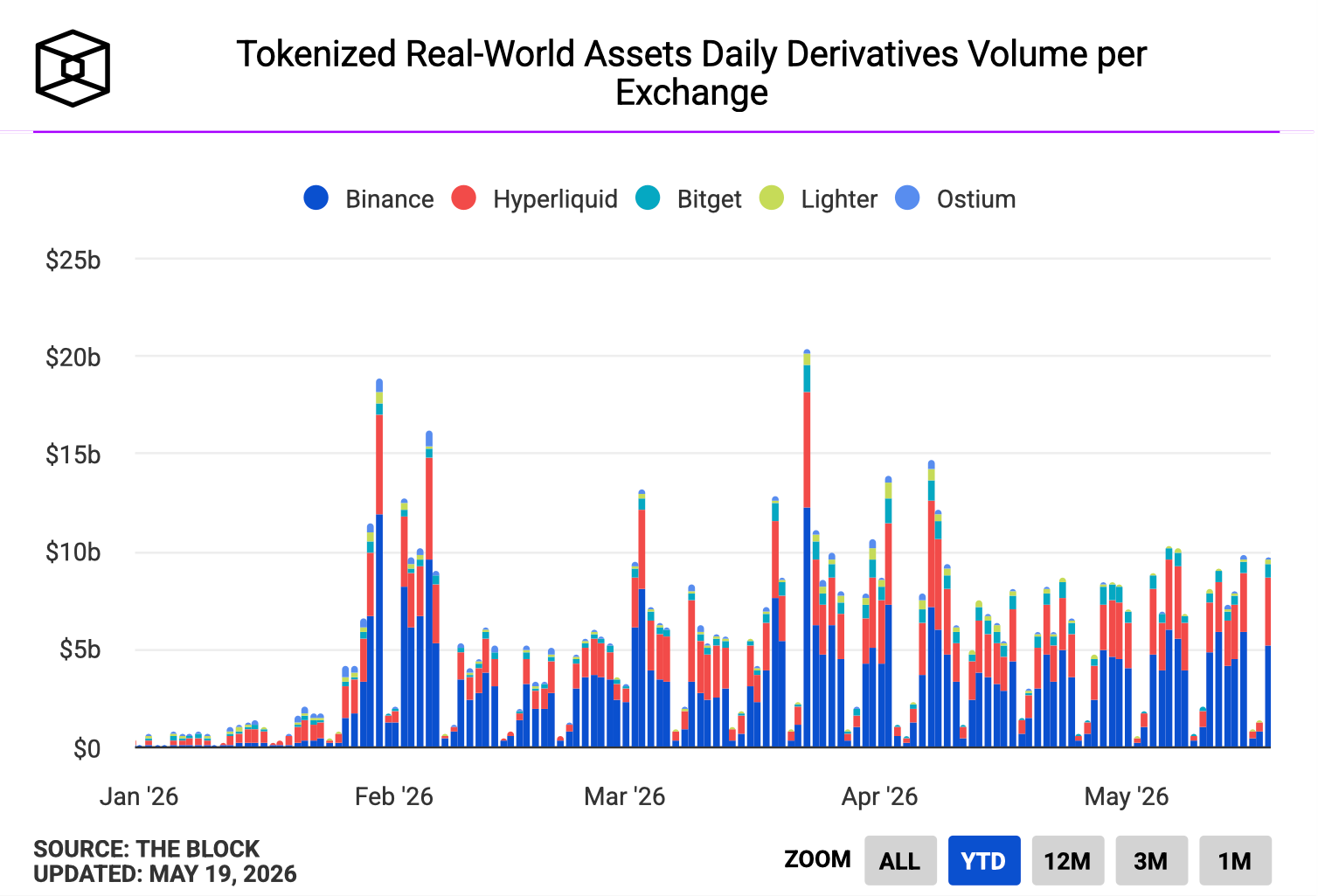
On Monday, onchain equities trading volume hit an all-time high of $3.57 billion, according to The Block's data. Binance and Hyperliquid did most of the heavy lifting, while Kraken's xStocks, Ondo, and Bitget also chipped in.
The catalyst is regulatory optimism. The SEC is reportedly working on an innovation exemption that would let traditional institutions experiment with blockchain tech without full registration. That's a massive reversal from January, when the agency warned that third-party tokenized stocks were operating in a legal gray zone.
Hyperliquid arguably stands to benefit the most. The market agreed — HYPE jumped to $48 on May 19, hitting a new local high.
The bigger picture
Tokenized commodities like gold, silver, and oil have seen slower uptake. But equities are exploding. With the DTCC, BlackRock, JPMorgan, and Franklin Templeton all filing or launching tokenized products in the past month alone, the floodgates are opening.
Ethereum may be leading now. But the race for RWA dominance is just getting interesting — and the SEC just threw gasoline on the fire.
Polymarket opens $5T private market — controversy tags along
For decades, betting on the future of private companies like SpaceX, Stripe, and OpenAI was a game reserved for Silicon Valley insiders and wealthy accredited investors. Not anymore.
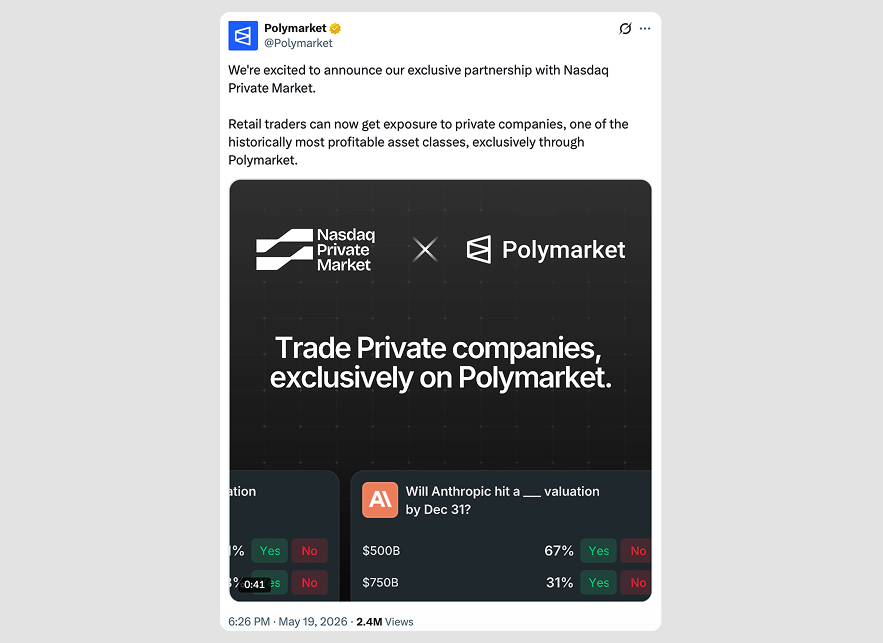
Polymarket has teamed up with Nasdaq Private Market to launch prediction markets tied to private-company milestones — letting everyday retail traders speculate on outcomes like valuation targets, IPO timing, and secondary share activity.
Nearly 1,600 unicorns globally now hold more than $5 trillion in cumulative value. Until now, most of that wealth creation happened behind closed doors. Retail traders were locked out.
Now they can bet on it.
How it works
Nasdaq Private Market will supply the transaction and valuation data used to resolve the "yes or no" contracts. Traders won't own equity in the companies themselves — this isn't stock trading. But they can take positions on whether a startup will hit a specific valuation or go public by a certain date.
The offering turns private-market developments into tradable prediction contracts, effectively giving retail traders a window into a world that has been locked off for decades.
The regulatory backdrop
The launch comes as the CFTC is fighting state-level efforts to crush prediction markets. The agency just sued Minnesota to block a new law that would make operating prediction markets a felony starting August 1.
"Minnesota farmers have relied on critical hedging products on weather and crop-related events for decades," CFTC Chairman Michael Selig said. "Governor Walz chose to put special interests first and American farmers and innovators last."
The outcome of that case may shape whether states retain authority to criminalize federally regulated event contracts.
Insider trading headaches
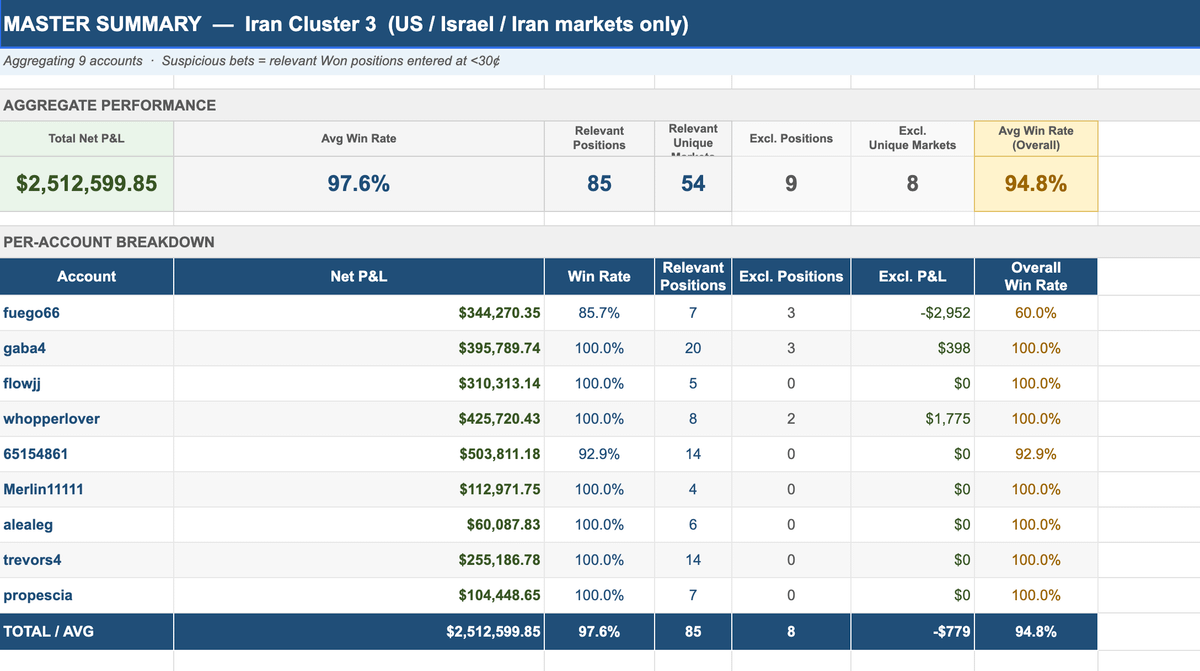
Meanwhile, Polymarket is also dealing with growing scrutiny over suspected insider trading. A cluster of nine interlinked accounts has netted roughly $2.4 million betting on US military actions in Iran — winning 98% of the time.
The accounts were created days before America's initial bombardment of Iran in late February and accurately predicted strike timing, the ousting of Iran's supreme leader, and even the temporary ceasefire.
On-chain sleuths at Bubblemaps flagged the pattern, noting that the only circumstantial clue tying the accounts to the U.S. is one of them being named "whopperlover."
Polymarket's bold experiment
If successful, Polymarket's private-company markets could democratize access to information and speculation that has long been the domain of elites. But with regulators circling and insider trading fears mounting, the platform is walking a regulatory tightrope.
For retail traders, the door is finally open, but whether it stays open is another question.