RWA gold rush: 10 platforms tokenizing real-world assets in 2026

Financial giants from BlackRock to J.P. Morgan have moved into the on-chain RWA market, where real estate, bonds, commodities, and other traditional assets are converted into blockchain-based tokens. What began as an experimental concept has evolved into a growing sector focused on improving liquidity, transparency, and investor access.
Here's a look at 10 prominent platforms tokenizing assets securely and compliantly as of May 2026.
TL;DR
- RWAs (real-world assets) are traditional assets like real estate and bonds converted into blockchain tokens, enabling fractional ownership and 24/7 trading.
- Growth is being driven by institutional giants entering the space, unlocking liquidity, transparency, and lower settlement costs.
- Platforms fall into categories: infrastructure (Zoniqx, Tokeny), institutional (Securitize, tZERO, Ondo), DeFi (Centrifuge, Maple), real estate (Lofty), and multi-asset (Polymath).
- Key players include Securitize and Ondo (each manages roughly $4+ billion), and Maple (over $21 billion in loans issued).
RWA tokenization and triggers of the boom
RWAs (real-world assets) are traditional assets — real estate, private credit, and more — converted into digital tokens that exist on a blockchain. Every token represents either full or fractional ownership of the underlying asset and is tradable on centralized and regulated marketplaces.
Tokenization technology has made traditionally illiquid assets more accessible, lowering the barrier to entry for global investors. Banks, funds, and asset managers have embraced it to boost efficiency.
Why the rush?
- Institutional recognition. Major institutions are now participating.
- Lower settlement costs. Fewer middlemen, faster closing.
- Fractional ownership. You don't need millions to buy a piece of a building.
- Transparency and security. Blockchain improves auditability while reducing tampering risk.
- Worldwide access. Anyone with an internet connection can participate.
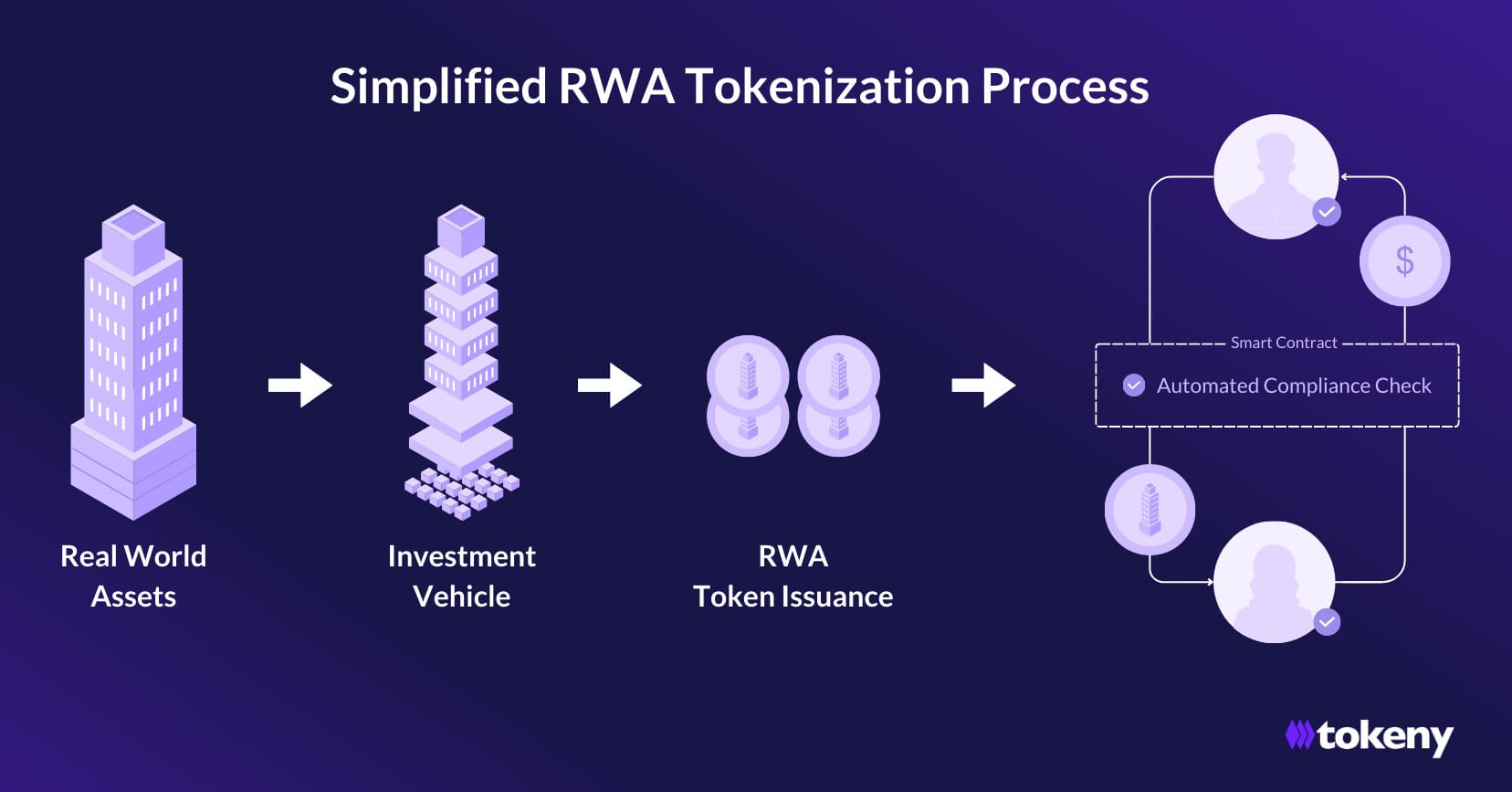
Types of RWA tokenization platforms
Not every RWA platform does the same thing.
- Infrastructure players like Zoniqx and Tokeny provide end-to-end tools for issuance and lifecycle management.
- Institutional providers like Securitize, tZERO, and Ondo focus on regulated securities and large-scale asset tokenization.
- DeFi protocols like Centrifuge and Maple Finance enable lending and yield generation using RWAs.
- Real estate specialists like Lofty offer fractional property ownership.
- Multi-asset platforms like Polymath cover bonds, credit, and commodities across the board.
With that framework in mind, let's dive into the 10 platforms shaping the RWA ecosystem in 2026.
#1 Securitize
Securitize is a dominant player in the RWA sector. The platform currently manages over $4 billion worth of tokenized assets across 580,000 investor accounts. It launched back in 2017 as the first fully digital security platform, letting issuers raise capital while investors tap into alternative opportunities with greater transparency and faster settlement.
Securitize launched BlackRock's BUIDL (BlackRock USD Institutional Digital Liquidity Fund), the world's largest tokenized real-world asset. Other offerings include VanEck's Treasury Fund (VBILL) — which invests in short-term US Treasuries — plus products from Apollo, Hamilton Lane, Blockchain Capital, and many others.
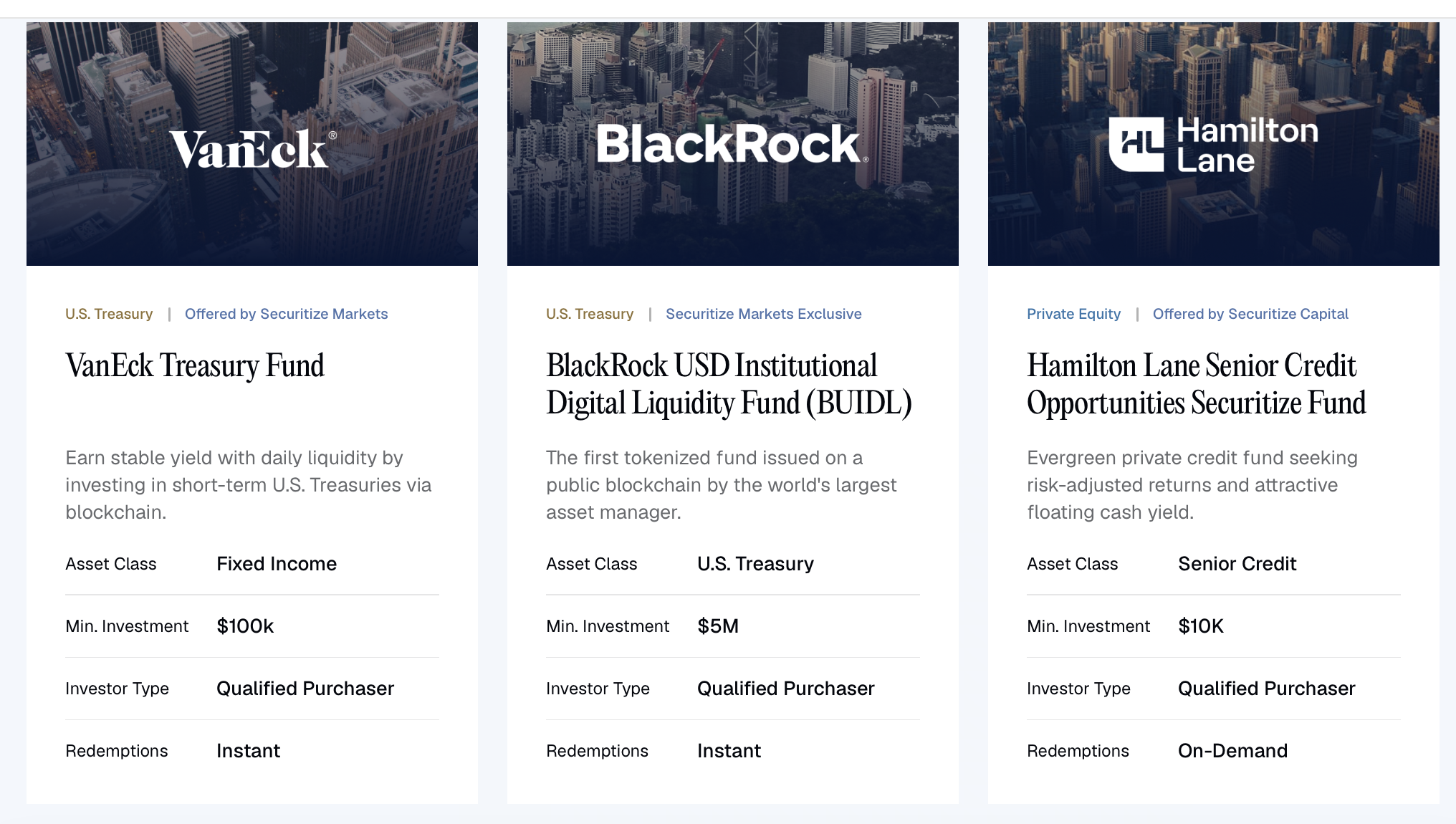
What sets Securitize apart:
- Regulatory firepower. It's an SEC-registered transfer agent and a member of both SIPC and FINRA.
- End-to-end compliance. The only vertically integrated tokenization provider with its own digital transfer agent, broker-dealer, and Alternative Trading System (ATS) to handle regulatory needs.
- Institutional blue-chip partnerships. Powers tokenization for heavyweights like BlackRock's BUIDL and Apollo's Diversified Credit Fund.
- Institutional liquidity integrations. Plugs into systems like Grove for Basin to deliver near-instant stablecoin liquidity to tokenized funds, supporting secure on- and off-chain settlement.
- Public equities infrastructure. Teamed up with the New York Stock Exchange (NYSE) and Computershare to bring traditional equities on-chain — opening the door to fractional ownership and potential 24/7 trading.
- Digital Securities Protocol (DS Protocol). An open-source, blockchain-agnostic protocol built into Securitize that builds compliance directly into smart contracts, enabling compliant trading on secondary markets across dozens of major blockchains.
#2 Ondo Finance
Ondo Finance brings traditional financial products on-chain. The platform tokenizes institutional offerings like Treasuries and bonds — letting DeFi users access low-risk yield without leaving the ecosystem. The scale is impressive: over $3.7 billion in TVL, with 260+ assets available on its Global Markets platform.
Ondo stands out for its compliance-first approach and institutional-grade financial tokenization. In May 2026, it completed the first cross-border, cross-bank redemption of a tokenized US Treasury fund in collaboration with Kinexys by J.P. Morgan, Mastercard, and Ripple. This pilot proved coordination between public blockchain infrastructure and interbank settlement rails works.
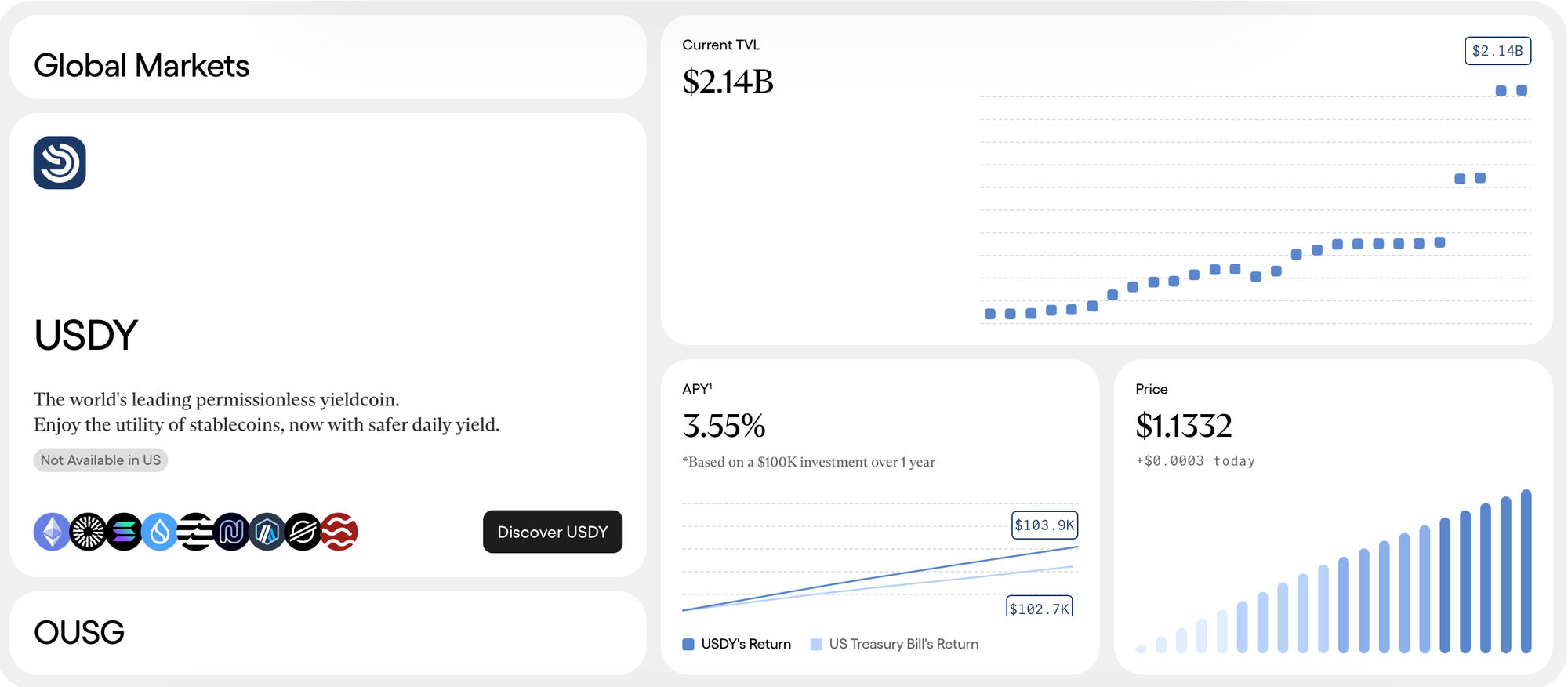
What Ondo brings to the table:
- Tokenized Treasuries (USDM & OUSG). Ondo is a dominant player in the tokenized US Treasuries market. USDY targets non-US investors as a yield-bearing stablecoin alternative. OUSG offers permissioned Treasury exposure for institutional capital.
- Ondo Global Markets. Day-one access to over 100 tokenized US stocks and ETFs. Backed 1:1 by underlying securities. 24/7 on-chain liquidity is something traditional markets can't match.
- Institutional-grade compliance. Regulated broker-dealers. Strict KYC/AML standards. Partnerships with TradFi giants: BlackRock, Fidelity, Franklin Templeton.
- Ondo Chain. Their own compliance-focused Layer 1 blockchain. Built to optimize transactions, support native yield distribution, and integrate regulated assets without friction.
- Cross-border settlement. Teamed up with Kinexys by J.P. Morgan, Mastercard, and Ripple to complete cross-bank, cross-border redemptions. Real-world settlement rails on crypto infrastructure.
Ondo offers a rare bridge to any institution looking to dip into DeFi — or DeFi user wanting exposure to traditional yields. Its platform combines Wall Street compliance with blockchain efficiency. And with nearly $4 billion already locked, the market is voting with its capital.
#3 Maple Finance
Maple Finance is the institutional lender of DeFi. While most platforms demand overcollateralization, Maple offers undercollateralized loans backed by real-world credit assessment — not just crypto collateral.
Maple bridges traditional credit markets with on-chain lending. The platform focuses on transparency, borrower due diligence, and sustainable yield — not speculative returns. As of this writing, the platform has issued over $21.45 billion worth of loans across more than 400 facilities, while its TVL has surpassed $2 billion.
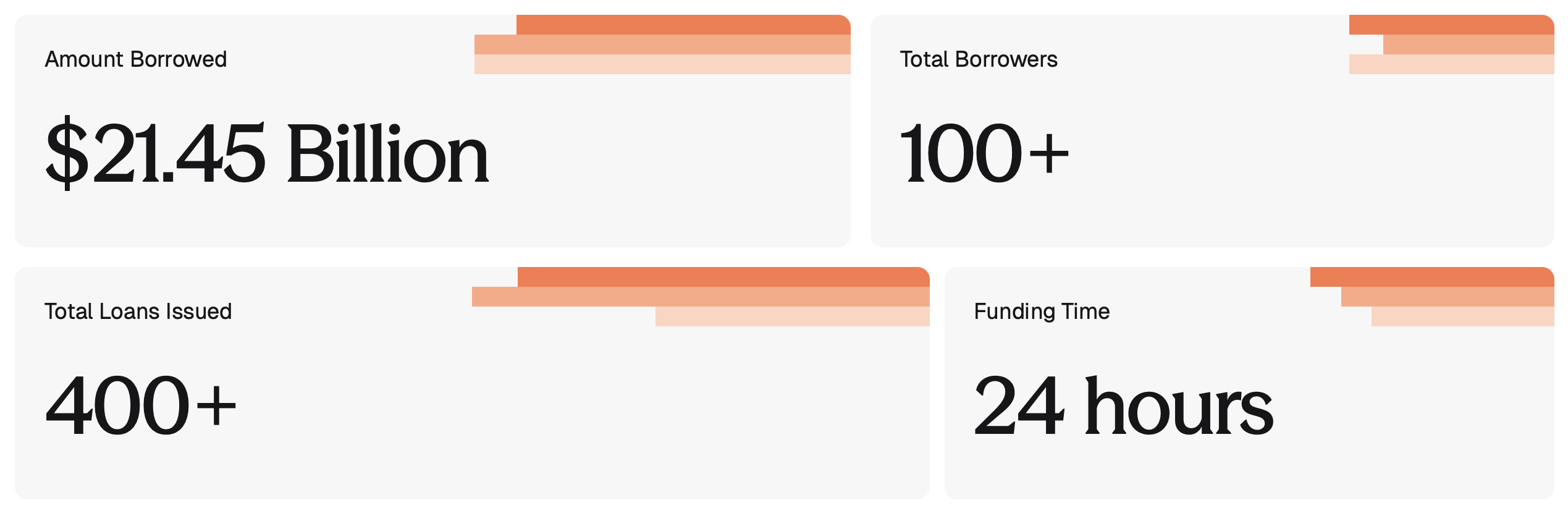
What Maple brings to the table:
- Undercollateralized loans for real borrowers. No need to lock up 150% in crypto. Maple assesses creditworthiness through Pool Delegates — experienced credit professionals who evaluate and approve loan applications.
- KYC-compliant pools. Institutions get regulatory safeguards while maintaining on-chain transparency.
- Pool Delegates as the middle layer. These vetted credit professionals handle borrower screening, risk evaluation, and pool management. They put up first-loss capital, aligning their interests with lenders.
- $MPL token for governance and incentives. Token holders vote on pool parameters, fee structures, and protocol decisions.
- Institutional partnerships. Collaborations with Circle, Zodia Custody, Fireblocks, and Anchorage — plus integrations with Chainlink and Chainalysis for compliance.
Maple has carved out a niche with crypto-native market makers and trading firms that need short-term capital without locking up excessive collateral. When defaults occurred in 2022 and 2023, Maple published public breakdowns and worked with Delegates to tighten practices. That transparency turned potential crises into trust-building moments.
#4 Centrifuge
Centrifuge bridges two worlds. The platform connects real-world assets with DeFi liquidity — letting businesses tokenize invoices, credit, and financial assets to access funding without relying on traditional bank loans. As of May 2026, the platform has tokenized over 1,700 assets and holds over $1.8 billion in total value locked.
The platform offers two ways in: self-serve for those who know what they're doing, or white-glove services for institutions that want a hand.
Builders can tokenize funds, credit, treasuries, or other institutional assets, with automated issuance and reporting. Investors gain exposure to treasuries, credit, index products, and structured vehicles with transparent yield and simplified settlement and reports.
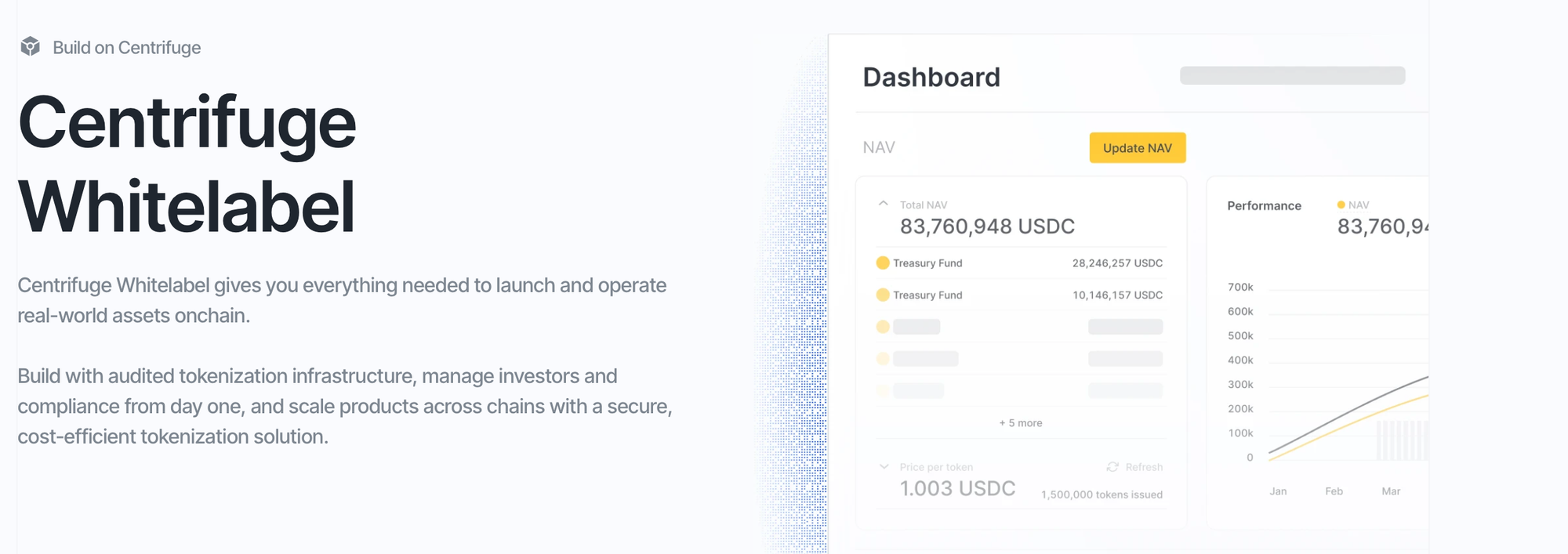
What Centrifuge brings to the table:
- Institutional yield products. Tokenize and manage any asset type — funds, credit, treasuries, you name it.
- Seamless DeFi connectivity. Integrations across DeFi unlock liquidity and secondary markets. No silos.
- Automated infrastructure. Streamlines origination, reporting, and lifecycle management. Real-time on-chain performance data is always there.
- Tinlake protocol. The engine underneath. Borrowers get financing. Investors earn yield from real-world collateral.
Centrifuge's crucial strength is interoperability. MakerDAO and institutional DeFi are plugged in. Real-world lending, invoices, structured finance — it's DeFi earning yield from things that exist offline.
#5 Polymath
Polymath takes a different route. Instead of tokenizing assets on general-purpose chains, it built its own blockchain — Polymesh — purpose-built for security tokens. The platform focuses on simplifying the creation and management of regulated digital securities, with compliance, identity verification, and governance baked in.
This platform is known for its compliance-first architecture. Polymath lets enterprises tokenize assets with transparency and legal certainty, making it a go-to choice for regulated markets.
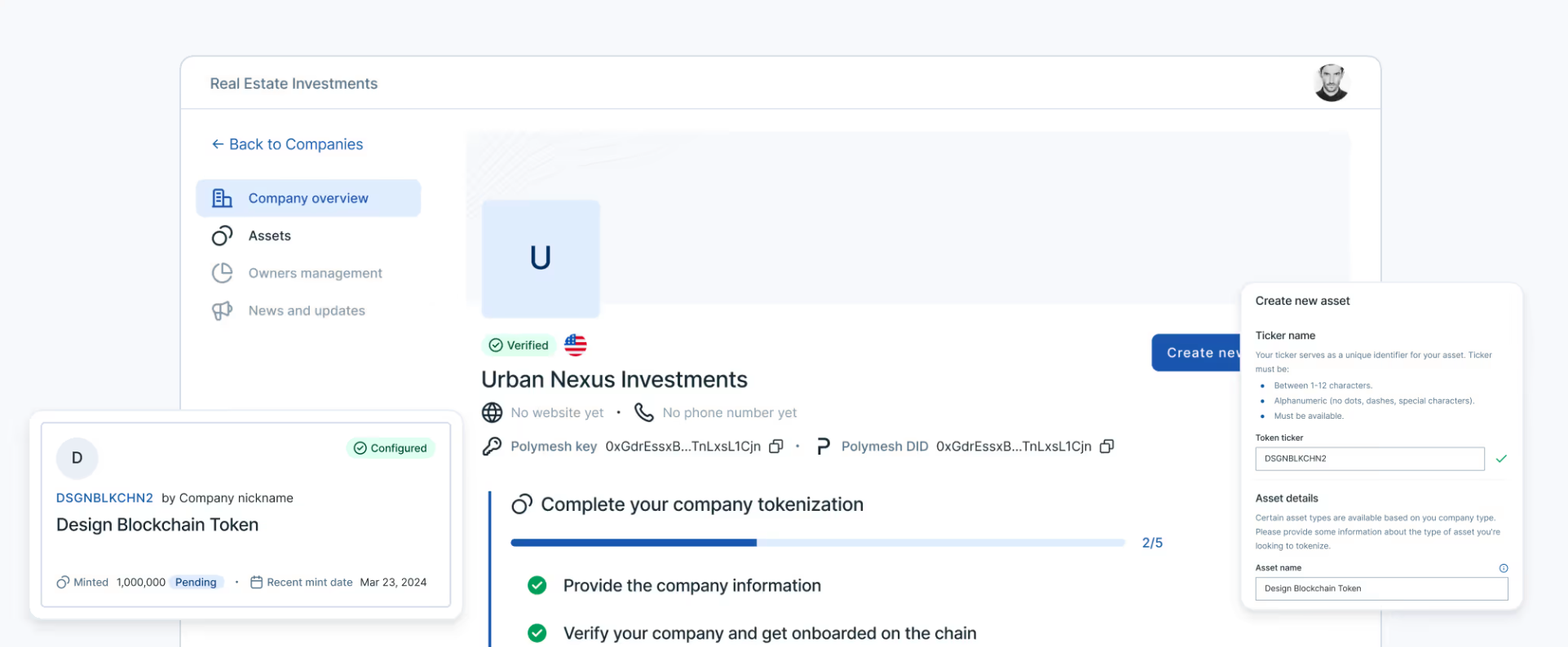
What Polymath brings to the table:
- 200+ tokens deployed. A proven track record in the security token space.
- Creator of the ST-20 standard. The token standard built specifically for regulated securities.
- Polymesh blockchain. Not just a product — their own Layer-1 blockchain designed from the ground up for security tokens, with built-in identity and compliance at the protocol level.
- White-label offering: Polymath Capital Platform. A turnkey solution for businesses to issue, manage, and trade digital securities without building everything from scratch.
For enterprises launching compliant tokenized assets, Polymath offers a seamless path. The white-label Capital Platform handles the heavy lifting — from issuance to ongoing management — while the Polymesh blockchain ensures identity and compliance are never afterthoughts.
#6 Tokeny
Tokeny builds infrastructure for the big clients that need compliance without compromise. The platform gives financial institutions and asset issuers the infrastructure to tokenize securities, funds, and real assets with identity checks and transfer rules wired into the system from the ground up.
Tokeny serves over 120 customers, having digitized over $32 billion in assets so far. Interoperability is one of its key strengths: users can tokenize across jurisdictions without getting buried in paperwork. The platform handles the full lifecycle of an asset, from issuance to ongoing management.
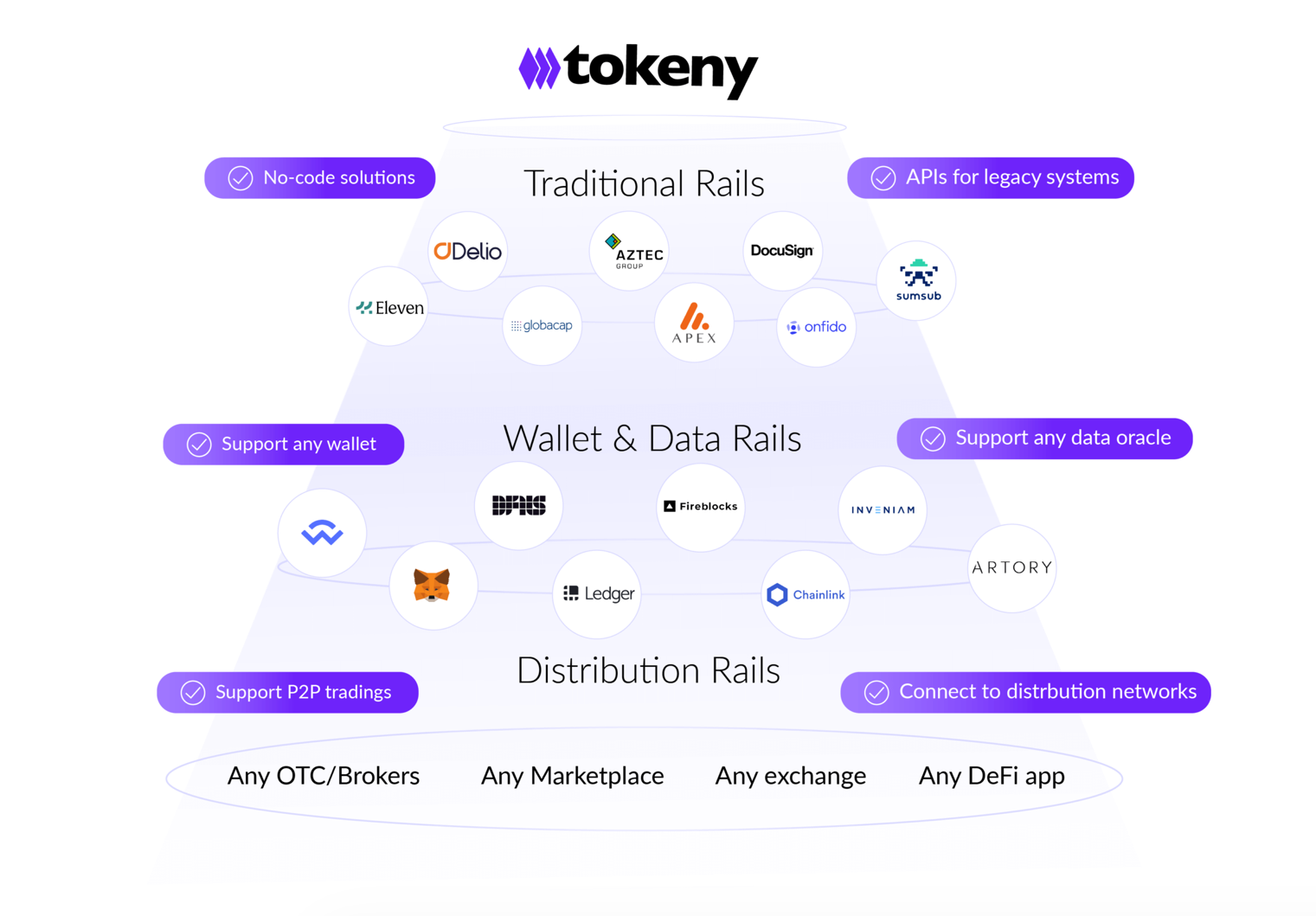
What Tokeny brings to the table:
- ERC-3643 standard. Tokeny created this open-source standard (formerly T-REX) that hardcodes compliance into the token itself. KYC/AML checks happen automatically. Only approved investors get in.
- No-code issuance. Businesses don't need blockchain engineers to launch. The platform does the heavy lifting.
- Built-in wallets. Comes with custodial and non-custodial options, plus a "gas tank" feature that covers transaction fees, so users avoid directly managing them.
- Automated workflows. Connects on-chain and off-chain operations — onboarding, compliance, reporting — cutting manual work and costs.
- Enterprise-grade security. SOC 2 Type II certified. Audited, secure, and ready for institutional money.
- Multi-chain flexibility. Rooted in Ethereum but works across multiple blockchains, public or permissioned.
Tokeny appeals to institutions that need compliance baked into every transaction. The ERC-3643 standard does the enforcement automatically, while the no-code platform makes issuance simple. And with $32 billion already tokenized, they've proven they can handle serious scale.
#7 RealT
RealT is democratizing real estate. The platform lets investors buy fractional ownership in US properties and earn rental income through blockchain tokens. No need to buy an entire building or manage tenants — users can buy tokens and receive rental income distributions. Anyone, from a student in Brazil to a freelancer in Kenya, can co-own a US rental property with a few clicks.
Each property is wrapped into a Special Purpose Vehicle (SPV). Tokens represent legal ownership rights — enforceable in court. The platform handles KYC/AML, custody, and regular audits. The platform provides a dashboard where you can track rental yields, property value, and your portfolio in real time.
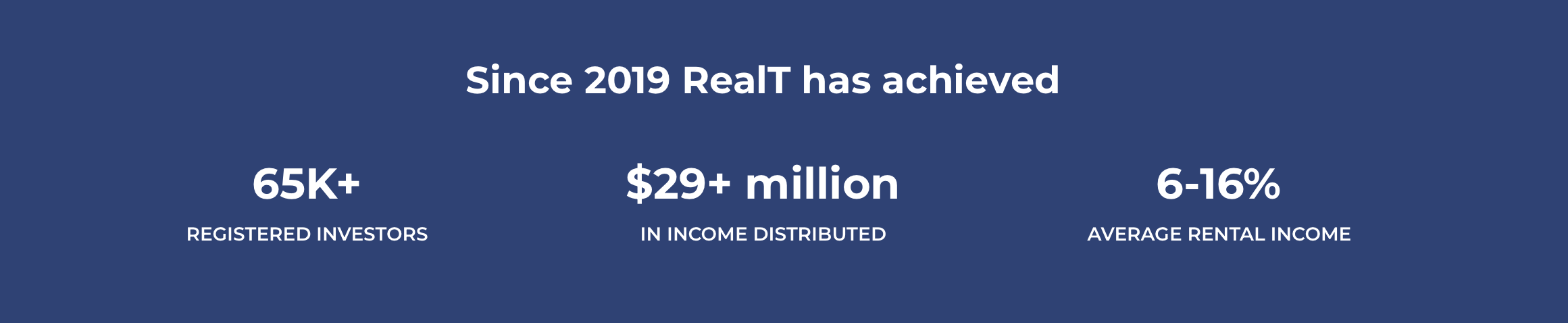
Here's what RealT brings to the table:
- Over 200 properties tokenized. All in the US. Total value north of $45 million.
- Global investor base. Users from more than 125 countries.
- Fractional ownership. Properties are divided into tokens. A $200,000 house becomes 10,000 tokens at $20 each. Small investors get in.
- Automated rental income. Smart contracts collect rent and distribute it to token holders. No middlemen, delays, or arguments.
- Secondary market. Holders can sell their tokens anytime instead of waiting months for a buyer. Real estate finally becomes liquid.
- Fiat on-ramps. Tokens can be easily bought with regular currency.
Real estate has always been a wealth-building machine — but only for those who could afford the down payment, navigate the paperwork, and wait out the illiquidity. Fractional real estate flips the script. These platforms hit $2.8 billion in transaction volume in 2024 — and by 2030, tokenized real estate could be a $3 trillion market. That's 15% of the entire real estate market.
#8 tZERO
tZERO puts a strong emphasis on regulation — operating an SEC-registered Alternative Trading System (ATS) and a FINRA-member broker-dealer. The platform focuses on tokenized securities trading and regulated assets. It provides compliant infrastructure for issuing and trading such assets, from issuance to secondary market.
For tZERO, the RWA universe extends beyond private funds and Treasuries — its collaboration with AGORACOM brings North American public company shares on-chain. It has also joined forces with institutional networks like Uphold and Stobox to expand global reach and provide secure custody and clearing.
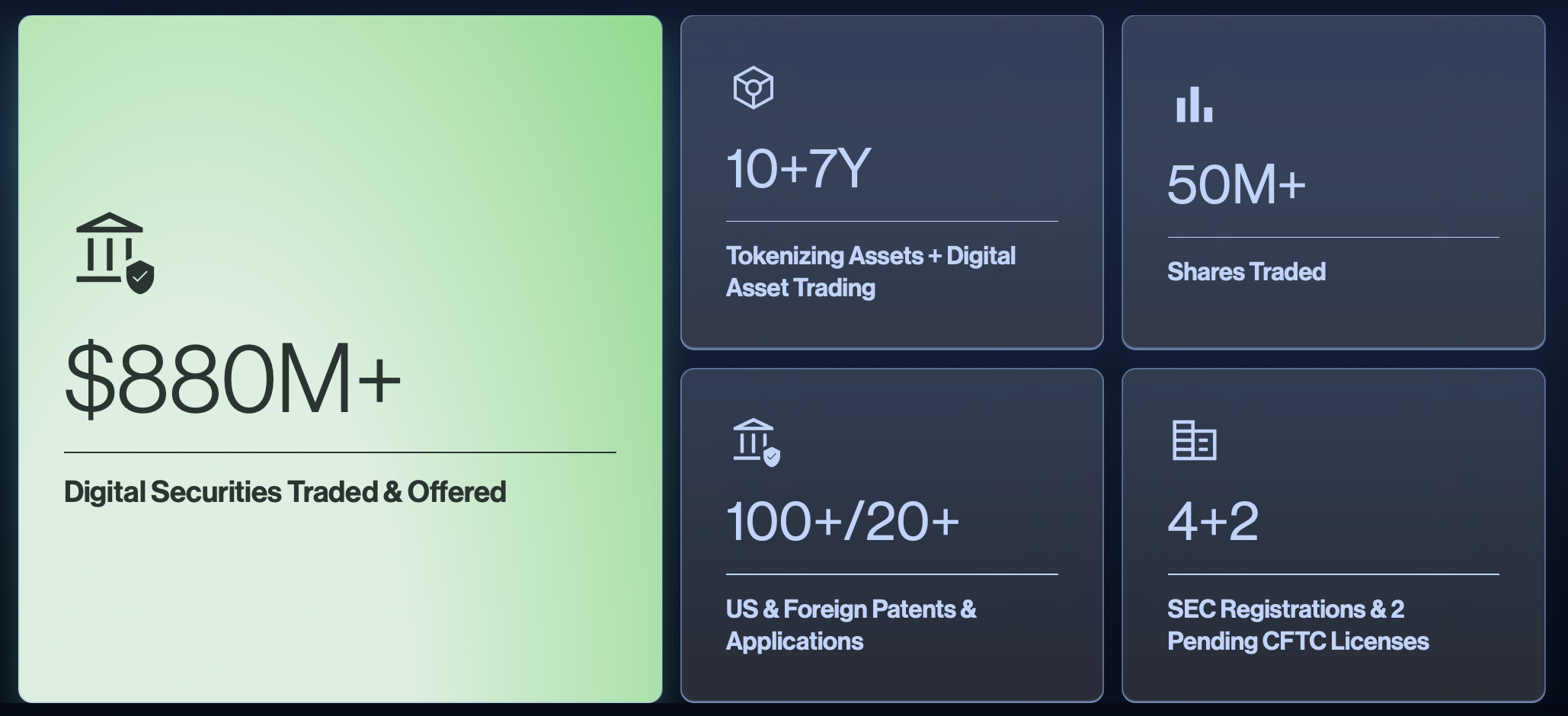
According to tZERO's website, over $880M+ in digital securities are currently being traded, with over 50 million shares already bought and sold.
What tZERO brings to the table:
- Strict regulatory compliance. Full lifecycle coverage. Issuance to secondary trading, all under SEC and FINRA oversight. No gray areas.
- Patent-backed technology. Over 100 patents powering compliance-aware smart contracts, transfer logic, and broker-dealer-level identity verification.
- Multi-blockchain ecosystem. Integrates with Aptos for institutional asset issuance, plus Polymesh for compliant on-chain environments. Not locked into one chain.
- Real-time settlement integration. A feature called "Yield-in-Transit" — built with Tassat and Arca — lets digital balances earn interest while moving between parties, reducing idle capital during settlement.
- Secondary trading support. Tokenized securities aren't just issued on tZERO; they also trade on it.
tZero caters to institutions that can't afford to guess about compliance. With over 100 patents, SEC and FINRA registration, and institutional-grade security at its core, it offers a level of confidence few rivals can match.
#9 Lofty
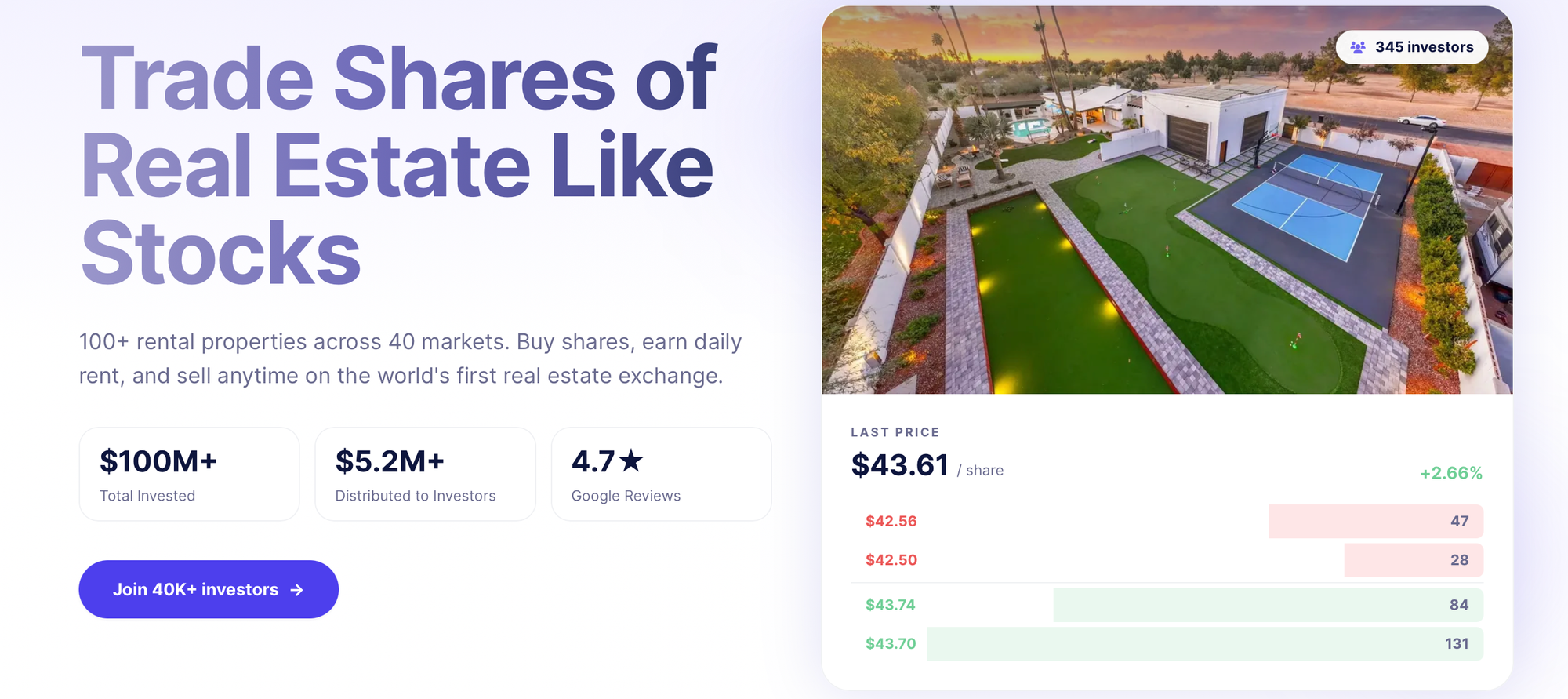
Lofty makes real estate investing accessible. The platform fractionalizes rental properties into tokens — starting at just $50 per share — enabling users to earn daily income payouts from rent. While the TVL looks modest in comparison compared to giants like Securitize (under $100 million), the platform serves thousands of daily active investors.
Holders can sell their tokens anytime on the built-in secondary marketplace, without landlord headaches. Lofty partners with vetted property management firms like HomeRiver Group to handle tenants, repairs, and administration. Around $4 million in rent payouts has already been distributed.
What Lofty brings to the table:
- Micro-investments. Users bypass the traditional down payment to own a piece of real estate for as little as $50.
- Daily passive income. Rental yields are paid every day — not quarterly. Steady, automated, transparent.
- Institutional-grade liquidity. The secondary marketplace lets you sell tokens anytime. No waiting for a buyer to close.
- Low barriers to entry. Lofty natively runs on Algorand (USDC or ALGO), but users can also buy in with fiat via debit or credit card with modest transaction fees.
- Outsourced property management. Lofty handles the messy stuff — tenants, repairs, administration — for a low management fee.
For retail investors, Lofty is the most accessible real estate tokenization platform out there. The plateau in TVL since September 2025 may suggest retail adoption has slowed, at least for now. But the model itself is proven: fractional real estate with daily yields and a liquid secondary market.
#10 Zoniqx
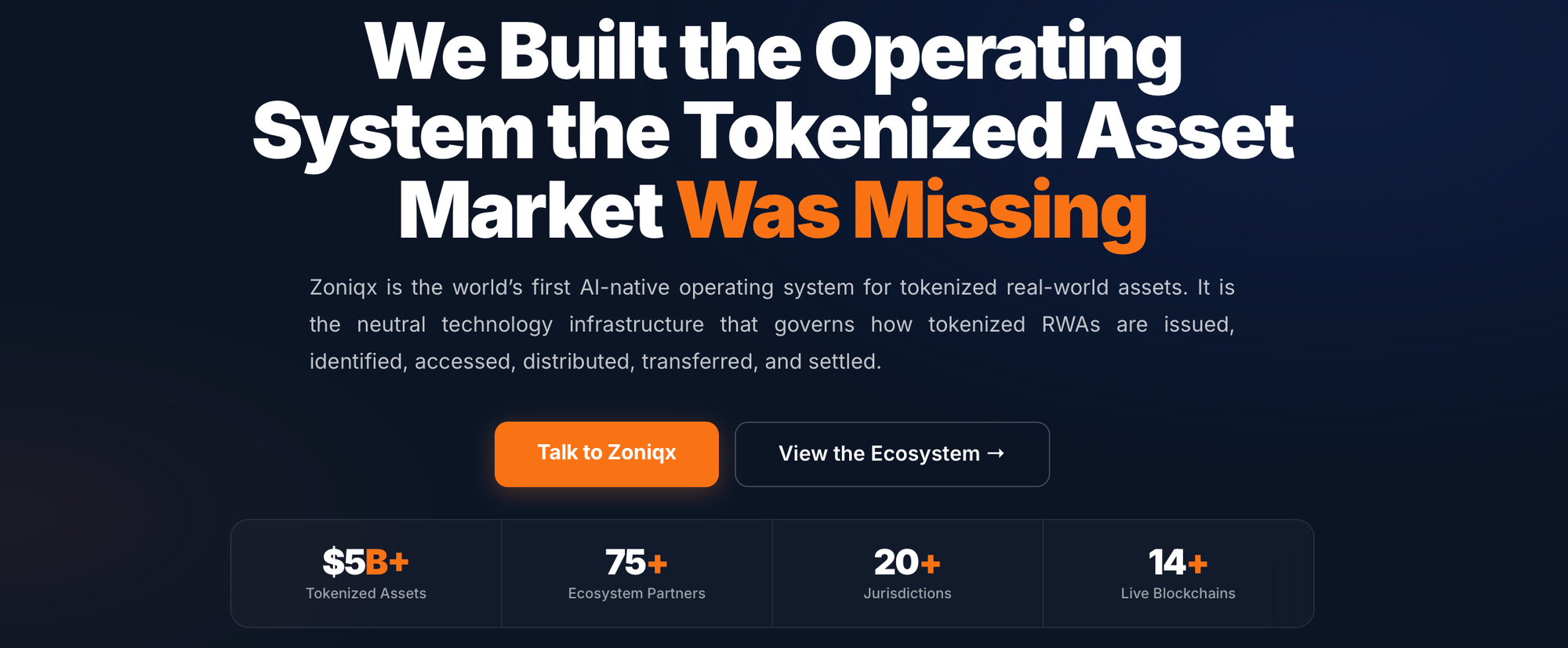
Zoniqx was built for speed and scale, promising to turn real-world assets into compliant digital securities within 48 hours. It has tokenized nearly $5 billion in assets so far across the US, Germany, and the UAE. Deep integration with the XRP Ledger leverages its speed and institutional capabilities.
The platform provides end-to-end tokenization infrastructure for enterprises, powered by AI. Real estate, funds, private equity — Zoniqx handles multiple asset classes through a modular, API-driven architecture. It has also deployed enterprise-grade RWA tokenization on Midnight, using programmable privacy to protect financial data.
What Zoniqx brings to the table:
- Tokenization-as-a-Service (TaaS). An API-driven, low-code/no-code infrastructure. Issuers can digitize traditional assets without hiring a blockchain dev team.
- RWAs meet AI. Positioned as "the world’s first AI-native operating system" for RWAs — "a neutral, AI-powered operating layer that governs how tokenized assets behave, comply, and are distributed, across every institution, jurisdiction, and blockchain."
- DyCIST protocol (ERC-7518). Stands for Dynamic Compliant Interoperable Security Token. Compliance is baked in through KYC, AML, and lock-up rules embedded directly into the token layer.
- Tokenized Asset Lifecycle Management (TALM). End-to-end coverage — from investor onboarding to eligibility enforcement to dividend distribution to secondary trading. One system, full lifecycle.
- Asset and chain agnostic. Builders can deploy across EVM and non-EVM blockchains: Hedera, XRP Ledger, Avalanche, Polygon, Midnight. No vendor lock-in.
Zoniqx offers a rare combination of speed and compliance to enterprises that need to tokenize assets at scale. Its 48-hour issuance, built-in transfer rules, and nearly $5 billion already deployed prove its model is in demand.
Wrap-up: RWA landscape in 2026
The RWA tokenization market has reached an inflection point. What started as a niche experiment is now backed by BlackRock, J.P. Morgan, and the New York Stock Exchange. Over $4 billion sits with Securitize alone — while Ondo just proved cross-border settlement works with traditional banking giants and Maple has issued over $21 billion in on-chain loans.
No single platform dominates every category. Infrastructure providers like Tokeny and Zoniqx power the back end. Institutional specialists like Securitize, Ondo, and tZERO handle regulated securities. DeFi protocols like Centrifuge and Maple bring RWAs into lending markets. Real estate platforms like RealT and Lofty open the door for retail investors. Polymath offers its own blockchain for security tokens.
The competition is healthy. The institutions are here — the only question now is how fast the trillions will follow.