Clapp Weekly: Geopolitical shockwave, 'Sell America' trade, CFTC's 'Golden Age' initiative

BTC price
Bitcoin slipped below $90k yesterday as geopolitical tensions coincided with Japan’s bond panic. Yields soared to record highs (above 4%) on fiscal fears — compounding market anxiety over Greenland-related tensions. The price had briefly stabilized after Sunday's sell-off, sparked by President Trump threatening new tariffs on European countries (more below).
BTC jumped to $97,538.10 on Thursday, January 15, and wobbled around $95k for three full days. On January 19, it sank to a low of $92,489.45 before briefly recovering. The decline resumed the next day, culminating in a drop to $88,312.84 hours ago.
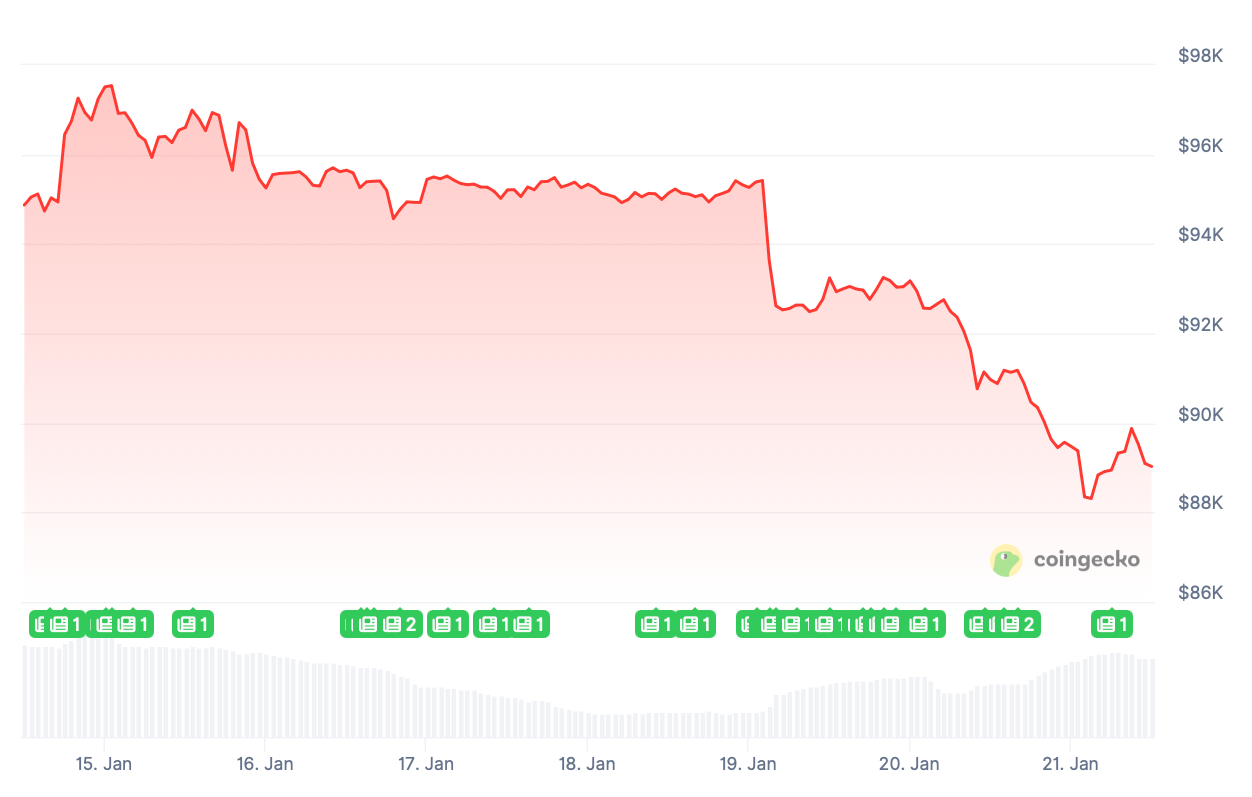
Currently, BTC is changing hands at $89,500.43, with a 24-hour loss of 2.3% and a 7-day change of -6.0%.
ETH price
Ether followed the broader sell-off after consolidating below $3,400. With a record 30% of total supply now staked, liquidity is constrained, and derivatives traders are cutting back on leverage. Yet usage is surging — daily transactions hit record levels in mid-January, and the “new user” cohort is growing fast. Meanwhile, BitMine has added 35k+ ETH over the past week.
The price seesawed and stabilized around the $3.3k mark through January 17. A push to $3,361.02 on January 18 was short-lived, as ETH plunged to $3.2k the next day and sank deeper. Eventually, ETH bottomed at $2,935.62 a few hours ago.
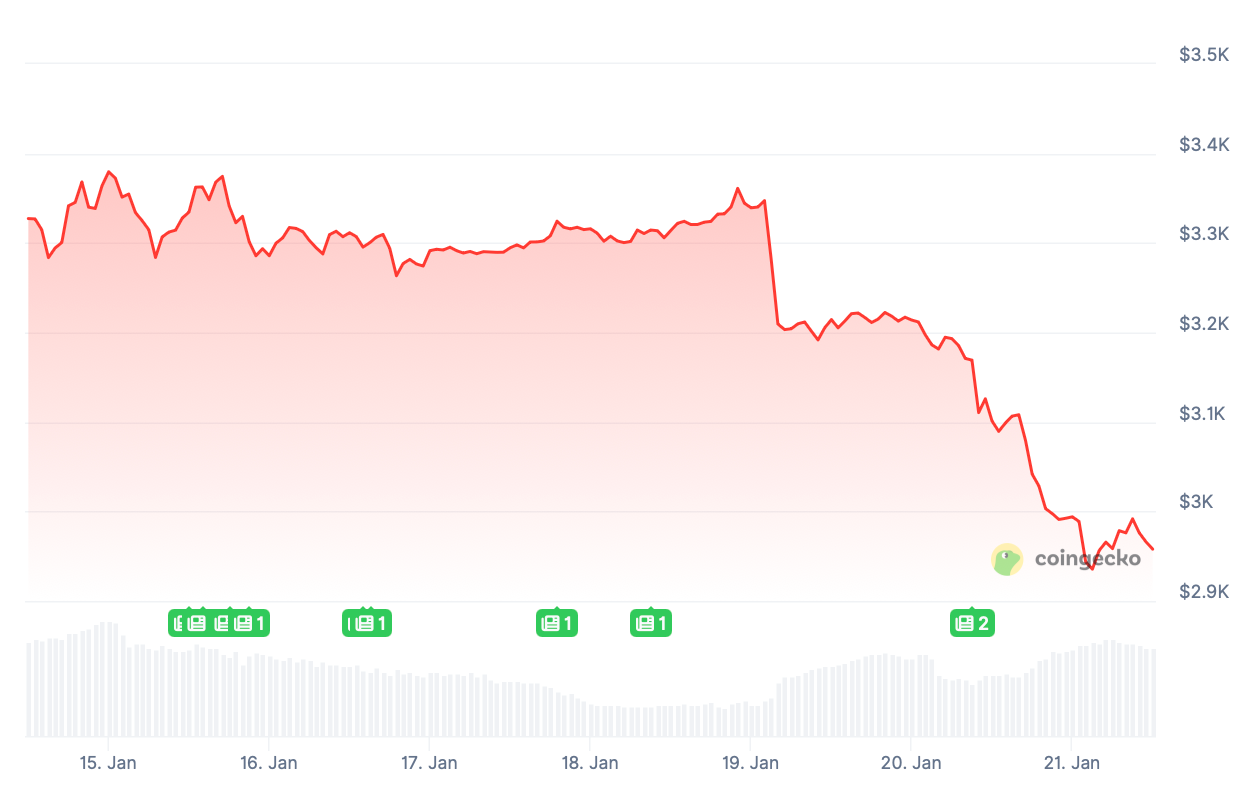
Currently, ETH is trading at $2,965.32, down 4.5% over the past 24 hours with an 11% weekly loss.
Seven-day altcoin dynamics
Last week's return to Greed proved fleeting, as sentiment collapsed back into Extreme Fear after a $120 billion market drawdown. Crypto dipped amid Japan's bond collapse and President Trump's threats against the EU. Now, the market is bracing for a bumpy week in trade war rhetoric from Davos — with Trump scheduled to speak today, January 21.
Geopolitical shockwave
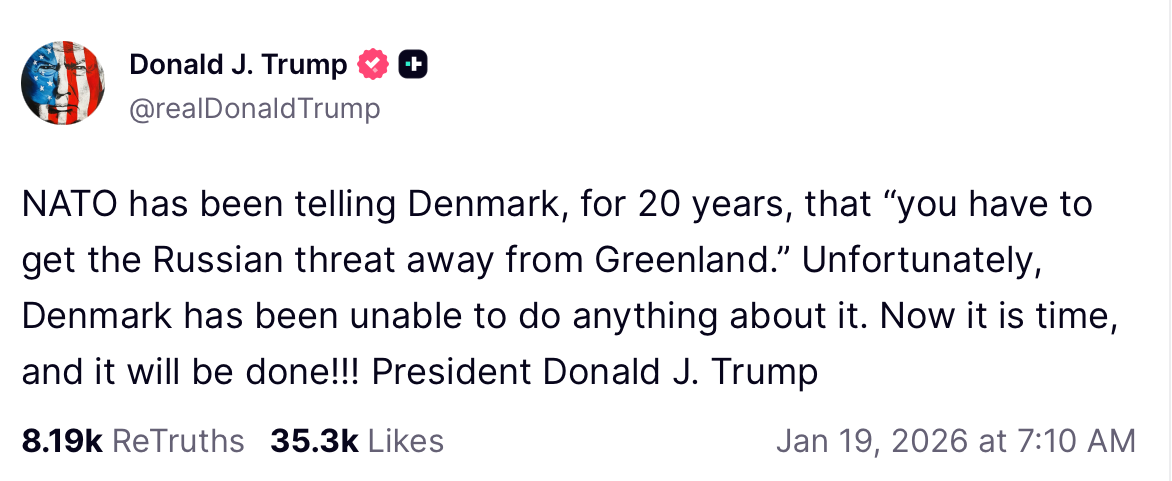
Trump vowed to impose tariffs on countries that oppose his bid to take control of Greenland, exacerbating the uncertainty sparked by his trade war last year. Further unsettling markets, U.S. Treasury Secretary Scott Bessent reaffirmed the intention to deploy tariffs as a geopolitical tool at Davos.
Following Trump’s tariff threat, almost $1 billion in positions were liquidated across broader markets on January 20. Ole Hansen, head of commodity strategy at Saxo Bank, explained:
"If markets have not been watching Japan, now is the moment. The relentless surge in long-dated JGB yields signals that one of the world’s most reliable liquidity backstops is fading, with consequences that extend well beyond Tokyo."
Altcoins fared worse than Bitcoin, whose dominance grew to 59.8% on January 20. Analysts expect smaller tokens to be the most vulnerable short-term as volatility holds. Canton Network (CC) and Pumpfun (PUMP) were among the few resilient performers yesterday.
Fed easing odds shrink
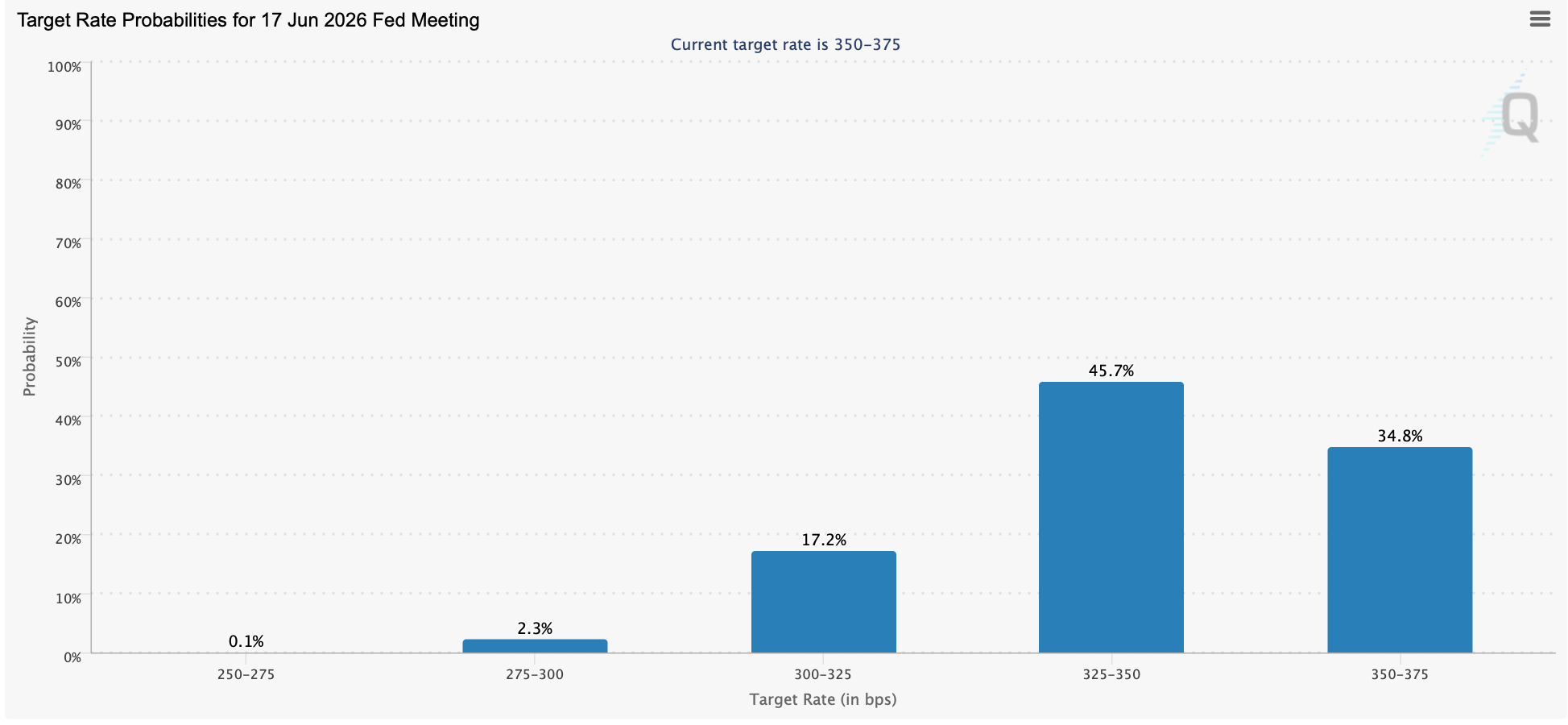
The January 28 FOMC meeting is not expected to bring a Fed interest rate cut due to recent improvements in the U.S. labor market (5% odds on CME FedWatch). Defying expectations of a late-cycle collapse, the economy entered 2026 in a state of “fragile equilibrium.”
Unemployment ticked down to 4.4% in December, while weekly jobless claims reached a near-historical low of 198,000 in early January. This stabilization pushed bets forward to June — the month after Chair Jerome Powell finishes his tenure. Expectations of a higher-for-longer stance are weighing on risk assets.
Privacy coins yield to pressure
Privacy-focused tokens like DASH and XLM initially defied the weekend plunge, with the sector gaining 13% overall. Market observers explained the divergence by selective capital rotation rather than a traditional risk-off exodus. Such assets attract investors who prefer not to de-risk completely.
In this regard, privacy tokens rival stablecoins, traditionally viewed as the preferred safe haven. Demand was fueled by volatility expectations linked to the geopolitical tensions and debates over the US CLARITY Act draft. However, momentum has now faded.
Seven-day winners
- HASH (+29.7%) defied the downturn after Provenance — a purpose-built chain for financial products — flipped Ethereum in RWA value. The RWA market peaked at over $350 billion on Sunday.
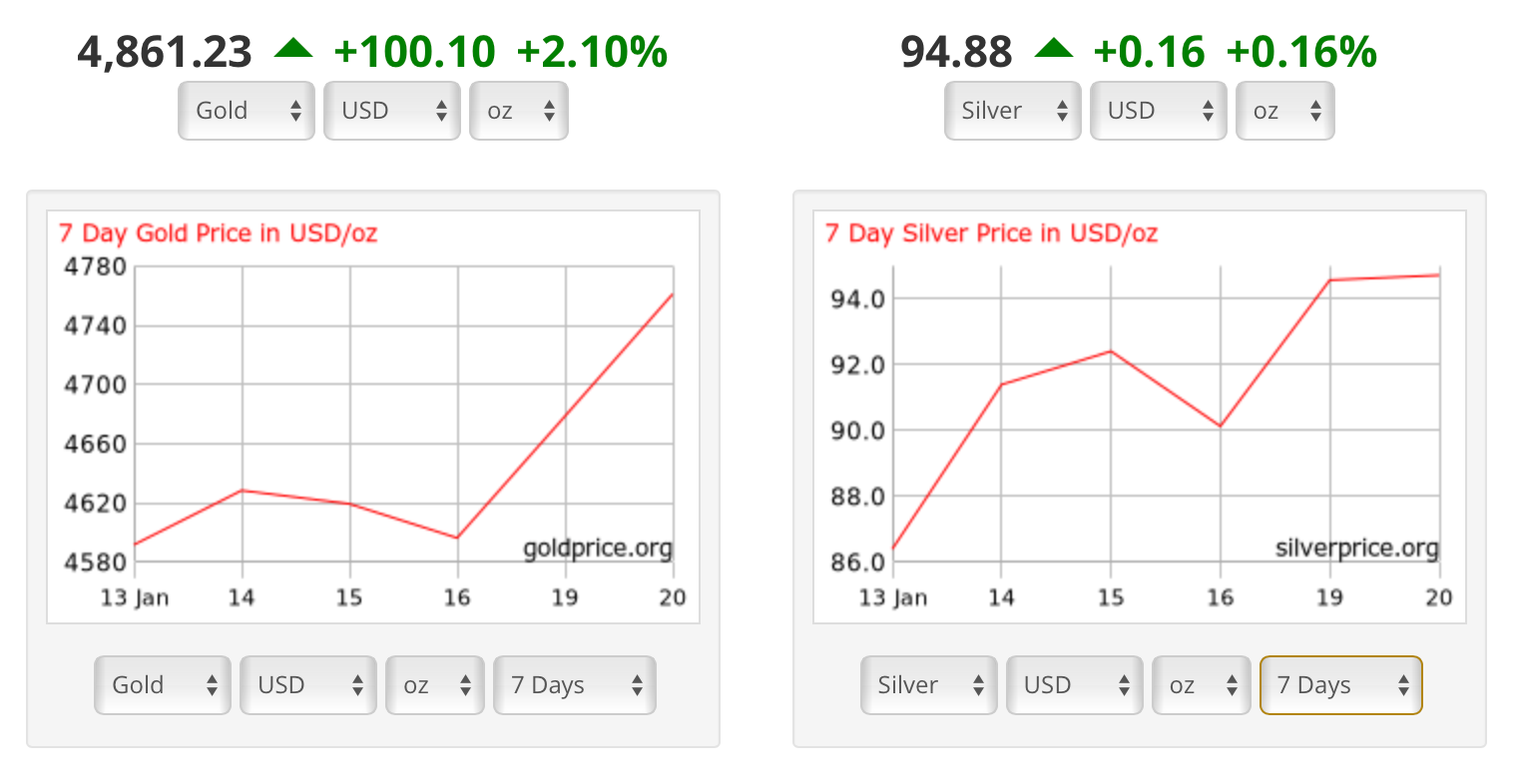
- PAXG (+5.8%) and XAUT (+5.5%) rallied as gold prices surged above $4,750 amid the Greenland tensions. Political and economic uncertainty is fueling a flight to safe-haven assets.
Seven-day losers
- XMR (-26.8%) took another plunge yesterday, correcting after an ATH of $788.50 on January 14; the rally was fueled by the resurgence of the privacy trade and excitement around protocol upgrades. On January 16, XMR spiked after a hacker swapped over $282 million in BTC and LTC for XMR.
- PEPE (-26.0%) has seen a sharp sell-off, echoing Bitcoin's drop in its third consecutive bearish week. Despite elevated trading activity, sentiment in the meme coin sector is mixed.
- ENA (-24.4%) followed Bitcoin's plunge on January 19, failing to reverse; the momentum from Ethena USD (USDe) listings on South Korean exchanges has fizzled.
Cryptocurrency news
Bitcoin, US dollar slide as 'Sell America' trade emerges
President Donald Trump's escalating bid to acquire Greenland triggered a classic flight to safety, sending traditional havens like gold soaring while battering risk assets, including Bitcoin and the USD. A fresh threat of tariffs on eight EU allies starting February 1 — described by European leaders as risking a "dangerous downward spiral" — reignited fears of a trans-Atlantic trade war.
Immediate and stark market reaction
The US Dollar Index fell, and the yield on the 10-year Treasury note spiked as bonds sold off. This "sell America" sentiment, as termed by Evercore ISI, propelled gold to a record high above $4,777 an ounce, with silver also hitting a peak.
Conversely, Bitcoin tumbled sharply, shedding over $6,000 from its Friday level to trade near $89,400. Crypto-related stocks followed suit, with major miners and platforms like Coinbase seeing significant losses.
Analysts frame this as a macro shock forcing a retreat from risk. "Bitcoin currently reacts to headlines," said Gracy Chen, CEO of Bitget. "When policy risk rises, liquidity usually moves first." She noted that despite its "digital gold" narrative, Bitcoin is currently behaving like a risk asset, with capital rotating decisively toward defensive plays like physical gold.
Supreme Court adds another layer of uncertainty
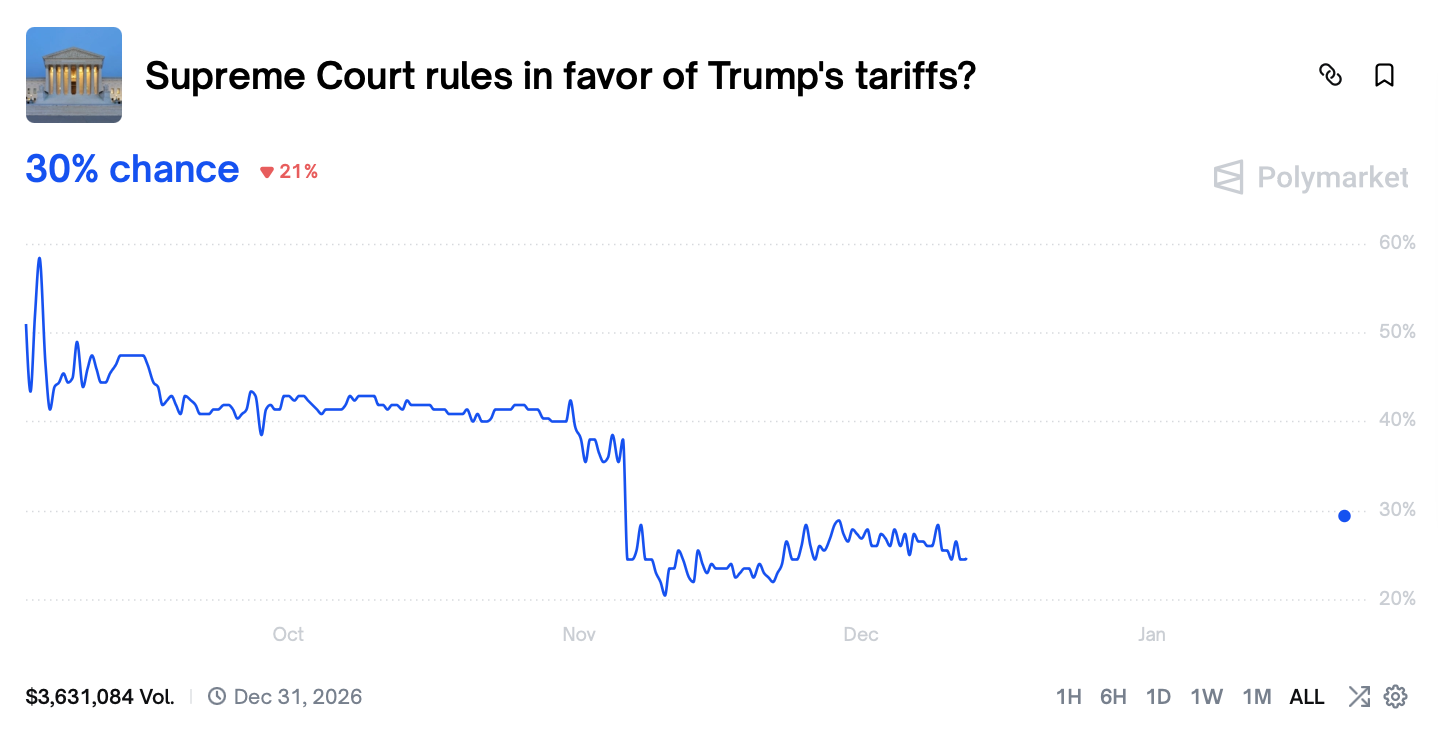
The US Supreme Court is poised to rule on the legality of Trump's tariff authority under the International Emergency Economic Powers Act — the same authority he would use for the new European tariffs. Prediction markets currently see a low probability of the Court ruling in the President's favor.
All eyes are now on Trump's scheduled speech at the World Economic Forum in Davos for any further details on his Greenland strategy. For now, markets are bracing for volatility, with traditional safe-haven flows dominating the landscape and crypto caught in the downdraft.
CFTC pledges ‘Golden Age’ amidst staffing crisis and market turmoil
New CFTC Chairman Michael Selig has launched a “Future-Proof” initiative to rewrite decades-old rules for the crypto and AI era, proclaiming a “golden age” for US markets. This push for regulatory clarity collides with a stark reality: a major staffing crisis and escalating global tensions that are roiling the very markets he aims to oversee.
Chairman Selig, who assumed his role in December, is a vocal critic of the previous enforcement-heavy approach. He has vowed to create purpose-built rules that protect consumers without stifling innovation. The initiative promises a comprehensive review to adapt regulations for blockchain-based trading and AI tools — the end goal is the “minimum effective dose” of regulation.
This comes as Congress deliberates the CLARITY Act, which could grant the CFTC sweeping new authority over crypto spot markets. Crypto industry leaders — including Coinbase CEO Brian Armstrong and Cardano founder Charles Hoskinson — have criticized that the bill, saying it would destroy the core tenets of DeFi by imposing strict, TradFi regulations on decentralized protocols.
Inspector General's sobering report
A report from the agency’s own Inspector General warns the CFTC is “smaller, thinner, and already under internal strain.” Staffing has plummeted by over 21% in the past year, leaving roughly 556 full-time employees to potentially shoulder a vastly more complex, always-on digital market.
Experts like Vincent Liu of Kronos Research note that meaningful oversight will require “targeted statutory expansion and a hybrid framework,” not just stretching old rules.
Volatile backdrop
As Chairman Selig outlined his vision, markets were rocked by a “sell America” trade triggered by renewed US-Europe tariff threats. The agency’s promise of a modernized framework offers a long-term vision for stability, but its immediate capacity to manage a crisis or oversee a booming, complex asset class is under serious question.
The path to a “golden age” appears fraught with both unprecedented opportunity and profound operational challenge.