Clapp Weekly: Iran deal lifts crypto, BlackRock's yield ETF, Hyperliquid steals the show

BTC price
Bitcoin steadied near $65k as sentiment improved following news of a US-Iran peace deal. Spot ETFs also showed early signs of recovery, recording net inflows in two of the past three sessions. The rebound was driven primarily by inflows into BlackRock's IBIT. Meanwhile, accumulation appears to be returning across both retail and whale cohorts, with Glassnode data showing investors added more than 250,000 BTC over the past 10 days.
After bottoming near $61.5k, BTC climbed steadily toward $64.5k by June 14 before briefly pulling back and then extending its rally. The coin peaked at $66,203.74 on June 15 and eased lower over the following sessions.
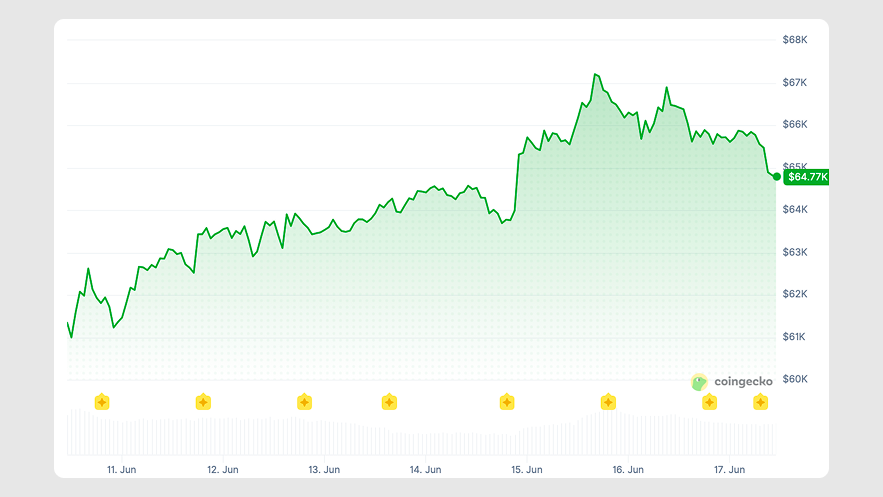
Currently trading at $64,774.88, Bitcoin is down 2.5% over the past 24 hours but remains up 5.7% on the week.
ETH price
Ether bounced from recent lows despite persistent selling pressure. BitMine snapped up another 20,000 ETH ($35.85 million), while wallet geminisir.eth added $19.94 million worth of ETH. US spot ETH ETFs returned to net inflows, attracting $22.5 million after a four-day outflow streak. Traders are also watching a proposed signature scheme that could protect Ethereum wallets from quantum-computing threats for as little as $0.07 per account.
ETH opened the week near $1.6k and spent several sessions trading around $1.7k before surging on June 14. After reaching a weekly high of $1,843.46 the following day, the rally lost momentum, with ETH retreating and failing to reclaim the $1.8k level.
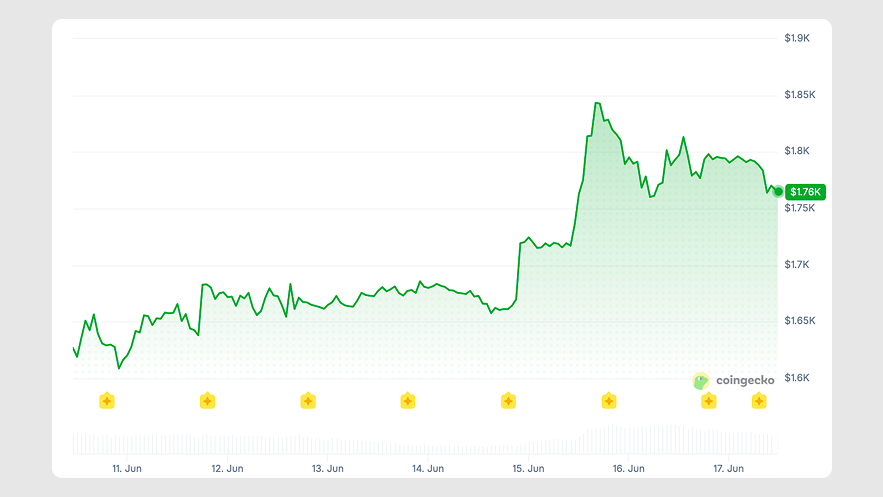
Currently trading at $1,767.30, ETH is down 1.4% over the past 24 hours but remains up 9.1% over the past seven days.
Seven-day altcoin dynamics
The crypto market paused after its relief rally on news of a US-Iran agreement, which appeared to remove a major macro overhang. Sentiment, however, remains firmly in Extreme Fear territory (22/100). Digital assets largely shrugged off the Bank of Japan's benchmark rate reaching its highest level in three decades, as optimism surrounding the US-Iran accord continued to support risk appetite.
US-Iran preliminary deal lifts spirits
On June 14, the US and Iran announced a preliminary agreement to end the Middle East conflict, which has dragged on for four months. US President Donald Trump wrote on Truth Social: “I hereby fully authorize the toll-free opening of the Strait of Hormuz and, simultaneously, authorize the immediate removal of the United States Naval blockade.”
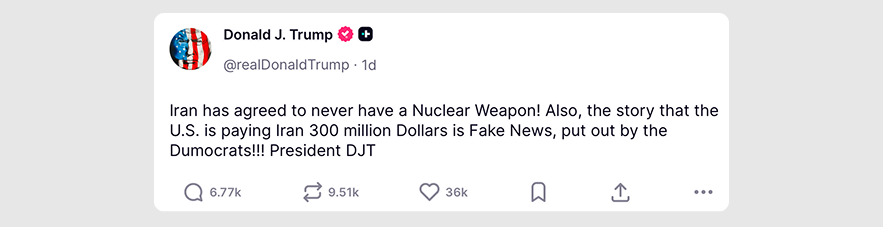
Meanwhile, Iran's Memorandum of Understanding (MoU) states that all military operations across every front, including Lebanon, would cease “immediately and permanently.” Pakistan Prime Minister Shehbaz Sharif confirmed the agreement had been reached, with the signing scheduled for June 19 in Switzerland.
After weeks of conflicting headlines, the announcement sent stocks to record highs and helped lift Bitcoin as oil prices briefly plunged 33%. The crypto market gained as much as 3.6% at the peak of the rally, although hawkish signals from the Fed soon cooled enthusiasm.
Fed rate cut in focus
This week's key macro event is the Federal Reserve's rate decision. The Federal Open Market Committee (FOMC) concludes its meeting today, June 17. No rate cut is expected. Moreover, respondents to CNBC's Fed Survey doubt that a Warsh-led Federal Reserve would cut rates before 2027.
A hot May CPI reading of 4.2%, driven in part by higher energy prices during the Strait of Hormuz disruptions, has largely extinguished hopes for near-term easing. Gregory Daco, chief economist at EY, noted that despite expectations of Warsh's dovish leanings, “he will inherit a committee that has become noticeably more hawkish.”
“Several policymakers have recently argued that rate hikes should remain an option if inflation remains above target, and concerns around energy-driven inflation pressures have only reinforced that bias.”
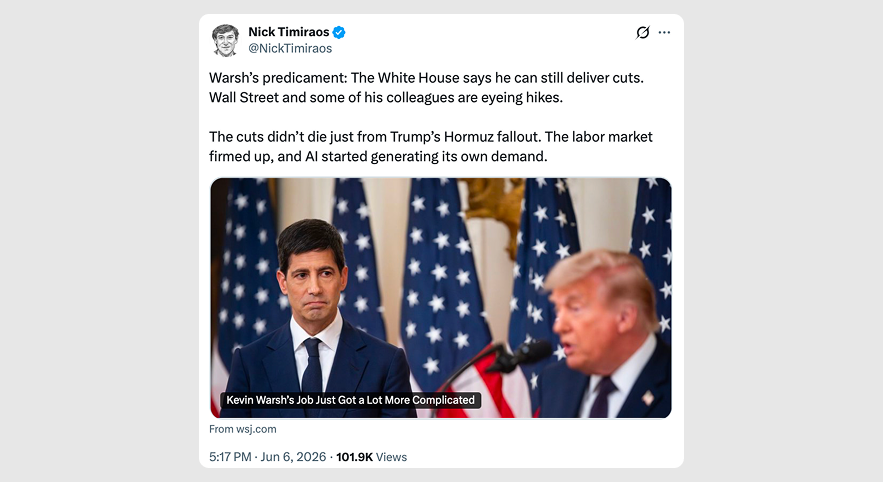
CME FedWatch currently assigns a 99.6% probability that rates will remain in the 3.50%-3.75% range. Investors will be watching the dot plot closely. If Fed officials signal a hike, Bitcoin could face a familiar headwind — tighter liquidity conditions pushing traders away from risk assets.
Prediction markets currently place the odds of at least one 2026 rate hike between 50% and 65%, though the dot plot could quickly reshape those expectations. Polymarket users are also betting on what Warsh might say during his post-meeting press conference.
Warsh has now fully divested from all crypto-related holdings under Federal Reserve ethics rules. He previously held more than 20 crypto-linked investments, including Solana, Compound, dYdX, and a stake in Bitcoin payments startup Flashnet.
Hyperliquid keeps rallying, undeterred
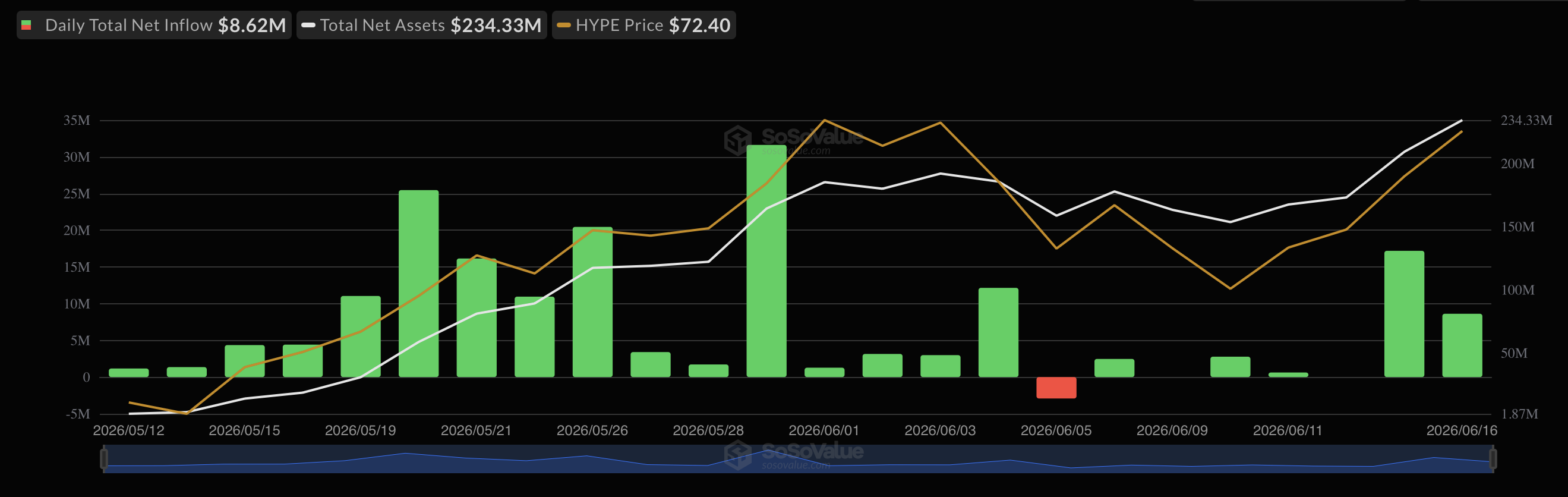
A handful of DeFi and AI-related altcoins continued their surge — most notably HYPE, UNI, and WLD. All three remain firmly in the green with double-digit weekly gains. HYPE has nearly tripled in 2026, making it one of the year's top-performing crypto assets.
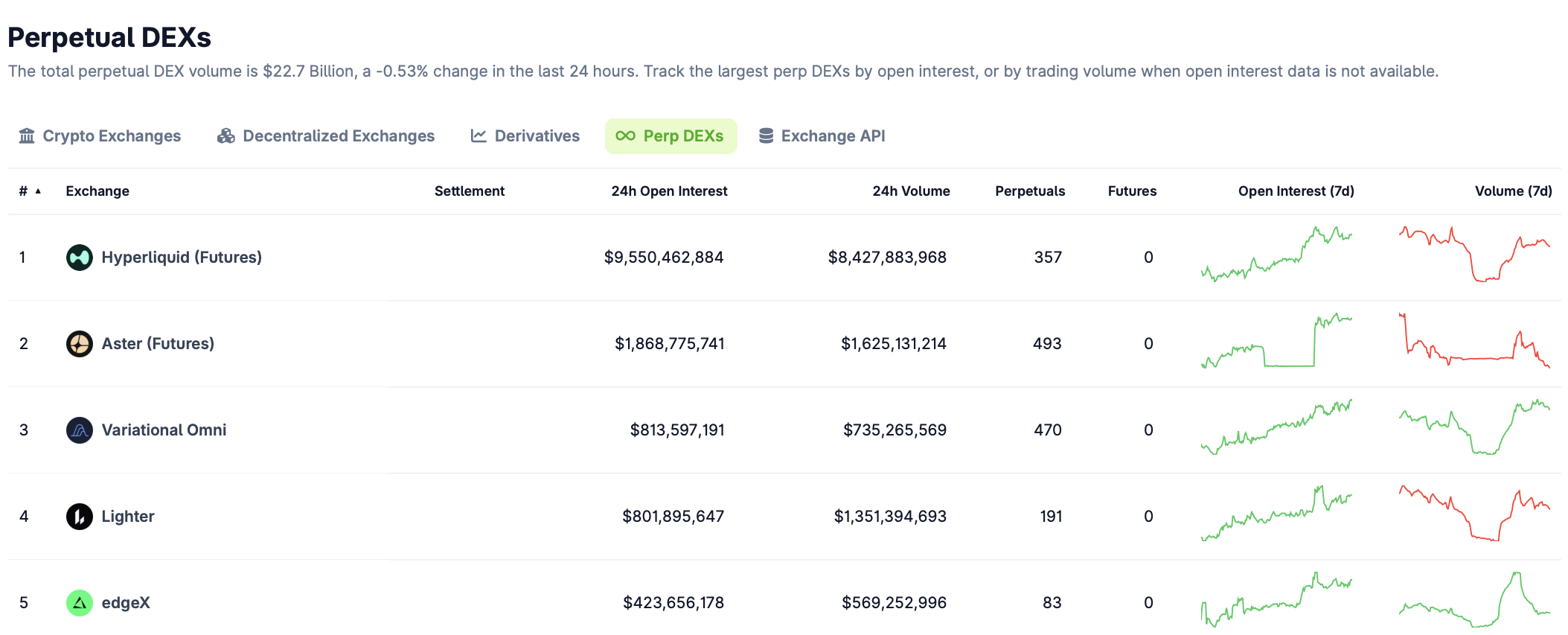
The SpaceX IPO helped Hyperliquid capture 8.3% of global perpetual futures open interest, while ETF-related inflows provided an additional tailwind. Short liquidations added fuel to the rally, helping HYPE reach a new all-time high (more below).
Top weekly winners
- LAB (+54.1%) saw a dramatic spike in trading activity as fresh speculative capital poured in. Volume surged 149.66% despite the absence of any project-specific catalyst, highlighting strong momentum-driven interest.
- UNI (+46.1%) surged after Standard Chartered initiated coverage with an aggressively bullish forecast, assigning the DeFi token a $100 price target by the end of the decade.
- WLD (+35.1%) continued benefiting from AI-sector enthusiasm, reinforced by SpaceX's market debut. The company owns xAI, while OpenAI — which shares co-founder Sam Altman with World Network — is widely expected to pursue a public listing of its own.
Top weekly losers
- BEAT (-42.9%) was hit by heavy profit-taking and a derivatives-driven liquidation cascade following its parabolic rally. On June 12, the token reached a new all-time high on news of Audiera's parnership with Polarise, an AI-powered SocialFi platform, and benefiting from a large short squeeze.
- DEXE (-8.3%) slipped as thin liquidity amplified a broader market pullback. According to CoinMarketCap, trading volume nearly halved, intensifying selling pressure.
- XDC (-3.3%) drifted lower despite the absence of any project-specific negative catalyst. The decline coincided with falling spot volume and likely reflected cautious positioning ahead of today's Federal Reserve decision.

Cryptocurrency news
BlackRock's new Bitcoin ETF: Give up some upside, get double-digit yield
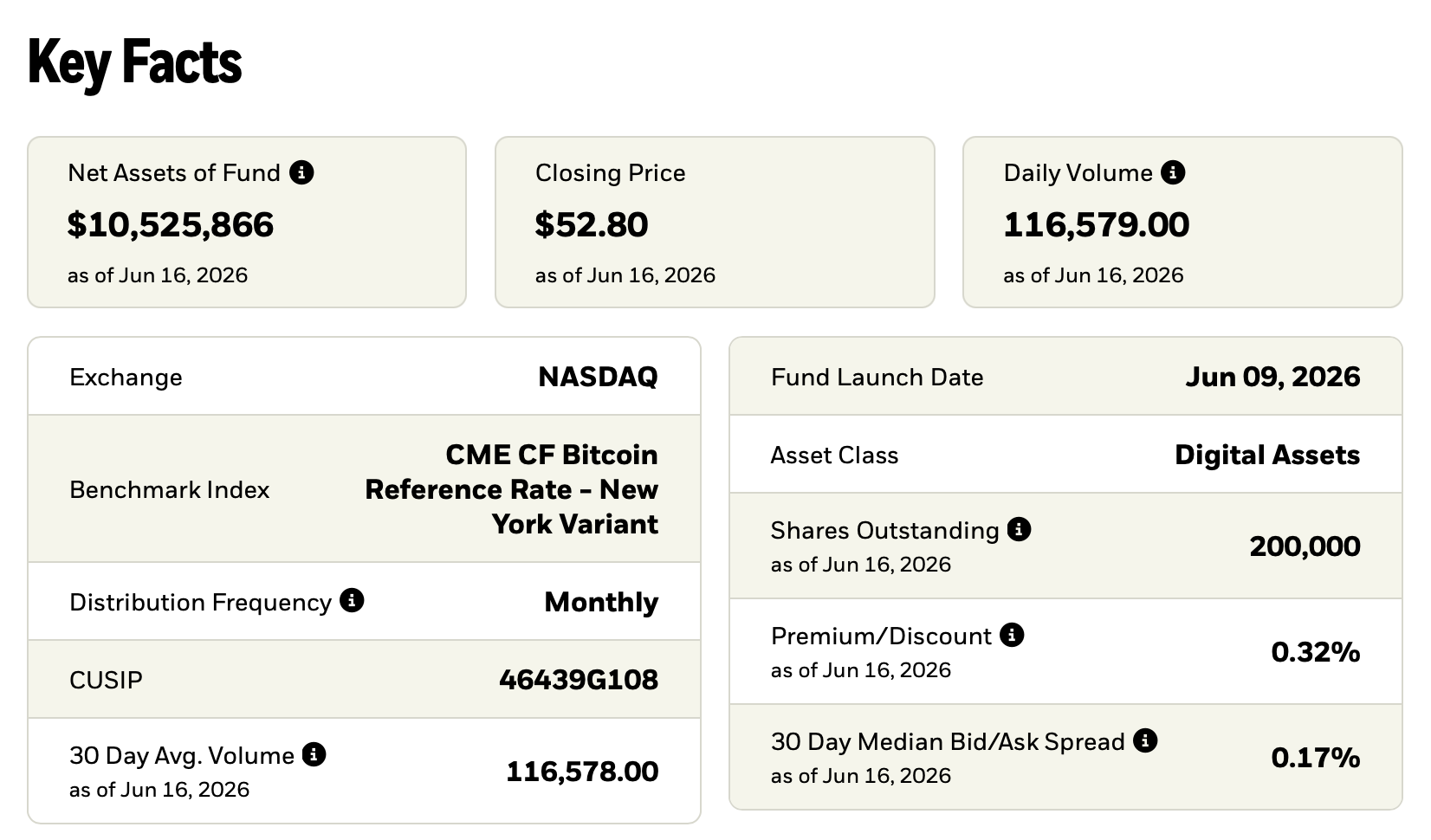
BlackRock has debuted a Bitcoin ETF that does something different. Aside from tracking the price, it also turns Bitcoin's notorious volatility into a paycheck. The iShares Bitcoin Premium Income ETF (BITA) began trading on the Nasdaq Tuesday, offering investors a trade-off: cap some upside in exchange for double-digit monthly payouts.
How it works
The fund splits its holdings between actual Bitcoin and BlackRock's existing spot ETF, IBIT. Then it sells call options against up to 35% of the portfolio. Those options generate premiums — cash payments from buyers betting on a rally.
If Bitcoin stays calm or falls, BITA keeps the premiums and distributes them to investors. If Bitcoin rips higher, the fund still benefits from its IBIT holdings, but the gains are capped.
Tagus Capital explained:
"By deploying a covered-call strategy on its Bitcoin-linked exposure, the fund seeks to convert Bitcoin’s historically high volatility into a recurring income stream with a target of +15% annual yield while retaining around 70% participation in its underlying capital appreciation potential."
The numbers
Robert Mitchnick, BlackRock's head of digital assets, put it this way: "The way the math works today, you can think of it as 70% upside retention in IBIT and a mid-to-high-teens yield."
That's roughly 15% annual yield — a level that could pull in insurers, pension funds, and financial advisors who have been sitting on the sidelines.
"There's no question that some of the challenge that they've had getting over the hump on Bitcoin in the past has been the absence of the yield," Mitchnick said.
Volatility tamer
Bitcoin's 30-day implied volatility has been dropping since 2022, and strategies like this are part of the reason. More systematic selling of options means more premium supply hitting the market, and more downward pressure on volatility.
Bitcoin, already less wild than it used to be, is about to get a little tamer still.
The catch
BITA isn't for everyone — it suits investors seeking income who are willing to sacrifice some upside. Goldman Sachs filed for a similar product in April, while NEOS launched one in 2024. But when the world's largest asset manager moves, the market tends to follow.
Hyperliquid Just Had Its Moment: SpaceX Perps, ETFs, and a New All-Time High
The Hyperliquid decentralized exchange saw its SpaceX perpetual futures become its biggest market on June 12 — the day of the IPO — recording $1.4 billion in trading volume and accounting for about 30% of all activity on the platform. Stock-linked perps collectively generated $18.8 billion in volume in the first half of June alone.
But Hyperliquid's ambitions extend far beyond crypto. The platform is increasingly viewed as a potential rival to traditional exchanges, offering 24/7 trading on tokenized stocks, commodities, and other assets. Its tokenomics create persistent demand for HYPE: as much as 97% of trading fees is directed toward buying and burning the token.
The SpaceX boost
The IPO provided a massive catalyst. SpaceX perpetual futures generated roughly $1.2 billion in weekly volume, helping Hyperliquid capture 8.3% of global perpetual futures open interest.
The timing was perfect. Centralized exchanges like Bybit, Binance, and Bitget all cancelled tokenized SpaceX allocations at the last minute, citing a "share shortage" and leaving traders empty-handed. Others faced undisclosed 180-day lockups.
Crypto investor Simon Dedic called it a "masterclass lesson why you should never trust the middlemen in crypto." His conclusion: "If all you want is economic exposure to these names, why deal with custody games and hidden lockups when you can just trade it 24/7 onchain?"
ETF demand adds fuel
The rally wasn't just about SpaceX. Asset manager Bitwise purchased roughly 77,100 HYPE (about $5.2 million) for its newly launched Bitwise Hyperliquid ETF. Combined with over $17 million in net ETF inflows in a single day and a cascade of short liquidations, HYPE ripped to a new all-time high of $76.70.
An anonymous wallet also withdrew 572,900 HYPE tokens — worth approximately $40 million — from Coinbase Prime and immediately staked them. Moving such a large sum off an exchange and into staking signals deep conviction and long-term positioning.
Coinbase-USDC connection
Speculation is heating up around a potential deeper partnership between Hyperliquid and Coinbase. The platform recently made Circle's USDC its primary trading pair, and under the arrangement, part of the revenue generated from US Treasury securities backing USDC is reportedly set to be used to purchase HYPE tokens.
Some observers believe the relationship could go much further — with Coinbase potentially replacing its own perpetual exchange with Hyperliquid's backend. The logic is compelling: Coinbase users are not particularly fee-sensitive, and even if Hyperliquid powers the infrastructure, Coinbase could continue charging its own trading fees on the frontend.
The hire of Sterling, who previously led onchain initiatives at Circle and recently joined Hyperliquid to focus on business development, has only added fuel to the speculation.
The everything market
Grayscale compared Hyperliquid's platform to Amazon Web Services — open infrastructure that lets developers create products while the HYPE token captures value from every trade. HIP-3 markets, which allow permissionless deployment of perps for equities, commodities, and pre-IPO stocks, hit $3.2 billion in open interest in June and have traded over $200 billion since launch.
For now, HYPE is trading near $76, up over 137% year-to-date. The question is whether it can hold those gains — or whether profit-takers step in. Either way, Hyperliquid just made its point: it's becoming the everything market.