The safest way to borrow against crypto (and it's probably less than you think)

Crypto lenders provide cash while preserving your upside, sometimes at 0% interest. It is as simple as it sounds — just deposit, borrow, and pay back.
But how much should you actually borrow?
The safe answer is probably less than you think.
Let's talk about LTV, liquidation risk, and why conservative borrowing is often the smarter move — even if it means borrowing less than you technically could.
TL;DR
- The safest LTV is 20% or below as a conservative starting point. Most platforms let you borrow more. But that doesn't mean you should.
- At 20% LTV, you have a massive buffer. Assuming an 80% liquidation threshold, your collateral would need to fall about 75% before reaching it.
- Borrowing more than 30% LTV leaves you with progressively less room for a market drop. A normal bear market could put you in danger.
- The goal is to borrow what you need while keeping your position safe.
- Conservative borrowing can also be cheaper. On some platforms, including Clapp, 20% LTV qualifies for 0% APR.
What LTV actually means
While Bitcoin's 75-85% drawdowns seen in earlier cycles may be less common, the market remains volatile. News from the macro, regulatory, and geopolitical fronts can still trigger sharp price swings — which means the value of loan collateral can shrink quickly.
LTV stands for loan-to-value. It's the ratio of what you borrow to what your collateral is worth, and it tells you how much room you have before the position becomes unsafe.
That's why platform LTV tiers often encourage borrowers to deposit more collateral and borrow less. In many cases, the lower the LTV, the lower the interest rate (APR).
- Borrow $10,000 against $50,000 in Bitcoin. That's 20% LTV.
- Borrow $25,000 against $50,000. That's 50% LTV.
- Borrow $35,000 against $50,000. That's 70% LTV.
The higher your LTV, the less room you have for market drops. And the faster a normal correction can push you towards a margin call or liquidation threshold.
The safest LTV is one that gives you enough buffer to withstand a serious market drop without constantly worrying about the next price move. It can also lower your borrowing costs along the way.
Collateral assets matter, too
Bitcoin is not the only acceptable option. With some lending products, you can also use stablecoins or combine several assets in one collateral pool.
Theoretically, your entire collateral could consist of stablecoins like USDT and USDC — meaning price volatility would be much lower, although stablecoins still carry their own risks, including the possibility of losing their peg.
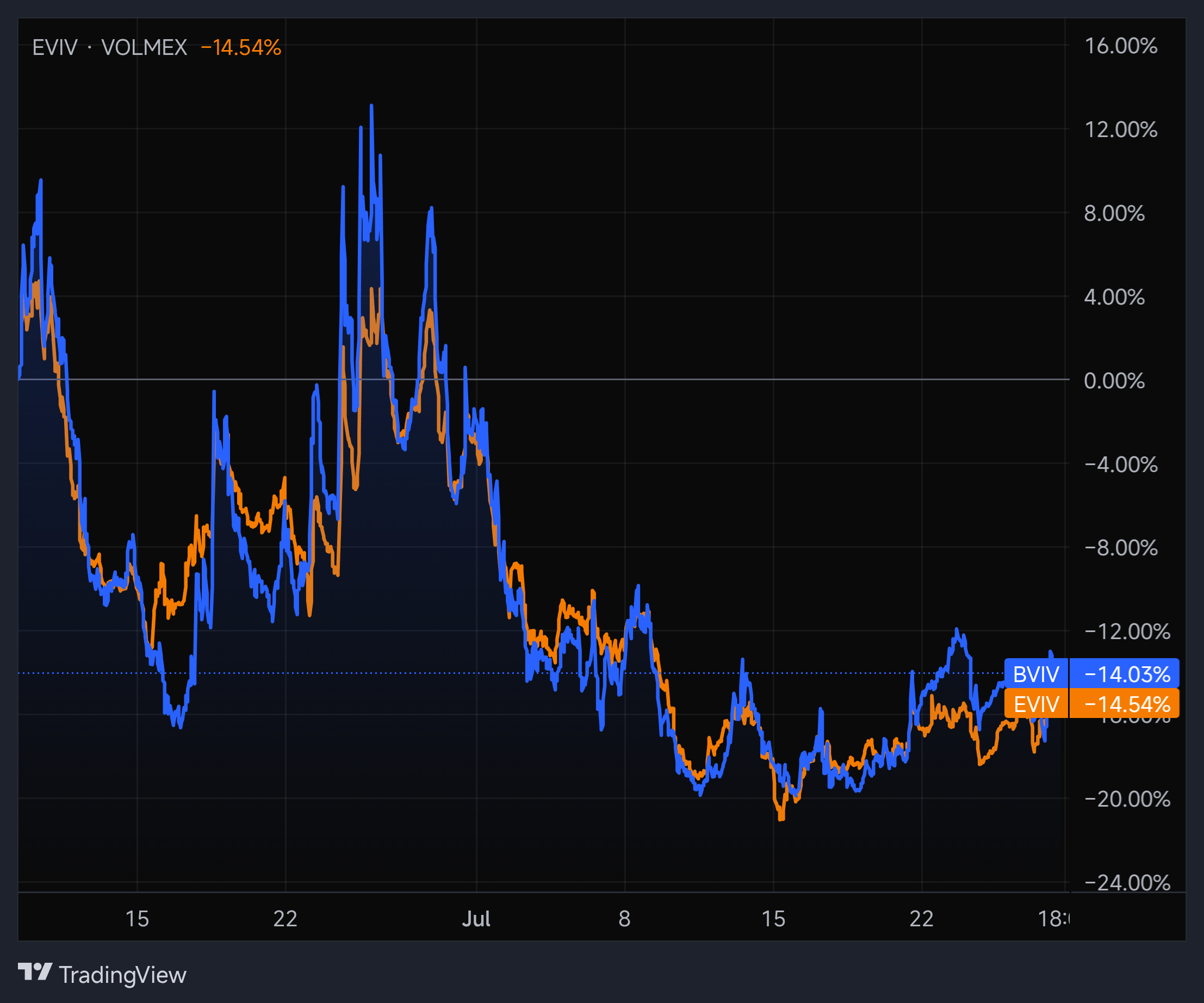
Ethereum's ether is generally more volatile than Bitcoin, often acting as its "high beta" version. When the crypto market moves, ether typically experiences larger price swings in both directions. Smaller-cap assets can be even more volatile because they tend to have less liquidity and thinner markets.
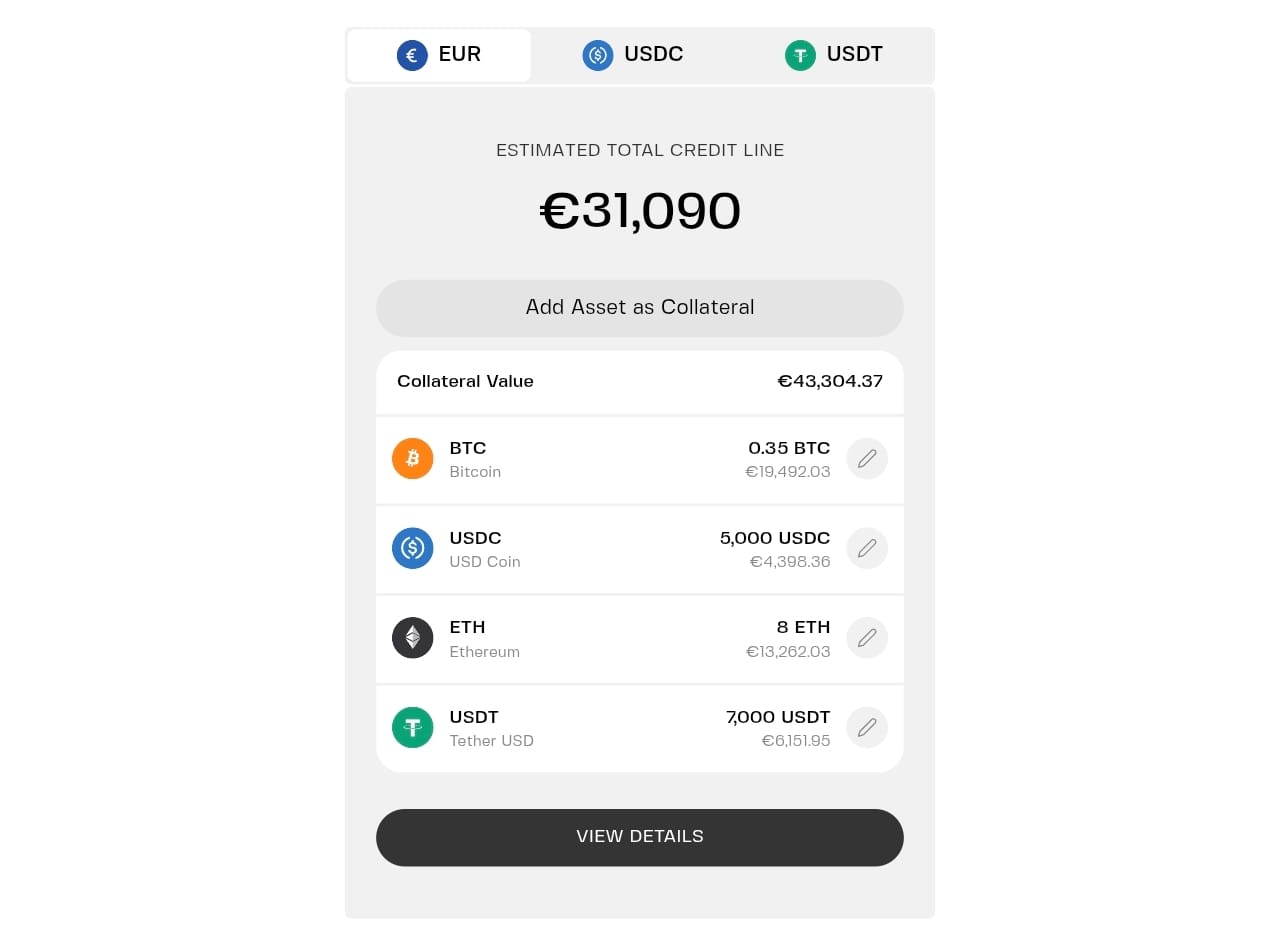
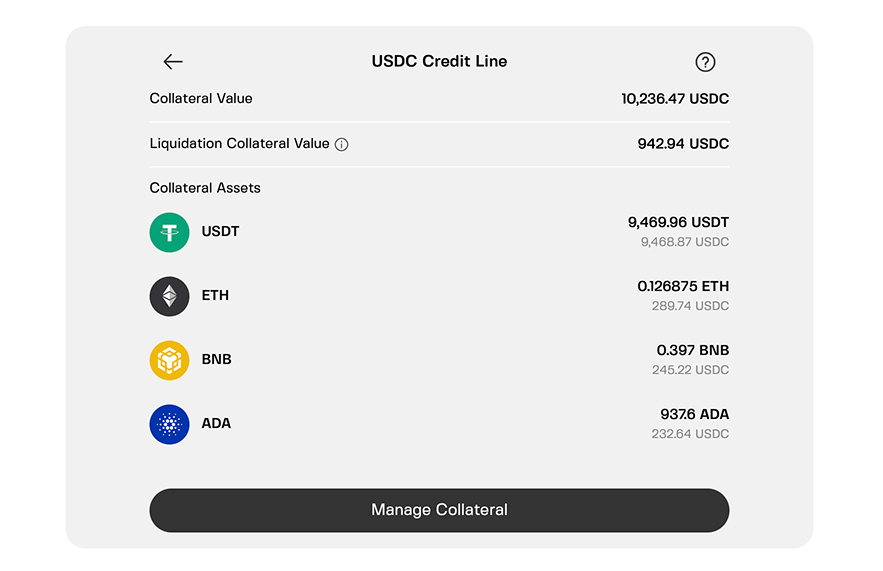
With multi-collateral credit lines, you can mix assets in a single collateral basket — up to 25 on Clapp. The more stablecoins you add, the less sensitive the overall collateral pool may become to crypto price swings.
The 20% rule
20% LTV is a very conservative starting point. At that level, your collateral would need to drop about 75% to hit an 80% liquidation threshold. That's a huge buffer compared with starting at 50% or 70% LTV.
On platforms that offer 0% APR at 20% LTV, your borrowing costs are zero. The liquidity is ready when you need it — and if you're using a credit line, you generally pay interest only on what you actually draw.
- 30% LTV is still reasonable. A 50% drop would put you at about 60% LTV. You'd have room, but you'd be getting closer to the edge.
- 50% LTV is risky. A 30% drop would put you at about 71% LTV. A prolonged downturn could put significant pressure on the position.
- 70% LTV is much more aggressive. A 20% drop would put you at about 88% LTV. Depending on the platform's liquidation threshold, that could put the position in serious danger.
How much buffer do you actually need?
Assume an 80% liquidation threshold. That's common as an example, although actual thresholds vary between lenders and assets.
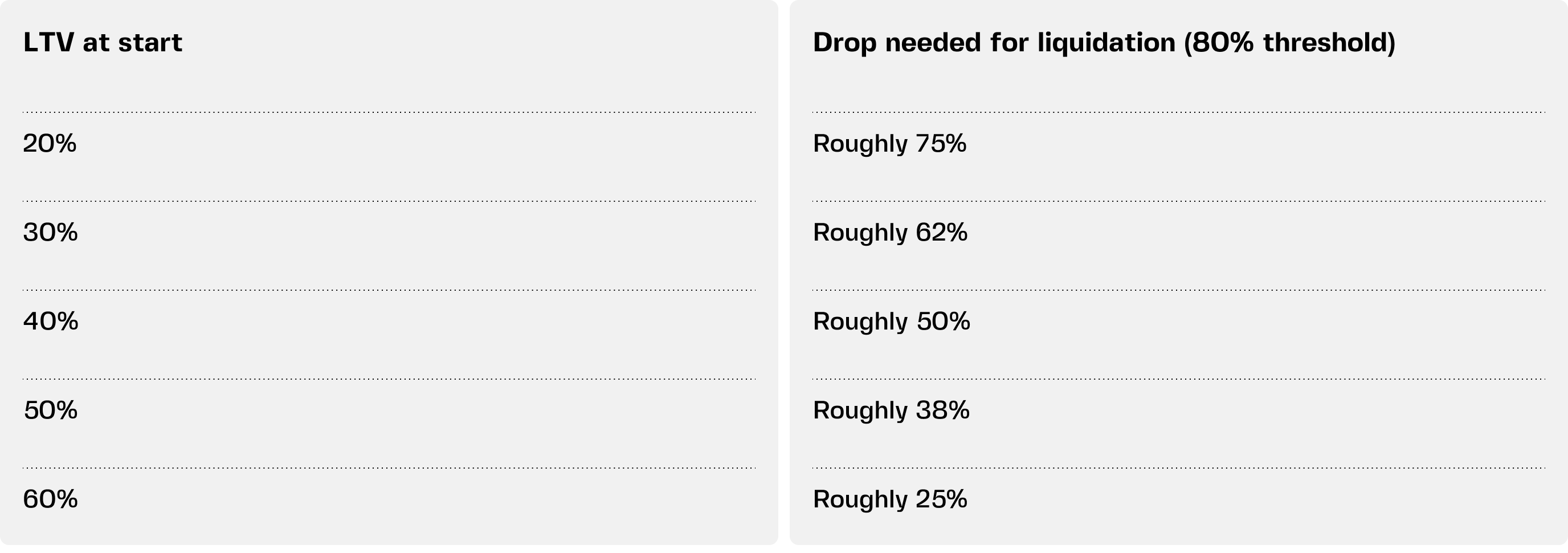
At 20% LTV, you have a very large buffer. At 70% LTV, a normal market correction could put you close to liquidation surprisingly quickly.
The emotional case for conservative borrowing
Numbers are one thing. Psychology is another.
The lower your LTV, the less pressure you feel when the market starts falling.
When you borrow at 20% LTV, market downturns are less intimidating. You don't need to check prices every hour or lose sleep — assuming an 80% liquidation threshold, it would take a 75% price drop to reach that level.
Bitcoin's major historical drawdowns have generally unfolded over months rather than in a single move, giving borrowers in previous cycles more time to add collateral or repay part of the loan.
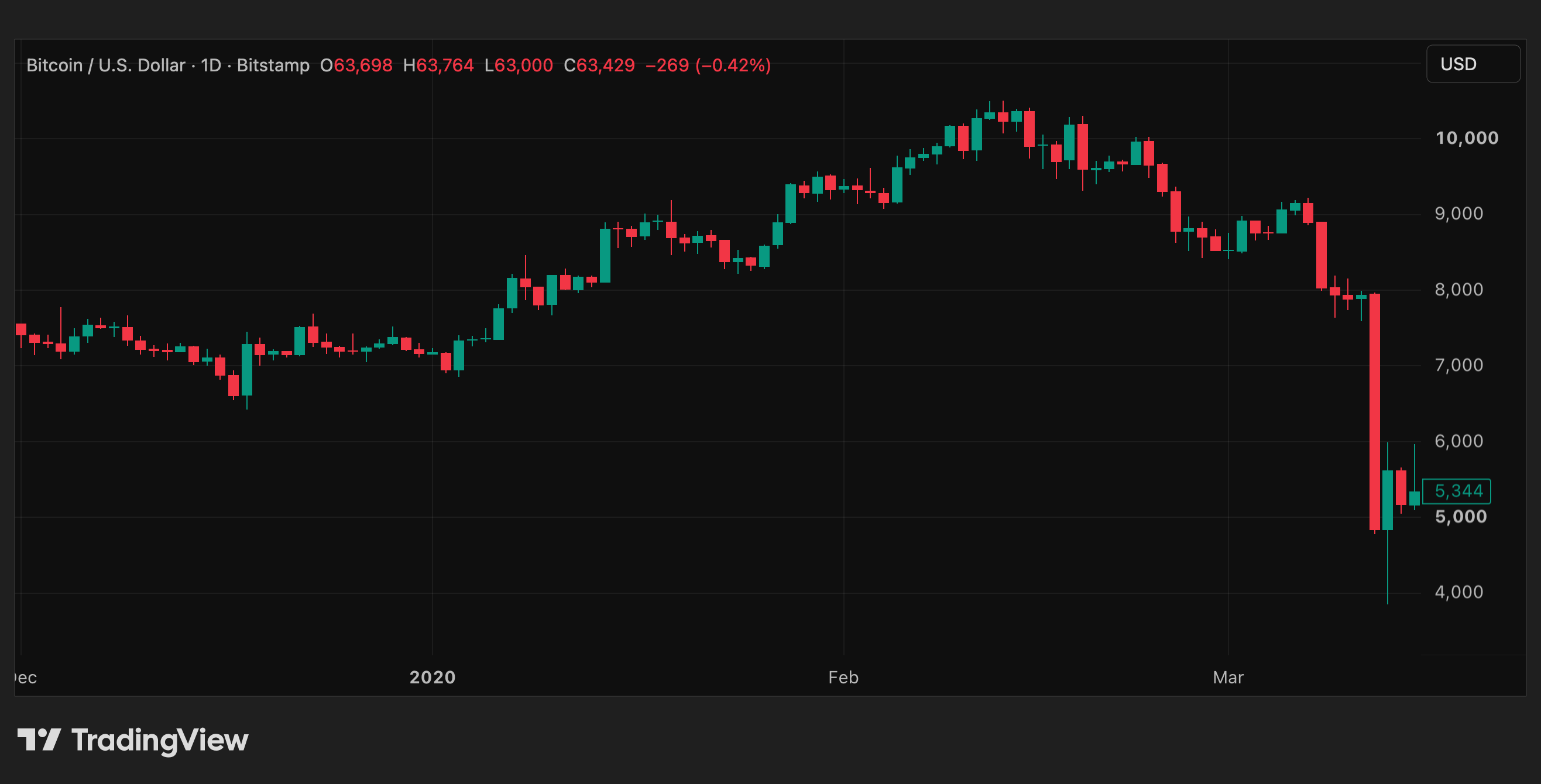
At 50% LTV, a roughly 38% drop would take you to 80% LTV. That's a much more realistic market move, especially during a serious correction. You watch the charts more closely. You worry about adding collateral or repaying part of the loan before the position gets into trouble.
Bitcoin has also experienced extreme short-term crashes. During the 2013 and 2020 sell-offs, it suffered single-day declines of roughly 30% or more, showing that large moves can happen much faster than a typical bear-market drawdown. Of course, the fact that a 75% drop has not happened overnight does not mean it is impossible. Black swan events can hurt any borrower.
But the point is simple: a large buffer gives you more time and more choices.
Psychology matters more than most people realize.
CeFi vs. DeFi matters
The type of platform you use also affects your risk management.
- CeFi platforms often provide alerts or margin calls when your LTV approaches a critical level. Depending on the lender, you may have time to add collateral or repay part of the loan before liquidation.
- DeFi protocols work differently. Liquidations are generally automated once a position crosses the protocol's liquidation threshold, and there may be no guaranteed warning or grace period.
That means your LTV should be especially conservative in DeFi. A 20% LTV is a good starting point in either case.
What the 20% rule looks like in practice
You have $50,000 in Bitcoin. You need liquidity. You could borrow $10,000 at 20% LTV and pay 0% APR on some platforms.
Note the difference between credit lines and fixed-term loans:
- With a credit line, that $10,000 is available when you need it. If you don't draw it, you generally don't pay interest on it.
- With a fixed-term loan, interest will typically accrue on the amount borrowed from the start of the loan, regardless of when you use the money.
In either case, when the market drops, your buffer protects you. You don't panic. You may still add collateral — not because liquidation is immediately close, but because keeping LTV low can help you remain in a lower APR tier.
You stay in control.
How Clapp makes this easy
Clapp's credit lines let you borrow at 20% LTV and pay 0% APR.
You can also mix up to 25 assets in your collateral pool. That means you can stabilize your LTV by adding stablecoins to your collateral basket.
If your LTV starts to creep up, you can swap collateral assets — Bitcoin to stablecoins — without closing your credit line.
The system is designed to make conservative borrowing easier to manage, rather than encouraging you to borrow as much as possible.
Bottom line: Borrow less than you think you can
20% LTV is a good starting point. It gives you a massive buffer, can keep borrowing costs low, and protects you from unnecessary stress.
Most people borrow too much because they focus on the wrong number. They look at the interest rate and how much they could borrow. They don't look at what happens when the market drops.
Borrow conservatively to give yourself room to act when the market moves.
Frequently asked questions
1. Why would I borrow at 20% LTV when I could borrow more?
Because borrowing more increases your liquidation risk. A 20% LTV gives you a massive buffer. A 50% LTV leaves you much more exposed to a normal market correction. The extra borrowing power may not be worth the additional risk.
2. Is 30% LTV safe?
It's still reasonable, but you have less buffer. A 50% drop would put you at about 60% LTV. You'd have room, but you'd be getting closer to the edge.
3. What happens if I borrow at 20% LTV and Bitcoin drops 50%?
Your LTV climbs to about 40%. You're still well below an 80% liquidation threshold. No liquidation. You have time to decide whether you want to add collateral, repay part of the loan, or simply wait for the market to recover.
4. Can I increase my LTV later if I need more liquidity?
On credit lines, yes. You can borrow more as long as your LTV stays within safe limits. You don't need to borrow everything upfront, which is one of the advantages of a revolving credit line.
5. Does the safest LTV change depending on the asset?
Yes. More volatile assets generally require a lower LTV. Bitcoin is less volatile than many altcoins. Ether sits somewhere in between. Stablecoins can have higher LTV limits because their prices are designed to remain stable, although they are not risk-free.
Always adjust your LTV based on what you're pledging and the liquidation rules of the specific platform.