How to build a crypto safety net without selling your assets

Sometimes life throws you a curveball. Unexpected expenses appear. Opportunities come up that are too good to miss. Markets get volatile.
Suppose you're short of cash, need quick liquidity, and have just the right amount of crypto in your wallet.
Most people in this situation either sell at a bad time or scramble for cash elsewhere, sometimes even turning to payday loans or cash advance apps. Neither feels great.
But there's another approach. Instead of relying on a single solution, you build a system that keeps different parts of your portfolio working together while making sure liquidity is available when you need it.
Let's look at how to build a crypto safety net that protects both your portfolio and your flexibility.
TL;DR
- A safety net has three layers. Savings for yield, credit lines for liquidity, and diversification for protection.
- Idle cash has an opportunity cost. Stablecoins can earn yield instead of sitting unused.
- Borrowing isn't the same as selling. Credit lines let you access cash while keeping long-term holdings invested. Conservative LTV may even qualify for 0% APR on some platforms.
- Diversification isn't just about returns. A mix of assets can make both your portfolio and your collateral more resilient.
- The layers reinforce each other. Savings provide a liquidity buffer, credit lines provide flexibility, and diversification reduces concentration risk.
Layer 1: Savings that actually earn
The first layer of any financial safety net is accessible liquidity. But liquidity doesn't have to sit idle.
Many investors keep stablecoins in a wallet waiting for the next opportunity. That preserves purchasing power better than cash in many cases, but the assets themselves aren't generating anything.
A more productive approach is to keep at least part of those stablecoins in yield-bearing savings products. The goal isn't necessarily to maximize returns. It's to earn something while keeping the funds available when you need them.
The difference becomes even clearer when you compare crypto with traditional savings products.
- In the US, the national average savings account pays around 0.38% APY, while many online high-yield savings accounts offer roughly 4–4.5% APY. Crypto-native savings products often go further.
- Flexible Savings can generate up to 5.2% APY with daily compounding on Clapp, while Fixed Savings currently offer up to 8.2% APR in exchange for locking funds for a chosen term.
For an emergency fund, however, flexibility usually matters more than squeezing out every extra percentage point. The ability to withdraw at any time is often worth accepting a slightly lower return.
Why does that matter?
A $10,000 emergency fund earning 5% APY grows to roughly $10,500 over a year. That's not life-changing, but it's still $500 your emergency fund earned while waiting for an emergency that hopefully never came.
Layer 2: A credit line that costs nothing until you use it
The second layer is liquidity backed by your crypto.
Selling isn't the only way to access cash. Crypto-backed loans and credit lines let you use your assets as collateral while keeping your long-term investment intact. In many jurisdictions, borrowing also avoids triggering a taxable disposal that selling would create.
There are two main ways to do this.
- Fixed-term crypto loans provide a lump sum for a predefined period — typically between one month and a year. Interest starts accruing immediately, and your collateral remains locked until the loan is repaid.
- Crypto credit lines work differently. You deposit collateral once, receive a borrowing limit, and draw only what you actually need. Interest accrues only on the amount you've borrowed, and you can repay partially or in full whenever you like.
That flexibility makes credit lines particularly useful as a safety net rather than a source of permanent debt.
At conservative LTV levels, they can also be remarkably inexpensive.
For example, Clapp offers 0% APR at 20% LTV or below. That means your credit line can remain available without costing anything until you decide to use it. Instead of rushing to sell during a market downturn, you already have liquidity waiting in the background.
Layer 3: Diversification that spreads the risk
The third layer is diversification. It may sound like the oldest rule in investing, but it's just as important in crypto. The goal isn't simply to own more assets; it's to avoid relying on a single one.
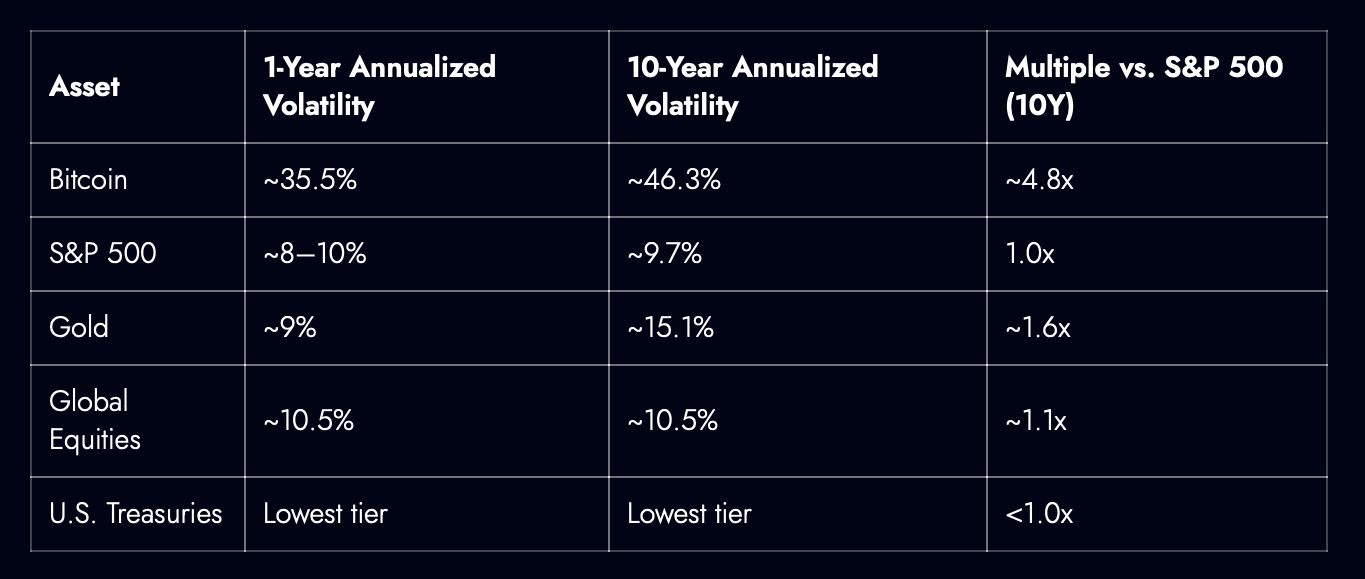
Crypto is far more volatile than traditional markets. Over the past decade, major cryptocurrencies like Bitcoin have generally been around 3.5 to 5 times more volatile than broad stock indexes such as the S&P 500, with double-digit daily price swings far from unusual.
Different assets also behave differently.
- Bitcoin and Ethereum often move in the same direction, but not always by the same magnitude.
- Smaller-cap tokens tend to amplify both rallies and sell-offs because liquidity is thinner.
- Stablecoins are designed to remain relatively stable.
That matters when your crypto is backing a loan or credit line.
If all your collateral is Bitcoin, your safety net rises and falls with Bitcoin. A sharp decline pushes your LTV higher, increasing the risk of margin calls — or, if it reaches the liquidation threshold (often around 80%), forced liquidation.
A diversified collateral pool helps reduce that concentration risk.
Instead of depending on a single asset, you spread exposure across assets with different risk profiles. Stablecoins can dampen volatility, while major cryptocurrencies like BTC and ETH continue providing long-term market exposure.
As a result, your overall collateral value tends to fluctuate less than a single highly volatile asset, making your LTV easier to manage.
You don't need dozens of coins to achieve that.
A small mix of high-quality assets — for example BTC, ETH, and stablecoins — can already create a more resilient collateral base.
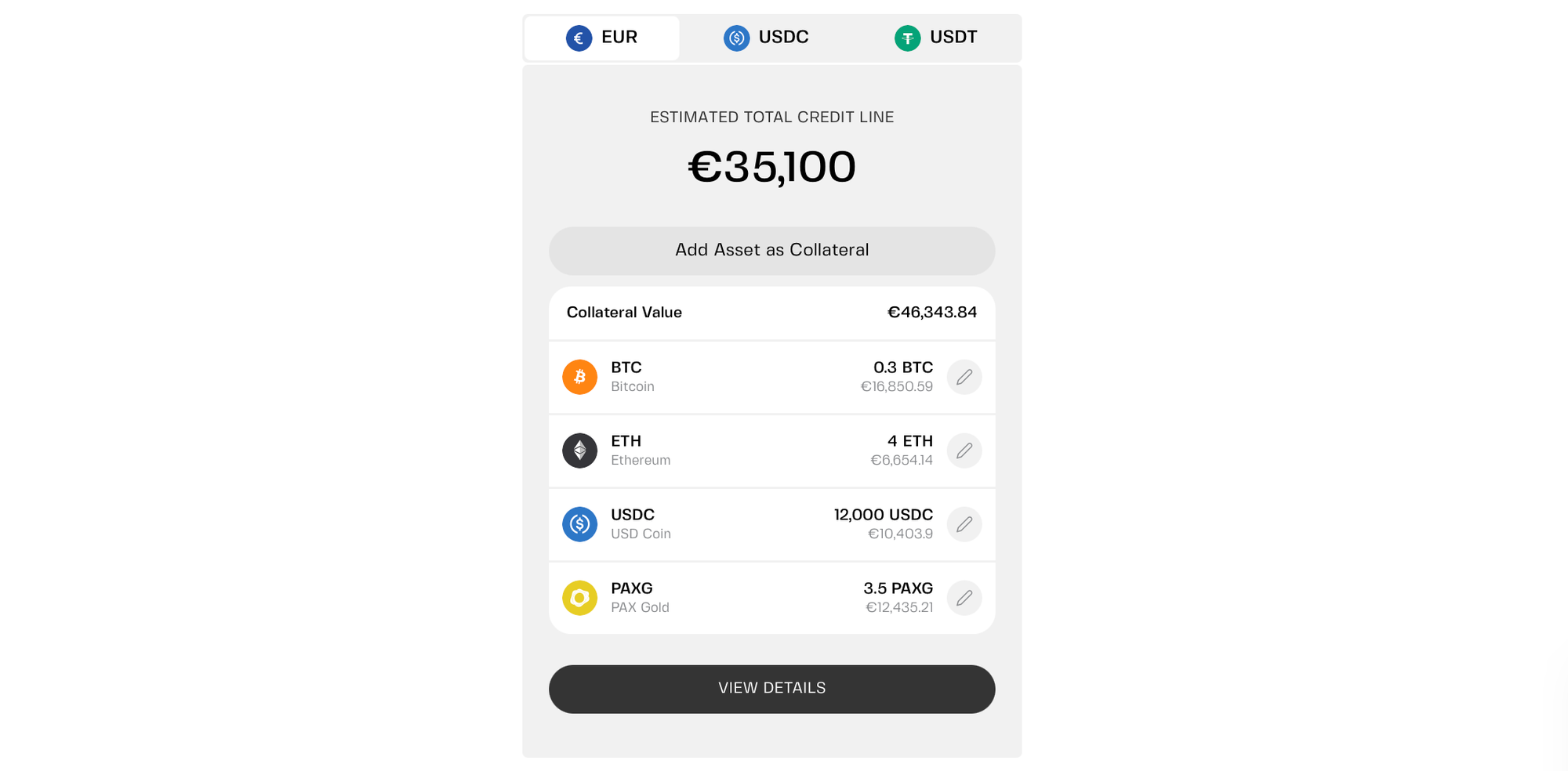
Many modern credit lines support multi-collateral pools, allowing you to combine several assets instead of relying on just one. On Clapp, for example, you can back a single credit line with up to 25 different assets and rebalance that pool without closing the position.
One final point: if you use DeFi lending instead of a CeFi platform, pay even closer attention to your LTV.
Most DeFi protocols don't issue margin-call notifications. Once your health factor falls below the liquidation threshold, smart contracts allow bots to liquidate the position automatically—sometimes within seconds. Keeping a diversified collateral pool and a conservative LTV gives you a much larger safety buffer.
How the three layers work together
Each layer is useful on its own, but the real strength comes from combining them.
- Savings support your credit line. If your LTV starts creeping up during a market correction, you can move stablecoins from Flexible Savings into your collateral pool instead of selling long-term holdings.
- Your credit line protects your savings. If you need cash, you don't have to liquidate investments or empty your emergency fund. You can borrow against your crypto instead, while your savings continue earning yield.
- Diversification strengthens both. A collateral pool built from several assets is generally less exposed to the volatility of any single coin, making your LTV easier to manage.
Together, these layers create flexibility. In rising markets, you stay invested. During downturns, you have liquidity and additional collateral available. Instead of reacting under pressure, you have more options.
Example
Imagine a portfolio worth $50,000:
- $30,000 in Bitcoin and Ethereum for long-term exposure.
- $10,000 in Flexible Savings, earning yield while remaining available.
- A crypto-backed credit line with 20% LTV, ready whenever liquidity is needed.
Now imagine three different situations.
The market falls 30%. Your LTV rises, but instead of selling BTC, you transfer $2,000 from Flexible Savings into your collateral pool. Your LTV improves and your long-term position stays intact.
An investment opportunity appears. Rather than selling assets to raise cash, you draw from your credit line. Your crypto remains invested while you access liquidity immediately.
Nothing happens. Your long-term holdings remain untouched, your savings continue generating yield, and your credit line simply stays available in the background should you ever need it.
Whichever scenario arrives, you're prepared.
A crypto safety net isn't built around a single product
It's built around different tools working together.
Savings provide accessible liquidity while earning yield. Credit lines let you access cash without selling long-term holdings. Diversification helps reduce concentration risk and makes your collateral more resilient during volatile markets.
None of these tools is revolutionary on its own. The advantage comes from combining them into a portfolio that can handle both opportunities and setbacks.
That's ultimately what a safety net is for: not maximizing returns, but giving yourself more choices when the unexpected happens.
Frequently asked questions
1. How much should I keep in savings versus collateral?
There's no universal rule. A common starting point is to keep three to six months' worth of expenses in accessible savings while leaving the rest invested for long-term growth. Your credit line can provide additional liquidity when larger expenses arise.
2. What if my LTV rises and I don't have enough savings?
You still have several options. Depending on your platform, you may be able to add more collateral, repay part of the outstanding balance, or rebalance your collateral pool. The important thing is to understand your lender's rules before markets become volatile.
3. Can savings support my credit line?
On platforms that support it, yes. Funds held in savings can often be added to your collateral pool, helping reduce your LTV without selling long-term holdings. This is one way the different layers of a safety net can work together.
4. If I already have savings, do I still need a credit line?
They serve different purposes. Savings provide a financial buffer while earning yield. A credit line provides liquidity without forcing you to sell your investments. Together, they give you more flexibility than either one alone.
5. Is this approach only for large portfolios?
No. The principles are the same regardless of portfolio size. Whether you have $1,000 or $100,000, building a safety net around accessible savings, conservative borrowing, and diversification can make your portfolio more resilient over time.