Crypto loan liquidation without notice — where do alerts fit?

DeFi lenders have a well-earned reputation for liquidating loans without warning. CeFi may not be all that different. Alerts aren't a given, and even when you do get one, there may not be enough time left to act on it.
Here's when the "get an alert → add collateral → keep your loan" chain doesn't match reality, why that's completely legal, and how to protect yourself regardless of which platform you use.
TL;DR
- Liquidation can happen without warning. Most platforms reserve the right to liquidate the moment your LTV hits the threshold, no notice required.
- Alerts are a convenience, not a guarantee. Platforms "may" send them — they're rarely obligated to.
- Your LTV is the only real protection. Keep it low, and the whole question of alerts stops mattering.
- Know your platform's terms. Understand exactly what it promises versus what it reserves the right to do.
It's all in the terms
Getting liquidated with zero courtesy warning is stressful, but it's actually the standard operating norm across most of the crypto lending market.
Zero-warning liquidations aren't reserved for DeFi's smart-contract-driven world. CeFi platforms are built the same way under the hood: hardwired to protect the lender's capital the instant your loan-to-value (LTV) ratio crosses a set threshold, without a human in the loop. Alerts may or may not factor into that process at all.
Every centralized lender has terms of service most borrowers never fully read, and the clause defining alerts as optional rather than obligatory is usually buried somewhere in there.
What alerts typically do, when a platform sends them:
- Notify you once your LTV reaches a warning threshold, often somewhere around 60–84%
- Give you a window to add collateral or repay part of the loan
- Point you toward what to do next
The exact language varies by platform, but the underlying takeaway doesn't: once your LTV crosses the liquidation threshold, the platform can sell part of your collateral to protect itself, whether or not it warned you first.
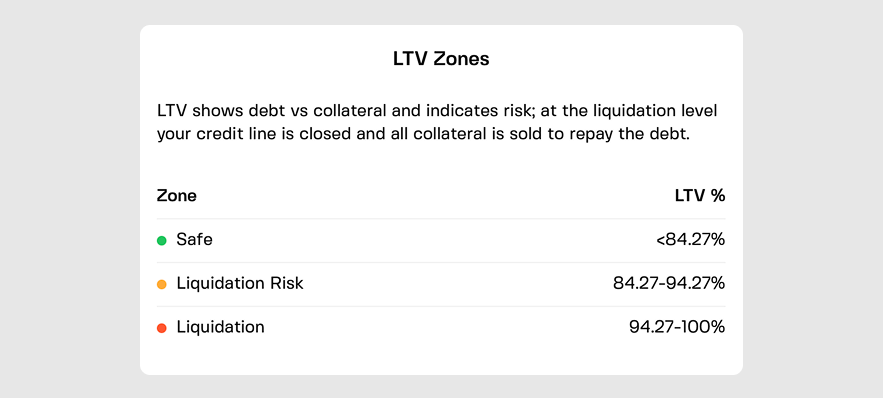
Clapp's own terms for Credit Lines spell this out directly: "You are responsible for monitoring your LTV and maintaining Collateral at safe levels. We may, but are not obliged to, send alerts when your LTV enters the Liquidation Risk zone." In plain terms, alerts are a helpful feature, not a promise.
Why platforms reserve this right
The liquidation threshold is a hard line. Cross it, and the platform has a contractual right to liquidate immediately. A warning beforehand is a courtesy, not a contractual obligation — and there are real structural reasons platforms build it that way.
Protecting the lending pool
Platforms typically lend out capital pooled from other users who are earning yield on it. If your collateral drops below your loan's value, the platform is looking at "bad debt" — a hole it now has to cover to keep paying its depositors. To avoid that, the risk engine is built to sell your collateral the moment it hits the liquidation price, not after a warning period has run its course.
Extreme volatility and gap risk
Say you've borrowed against BTC on a centralized platform, and the price drops sharply within minutes. If the platform paused to send a warning email with a 24-hour grace window, your collateral could lose value faster than you could realistically top it up — leaving the platform holding a loss it never intended to take on.
In a genuine flash crash, LTV can move from safe to dangerous in seconds, not hours. That's roughly what happened on October 10, 2025, when a sudden geopolitical shock triggered the largest single-day liquidation event in crypto's history — an estimated $19 billion in leveraged positions wiped out across the market within hours, with Bitcoin falling around 14% at the worst of it.
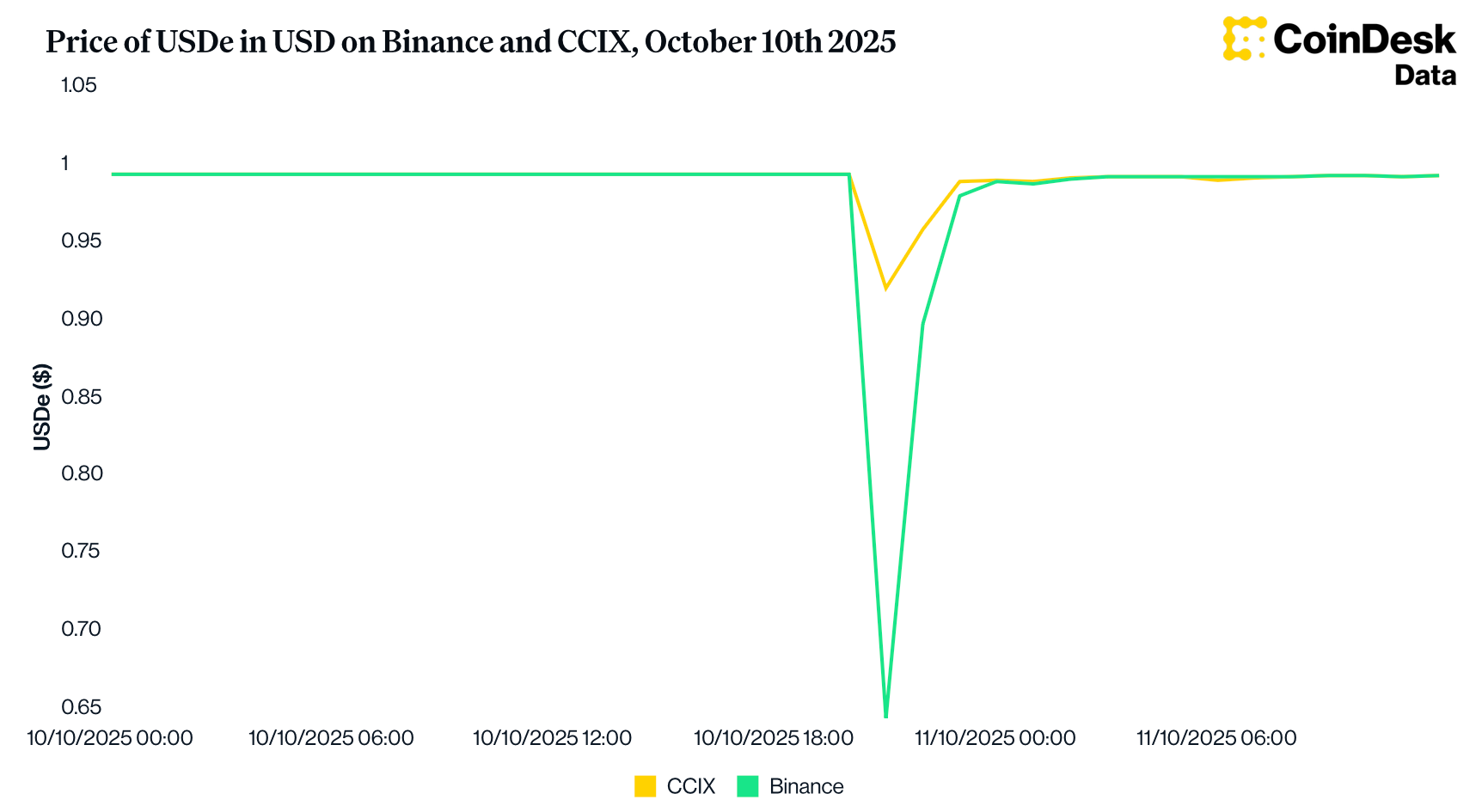
The event hit centralized and decentralized platforms alike. Aave auto-liquidated a record $180 million in under-collateralized loans within a single hour to prevent bad debt. Several major exchanges — including Binance — saw internal pricing and liquidity issues that made an already fast-moving crash even harder to navigate in real time. co
In genuinely extreme conditions, the gap between "safe" and "liquidated" can close faster than any notification system, human or automated, is built to handle.
Liquidation engine algorithms
CeFi platforms run their own automated risk engines, continuously checking your account's LTV against live market feeds. Cross the threshold, and the system places a market sell order automatically — no human approval step, and the trade executes far faster than a push notification could ever reach your phone.
The terms of service clause
Most platforms' terms explicitly grant the right to liquidate immediately, without notice. That makes the practice fully lawful, and it's exactly why a "margin call" notification should be read as a courtesy rather than a promise. Alerts are a convenience, not an obligation.
Notifications can simply fail
Emails land in spam. Push notifications get silently disabled. Servers go down at the wrong moment. A platform can't guarantee delivery, so it generally doesn't promise one.
What alerts don't do, even when a platform sends them: guarantee you'll actually receive one, guarantee you'll have time to act on it, or prevent liquidation if you don't respond in time.
CeFi usually gives you a chance. DeFi generally doesn't.
Once your LTV hits the liquidation threshold, the platform can sell your collateral — but what happens leading up to that moment differs by venue.
On CeFi platforms, you may:
- Receive a margin call or alert before liquidation happens
- Get a grace period, often somewhere in the 24–72 hour range, to respond
- See liquidation proceed if you don't respond in time, with the platform selling collateral to cover the loan
On DeFi protocols, typically:
- There's no alert and no grace period
- Liquidation executes instantly the moment the threshold is crossed
- Bots actively compete to be the one that liquidates your position
- You have essentially no time to react
Not every platform handles this the same way, and not every platform is equally upfront about it. Look for a provider that clearly states alerts are discretionary and gives you real tools to monitor your own LTV, rather than one that implies you'll always be warned in time.
The more honest platforms don't promise protection they can't actually guarantee. They tell you plainly: liquidation can happen without notice. Use whatever tools they give you, but don't lean on them as your only line of defense.
Checklist to protect yourself
- Know your liquidation threshold. Every platform sets one — find out what it is before you borrow, then keep your LTV comfortably below it.
- Keep LTV low. At 20% LTV, Bitcoin would need to drop roughly 75% to hit an 80% liquidation threshold — a decline that's survived every crash in crypto's history so far.
- Keep extra collateral on hand. Stablecoins sitting in Flexible Savings can be moved into your collateral pool instantly if your LTV spikes.
- Set your own alerts. Don't rely solely on the platform's notifications — set independent price alerts on your collateral assets, so you know you're approaching danger before the platform tells you, if it tells you at all.
- Monitor your position during volatility. Check your LTV directly rather than waiting to be told something's changed, especially when markets are moving fast.
- Read the terms. Know exactly what your platform promises versus what it reserves the right to do. Most use "may," not "will" — plan around that distinction, not around the assumption of a warning.
The single best protection is simply keeping your LTV conservative. Stay far from the threshold, and the question of whether alerts arrive stops being something you need to worry about at all.
Alerts help. They're not your safety net.
Liquidation without prior notice is a real, legal possibility — it's written into the terms most borrowers skip past. Alerts can help when they show up, but they're not guaranteed, and your real protection is your buffer, not your notifications.
Platforms that admit this openly are being honest with you. Ones that promise "no forced liquidations" are overpromising something the underlying mechanics can't actually back up. Liquidation can happen. It's a risk that comes with borrowing, full stop.
Don't rely on alerts. Rely on your LTV — keep it low, keep it safe, and check your own position rather than waiting for someone else to.
Frequently asked questions
Will I always get a warning before my crypto loan is liquidated?
No. Most platforms reserve the right to liquidate without prior notice once your LTV crosses the threshold, and alerts — where offered — are typically framed as a convenience, not a contractual promise.
Is it legal for a platform to liquidate my collateral without warning me first?
Yes. This is standard practice across both CeFi and DeFi, and it's usually spelled out explicitly in a platform's terms of service, which most borrowers never read closely.
Why don't platforms just guarantee alerts for everyone?
Because notifications can fail — emails land in spam, push notifications get disabled, servers go down — and because in extremely fast market moves, there may not be time to send one before liquidation needs to happen to protect the lending pool.
What's the real difference between CeFi and DeFi liquidations?
CeFi platforms sometimes offer a grace period and a margin call before liquidating, though neither is guaranteed. DeFi protocols generally liquidate instantly once the threshold is crossed, with no built-in warning or waiting period at all.
What's the single best way to protect myself from a no-warning liquidation?
Keep your LTV low. A wide buffer between your current LTV and the liquidation threshold means you have real room to absorb a market move, regardless of whether an alert ever reaches you.