Fixed vs guaranteed: Why the wording on savings rates matters

When a crypto ad promotes "guaranteed rates up to 8% APR," it's easy to assume that word is doing more work than it actually is. Guaranteed sounds like a promise with teeth — the kind you'd see on a bank product, backed by deposit insurance.
In crypto, it usually means something narrower: the rate itself won't move. Not that your funds are insured. Not that a regulator is standing behind the platform if something goes wrong.
That gap between what "guaranteed" sounds like and what it actually promises is where most confusion starts — and it's usually not because the marketing was dishonest. It's because most people don't read past the headline number to check what the term is actually guaranteeing.
TL;DR
- Both "fixed" and "guaranteed" show up in crypto savings marketing, and neither one is inherently misleading — the confusion comes from what people assume those words mean.
- There's a real difference between the platform guaranteeing a rate and the platform guaranteeing it will pay you no matter what happens. Most products only promise the former.
- Crypto products generally aren't covered by FDIC-style deposit insurance. Assuming "guaranteed" means your funds are protected the way a bank deposit is protected is a reasonable-sounding assumption — but it's the wrong one.
- The fix is reading what "guaranteed" is actually attached to: the rate, or the payout.
What "guaranteed" is actually promising
In everyday use, "guaranteed" implies certainty backed by someone taking on the risk for you. In crypto savings products, it almost always refers to the rate, not the outcome.
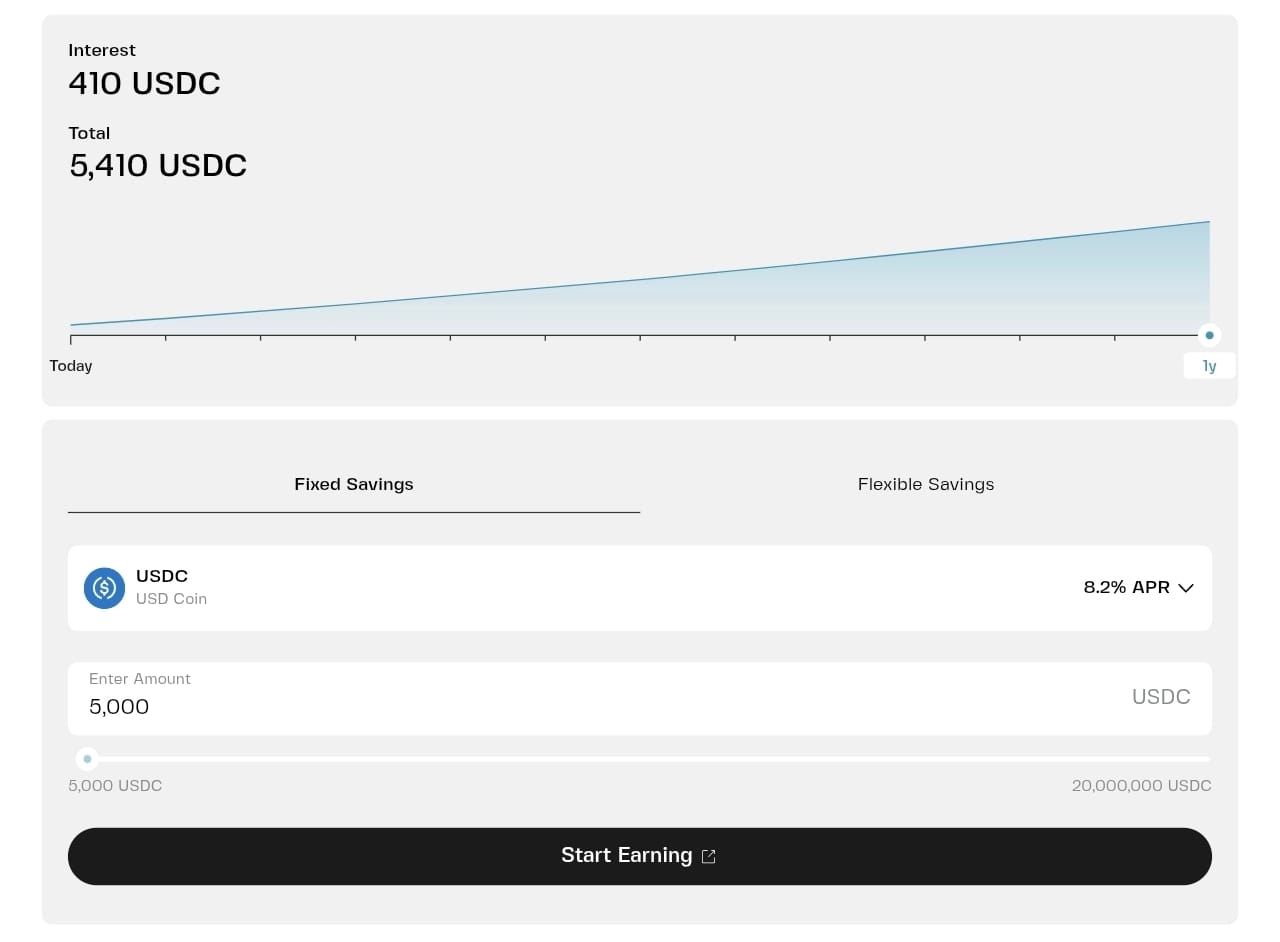
Lock funds for 12 months at a guaranteed 8.2% APR, and that number is what's fixed — it won't shift with market conditions during your term. What the guarantee doesn't automatically cover is every risk surrounding the product or the platform's ability to meet its obligations under every possible circumstance.
Those are two different promises, even though the marketing copy often uses one word to describe both. The distinction — a guaranteed rate versus a guaranteed payout no matter what happens — is the one worth understanding before you deposit anything.
Where the assumption gap comes from
Part of the problem is that "guaranteed" carries baggage from traditional finance. With products such as bank CDs, there may be a separate layer of government-backed deposit insurance, depending on the institution and jurisdiction.
When the same word shows up on a crypto savings product, it's natural to import that same assumption — even though nothing about the underlying protection is actually the same.
Crypto savings products aren't insured by the FDIC. There's no federal backstop if something goes wrong. That's just a fact about the asset class that doesn't change no matter which word is used on the landing page.
Expecting "guaranteed" to mean "insured like a bank account" is an understandable assumption. It's also not a reasonable one to bring into crypto without checking first, because that kind of protection simply doesn't exist here yet, regardless of the terminology any individual platform chooses.
There can still be separate layers of protection
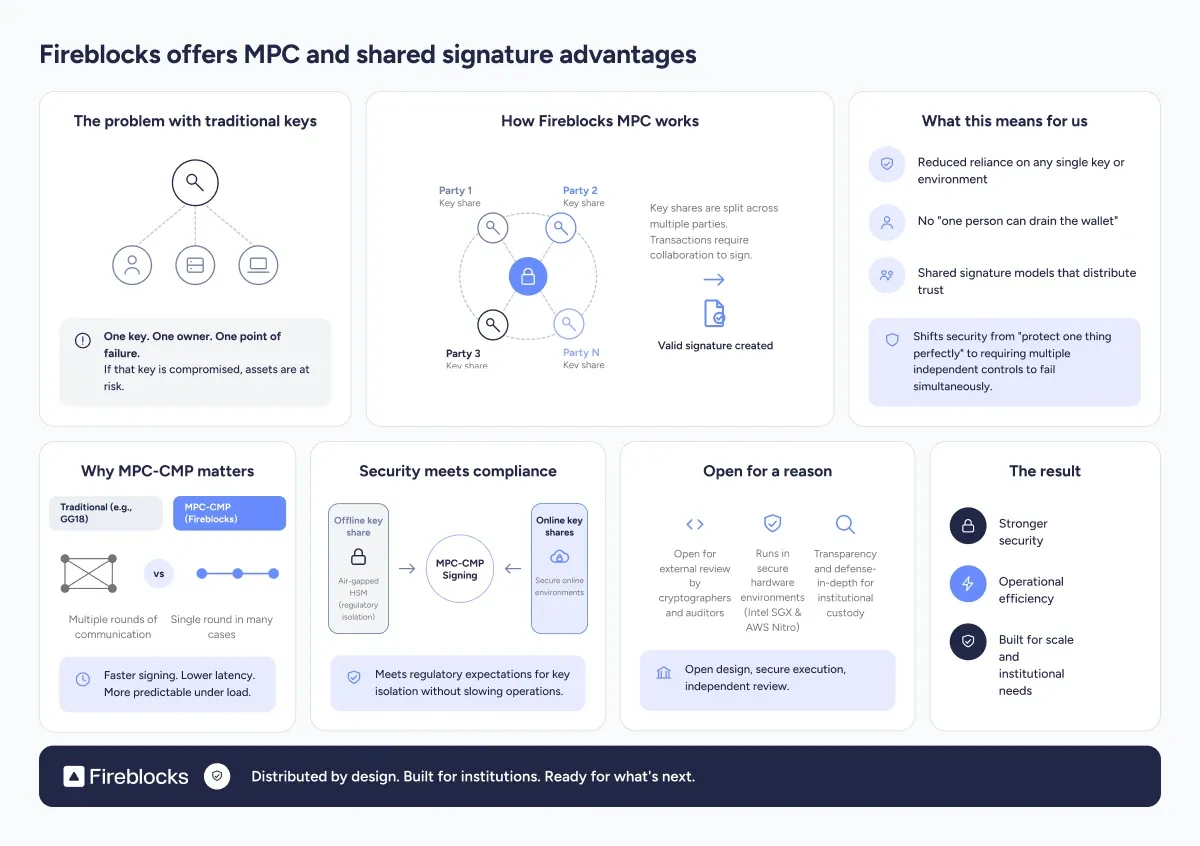
For example, Clapp uses Fireblocks institutional-grade MPC custody, and keeps user funds segregated from company operational funds.
Fireblocks also maintains insurance coverage for digital assets under its protection. That is a custody and asset-protection measure, though — not the same thing as deposit insurance, and it doesn't turn a crypto savings product into a bank deposit.
Learn more about Clapp's Fireblocks integration in this in-depth article by Clapp CEO.
Adjusting your expectations
Reading "guaranteed" and assuming your funds are protected the way a bank deposit is protected is the single most common gap between what people expect and what they've actually signed up for.
A guaranteed rate means the product is promising a particular rate for the agreed period. It doesn't mean the yield generation behind it is risk-free.
A range of things can still affect the risk around the product — shifting market conditions, a yield strategy underperforming, counterparty problems, or platform-level issues. A genuinely fixed rate should remain unchanged during the agreed term, but that doesn't make the underlying product risk-free.
Choosing a regulated provider with a real track record reduces that risk, but it doesn't erase it, and no wording on a savings product changes that. Even institutional-grade custody can't eliminate platform, counterparty, market or operational risk.
This isn't a reason to avoid crypto savings products, but users should read past the headline rate before deciding how much they're comfortable committing.
Does this make crypto savings a bad fit for an emergency fund?
Not necessarily, but the type of savings product matters.
- Fixed-term savings come with higher yield rates (up to 8.2% APR on Clapp), but they generally aren't a natural fit for emergency funds because your money is committed for a set period. If you need access before maturity, you may have to give up some or all of the interest you've earned, depending on the product.
- Flexible savings are designed differently. You accept a lower rate (up to 5.2% APY with daily compounding on Clapp) in exchange for being able to access your funds when you need them.
Insider threats are one category of risk, mitigated by internal protocols like multisig wallets and multi-party computation (MPC).
External shocks — hacks, broader market downturns, other black-swan events — are a separate category, and no internal safeguard fully rules them out.
So the best question to ask is:
“Can I access this money when I need it, and what risks am I taking in exchange for the yield?”
What Clapp actually says
On Clapp's Fixed Savings, "guaranteed" describes the rate itself — the APR is locked for whatever term you choose, and it won't move regardless of what the broader market does during that period. That's the guarantee: rate stability.
Clapp's risk disclosure statement lays out the underlying considerations in full, and it's worth reading before you commit funds, the same as with any savings product.
Read the terms, not just the headline
The word on a savings product tells you what's being promised. It doesn't tell you what isn't. That's on the reader to check.
If "guaranteed" leads someone to assume their funds are insured, and something later goes wrong, trust breaks down — even when the platform's language was accurate the whole time. The fix isn't platforms avoiding the word. It's users treating "guaranteed" as a prompt to go read what's actually guaranteed, rather than a reason to stop reading.
Check a product's terms upfront, read the risk disclosure carefully, and don't assume FDIC-style deposit protection applies to a crypto savings product — generally, it doesn't, no matter how confident the marketing sounds.
The underlying risk worth understanding
Behind every rate — fixed or guaranteed — sits an actual source of yield. Borrowers paying interest, trading fees, DeFi incentives, real-world assets. Something is generating that return.
If that source shifts significantly — borrowers stop borrowing, trading volume dries up, incentives disappear — it can affect the economics behind a product, even if the advertised rate itself is fixed for your term.
That's not a wording problem. It's a structural reality of how yield gets generated in the first place, and it's worth understanding before you lock funds into any term.
What to actually check before depositing
When comparing savings products, the headline rate is the least useful piece of information on the page. What matters more:
- What exactly is being guaranteed — the rate, or the payout? Crypto products usually guarantee that the rate stays fixed for the agreed term, not unconditional repayment regardless of what happens. Read the terms to see which one you're actually getting.
- Is the rate locked for your full term? It should hold from the day you open the deposit. If it can shift mid-term, that's a variable product, whatever label it's wearing.
- What happens if you withdraw early? Losing accrued interest is a real cost that changes your effective return. If locking funds for a set period doesn't work for you, a flexible product is worth considering instead.
- Is there any FDIC or equivalent insurance? In crypto, generally no. Assuming otherwise because a product says "guaranteed" is the single most common misread in this space.
Wrapping up
"Fixed" and "guaranteed" both show up across crypto savings marketing, and neither term is automatically deceptive. The confusion isn't really about which word gets used — it's about what people assume a guarantee covers before they've actually checked.
A guaranteed rate means the number won't move. It doesn't mean the platform is insured the way a bank is, because in crypto, that kind of insurance generally doesn't exist yet. That's not a knock against any specific product — it's just the honest shape of the asset class right now.
Read past the headline number. Check what's actually being promised, and what isn't. That's where the real story lives, regardless of which word made it into the ad.
Frequently asked questions
What's the difference between fixed and guaranteed?
In practice, both terms often describe the same thing in crypto: a rate that won't change during your term. The more useful distinction is what's being guaranteed — the rate staying fixed, or the platform promising to pay out no matter what happens. Most products only promise the first.
Are Clapp's savings products guaranteed?
Clapp's Fixed Savings uses "guaranteed" to describe the rate — it's locked for your chosen term and won't move with market conditions. That's a guarantee on the rate, not a claim of deposit insurance.
Does "guaranteed" mean my funds are insured?
No. Crypto savings products aren't backed by the FDIC or an equivalent, regardless of what term a platform uses. Assuming otherwise is a common but incorrect read of the word "guaranteed" in this context.
Can I lose yield on a guaranteed-rate product?
The rate itself is fixed for the agreed term. The underlying yield strategy can still change or underperform, but that doesn't automatically mean your contracted rate changes. The risk to consider is whether the platform and relevant counterparties can continue to meet their obligations under the product's terms.
How should I compare savings products?
Don't stop at the headline APR. Check exactly what's guaranteed — the rate or the payout — how the platform generates yield, what happens if you withdraw early, and whether any insurance actually applies. Those answers matter more than which word appears next to the percentage.