Clapp Weekly: $100 oil, Liquid's $320M hack, Hunter Biden enters memecoin game

BTC price
Bitcoin is hovering near $79,000, having slid as low as $77,900 amid renewed US-Iran tensions and growing bets on a Fed rate hike that sparked broad de-risking. The latest pullback followed a hotter-than-expected US jobs report, which also pushed the price below $81k last week. Spot Bitcoin ETF inflows turned negative on September 8 (-$46.65 million) after a three-day streak brought in over $1 billion, including $730.87 million on September 3, the highest since January.
BTC climbed from $76.5k to $81,731.28 on September 3, then reversed lower after Friday's jobs report, falling below $79k. The price recovered gradually over the weekend before pulling back from $80k on Monday and hitting $77,957.69 on September 8. BTC has since bounced back above $79.6k and retreated slightly.
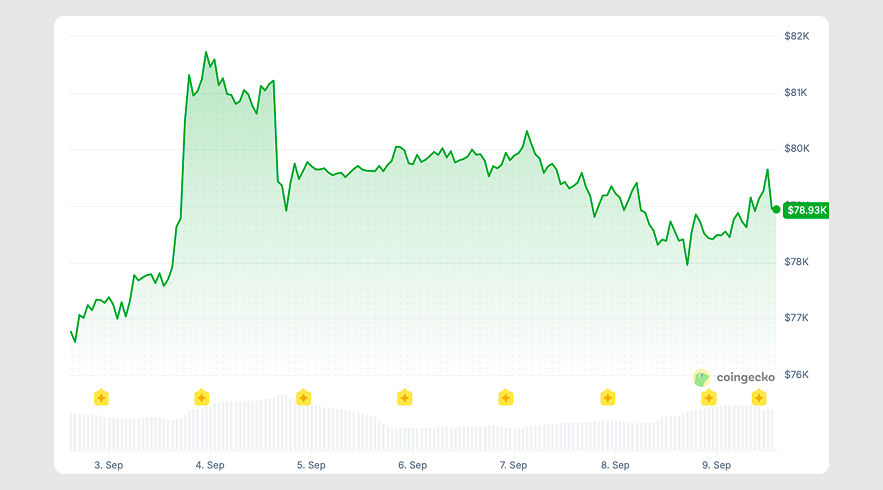
Now at $79,640.04, BTC has gained 1.4% in the past 24 hours and is up 3.3% in the past week.
ETH price
Ether reclaimed $2,500 after Friday's sell-off, but the recovery is facing mixed signals. While 116,000 ETH left exchanges over two days, reducing near-term liquid supply, analysts point to softer fund flows and declining network use. US spot Ethereum ETFs also reversed lower yesterday, shedding $24.29 million and giving up nearly all of Monday's gains. Still, institutional demand remains strong: BitMine purchased another 28,086 ETH last week, signaling continued confidence in the uptrend.
ETH jumped from $2.3k to $2,526.10 on Friday, September 4, before falling back below $2.5k and struggling to reclaim the level through the weekend. It resumed its climb on Monday, reaching $2,518.66 before easing slightly.
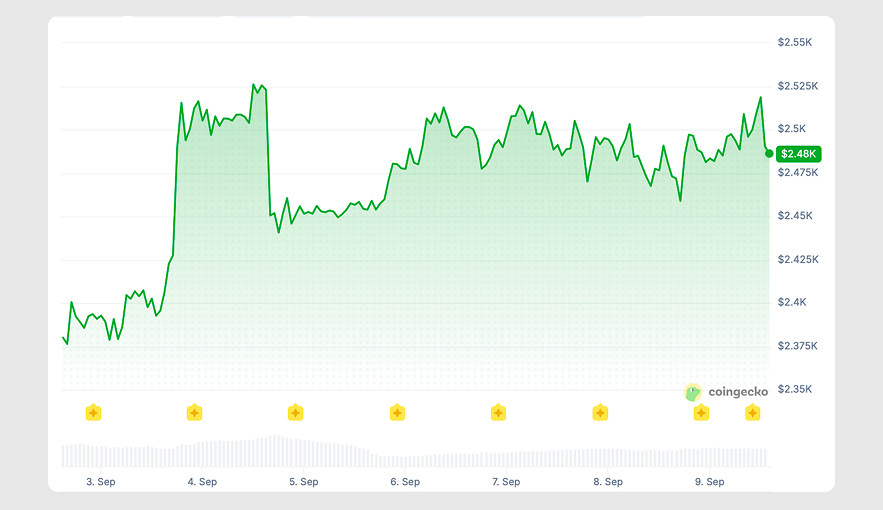
Currently at $2,518.57, ETH is up 1.5% over the past 24 hours and 4.8% over the past week.
Seven-day altcoin dynamics
Several macro forces are weighing on markets across the board. Heightened geopolitical tensions and rising expectations for a Fed rate hike next week triggered broad de-risking across crypto. Greed is subsiding: the Crypto Fear & Greed Index has declined to 66 from 74 on September 4, though the index has read above 60 every day since August 20.
Strait of Hormuz tensions re-escalate
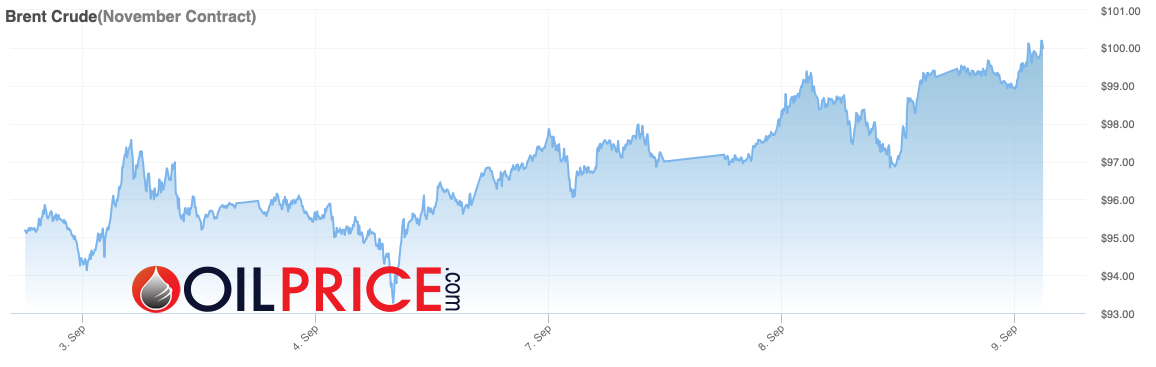
Oil prices surged again amid US strikes on five Iranian tankers near Kharg Island and Iranian missile retaliation. Iran targeted a US base in Jordan, while Houthis attacked Saudi refining facilities. Previously, US forces hit three other oil tankers over the weekend in response to the IRGC attacking two US warships.
Brent crude hit the $100 mark earlier today and is currently trading at $99.99 per barrel (November contract) — the highest price since July.
Gold sits near $4,400 an ounce, roughly 30% above a year ago. The renewed energy shocks also kept the 10-year Treasury yield elevated at near 4.8%, while the two-year yield remained above 4.3%. Analysts expect more volatility this week as the final macro data arrives before the Fed rate decision.
Fed hike odds rise again
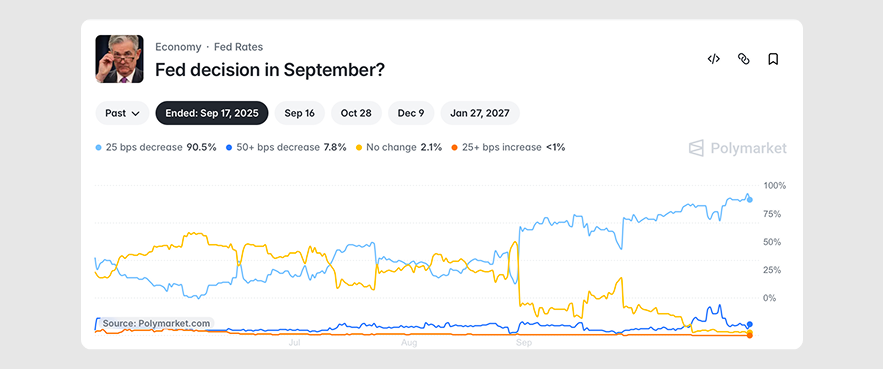
Friday's US jobs report for August showed hotter-than-expected hiring, reviving anxiety ahead of the Fed's September 16 decision. Nonfarm payrolls jumped by a dramatic 162,000, far above the consensus estimate of 55,000. Furthermore, positive revisions added another 55,000 jobs to prior months.
The three-month average for private employment now stands at 75,000, above the 0–60,000 breakeven range required to keep the unemployment rate stable. On CME FedWatch, the odds of a 25-basis-point hike have jumped above 60%, while Polymarket traders raised the odds of a quarter-point hike to 90%.
Zcash records a $500M ETF haul
Grayscale's Zcash ETF (ZCSH) crossed $500 million in assets two weeks after listing on NYSE Arca. The fund — the only spot product offering exposure to the privacy coin — took in more than $70 million in cumulative inflows since its August 25 debut, on top of a $100 million investment from DCG International Investments.
Meanwhile, the coin itself has gained 53.0% over the past week.

Top weekly winners
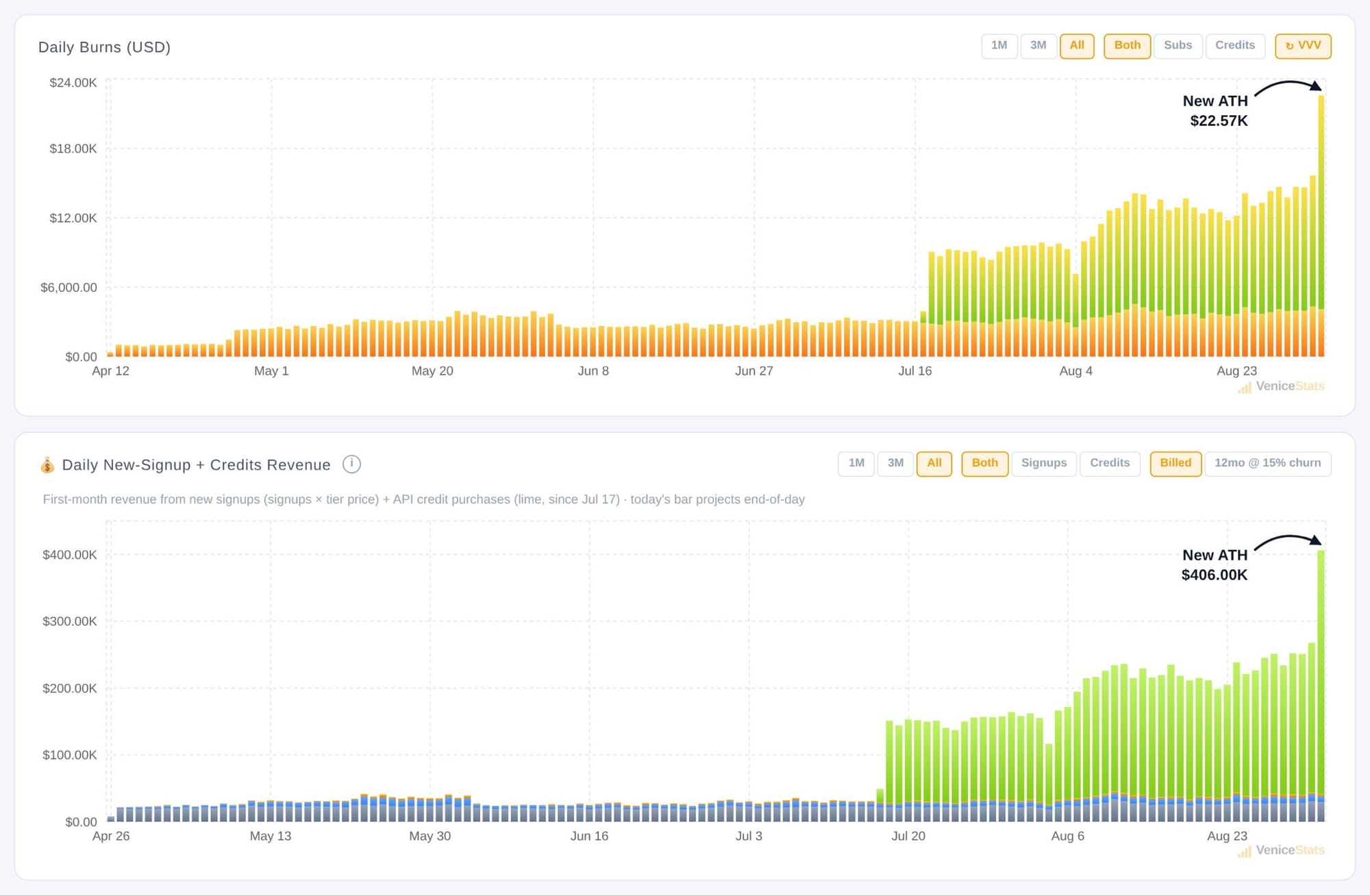
- VVV (+54.9%) surged after Venice reported record daily revenue and executed one of its largest discretionary token burns to date ($22,571), tightening effective supply and reinforcing the token's value-accrual narrative. New exchange listings also supported the move.
- ARB (+47.9%) surged alongside explosive activity on Robinhood Chain, which generated nearly $21 million in fees from August 31 to September 4. As the chain remits 10% of net protocol revenue back to the Arbitrum ecosystem, this visible cash-flow link is supporting strong relative performance versus other L2s.
- DASH (+46.0%) has rallied after Dash Shielded payments debuted on NanoGPT, enabling users to access over 1,000 AI models without traditional KYC checks. The token is also benefiting from the broader privacy-coin rally, moving in tandem with ZEC.
Top weekly losers
- MORPHO (-10.8%) came under pressure from profit-taking and technical selling following a prior rally, which reversed on September 7. This occurred despite the expansion of its Midnight Markets to Ethereum and integration into new DeFi products.
- RAIN (−7.3%) was hit by a massive ~$569–$586M token unlock in late August–September, releasing roughly 6.35% of circulating supply — well above the ~5% threshold associated with a statistically significant negative price impact.
- SKY (−6.0%) pulled back amid a broad risk-off correction and profit-taking after a September 6 rally, which followed a mention in a Financial Times piece on token buybacks. The underlying fundamentals remain positive.
Cryptocurrency news
Hunter Biden turns the laptop scandal into a memecoin, taking aim at Trump
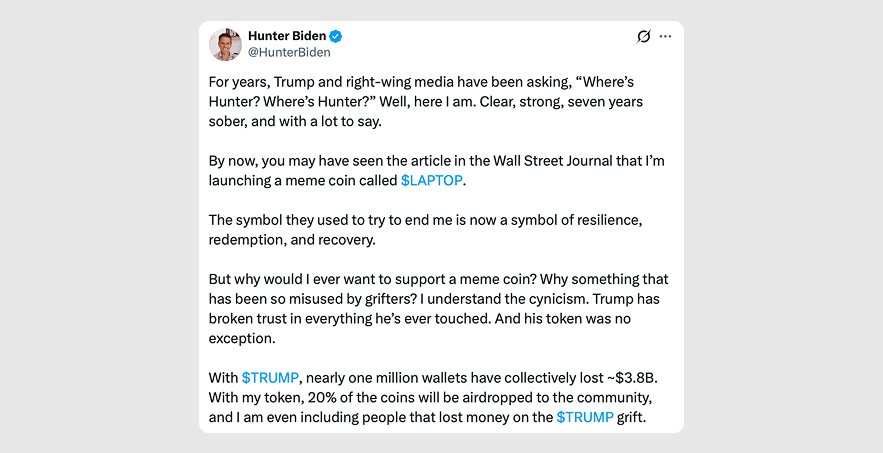
Hunter Biden is launching his own memecoin. The LAPTOP token begins trading Wednesday, September 9, on Coinbase's Base network. Biden framed the launch as a way to reclaim the scandal that followed him for years — calling Donald Trump's TRUMP token a "grift" in an early morning X post.
"I understand the cynicism," Biden wrote. "Why something that has been so misused by grifters?"
The numbers behind the jab
Biden pointed to TRUMP's performance: nearly one million wallets holding the token have lost a combined $3.8 billion since its 2025 peak. The coin traded at just $2.26 this week, down from its all-time high near $75.
LAPTOP plans to distribute 20% of its supply through community airdrops — including to wallets that lost money holding TRUMP. Another 30% is tied to a set of political, crypto, and cultural predictions. Tokens linked to outcomes that come true will be burned; those tied to failed predictions will go to charity.
The backlash
The response has been hostile. Kraken deleted a promotional post about LAPTOP after traders criticized it. Video journalist Andrew Callaghan distanced himself after his viewers were included in a planned token distribution. Base executives emphasized their team was approached with a partnership offer, but made a "conscious decision" not to provide any help to the project.
"There will be workarounds," one industry observer noted, "but the actual situation doesn't appear to be as bad as the headline indicates."
Geopolitical Economy Report's Ben Norton put it bluntly:
"Many people have praised Hunter Biden, because he has rightfully criticized Trump's extreme corruption [...] But now he is launching his own shady meme coin, like Trump. No principles, just greed."
Political memecoin track record
Biden joins a growing list of political figures who have launched tokens — Trump, Melania, and former NYC mayor Eric Adams among them. Most have seen brief rallies before collapsing.
Analyst Nic Puckrin of The Coin Bureau summed it up: "The world probably doesn't need another political meme coin, especially given what happened with TRUMP. Even if there's a lot of demand at launch, that doesn't make it a sustainable investment."
"LAPTOP isn't just about owning something, it's about saying something."
Biden told buyers not to expect him to make the token more valuable. Whether that message resonates — or the token follows the same trajectory as its predecessors — remains to be seen. For now, another political memecoin is entering a crowded, skeptical market.
$320M Liquid hack leaves $47M missing — and 'white hat' claims under fire
The Liquid Network just suffered one of the year's biggest crypto heists from hackers self-identified as "whitehats."
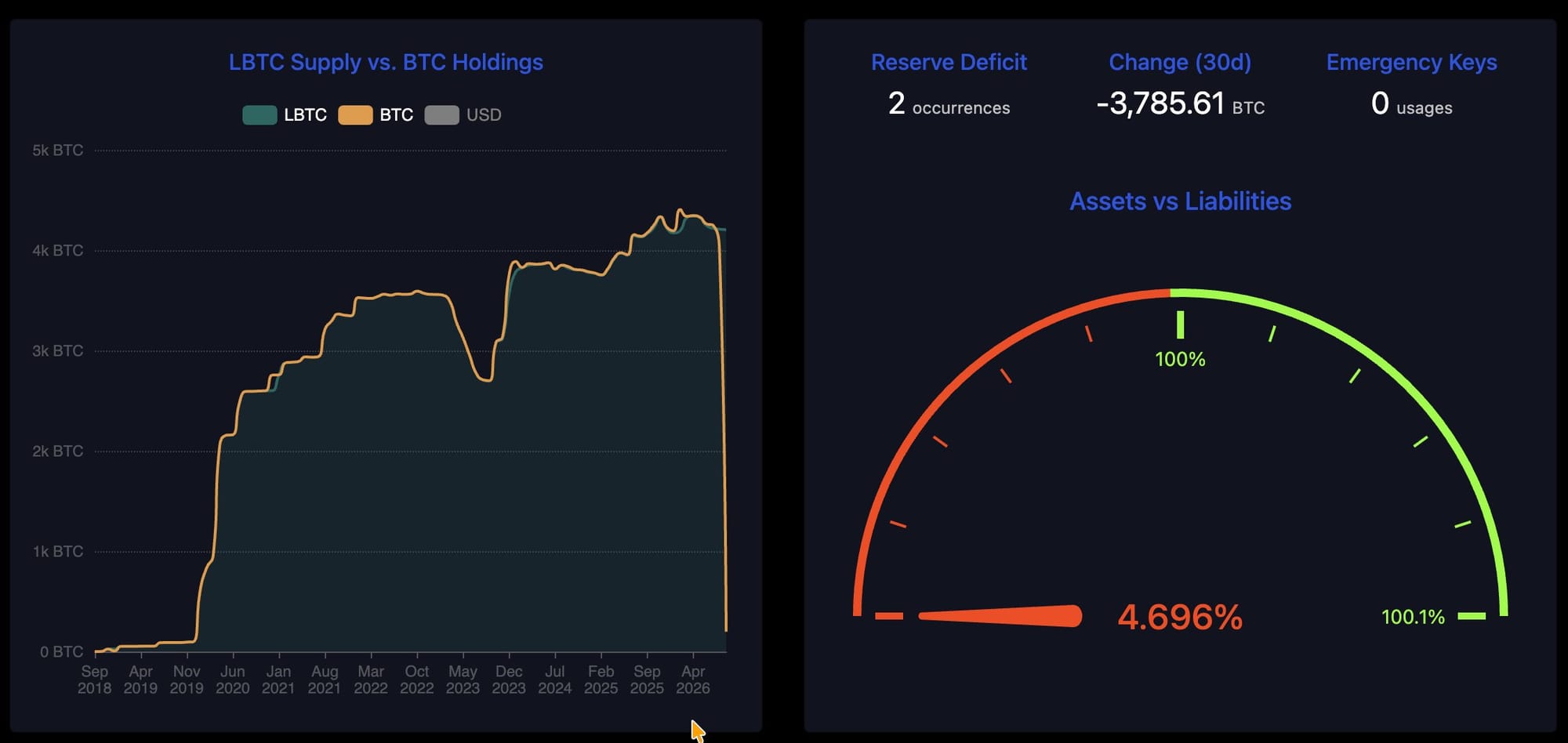
On September 6, roughly 4,000 BTC — about $320 million — was drained from the Bitcoin sidechain's federation wallet. The attackers exploited a flaw in Liquid's underlying Elements software, creating unbacked L-BTC tokens that were then exchanged for real Bitcoin. By the time operations were halted, Liquid's reserve had fallen from approximately 4,205 BTC to just 197 BTC.
The individuals behind the exploit communicated with Liquid's team in an on-chain message, promising to return the funds once the vulnerability was fixed. "Please fix the bug first," they wrote. "The chain is under risk at latest commit right now."
The return and what's still missing
On Monday, the hackers returned 3,400 BTC. But roughly 600 BTC — about $47 million — remains outstanding. Blockstream, the company behind Liquid, is in ongoing talks with the individuals to recover the rest.
"Discussions between Blockstream and the individuals responsible are ongoing to secure the return of the remaining funds," Liquid said in an incident report.
Skepticism grows
Not everyone is buying the white-hat narrative. Ledger CTO Charles Guillemet called the situation into question: "The 'white hats' still hold 600 BTC. If this was ever a negotiated reward under an encrypted contract signed on-chain, it looks more like extortion than white-hat hacking!"
How it happened
The flaw allowed the creation of unbacked tokens that SideSwap, a Liquid Federation member, accepted as valid. The platform's transaction checks failed to distinguish between legitimate and fraudulent L-BTC before the withdrawal began.
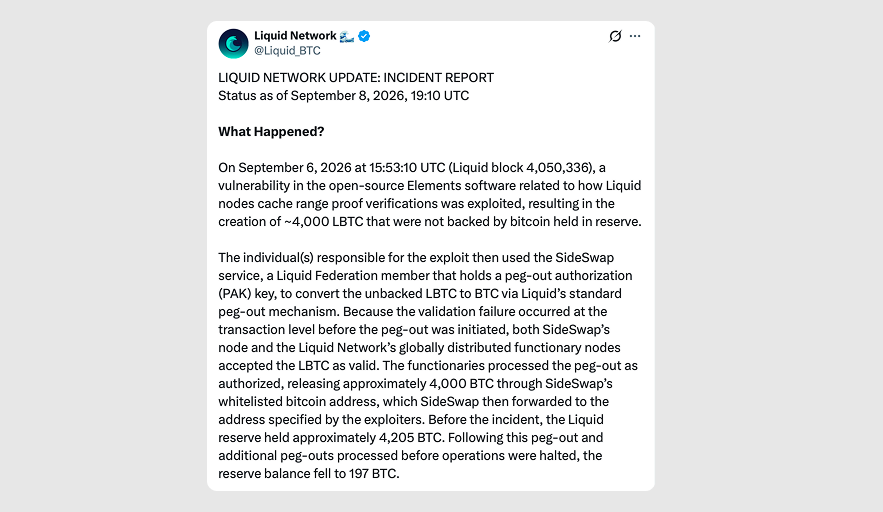
"Because the validation failure occurred at the transaction level before the peg-out was initiated, both SideSwap's node and the Liquid Network's globally distributed functionary nodes accepted the LBTC as valid," Liquid's developers wrote.
The attackers themselves weren't compromised. "The Liquid Federation functionaries were not hacked, and no private keys were compromised," Liquid confirmed. "The peg-out mechanism that authorizes withdrawals to whitelisted addresses operated as designed."
A pattern of infrastructure attacks
The Liquid hack follows a string of cross-chain breaches this year, including the $292 million KelpDAO exploit in April and the Drift Protocol hack that drained roughly $270 million. Cross-chain hacks now account for over 10% of all crypto attacks in 2026, compared to just three in all of 2025.
For institutions watching crypto from the sidelines, incidents like these are a reminder of the risks lurking in the infrastructure layer. As one analyst put it, "Blockchains are great for financial settlement, but DeFi is not ready for the institutional standards that are taken for granted in legacy markets."
For now, the Liquid Network remains paused. Blockstream is preparing an emergency update. And the crypto world is watching to see whether the remaining $47 million comes back — or whether the "white hats" were something else entirely.