Borrowing against Bitcoin instead of selling: When it makes sense

Suppose your Bitcoin has grown into something you don't want to touch, but you also need cash to buy a home. Is selling the right move? Dilemmas like that catch up with every HODLer sooner or later, and there is more than one way to solve it.
Getting cash without selling is the whole idea behind a crypto-backed loan, though there's a real trade-off attached. You can borrow against Bitcoin and keep your position, but you take on interest costs and a new kind of risk that selling never had.
Here's what situations make that trade worth it, and which don't.
TL;DR
- Borrowing against Bitcoin lets you access cash without selling — you keep your position, but you take on interest and liquidation risk in exchange.
- It works best for short-term needs with a clear repayment date, real conviction to hold, and a low loan-to-value ratio that leaves room for normal price swings.
- It works badly when there's no repayment plan, the LTV ratio is close to the maximum, or there's no spare collateral to add if the price drops.
- Liquidation can happen without warning if your LTV crosses the threshold — your Bitcoin isn't sitting still while the loan is open, and neither is its risk.
- Borrowing generally isn't a taxable event, though selling to repay or having collateral liquidated might be, depending on where you live.
"Borrowing against Bitcoin" in practice
Sell now, or wait? It's a question that comes up constantly among crypto holders, and for good reason — selling is final, and it triggers a taxable event in many jurisdictions. If you're not ready to part with your coins, a crypto loan or credit line offers an alternative that can look like a straightforward fix.
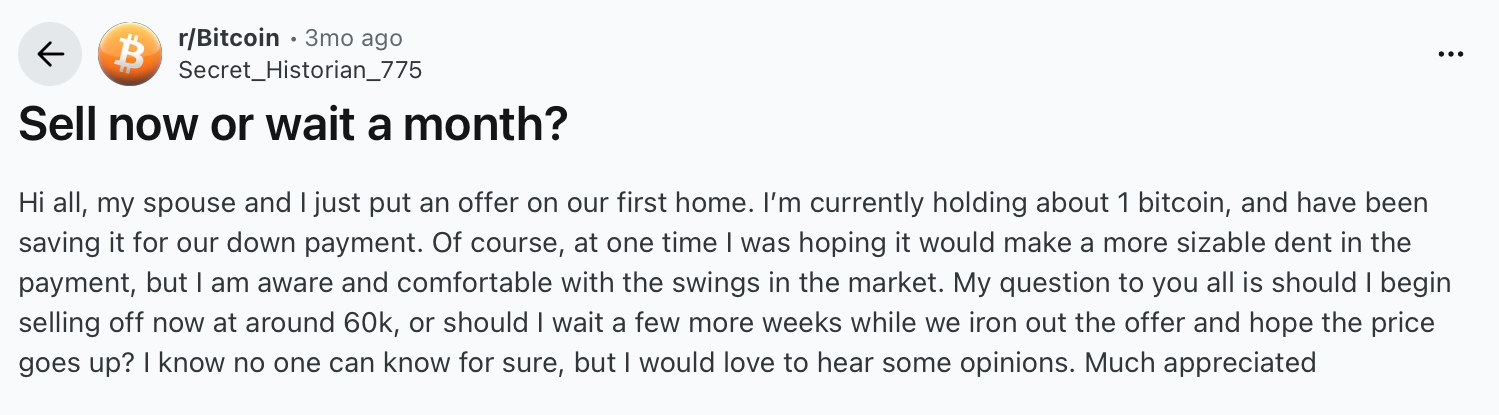
When you borrow against Bitcoin, nothing gets sold. You hand your coins over as collateral, and in return you get cash or stablecoins — commonly USDT or USDC — that you can spend or move into your bank account.
How much you can borrow comes down to your loan-to-value ratio (LTV), which functions as your loan's risk gauge: it compares the size of your loan to the value of the coin backing it. Borrow €10,000 against €20,000 in BTC, and you're at 50% LTV; most lenders cap borrowing somewhere around 70% LTV.
The lower that ratio, the more room you have before a drop in Bitcoin's price pushes you toward liquidation — and unlike a loan against a car or a house, your collateral here never sits still; its value moves with the market every day the loan is open.
If BTC drops far enough that your LTV crosses the liquidation threshold — typically somewhere between 70% and 90% depending on the platform — the lender can sell part of your collateral to cover the loan, sometimes without a warning first.
- Borrow €10,000 against €50,000 in Bitcoin (20% LTV), and BTC would need to fall roughly 75% before you're anywhere near an 80% liquidation threshold.
- Borrow €35,000 against that same €50,000 (70% LTV), and a routine 15–20% pullback puts you over the edge.
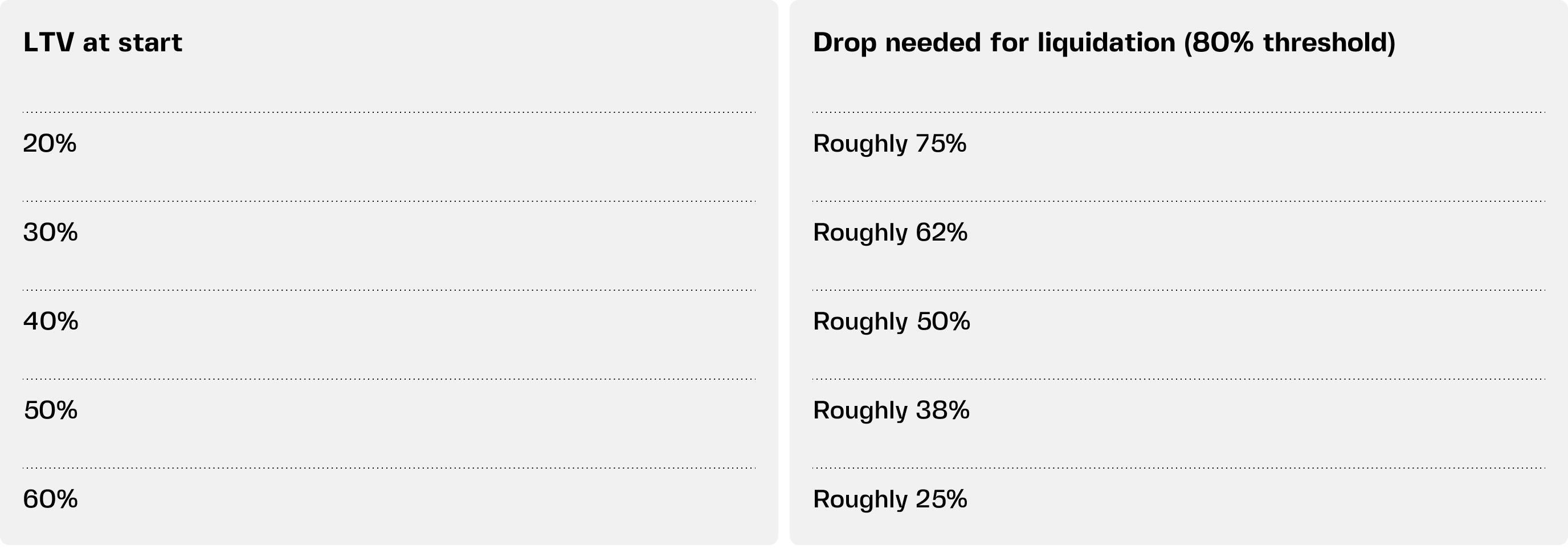
In DeFi, liquidation happens with no warning at all. Centralized platforms may send a margin call first, but they're rarely obligated to. (Our full guide on liquidation alerts and where they fit in goes deeper on exactly how much warning you should — and shouldn't — expect.)
Two ways to manage that risk
Hedge 1: Turn single-asset collateral into a pool
Backing a loan with BTC alone gives you limited options when the market turns — add more BTC, repay the loan, or risk losing part of it. Mixing in other assets is the more flexible fix.
Multi-collateral lending products let you combine BTC with ETH, stablecoins, smaller-cap alts, or even fiat, which lowers your cumulative LTV without shrinking how much you can borrow.
The more stable an asset, the more you can typically borrow against it, and the less a routine dip threatens your position.
Back a credit line with €5,000 in BTC and €5,000 in USDT, and a BTC plunge alone won't put you at risk the way it would if the full €10,000 sat in BTC — the stablecoin half holds steady and buys you a genuine buffer. Clapp goes a step further, letting you add, remove, or reshuffle collateral on an open credit line at any time.

Hedge 2: Use a credit line instead of a fixed-term loan
A fixed-term loan locks you into a repayment schedule, with late fees and sometimes a charge for repaying early. Credit lines work the opposite way, built around flexibility: you pay interest only on what you actually draw, and you can repay whenever you want, with the one condition being that you keep your LTV at a safe level.
You can even withdraw BTC from the pool without repaying anything, as long as you add other assets of equal value to keep your LTV in a safe range — reshuffle the mix, and the BTC gets released while the loan stays open.
When it makes sense to borrow against Bitcoin
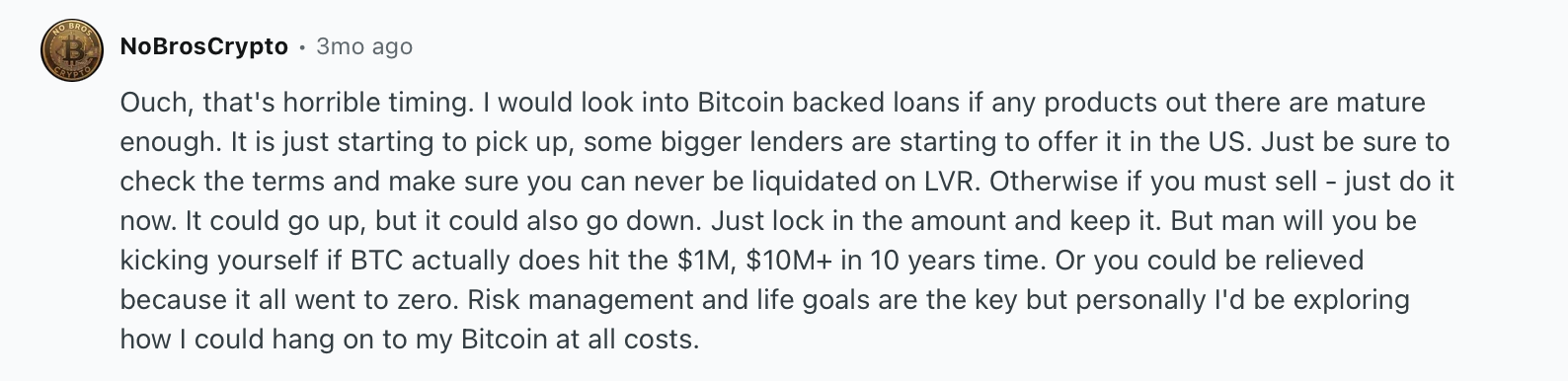
Borrowing against Bitcoin can be useful when the cash need is temporary and you don't want to sell your holdings to cover it.
A straightforward example is a short-term cash gap. You might have a tax bill, a deposit to pay, or an unexpected expense, while knowing that income is due in a few weeks. Selling Bitcoin would turn a temporary cash need into a permanent reduction in your holdings. A credit line can cover the gap until the money comes in.
It can also make sense if you want to keep your Bitcoin exposure. If you've held Bitcoin for years and don't want to sell at the current price, borrowing against part of your holdings gives you access to cash without closing the position. You still pay interest, and you still take on liquidation risk, but you don't have to sell the Bitcoin itself.
The third piece is the amount you borrow. A low LTV ratio gives you more room if Bitcoin's price falls. That matters because the loan balance doesn't fall with the market, while the value of your collateral does. The less you borrow relative to your holdings, the more distance you have from the liquidation threshold.
When it doesn't make sense
Borrowing against Bitcoin isn't a good fit for every situation. Some cases make the risks much harder to manage.
Long-term borrowing without a repayment plan can become expensive and difficult to manage. If you don't have a clear way to repay the loan and expect to keep it open for a year or two, interest will continue to accumulate while the value of your collateral can move significantly. A longer loan also gives the market more time to move against you.
High loan-to-value ratios leave less room for price drops. If you borrow close to the maximum available, a relatively modest decline in Bitcoin's price can push your LTV toward the liquidation threshold. Starting with a lower LTV gives you more room to absorb volatility.
No cash or additional collateral means fewer options if the market falls. If you can't add collateral or repay part of the loan when your LTV rises, you have less control over the position and a higher risk of liquidation.
In these situations, selling part of your Bitcoin may be worth considering instead. You avoid interest and liquidation risk, although selling can have tax consequences depending on your jurisdiction.
Potential costs: Interest and liquidation
Borrowing against Bitcoin comes with two main costs to consider: interest and the possibility of losing some of your collateral through liquidation. Tax treatment can also matter, depending on what happens to the collateral.
Interest
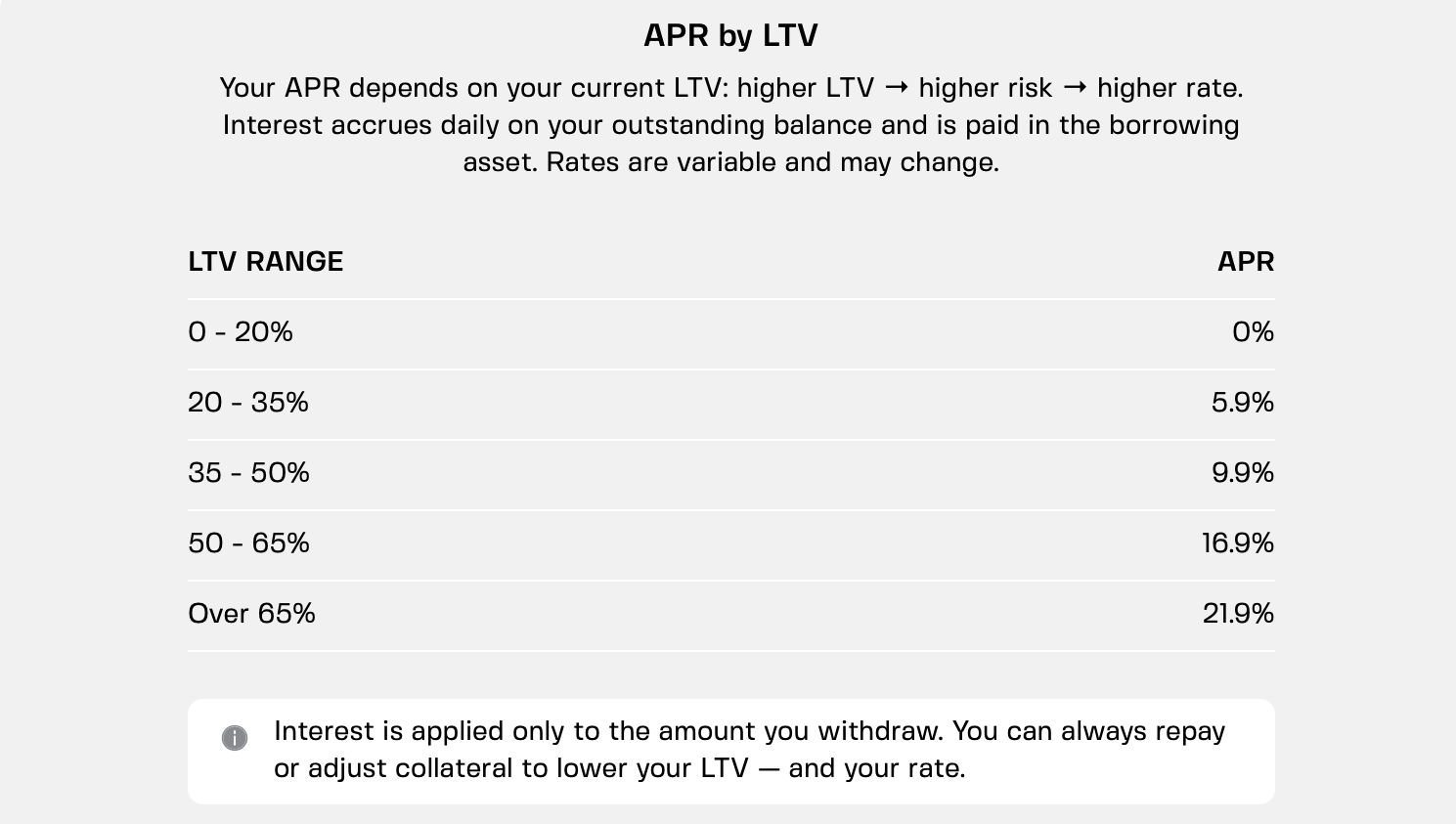
Clapp's Credit Line offers 0% APR up to 20% LTV, with higher rates at higher LTV levels — and the longer the loan stays open, the more that rate costs you. Borrow at 30% LTV with Bitcoin's price roughly flat, and the interest is a straightforward, predictable cost.
Liquidation
If the LTV reaches the liquidation threshold and you don't bring it back down in time, some of your collateral may be sold to repay the loan.
This is one of the main differences between borrowing and selling. With a sale, you decide when to sell. With a liquidation, the sale happens because the loan has reached the relevant threshold. A lower starting LTV gives you more room for the Bitcoin price to move before you reach that point.
Taxes
Taking out a loan against Bitcoin is generally not treated as a sale, so borrowing itself may not trigger capital gains tax — though that can change if you later sell to repay the loan or your collateral gets liquidated, and rules vary enough by country that it's worth checking before relying on this distinction.
So, should I get a Bitcoin loan?
A few things worth checking before using Bitcoin as collateral:
- Why do you need the cash, and when do you expect to repay it? A clear repayment plan matters more than simply qualifying for the loan.
- How much are you borrowing relative to your collateral? Staying well below the maximum LTV gives you more room if Bitcoin falls. At press time, Clapp allows up to 70% LTV for Bitcoin.
- What happens if Bitcoin drops 30% or 40%? Make sure you have enough cash or additional collateral to deal with a sharp move without being forced to sell.
- What will the loan actually cost? Work out the interest for the period you expect to keep the loan rather than relying on the advertised rate alone.
- What would selling your Bitcoin cost you? Depending on where you live, selling may create a tax liability. That is worth comparing with the interest you would pay on the loan.
- And finally, are you comfortable with the liquidation risk? If a sharp enough drop could force the sale of your collateral, that needs to be part of the decision from the start.
Borrowing or selling? It depends
Selling gives you cash with no debt and no interest, at the cost of your Bitcoin position. Borrowing keeps that position intact, but trades it for interest payments and liquidation risk if the market falls far enough. Neither is automatically the better move — which one fits comes down to why you need the money, how long you expect to need it, and how much room you have between your current LTV and the liquidation threshold.
Frequently asked questions
Is it better to borrow against Bitcoin or sell it?
That depends on what you need the money for and how long you expect to need it. Borrowing can make sense if you need short-term liquidity but want to keep your Bitcoin. You still have to pay interest, though, and the collateral remains exposed to liquidation risk. Selling avoids those risks, but you give up your Bitcoin position.
What happens if Bitcoin's price drops after I borrow against it?
Your loan doesn't get smaller when Bitcoin falls, so your LTV goes up. If it reaches the liquidation threshold, the platform can sell some or all of your collateral to repay the loan. A large enough price move can therefore put a position at risk even if everything looked comfortable when you opened the loan.
Is borrowing against Bitcoin taxable?
A loan is generally not treated as a taxable sale of the Bitcoin used as collateral. But tax treatment depends on where you live and what happens later, including how the collateral is disposed of. Check the rules that apply in your jurisdiction before making assumptions about the tax cost.
What loan-to-value ratio is considered safe when I borrow against Bitcoin?
There isn't one LTV that is safe for everyone. The lower your LTV, the more room you have if Bitcoin falls before your position reaches the liquidation threshold. Your own risk tolerance, repayment plan and ability to add collateral all matter here.
Can I add more collateral if my loan gets risky?
That depends on the credit line. Where additional collateral is supported, adding more Bitcoin or paying down part of the loan can lower the LTV and give the position more room. Check the terms of the specific product to see what options are available and how much time you have to act.