Clapp Weekly: Bitcoin reclaims $86K, SEC clears tokenized stocks, X's new 'Trade' button

BTC price
Bitcoin reclaimed $86k on Monday, riding a mix of tailwinds: falling oil, a record Nasdaq, and a relatively muted reaction to the Fed rate hike. The bigger catalyst, however, was a short squeeze that wiped out $648 million in bearish bets. As the coin climbed to its highest level since January, spot Bitcoin ETFs attracted nearly $1 billion on Monday, the highest inflow since October 2025. Up nearly 48% for the quarter, Bitcoin is tracking toward its best performance since Q4 2024.
BTC traded flat around $76k before a September 18 breakout lifted it toward $81k, a level it held close to until September 21. From there, the rally accelerated, with the price topping out at $86,968.80 the next day — and it has continued to hold the $86k mark at press time.
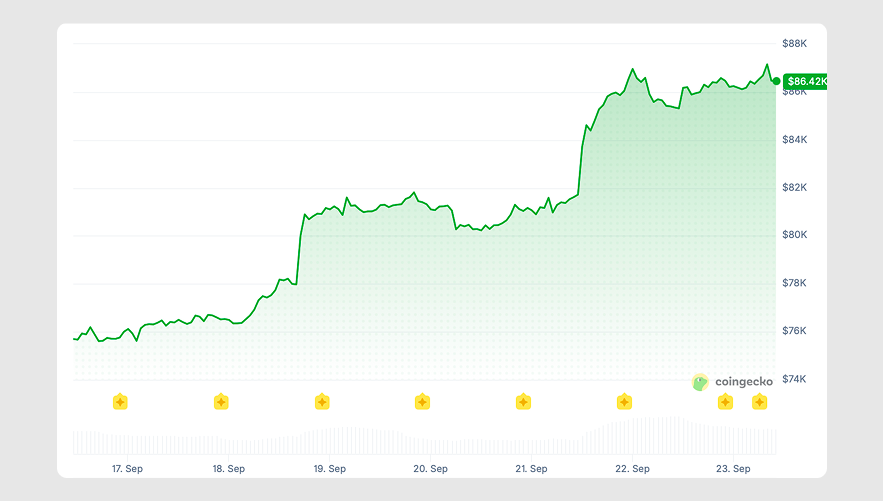
Currently, BTC sits at $86,468.95, up 1.3% over the past 24 hours and 14% over the past week.
ETH price
Ether is holding above $2,700 as bullish positioning continues. Spot Ethereum ETFs offset three days of outflows with a two-day inflow streak, pulling in $270 million on Monday alone. Whales are stepping in too — one wallet bought 4,500 ETH on Tuesday — while BitMine extends its own accumulation streak, adding 12,500 ETH to its 5.98 million ETH balance, according to on-chain trackers. The quarter's +75.7% gain trails only the +160.1% surge seen in Q1 2021.
Riding BTC's momentum, ETH rose past $2.4k on September 16 and hit $2,635 two days later before retreating slightly over the weekend. It pushed higher again on September 21, then peaked at $2,782.33, and is now holding firm around the $2.75k mark.
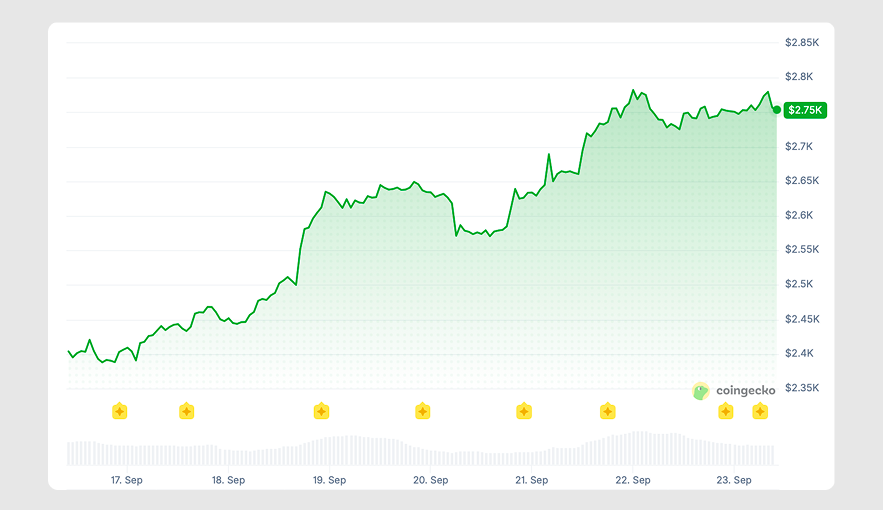
At press time, ETH is changing hands at $2,751.16, up 0.8% over the past 24 hours with a 14.5% weekly gain.
Seven-day altcoin dynamics
The Crypto Fear & Greed Index has returned to 70 — solidly in "greed" territory — as easing oil prices and a tech-stock rally fed risk-on appetite. On Monday, the Nasdaq Composite closed at a record, AI-linked names like Intel ripped higher, and chipmakers rallied in unison. With Bitcoin's surge pulling the broader market along, the Altcoin Season Index at 50 suggests BTC still holds the upper hand even as altcoins start to move.
Oil slides on Iran hopes
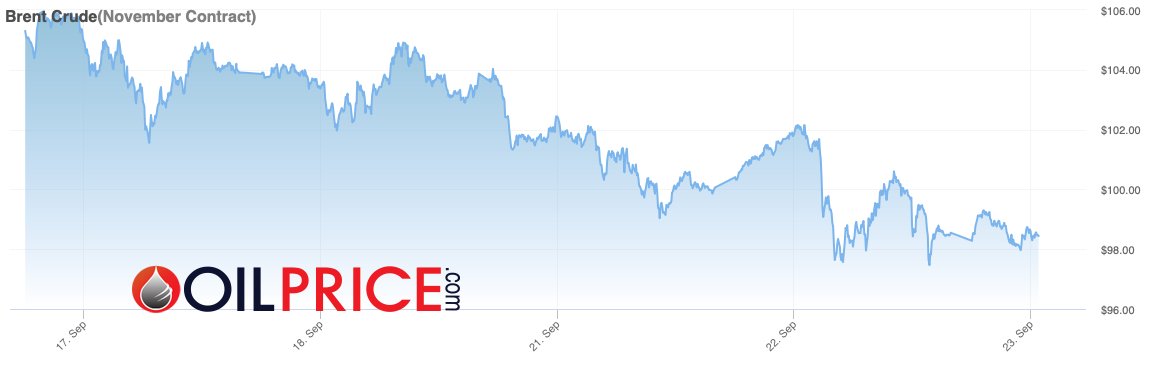
Reports that Iran offered to reopen the Strait of Hormuz caused Brent to slip below $98 a barrel on Tuesday, September 22. It is currently trading at $98.63, while WTI has slipped below $91, its lowest level since early September.
The same day, a senior Iranian official told Reuters that Iran was ready to reopen the key waterway within seven days if the US eased military pressure and lifted its blockade on Iranian ports. Meanwhile, President Trump told the UN he expects Iran to make a deal after the US midterm elections in November.
Supply pressure in the Middle East appears to be easing more broadly, too: Saudi Arabia is restarting its critical East-West pipeline, aiming to restore meaningful flows as early as this Saturday.
Fed hikes rates but keeps pumping liquidity
The Federal Reserve delivered its first rate hike since 2023 on September 16. The FOMC voted unanimously for a quarter-point increase to 3.75%-4%, with hot August CPI and PPI readings forcing the move.
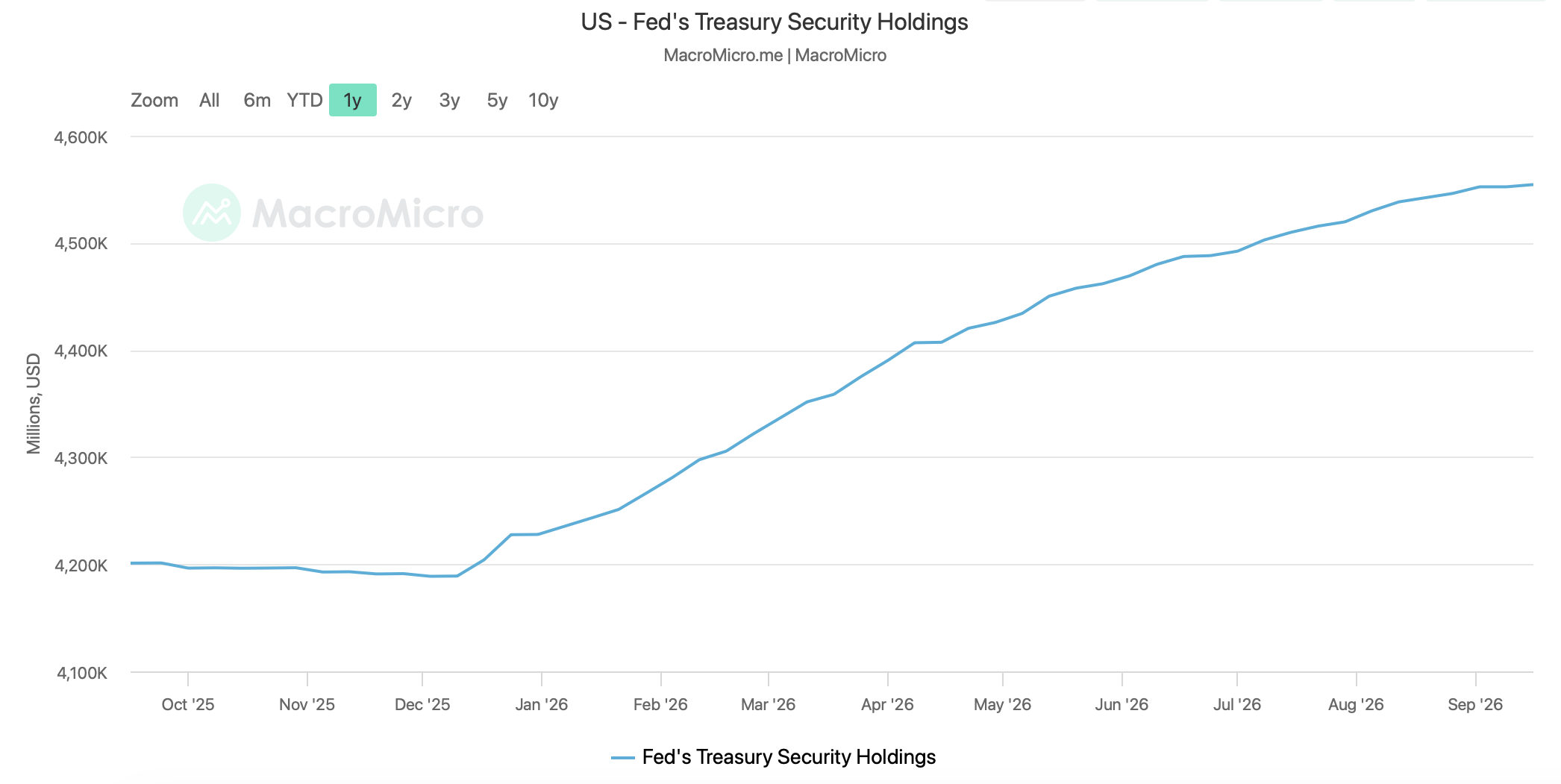
Meanwhile, the Fed has continued regular purchases of short-term Treasury bills, a technical operation that resumed in December 2025 to keep bank reserves "ample" — effectively softening some of the hike's tightening effect. By absorbing Treasury supply this way, the Fed's balance sheet is no longer draining liquidity from the system, which means cash keeps flowing to buyers of risk assets.
Top weekly winners
- NEAR (+88.8%) rallied on news of a strategic partnership with Ondo Finance, giving users access to tokenized US stocks and ETFs from over 30 blockchains, payable in stablecoins or any supported crypto.
- ARB (+59.3%) is riding Standard Chartered's prediction of a 70-fold price surge to $10 by the end of 2030, citing Robinhood Chain revenue. Since its July debut, the chain has pushed Arbitrum's September revenue toward a roughly $5 million monthly run-rate — more than five times the pre-launch level.
- UNI (+64.6%) surged after CME Group's announcement of regulated Uniswap futures contracts launching October 19, pending regulatory review. The news signals greater institutional access ahead, adding to already-bullish sentiment around Uniswap's active fee switch and token burn mechanism.
Top weekly losers
- STABLE (-7.9%) got caught in last week's broader selloff after the Senate failed to advance the CLARITY Act and the Fed raised rates, and has yet to recover the ground lost on September 16.
- RAIN (-6.3%) remains stuck below its pre-hike level. A major token unlock looms, raising sell-pressure concerns in the absence of project-specific catalysts: on October 10, 2026, $683–$785 million worth of RAIN will enter circulation.
- JST (-2.3%) is showing post-hype consolidation, unable to sustain the momentum from a mid-September rally spurred by TRON's MetaMask integration. Thin liquidity has compounded the pressure, and underperformance against BTC suggests coin-specific profit-taking is weighing on the token.
Cryptocurrency news
SEC opens the door to tokenized US stocks
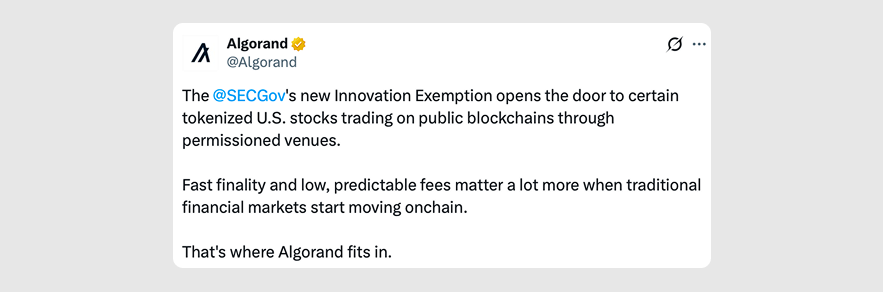
The SEC unveiled a five-year pilot program on Thursday that lets tokenized versions of US equities trade on public blockchains — the first time real shares can move onchain under a formal regulatory framework. The long-awaited "innovation exemption" marks a clear shift from the agency's prior gray-zone treatment of tokenized stock products.
The fine print matters, though
Only tokens tied to actual shares — carrying dividends and voting rights — qualify; synthetic products that merely track a stock's price are shut out entirely. Gabo Otte, CEO of Dinari, commented:
"The SEC is drawing an important line around what tokenized equities should actually represent. Putting stocks onchain shouldn't mean stripping away the rights that make them stocks in the first place."
Securitize's Carlos Domingo was similarly upbeat, calling the move a real path to trading genuine tokenized shares.
Public companies get a veto
Before a tokenized stock can trade, the venue must notify the issuer and wait 30 days, and the company can block the listing entirely if it objects — a safeguard that traces back to a public dispute this summer, when AMC's CEO criticized Robinhood over AMC-linked tokens launched without the company's involvement.
Carving out a regulated lane for DeFi
The pilot lets automated market makers trade tokenized stocks without registering as traditional exchanges — though KYC checks, trading limits, and other guardrails still apply. Grayscale's Zach Pandl expects the benefits to flow toward Ethereum, Solana, BNB Chain, and DeFi platforms like Uniswap, Aerodrome, and Raydium.
Scope is limited
The program stays deliberately narrow for now, with caps on how many stocks each venue can list and how much volume they can handle, and participants must be permissioned. Still, it's the first defined US route tokenized stocks have ever had, and issuers are already adjusting: Superstate's Robert Leshner expects new, rule-conforming products to launch in the coming weeks and months.
X just became a trading terminal, but it won't hold your coins
Elon Musk's X took another step toward becoming an "everything app" on September 22, rolling out its US Cashtag Partner Program. This feature links tickers like $BTC, $TSLA, and $ETH directly to five outside trading platforms: Coinbase, Gemini, Kraken, Interactive Brokers, and Moomoo.
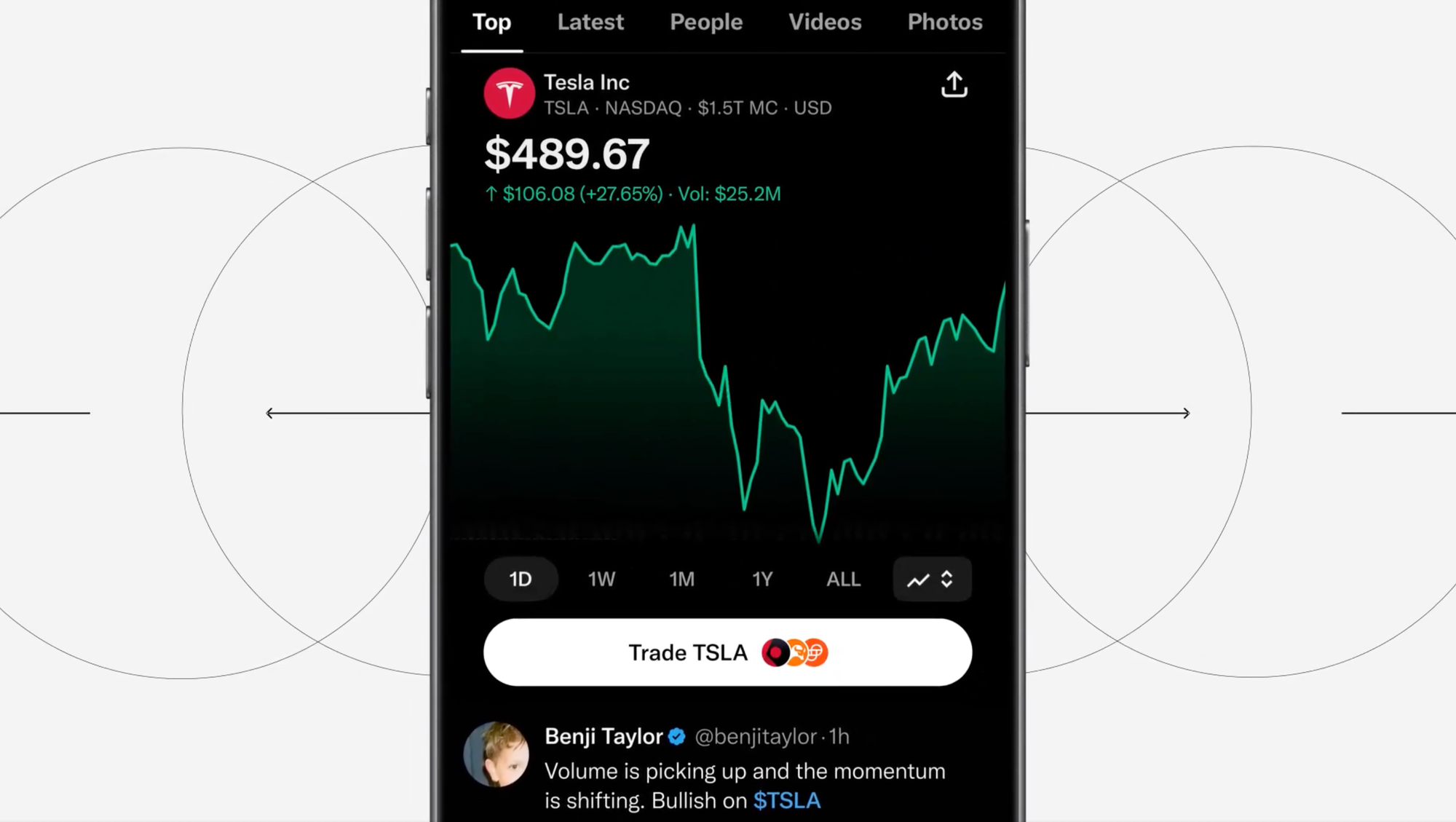
The flow is straightforward: tap a cashtag, see a live price chart next to related posts, then hit "Trade" to get redirected to a chosen partner platform to log in and complete the order. X itself never touches the transaction or custodies any assets — it isn't acting as a broker, and execution, eligibility, and account terms all remain with the partner exchange.
The official announcement reads:
"Cashtags turn ticker symbols for stocks, ETFs and cryptocurrencies into interactive destinations, giving X users real-time access to market conversation and financial information. Now, X Cashtag partners give users a seamless path from discovering a ticker and following the conversation on X to taking action with a brokerage."
The rollout builds on Smart Cashtags, which X introduced earlier this year to attach real-time charts and dedicated pages to ticker symbols; this update adds the final step from conversation to execution.
Kraken says its integration spans nearly 2,500 assets across its centralized and decentralized offerings, while Interactive Brokers is dangling a $100 credit for new eligible US clients who open and fund an account through the Cashtag flow.
The scale here is the real story
X counts roughly 245 million global users and 132 million daily active users on mobile, making it the closest thing crypto has to a town square — one Musk post has moved markets more times than anyone can count. By turning that conversation into a funnel, X isn't trying to compete with Coinbase or Kraken; it's feeding them customers instead.
The feature is separate from X Money, the platform's payments product, which still has no direct link to fund trades — but Musk's larger vision of banking, payments, and trading under one roof is clearly taking shape.
For now, X is the front door and the exchanges are the back office; whether that convenience becomes a new kind of risk is still an open question.