Clapp Weekly: $64K holds ahead of FOMC, Metaplanet's US Bitcoin expansion, SEC's surprise rule

BTC price
Bitcoin is holding a tight range between $64,000 and $65,000 after reclaiming the lower end of the range. Markets are digesting a surprise SEC regulatory proposal, a brief $56 million short squeeze, and shifting institutional activity. Spot Bitcoin ETFs reversed their outflow trend on August 17, attracting nearly $490 million over two days. Persistent tensions in the Middle East, however, continue to cap Bitcoin’s upside.
BTC retreated from $64k on August 13, slipped to $62.5k the following day, and traded in a narrow range around $63k before surging on August 17. It climbed from $62.7k to $64,833.58 on August 18 before giving back some of the gains.
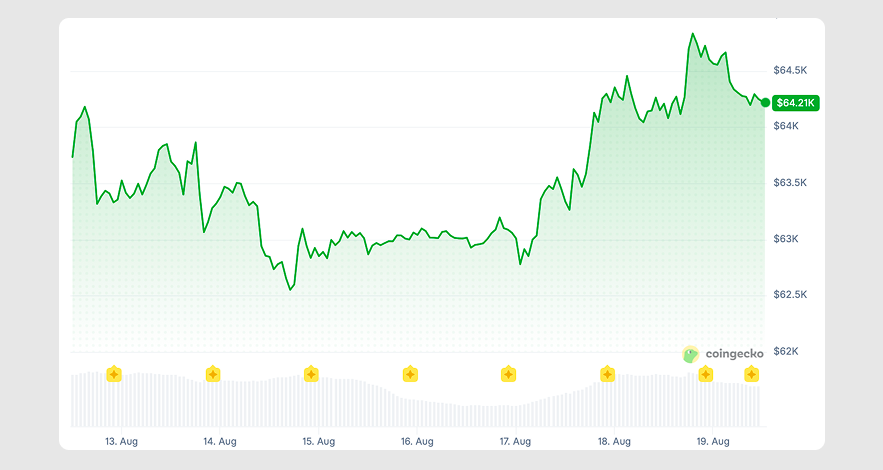
BTC is currently changing hands at $64,212.99, flat over the past 24 hours and up 1.0% over the past week.
ETH price
Renewed US spot ETF demand sparked a brief rebound, helping Ether hover near $1,900. The funds attracted $30.85 million in net inflows on Monday, August 17, after Friday saw no net flows — more a pause than a clear shift in demand. Meanwhile, Bitmine bought another 9,926 ETH last week, bringing its treasury to 4.8% of Ethereum’s supply.
ETH briefly spiked to $1,914 on August 12, then slipped below $1.88k and seesawed around that level through mid-week. It bottomed at $1,870.34 before surging back above $1.9k on August 17, then retreated the next day and rebounded to $1,916.01.
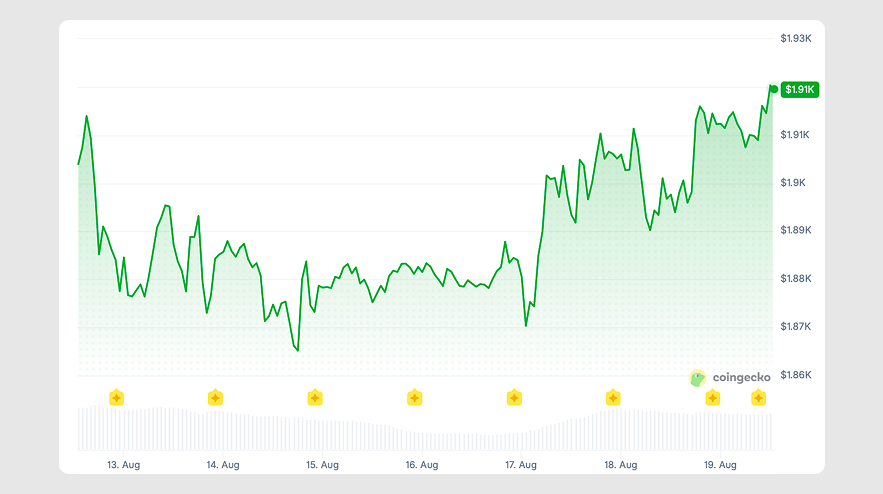
ETH is currently trading at $1,915.58, up 0.8% over the past 24 hours and 1.1% over the past seven days.
Seven-day altcoin dynamics
Major tokens are mostly in the green as traders await the Fed minutes, with BNB and HYPE the notable exceptions. The minutes follow July's in-line CPI report, which failed to give markets much direction, though the odds of a September Fed rate hike have slipped toward 36%.
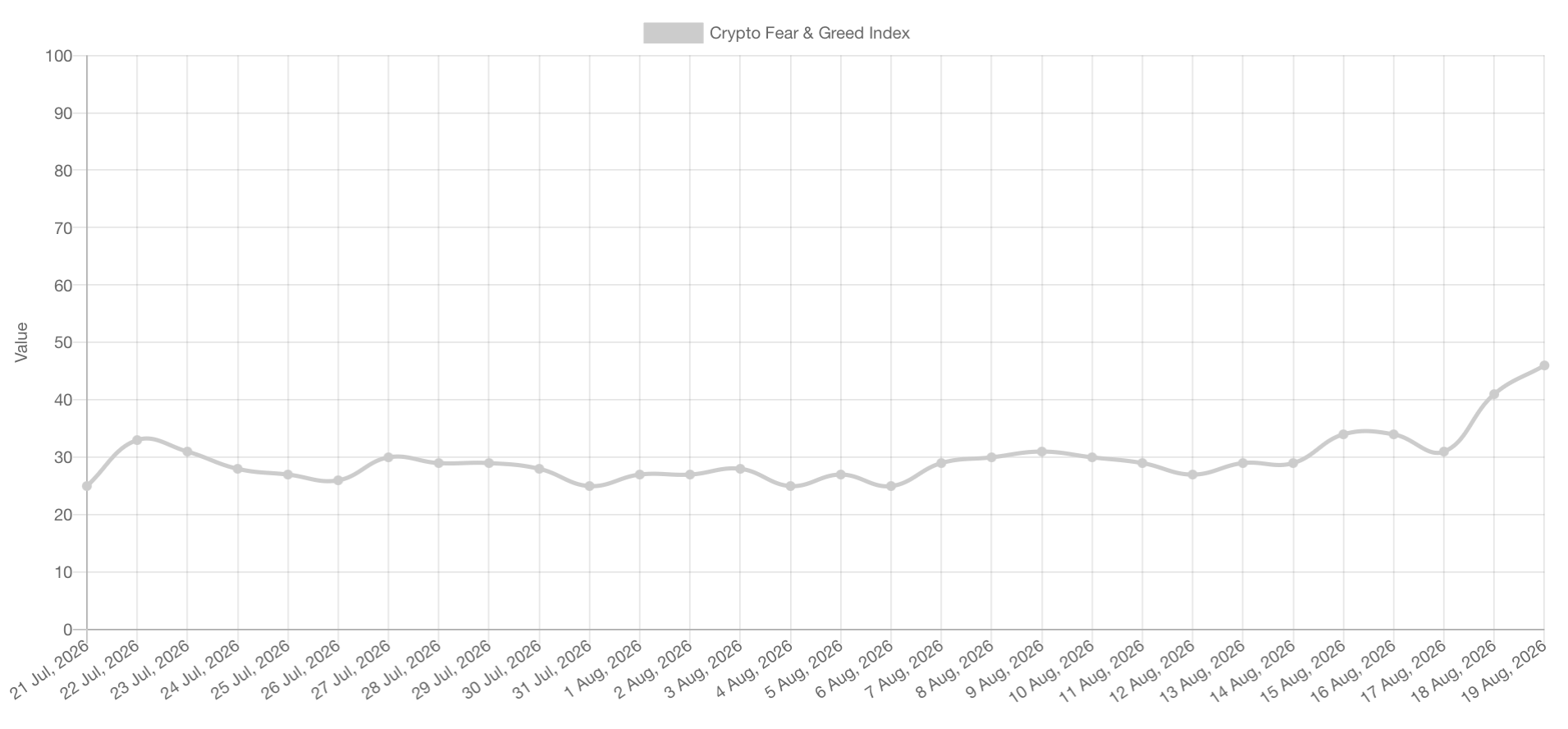
The Fear & Greed Index is nearing neutral at 46/100. Sentiment jumped from 31 to 41 the previous day as Bitcoin reclaimed $64,000, easing immediate risk-off pressure despite broader macro headwinds.
Bond yields weigh on crypto
Long-term government bond yields have surged to multi-decade highs following a global sell-off, threatening to pull capital away from crypto. The 30-year US Treasury yield has climbed to 5.33%, its highest level since 2007, while the 10-year yield has reached levels last seen in early 2025.
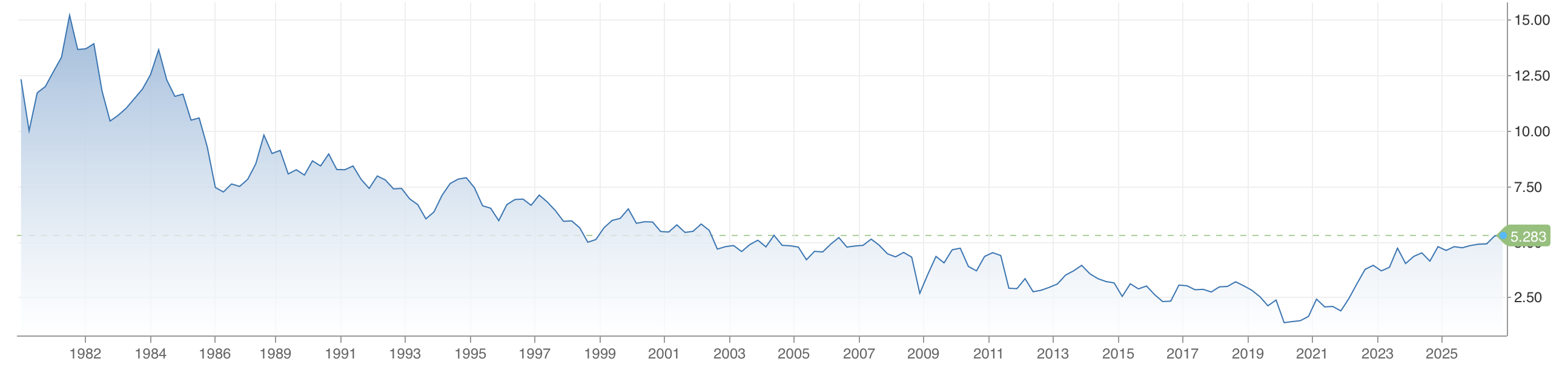
The move reflects broader concerns over government debt — with US debt approaching $40 trillion — heavy AI infrastructure spending, and global rate-hike expectations. Higher yields raise borrowing costs for AI hyperscalers and can siphon liquidity from risk assets, putting crypto's inflation-hedge narrative to the test.
Oil also remains a concern
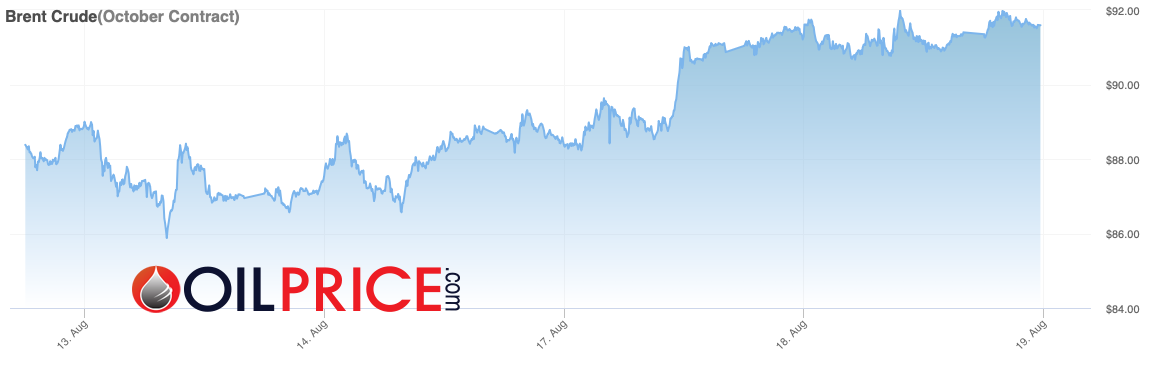
Geopolitical inflation risks are still hanging over markets. October Brent contracts are trading at $91.59 per barrel after four consecutive sessions of gains. The escalating US-Iran conflict is renewing fears over global energy supplies and shipping through the Strait of Hormuz. WTI is at $85.60, up from $80.44 on August 13.
President Donald Trump denied any ongoing or scheduled talks with Iran, saying his administration had established a back channel with the Revolutionary Guards. Iran's parliament speaker, Mohammad Bagher Ghalibaf, meanwhile, accused the US of "squeezing" Tehran for further concessions.
Trump says the naval blockade of Iranian ports remains in full force. He also posted a map on Truth Social marking the Strait of Hormuz as “new US territory.” According to Ghalibaf, the waterway will remain closed until the US fulfills conditions agreed to in a June memorandum of understanding.
Fed minutes in focus
Minutes from the Federal Reserve’s July meeting are due today at 2 p.m. ET. The release could offer fresh clues on the policy path before traders make new bets on risk assets.
The tone will matter. The Fed kept rates at 3.50%–3.75%, but three voting officials dissented in favor of a hike. Signals that further tightening is unnecessary could strengthen the liquidity-driven bullish case for crypto; hawkish cues, on the other hand, could push Treasury yields and the US dollar higher, weighing on high-beta assets.
The next major macro catalyst is the Jackson Hole symposium next week (August 27–29), where Fed Chair Kevin Warsh is scheduled to speak.
Top weekly winners
- BTW (+138.7%) — rocketed higher after Bitway launched its incentivized decentralized traditional finance (DeTraFi) staking program on Aug. 13, offering an 8% base APR in stablecoins plus another 4% return in platform points (BW). Binance Wallet’s Bitway Booster Season 4 also encouraged BTW deposits.
- ETHFI (+27.3%) — jumped following Ether.fi’s Summer upgrade, which expands the ecosystem into tokenized stocks and metals, Aave-powered lending, and programmatic buybacks funded by protocol revenue, tying the token more closely to platform activity.
- VVV (+19.6%) — surged Monday after Venice’s privacy-focused AI platform surpassed $100 million in annualized revenue. A new AI-powered Doodle feature added another catalyst, while a technical breakout coincided with tripled trading volume.

Top weekly losers
- UNI (-13.1%) — lost ground amid a technical breakdown, leveraged long liquidations, whale deposits to exchanges, and regulatory uncertainty after the SEC delayed its “innovation exemption.” These pressures outweighed positive infrastructure expansion developments.
- FIL (-10.8%) — hit multi-month lows after breaking below key support. Selling pressure was compounded by continued daily linear token unlocks and the lack of a clear project-specific catalyst.
- CC (-9.9%) — slipped despite new exchange listings, security ecosystem developments, and an improving burn-to-mint ratio. The decline has been linked to a technical breakdown and increasingly bearish derivatives positioning.
Cryptocurrency news
Metaplanet plants its flag in the US: 2,100 BTC for a Nasdaq-listed treasury play
Japan's most aggressive Bitcoin accumulator is setting up shop across the Pacific.
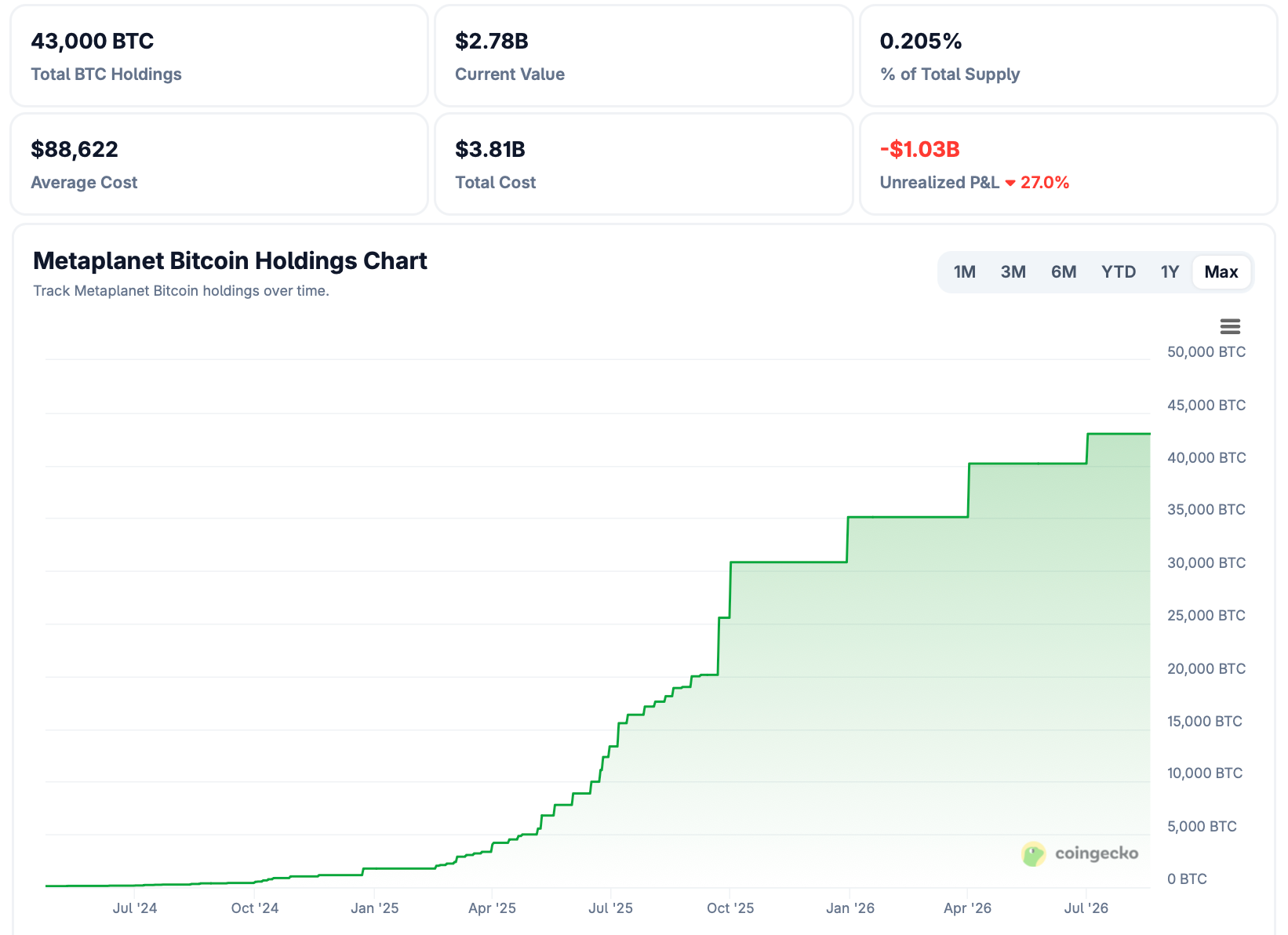
Metaplanet, the Tokyo-listed firm that has amassed 43,000 BTC — making it the world's third-largest corporate holder — is taking a controlling stake in a Nasdaq-listed gaming company to create a new US-based Bitcoin treasury platform.
The deal, announced Tuesday, will see Metaplanet contribute 2,100 Bitcoin (around $132 million) plus $2.5 million in cash to Super League Enterprise. In return, it gets a 95.7% stake in the renamed entity — Superplanet — which will trade under the ticker SUPA when the transaction closes in Q4.
The gaming media business stays intact as a separate operating segment. But the real story is what sits on the balance sheet: 2,100 BTC from day one.
A different kind of deal
Unlike the flood of SPAC-style treasury deals that defined the last crypto cycle, this one stands out. Metaplanet is funding the acquisition with its own Bitcoin holdings, not third-party money raised at a discount. The share price was locked in near the market close rather than negotiated down. And Metaplanet's stake comes with a five-year lock-up — a signal of long-term commitment.
CEO Simon Gerovich explained:
"“We've built one of the world's largest Bitcoin treasuries from Japan. Superplanet is how we build in America, the deepest capital market in the world. We are putting our own Bitcoin in, locking up our shares, and backing the company with our balance sheet and know-how. One consolidated Bitcoin position, compounding through two listed platforms, in Japan and in the US.”
The company seeded this investment with less than 5% of its Bitcoin holdings, "with the ability to contribute much more as the platform grows."
Two listed treasuries
The move gives Metaplanet dual-listed Bitcoin exposure — one vehicle in Tokyo, another in New York. Superplanet will publish its own BTC-per-share metrics after closing, giving US investors a clean way to track the play.
Metaplanet also has a 24-month option to invest up to another $210 million through preferred stock. And it's not stopping at accumulation: the firm recently acquired a Japanese securities firm to launch Bitcoin yield products and rolled out Bitcoin-backed bonds.
A deepening strategy
The move goes beyond accumulation. Metaplanet recently acquired a Japanese securities firm to launch Bitcoin yield products and rolled out Bitcoin-backed "Bitbonds." The latter — a fixed-rate debt program — might help fund the firm's future BTC purchases.
The US expansion signals a broader ambition to tap the world's deepest capital market while compounding a single group Bitcoin position across two listed platforms.
While most corporate Bitcoin holders have spent 2026 under pressure — selling coins, repaying debt, or pivoting entirely — Metaplanet is doubling down. The US expansion taps deeper capital markets while keeping the same playbook: buy Bitcoin, hold it, and let the balance sheet do the talking.
SEC just dropped its first major crypto rule, and it's a big deal
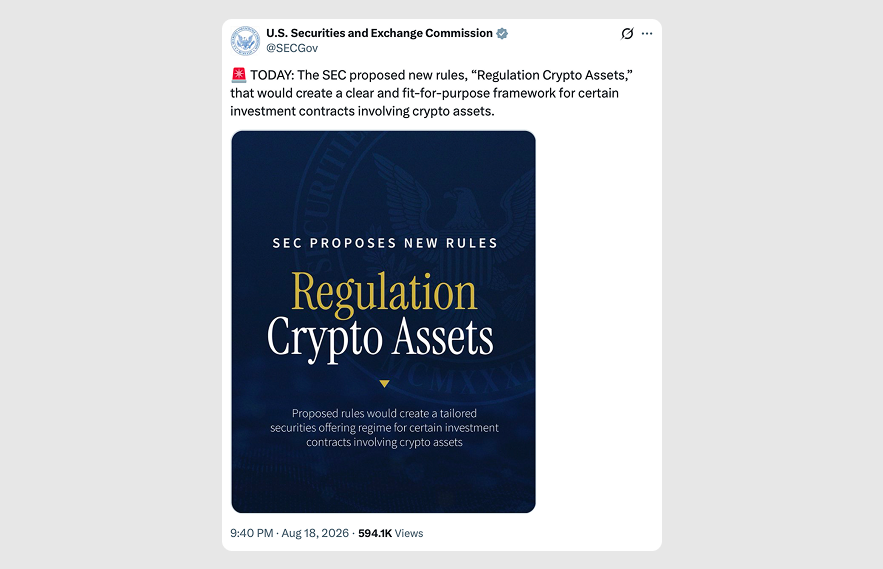
On Tuesday, the SEC proposed "Regulation Crypto Assets," its first permanent rule governing digital assets, in a surprise announcement that caught even close watchers off guard. The move comes after the agency cancelled an August 14 meeting that was meant to vote on the same proposal.
The rule creates two tracks for crypto offerings. Startups can raise up to $5 million over four years with lighter disclosure requirements. Larger issuers can raise up to $75 million per year but must provide financial statements and ongoing reporting. Both paths require public filings and fall under anti-fraud rules.
A safe harbor for decentralization
The most significant piece of the proposal is a conditional safe harbor. Once an issuer has completed or permanently ceased all essential managerial efforts, the crypto asset is no longer considered an investment contract under securities law. Projects that become sufficiently decentralized can shed their security status.
"In line with the commission's earlier interpretative guidance, this proposal would also allow for a safe harbor once an issuer has completed or permanently ceased all essential managerial efforts that it represented or promised it would take under an investment contract," SEC Chairman Paul Atkins said in a statement.
Why now
Congress has stalled on the CLARITY Act, and the Senate has just three weeks of floor time left before the midterms. The SEC is stepping into that void. Atkins said:
"Legislation remains indispensable to enacting 'future-proofed' rules of the road that are durable enough to protect the work we are undertaking today from being unwound by a future rogue regulator."
The proposal is now open for a 60-day public comment period. After that, the agency will review input before finalizing the rule.
Industry reaction
Acording to Digital Chamber CEO Cody Carbone, the SEC acknowledged several suggestions from crypto firms in the proposed language. His organization will continue working with the SEC to ensure consumers and the digital assets industry can operate onshore in the US.
The rule doesn't deliver the permanent legal framework the industry has been pushing for, but it gives builders a clearer path forward, and marks the first time the SEC has offered anything resembling a rulebook for crypto.