Clapp Weekly: Treasury pressure, NEAR ETF launch, Anthropic eyes $2T IPO

BTC price
Bitcoin is back at $83.3k, giving up Tuesday's gains after bond yields fell sharply as New York Fed President John Williams eased rate-hike fears. ETF inflows are still holding up — spot Bitcoin funds recorded a nine-day green streak, bringing in$97.27 million over two days, following last week's $2.39 billion in inflows. Institutional buying has helped offset the pressure from rising Treasury yields, and Bitcoin is on track for a third straight monthly gain. BTC is up 7.36% in September, compared to 24.95% in August and 6.18% in July.
The BTC price slipped from $85.9k on September 23 and rebounded from $83.2k the following day, but failed to regain much ground. It then remained below $84.5k through September 27, when it briefly touched $85k before falling sharply. After hitting a low of $82,630.38 on September 28, Bitcoin recovered but failed to hold above $84k.
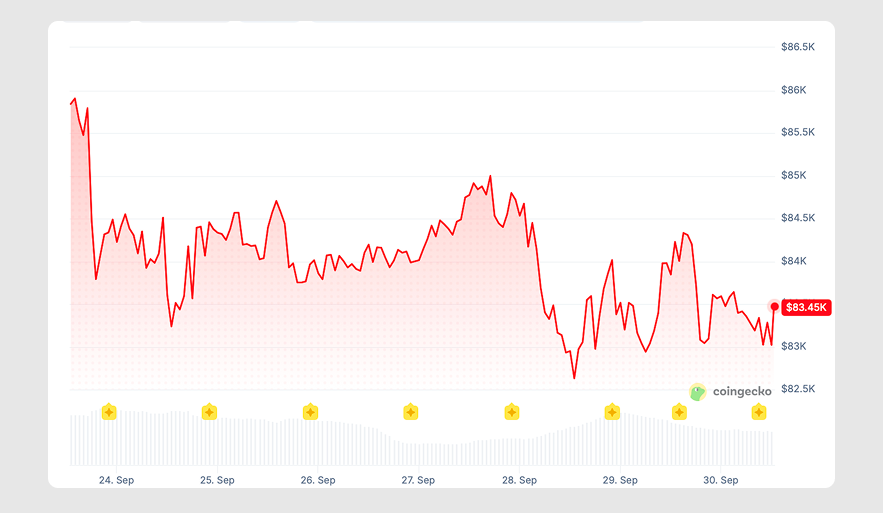
At $83,309.73, BTC is down 0.6% over the past 24 hours and 3.6% over the past seven days.
ETH price
Ether has struggled to push through $2,700 in recent days as some investors take profits. Exchange reserves have risen by 127K ETH over the past five days, while spot ETF inflows have slowed ahead of the upcoming US inflation and labor market reports. The seven-day inflow streak ended on September 29, when the products recorded $2.81 million in outflows. BitMine, however, continued buying, adding another 17,362 ETH last week and taking its holdings above 6 million ETH.
ETH fell alongside BTC, dropping from around $2.7k to $2.6k on September 23 and edging lower the following day before recovering. The coin traded below $2.7k for several days, briefly pushed higher on September 27, then fell to $2,640.06 on September 28. ETH rebounded from there, reaching $2,736.10 yesterday, September 29, before pulling back.
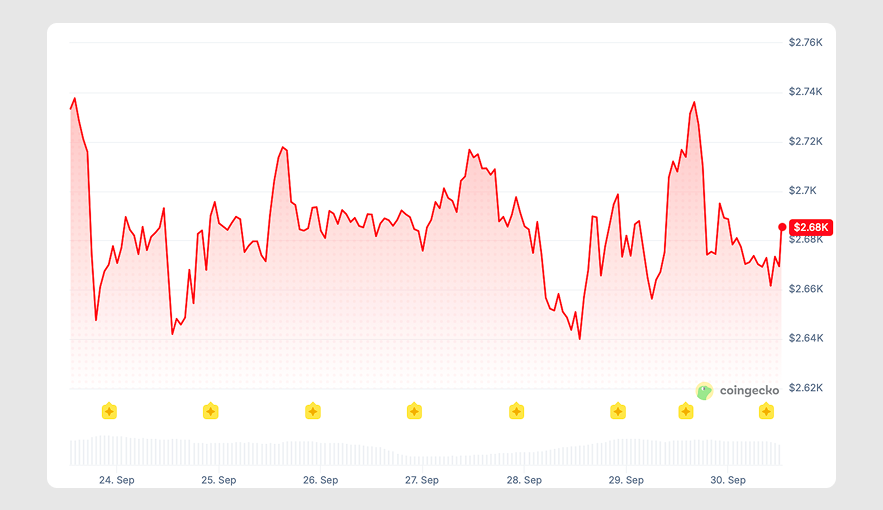
At press time, ETH is trading at $2,682.66, down 0.8% over the past 24 hours and 2.6% over the past seven days.
Seven-day market dynamics
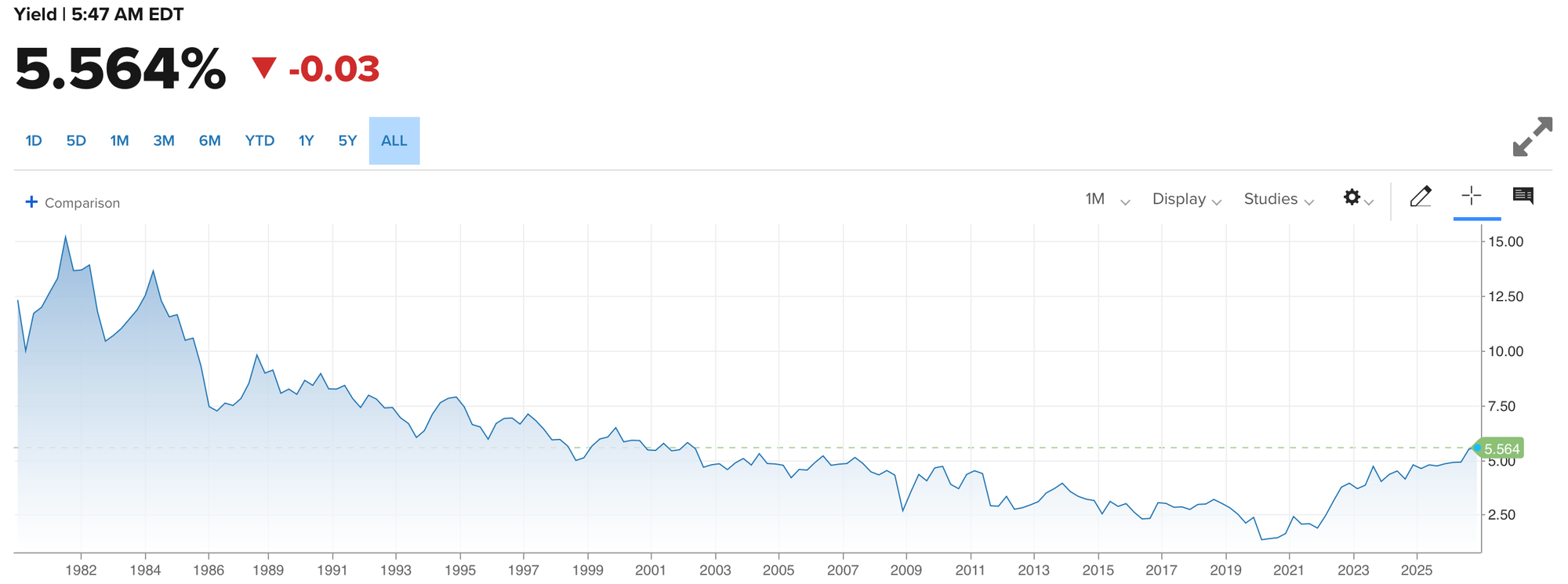
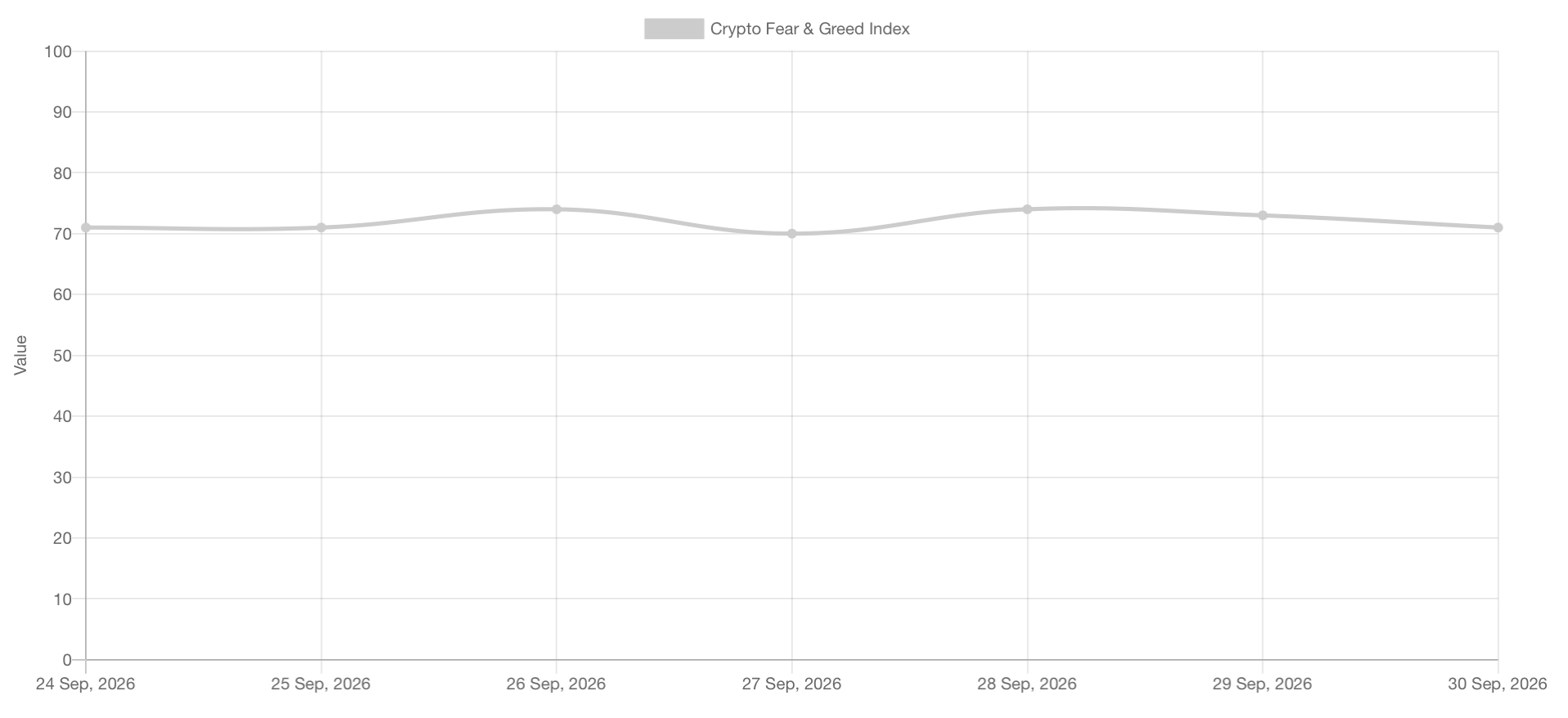
The Fear and Greed Index has stayed in the Greed zone since September 19, but macro pressure is making it harder for crypto to extend its gains. Treasury yields remain near multi-year highs. The 10-year Treasury yield reached a level last seen in 2007, while the 30-year yield moved close to levels not seen since the early 2000s.
Oil has been a major factor. Brent crude topped $108 a barrel on Monday after President Trump rejected Iran's seven-day plan to end the war and reopen the Strait of Hormuz. Prices then pulled back slightly as US and Iranian officials continued indirect talks through Qatar. Saudi Arabia also restored around half of the flows through its East-West pipeline, providing an alternative route around the Strait of Hormuz.
Altcoin appetite heats up
With Bitcoin struggling to hold its recent gains, traders are showing more appetite for riskier assets. Glassnode estimates that altcoin spot trading volume has climbed to nearly four times Bitcoin's. That's the highest relative level since September 2025, and similar spikes in altcoin activity have often coincided with local peaks in Bitcoin's price.
Fed rate hike bets cool
New York Fed President John Williams cooled expectations of an immediate rate hike, saying there is “no urgency” to tighten policy further. After his remarks on September 29, 2026, market bets on an October rate hike fell from roughly 70% to below 45% at press time, according to CME FedWatch.
Markets now turn to several key macro releases: August core PCE, the third estimate of second-quarter GDP, and the September jobs report. Payroll growth is expected to come in around 90,000, down from 162,000 in August, while unemployment is projected to remain at 4.1%.
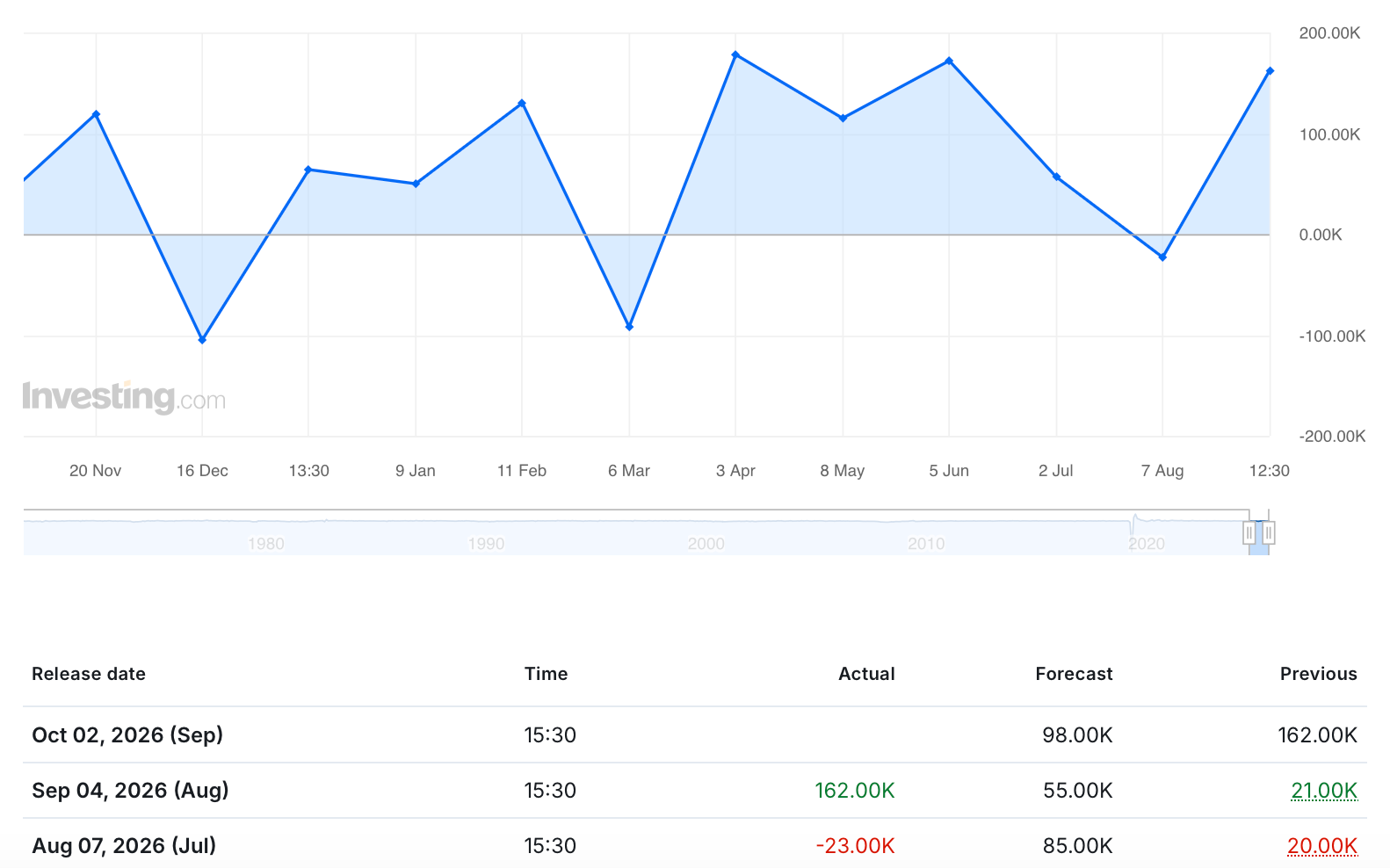
US consumers also expect business and labor market conditions to weaken further. The Conference Board's Consumer Confidence Index fell to its lowest level in more than a decade in September. A weaker-than-expected jobs report could support risk appetite, while a hotter core PCE reading would reinforce concerns that inflation remains persistent. The August PCE data predates the Fed's latest rate hike, however, so it won't capture its effects.
The Fed's next meeting is scheduled for October 27–28, three weeks after its first rate hike since 2023.
Top weekly winners
- QNT (+299.3%) surged after The Clearing House — owned by major commercial banks that process more than $2 trillion daily — selected Quant's technology for its new On-Chain Money Initiative. Quant will provide interoperability and transaction-management infrastructure for clearing and settling tokenized bank deposits.
- BTW (+56.9%) posted three sharp moves higher over the past week, culminating in a new all-time high on September 28. The rallies came as the broader market cooled, with BTW benefiting from the rotation into altcoins alongside a staking program and a Binance wallet campaign.
- PUMP (+30.2%) extended its rally, supported by rising launchpad user engagement. Protocol fees approached $45 million last week — merely $100,000 away from Pump.fun's latest record set during the last week of August.

Top weekly losers
- AKE (-35.7%) entered a sharp sell-off after an explosive 300%+ run and a $115 million token unlock on September 21. The price initially flash-crashed and has continued to fall amid broader weakness across altcoins.
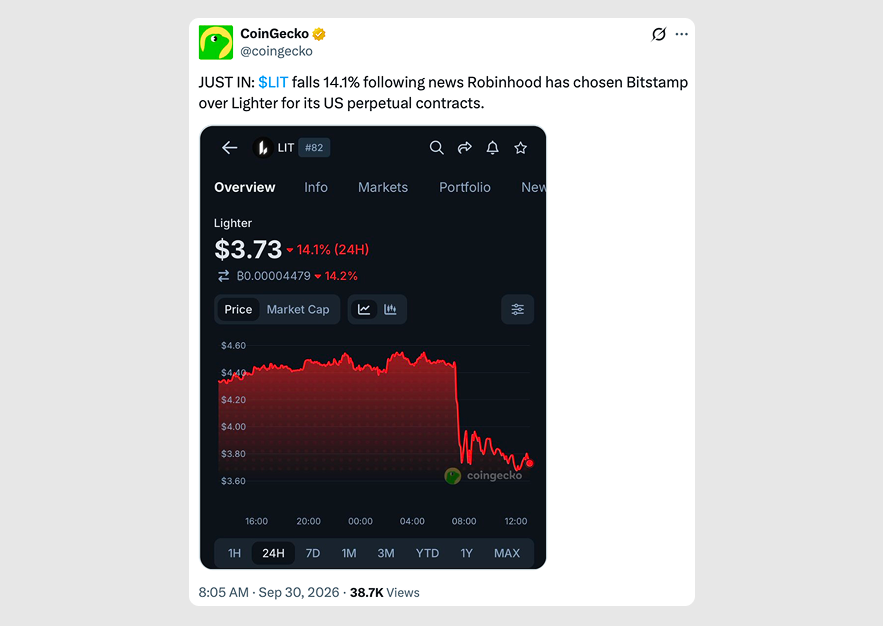
- LIT (-27.9%) fell amid profit-taking after a monthly rally and disappointment over Bitwise's new Lighter Staking ETP, which delayed the launch of actual staking. Robinhood's decision to integrate Bitstamp rather than Lighter for US perpetual contracts added to the pressure.
- M (-20.8%) came under pressure ahead of a token unlock on October 2, which is set to release about $67.9 million worth of tokens, or roughly 2.46% of total supply. The memecoin sector has also lost 8% collectively over the past week.
Cryptocurrency news
Bitwise just launched the US's first spot NEAR ETF with built-in staking
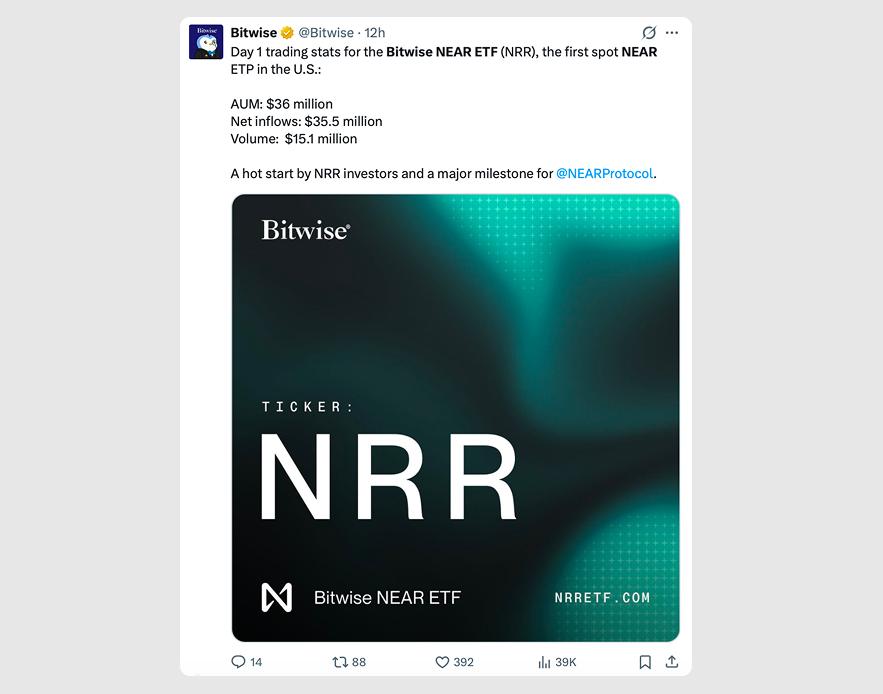
Bitwise has done it again. On Tuesday, the asset manager launched the first spot NEAR ETP in the US, trading under the ticker NRR on NYSE Arca.
The fund carries a 0.75% management fee, and Bitwise plans to stake its NEAR holdings in-house. That gives shareholders exposure to the token's price as well as staking rewards, which are currently around 5% annually. The rewards accrue to the fund's net asset value, although the rate can change and the rewards aren't guaranteed.
For anyone who never wanted a crypto exchange account or a wallet, that's the appeal. The tokens stay inside the fund, while the shares show up in your brokerage account alongside everything else.
The AI angle
Bitwise isn't pitching NEAR as just another layer-1. It's positioning the blockchain as infrastructure for an AI-driven economy, where software agents can eventually book, pay, swap, and transact on a user's behalf.
"AI is fundamentally changing how we access information and how economic activity happens," said Bitwise CEO Hunter Horsley. "We’re moving toward a world in which AI agents increasingly act on our behalf, coordinate with one another, and participate in the economy."
The pitch also leans on NEAR co-founder Illia Polosukhin, a co-creator of the Transformer architecture that underpins modern AI models. NEAR launched an AI research lab in May 2024, led by Polosukhin and co-founder Alex Skidanov.
Bitwise also points to NEAR Intents, a cross-chain swapping service that has processed tens of billions of dollars in volume. NEAR's own site now puts all-time volume above $30 billion.
A busy month for Bitwise
The NEAR launch isn't Bitwise's only recent move. Just last week, the firm debuted Europe's first exchange-traded product tracking Lighter (LIT), a decentralized perpetual futures platform positioning itself as a rival to Hyperliquid. The Bitwise Lighter Staking ETP (BLIT) trades on Deutsche Börse Xetra and carries a 0.85% annual expense ratio. It's fully backed by LIT in cold storage, although staking won't begin until the product reaches sufficient assets under management.
Lighter recorded nearly $1.8 billion in trading volume over the past 24 hours, according to CoinGecko. The platform also gained a significant distribution channel in July when Robinhood integrated it into Robinhood Chain.
The timing
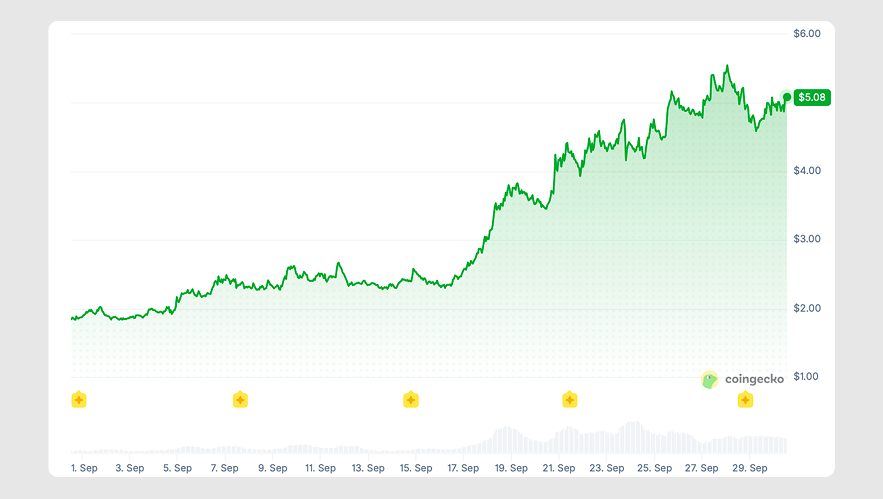
NEAR has been on a tear. The token trades around $4.90, up roughly 165% over the past 30 days. The rally accelerated in the second half of September as the ETF moved through its final listing steps. NYSE Arca certified the fund's registration on September 28, one day before trading began.
Grayscale filed to convert its own NEAR trust into an ETF back in January. That fund hasn't listed yet, so Bitwise reached US investors first.
The price target
Bitwise isn't shy about its ambitions. In a previous research report, the firm laid out a base case of $155.85 for NEAR by the end of 2030 — about 31 times today's price. The max case reaches $562.81. The bear case? $1.63.
Those are wide bands, and Bitwise acknowledges the risks. The fund holds a single asset. Staking carries slashing and operational risks, and rewards aren't guaranteed.
Meanwhile, Bitwise is winding down its Dogecoin ETF, which stops trading October 14. A low fee alone didn't draw investors. NRR's first weeks of flow data will show whether NEAR's AI narrative can attract meaningful demand.
Anthropic is losing billions. It still wants a $2 trillion IPO.
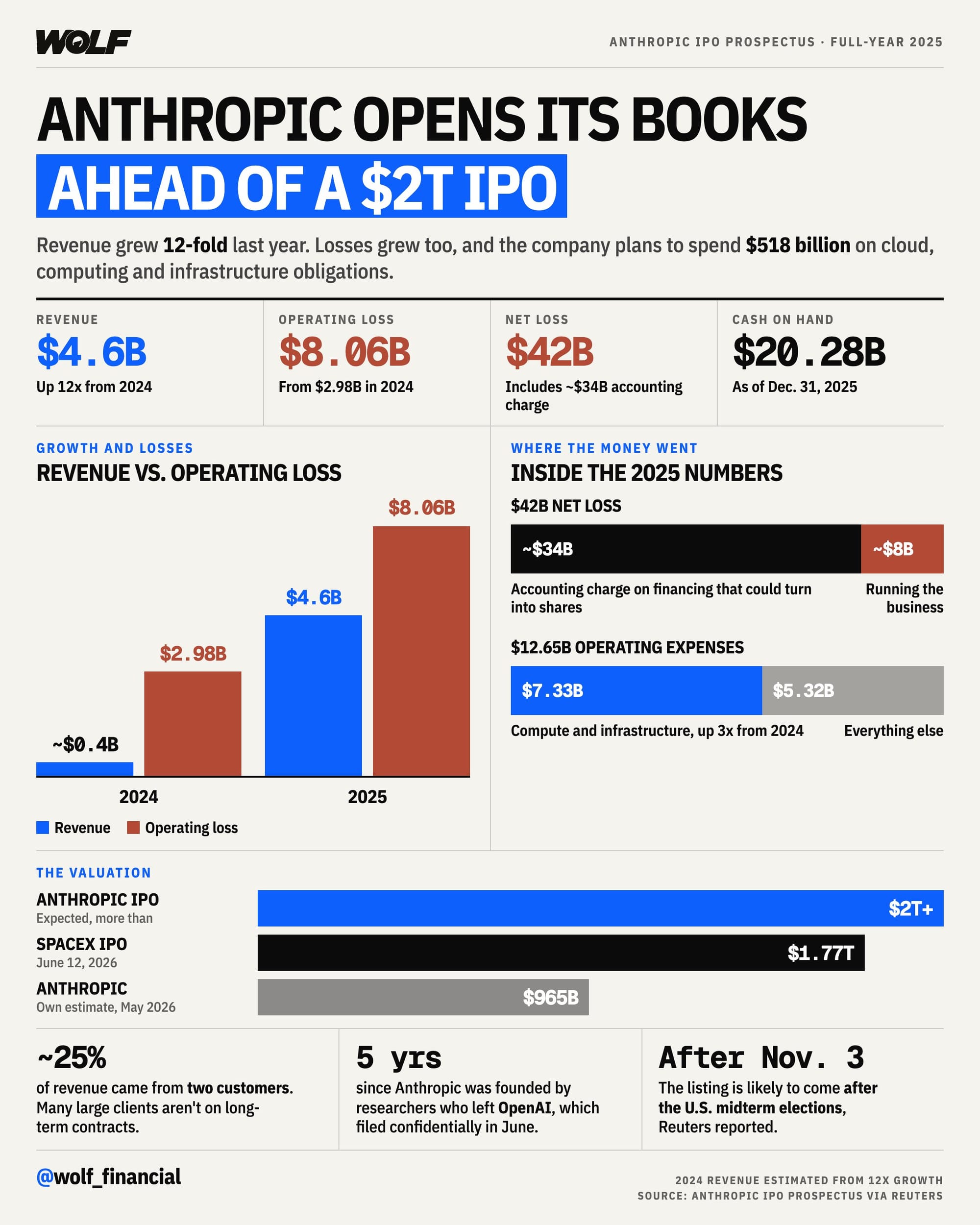
Anthropic, the company behind the Claude chatbot, is preparing to go public at a valuation above $2 trillion — potentially the largest public offering ever. The number is staggering, but so is the loss reported alongside it.
In May, Anthropic was valued at $965 billion. According to a draft IPO prospectus reviewed by Reuters, Anthropic lost nearly $42 billion in 2025. Both figures appear in the same filing, along with a warning that its own AI models could pose catastrophic or existential risks to humanity.
Where the loss comes from
About $34 billion of that loss was a non-cash accounting charge. It stems from convertible financing — money raised from investors that can later convert into shares — whose estimated value rose alongside Anthropic's valuation. No cash actually left the company because of that accounting charge.
That still left an operating loss of more than $8 billion, up from roughly $3 billion the year before. Revenue reached nearly $4.6 billion, twelve times the 2024 amount. The biggest expense was compute: spending on chips and servers tripled to $7.33 billion, accounting for more than half of total operating costs.
What's coming is bigger
Anthropic plans to spend roughly $518 billion on cloud computing and infrastructure over the coming years. About 80% of those commitments can't be canceled. Google accounts for at least $111.1 billion and Amazon for $110 billion. Anthropic held $20.28 billion in cash at the end of 2025.
Revenue is sprinting to keep up. Second-quarter 2026 revenue topped $11.5 billion, more than double all of 2025. But nearly a quarter of 2025 revenue came from just two customers, while many of its largest clients have no long-term contracts.
The warning
The risk section runs nearly 80 of the filing's 261 pages — longer than the 48 pages describing the business itself. Anthropic warns that its models could “resist shutdown” and behave in ways “resembling blackmail” during testing. CEO Dario Amodei has called for binding government regulation, comparing AI with cars, airplanes, and drugs — technologies that are essential to the economy but can cause serious harm if poorly designed.
Why crypto should care
A deal this size could compete for the same risk capital that flows through markets including crypto. We've seen a similar debate around mega-IPOs before. When SpaceX went public in June 2026, it raised $75 billion in the largest IPO on record.
The question for crypto is whether another giant technology listing could pull money and attention away from digital assets. If Anthropic prices above $2 trillion, it would set a new record for a public listing. The prospectus also landed on a nervous morning, with BTC slipping below $83,000 and “Big Short” investor Michael Burry warning that the AI bubble could burst “sooner than later.”
For crypto traders, the June experience is a useful reference point, but not a guarantee of what comes next. Anthropic's impact will depend on the timing, valuation, market conditions, and how much investor demand the offering attracts.