Clapp Weekly: Bitcoin storms past $80K, Treasury-fueled rally, Zcash ETF debut

BTC price
Bitcoin settled below $79K after a rally briefly pushed it above $80K for the first time in three months. The move — Bitcoin's second-largest weekly gain in five years — was fueled by a historic short squeeze and a weaker dollar tied to expanded US Treasury bond buybacks, coming as gold hit its highest level since mid-May. US spot Bitcoin ETFs posted their strongest week since October 2025, with $1.92 billion in net inflows.
BTC climbed from below $64.4K on August 19 to $79.2K on August 21, then held around the $77.5K mark for three days. It pushed higher again on August 24, topping out at $80,697.54 the next day before retreating slightly.
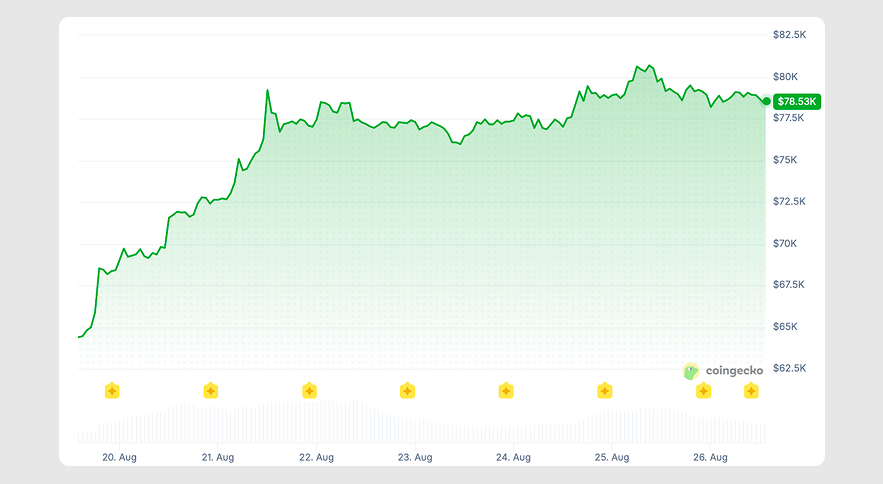
BTC is currently at $78,416.60, down 1.4% over the past 24 hours but up 22.4% on the week.
ETH price
Ether's rally has cooled after reclaiming investors' average on-chain cost basis at $2,306. Profit-taking has been concentrated among smaller retail holders, while whales continue to accumulate. ETH also showed a strong correlation with gold over the past week (0.95), underscoring the macro- and rate-sensitive nature of the latest move. US spot Ethereum ETFs posted their strongest week of 2026, attracting $697.2 million in net inflows.
ETH followed BTC's move higher, climbing from $1.9K on August 19 to $2.5K on August 22. It then pulled back, dipping below $2.4K on August 23, before bouncing back above $2.5K briefly. ETH has traded below $2.4K since August 25 and has since stabilized.
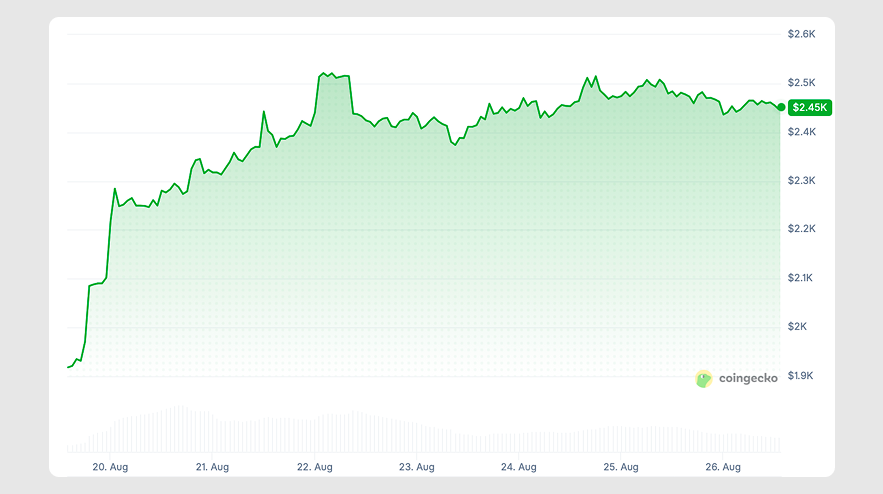
Changing hands at $2,447.22, ETH is down 1.0% over the past 24 hours but up 28.2% on the week.
Seven-day altcoin dynamics
US debt concerns, strong ETF inflows, a weaker dollar, and regulatory optimism have flipped market sentiment sharply. CMC’s Crypto Fear and Greed Index flipped to “Extreme Greed” for the first time since 2024, marking the fastest swing in sentiment this year. Just a month ago, the index was stuck around Neutral after weeks of persistent fear.
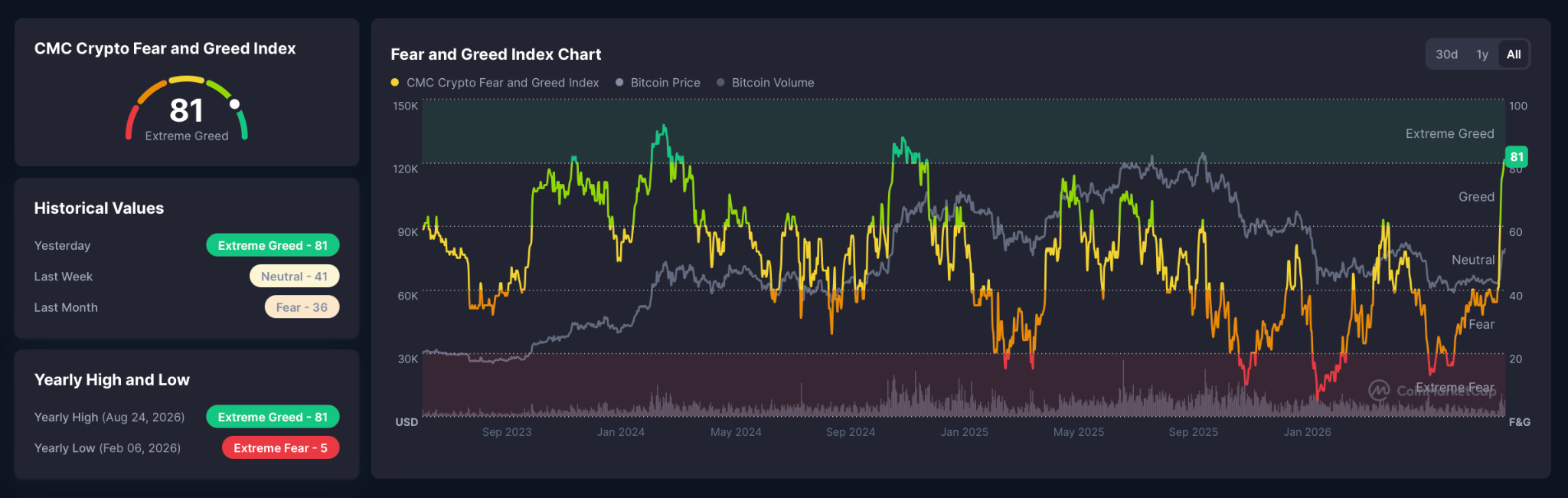
Alternative.me and CoinGlass still place sentiment in the “Fear” zone, however. The sharp turnaround is notable — and echoes the kind of rapid sentiment shift seen in 2021.
Buybacks trigger the rally
The move was initially driven by macro factors. Last week, the US Treasury surprised markets with plans to double its buybacks of off-the-run securities at the long end of the curve, from $2 billion to at least $4 billion per operation. Treasury Secretary Scott Bessent said the new minimum could be increased further in the future.
The buyback plan revived the “debasement trade” as concerns over US debt and borrowing costs mounted. Short covering and a surge in Bitcoin ETF inflows then added fuel to the rally.
Record weekend flash crash
On August 22, traders saw the biggest crypto flash crash since October 2025, with $103 billion wiped from the market in just six minutes. The plunge liquidated $1.71 billion in BTC, ETH, and altcoin positions, while the altcoin-focused TOTAL3 market cap shed around $53 billion in a single candle.
Rally brings fresh money on-chain
Bitcoin’s rally has helped the two largest stablecoins — USDT and USDC — shake off the stagnation that had defined much of the year. USDT supply expanded by $2.2 billion over the past week, while Circle’s USDC grew by $1.8 billion, according to RWA.xyz.
Ripple’s RLUSD added another $309 million.
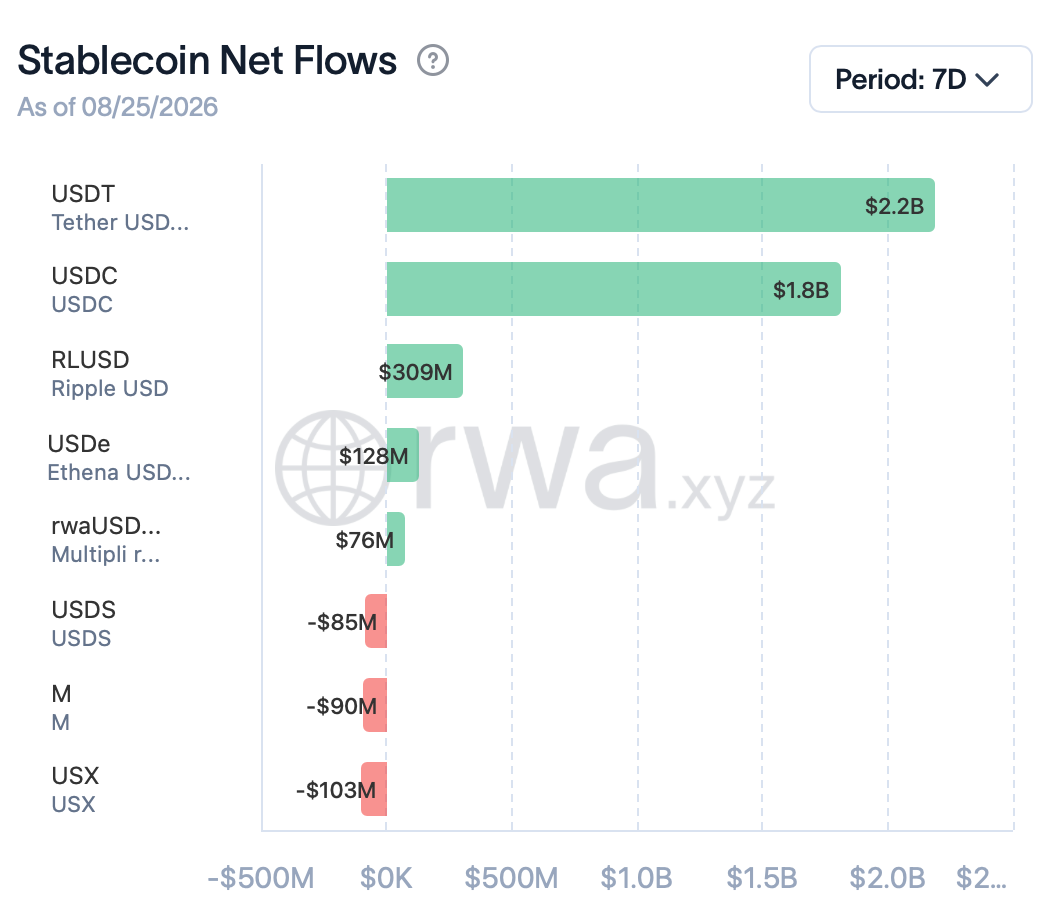
The influx highlights stablecoins’ role as a key source of crypto liquidity, allowing traders to move capital without relying on traditional banking rails.
SOL rallies toward $100
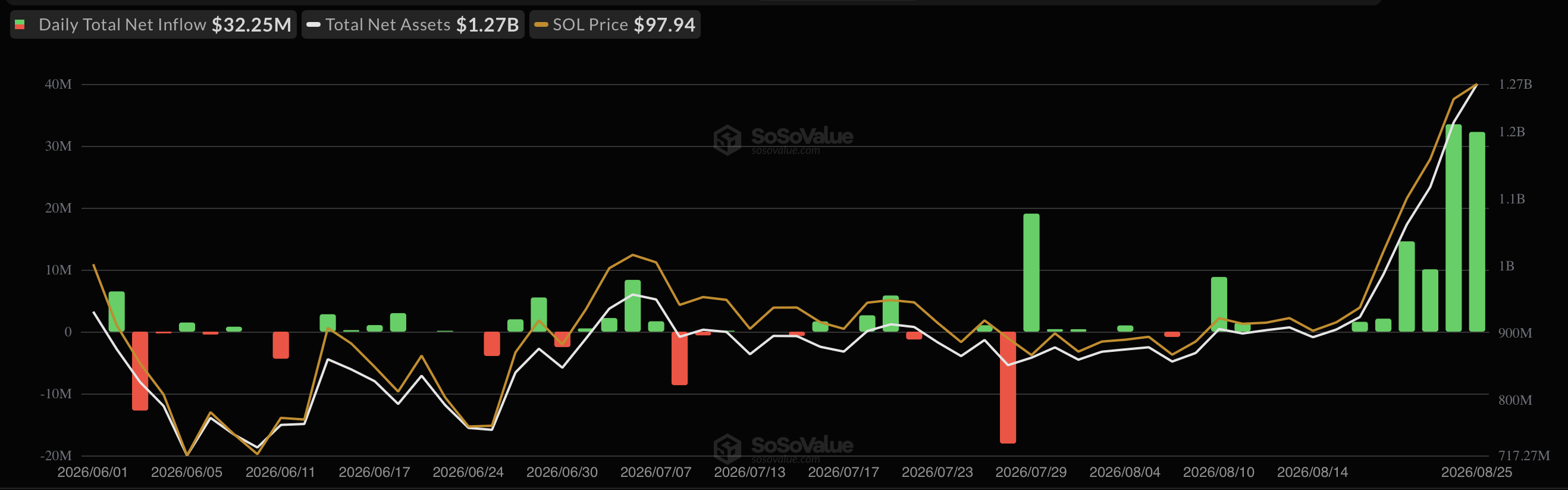
On August 25, SOL outpaced Bitcoin amid record inflows into US spot Solana ETFs this year — nearly $66 million in two days. It marked a sixth consecutive session in the green, while cumulative net assets reached a record $1.27 billion.
ZEC surged on ETF excitement
Zcash gained 57.9% on the week — and hit an 8-year high over $855 — as Grayscale debuted the first ETF to offer direct exposure to the privacy coin. Trading under the ticker ZCSH on NYSE Arca, the fund is a conversion of the firm’s Zcash Trust. The revenue generated from its 2.5% fee will flow back to the Zcash ecosystem to promote and support its development. More below.
Top weekly winners
- ENA (+69.4%) — soared after Ethena struck a deal with FalconX involving a $1 billion secured lending and institutional warehouse facility backed by USDe. Open interest doubled as trading volume topped $1 billion during the breakout, with bullish commentary from Arthur Hayes adding further momentum.
- PENGU (+56.1%) — jumped amid IPO speculation after CEO Luca Netz posted a cryptic four-emoji message on X. The rollout of Pudgy Penguins toys and collectibles at Target and Walmart added another catalyst.
- TRUMP (+55.9%) — followed the broader market rally, helped by political optimism and renewed attention on US crypto policy. President Donald Trump has pushed for passage of the CLARITY Act and left the door open to expanding the government's Bitcoin holdings.
Top weekly losers
- BTW (-19.2%) — entered a natural correction after an extreme multi-week rally that pushed the token to a fresh all-time high on August 19. The run-up was fueled by a new staking program, anticipation of network upgrades, and expanding stablecoin support on Bitway Earn.
- JST (-6.9%) — was caught in the broader pullback following the August 22 flash crash, which liquidated more than $1.7 billion in leveraged positions over the weekend. The underlying TRON ecosystem remains active, with deflationary burns and GasFree Mainnet expanding utility.
- STABLE (-5.3%) — cooled from its August 22 peak amid thin liquidity. Analysts point to a lack of coin-specific catalysts, while a 22% drop in trading volume suggests buying interest remains weak.
Cryptocurrency news
$80K Bitcoin: Treasury buybacks, short squeeze, and a White House meeting
This week, Bitcoin did something it hadn't managed since mid-May: it broke through $80,000. In just eight days, the largest cryptocurrency added roughly $350 billion in market cap and erased three months of losses.
Bitcoin hit $81,265 on Monday, August 24 — a 25% surge from its August 19 low of roughly $64,100.
The rally wasn't driven by a single catalyst. Several pieces fell into place at once.
The Treasury spark
The move was kicked off by an unexpected move from the US Treasury. Secretary Scott Bessent doubled long-dated Treasury buybacks from $2 billion to $4 billion per operation and raised the possibility of deploying nearly $950 billion held in the Treasury General Account.
Aside from lower yields, the markets interpreted the move as evidence of currency debasement. Dave Liebowitz, head of growth at Cap, told Forbes:
"Bitcoin's move toward $80,000 looks less like a crypto-specific rally and more like several forces converging at once. The macro backdrop has become more supportive for risk assets, while nearly $2 billion flowed into US spot Bitcoin ETFs last week."
Short squeeze fuel
The sharp upward movement triggered a massive short squeeze. Over $3 billion in short bets were liquidated in a single day, accelerating the rally — the largest short liquidation since at least 2021, according to CoinDesk.
Brett Sifling, wealth manager at Gerber Kawasaki, pointed to the timing: the Treasury's buyback expansion coincided with news that US debt topped $40 trillion, writing:
“The combination of this news sparked currency fears and started the short squeeze that we are seeing with Bitcoin.”
ETF inflows tell the story
August has become the strongest month for spot Bitcoin ETF inflows since the start of the year. The 12 funds have collectively netted over $3 billion, bringing the total net assets upward of $99 billion.
This is a dramatic turnaround after May and June outflows and the $172.4 million in July net inflows. That’s nearly half of the year-to-date deficit eliminated.
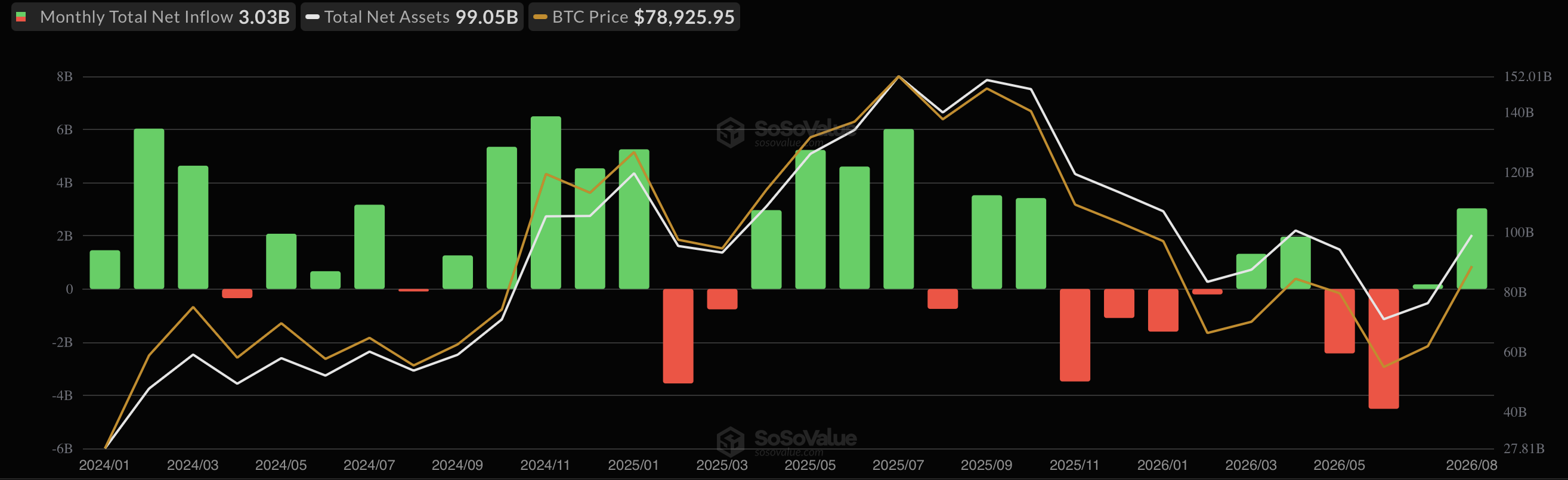
Paul Howard of Wincent noted that "more than $2 billion flowed into ETFs over the past five days." That momentum, he said, "has caught the attention of investors who had previously been looking elsewhere."
The political catalyst
Last week, Trump met with crypto leaders at the White House and urged the Senate to pass the Clarity Act, declaring America will remain the "undisputed leader" in Bitcoin and crypto.
Congress is now expected to vote on the bill shortly after lawmakers return in September. The Clarity Act divides regulatory authority between the Securities and Exchange Commission (SEC) and the Commodity Futures Trading Commission (CFTC) while establishing registration and customer protection requirements for cryptocurrency exchanges, brokers and dealers.
What's next
Bitcoin's ability to stay above $80,000 may now depend on further signals from the Federal Reserve about the path of interest rates.
For now, the breakout has momentum and plenty of catalysts behind it.
Grayscale brings Zcash to Wall Street — privacy meets mainstream
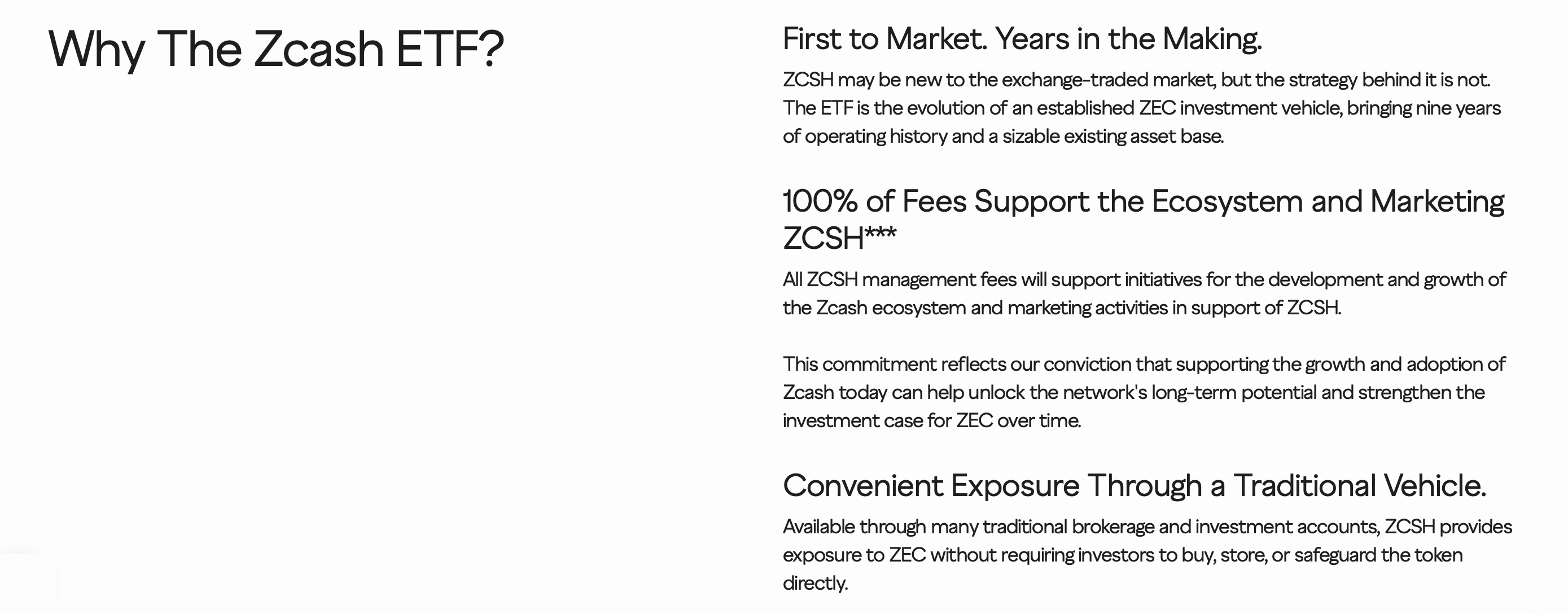
Grayscale launched the first-ever spot Zcash ETF on Tuesday, trading under the ticker ZCSH on NYSE Arca. The fund is a conversion of Grayscale's existing Zcash Trust, which had previously traded on over-the-counter markets at discounts as steep as 55%.
The timing couldn't be better. ZEC has surged roughly 50% over the past week, trading near $790.59 at press time — a rally that coincided with the ETF's final registration push.
Privacy in an AI age
Grayscale framed the launch as a bet on financial privacy in an era of increasing surveillance. Grayscale Head of Index Steve Vanourny commented:
"As AI reshapes how financial activity can be monitored, we believe demand for genuine financial privacy will only grow."
The fund's 2.5% fee will flow back to the Zcash ecosystem to support network development, linking the ETF's success more directly to the underlying protocol.
From OTC to NYSE
The move from over-the-counter quotes to a national exchange is a major step for Zcash. The trust had previously sold to accredited investors at a discount, sometimes as much as 55% below net asset value. The ETF structure opens Zcash exposure to a much wider pool of investors.
Zcash's privacy features distinguish it from Bitcoin and ether. Users can choose between transparent transfers — visible to anyone — and shielded transactions that conceal sender, recipient, and amount. Viewing keys allow selective disclosure to auditors or regulators, making it a favorite for those who value optional privacy.
A rocky road
The launch follows a turbulent period for Zcash. In July, a researcher disclosed a flaw in the Orchard shielded pool that could have allowed counterfeit ZEC to be minted. The price fell roughly 50% before an emergency patch was deployed. The Ironwood upgrade replaced Orchard with a new shielded pool and added recovery mechanisms for future quantum-related risks.
Corporate interest in Zcash has also expanded. Cypherpunk Technologies recently introduced a US-based mining fleet representing about 18% of the network's hashrate after a $33 million equity transaction with Winklevoss Capital.
The bigger picture
The Zcash ETF is the latest addition to Grayscale's ETF lineup, which now includes funds tracking Bitcoin, Ethereum, XRP, Solana, and Litecoin. As of Monday, the Zcash Trust had over $313 million in assets under management.
For privacy advocates, the listing is a validation. For investors, it's a new way to bet on a coin that has spent years on the fringes of crypto — and is now getting a seat on Wall Street.