Clapp Weekly: Bitcoin's $86K pullback, Ethereum L2 shakeout, 3x ETFs get SEC nod

BTC price
Bitcoin lost its grip on $86k yesterday as oil, Treasury yields, and the dollar all climbed following stepped-up Iranian attacks on tankers — a reversal from the gains the coin had logged after weaker-than-expected US jobs data eased Fed rate-hike fears. Analysts link the pullback to profit-taking and forced long liquidations, which flushed out $129.31 million over the past 24 hours, versus just $11.63 million in shorts. A prior build-up in open interest and funding rates had left the market primed for exactly this kind of deleveraging.
The price action told the same story in miniature. BTC bottomed near $83.4k on October 1, peaked at $86,789.89 the next day, then collapsed before rebounding at $84.2k. From there it clawed back ground gradually over the weekend, pushing as high as $86.6k on Monday, October 5 — only to seesaw and retreat again after briefly touching $86.5k on October 6.
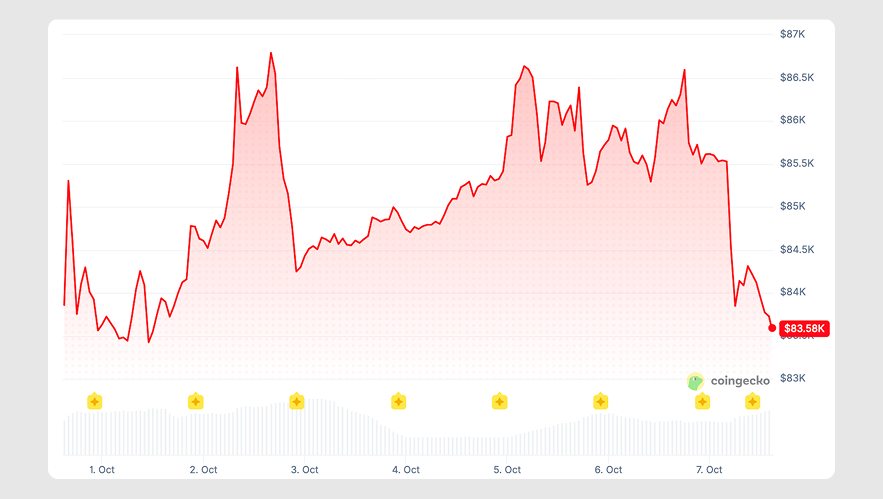
At press time, BTC is changing hands at $83,582.68, down 2.9% over the past 24 hours while gaining 0.9% over the past week.
ETH price
Ether is recovering from a September 30 plunge that coincided with MetaMask exiting nearly 17,000 ETH validators over a security incident, which raised concerns about staking stability and near-term sell pressure. Spot ETFs compounded the pressure, shedding over $400 million in a six-day outflow streak. Still, the launch of 3x ETFs helped the coin claw back from its October 2 plunge — a recovery that proved short-lived once $400 million in long positions got liquidated within a 20-minute window today, dragging ETH down to $2.6k.
ETH's chart told a calmer version of Bitcoin's story. It initially rebounded from $2.6k to over $2,754 on October 2, then echoed Bitcoin's reversal — climbing from just above $2.6k on October 3 to $2,730.50 by October 5, before swinging sharply within the $2.70k–$2.725k range. Today that calm broke: the coin slid back to $2.7k before collapsing sharply.
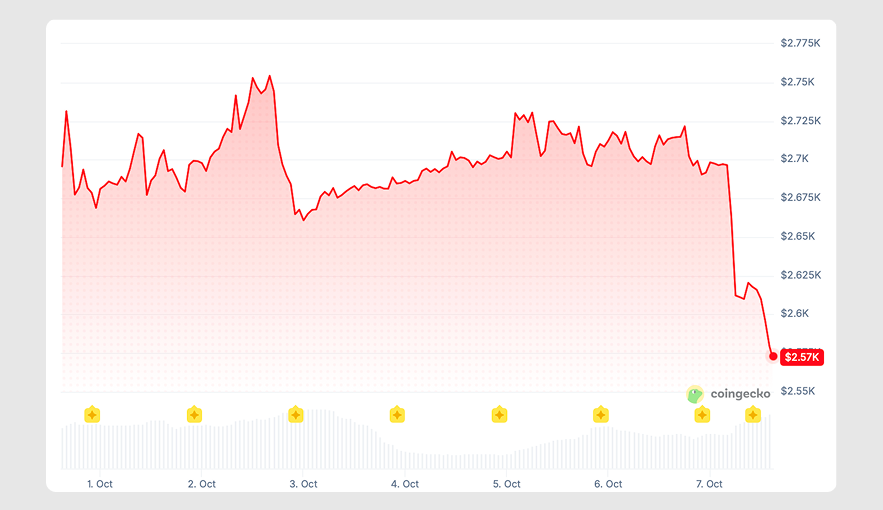
Currently, ETH is changing hands at $2,576.64, down 5.1% over the past 24 hours and 2.8% over the past 7 days.
Seven-day market dynamics
The Crypto Fear & Greed Index currently stands at 71, still in "Greed" territory since September 19 — though the mood isn't as confident as that headline number suggests. Last weekend's dip to 65 exposed softer sentiment underneath, which has since fed into the broader pullback alongside mixed altcoin performance. The crypto market overall spent the week consolidating and taking profits, with Bitcoin pinned in a $83,000–$87,000 range.
Further down the market, the damage ran deeper. The memecoin sector lost 4.6% collectively over the past week, privacy coins shed 4.3%, and Layer-2s and AI tokens each gave back just over 3%. Amid the wreckage, M, BTW, STX, PUMP, and OKB stood out as the strongest 24-hour recoveries at press time, each up roughly 2% to 3%.
Derivatives markets bore the brunt of it all — total liquidations topped $608.57 million, $543.08 million of it in longs alone.
US-Iran escalation thwarts rally
Brent has jumped to $101.60 a barrel following new Iranian attacks on tankers in the Strait of Hormuz. Meanwhile, the Houthis are fighting to maintain control over much of Yemen's Red Sea coast and the Bab el-Mandeb Strait, a key chokepoint for global energy shipments.
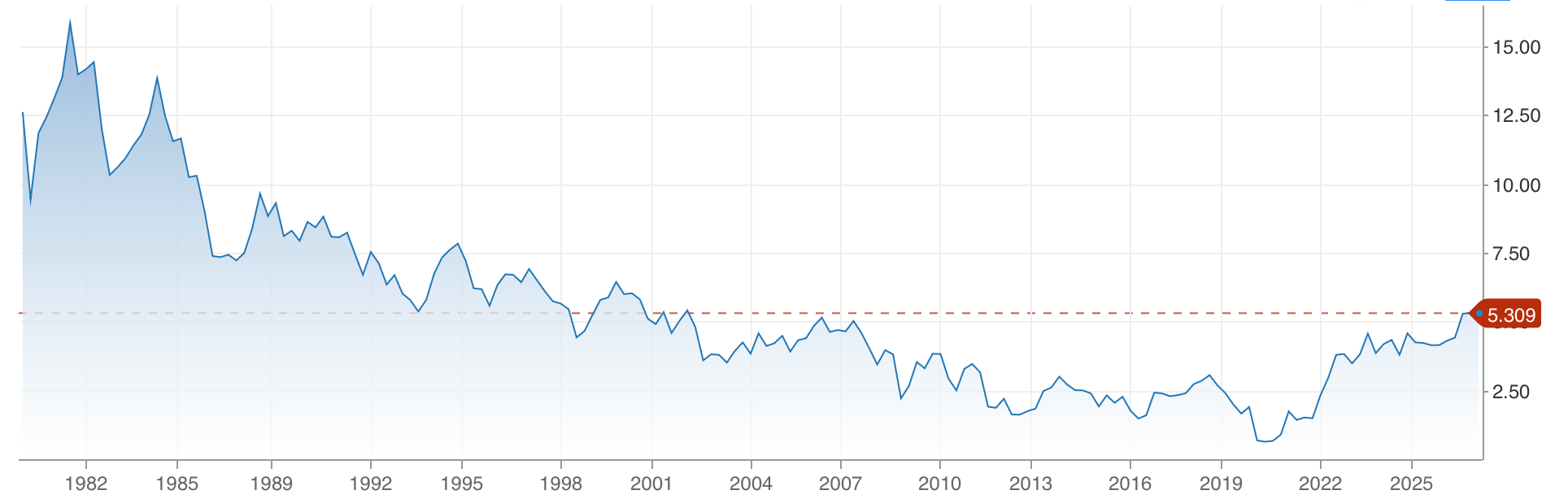
The new attacks helped the dollar rise against every other Group-of-10 fiat currency, while the 10-year Treasury yield eased slightly from its October 5 peak above 5.34%, the highest since 2002.
Market awaits FOMC minutes
Minutes from the Fed's September meeting, which lifted rates by a quarter point, are due October 7. A sharp drop in hiring last month — the US added just 29,000 jobs against the 89,000 projected — has made another rate hike in October less likely, even as the broader jobs market still looks solid overall.
Traders will scrutinize the minutes for whether the Fed's tone reads as patient or still points toward one more hike this year — a scenario most central bank officials had penciled in. With October odds currently sitting at just over 21%, the Guardian notes that a hike is more likely to land at the Fed's December meeting instead.
Top weekly winners
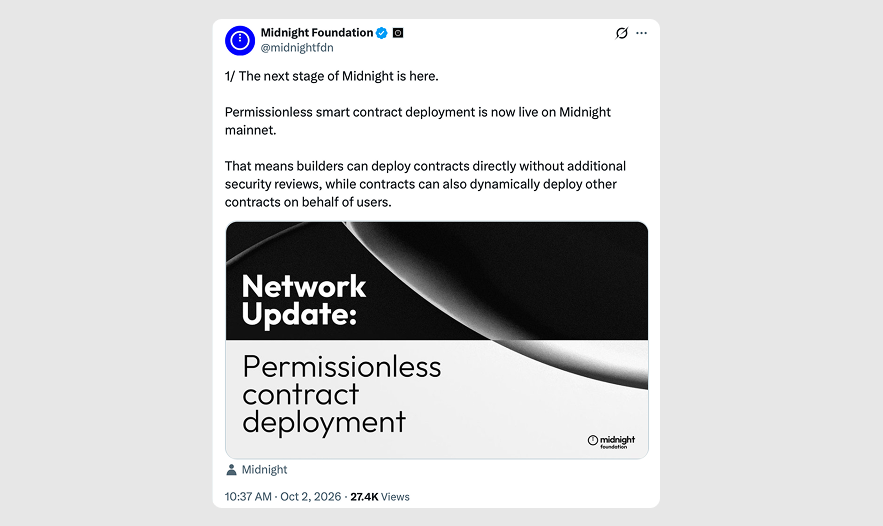
- NIGHT (+49.6%) surged after Midnight launched permissionless smart-contract deployment on its mainnet, with users also anticipating v8, set to enable private contracts and tokens. Thinning CEX outflows added further bullish momentum across privacy tokens.
- ZRO (+26.9%) is riding LayerZero's latest token buyback: the protocol bought back another 162,000 ZRO, worth roughly $347,000, while also expanding beyond traditional cross-chain messaging. Integration into the ATLAS platform now lets venues stake the token for higher fee rebates.
- STX (+19.9%) rallied on a new use case tying it to institutional demand, unlocking "capacity for institutions to stake Bitcoin and earn Bitcoin yield." As of October 2, major players including 21Shares, Anchorage Digital, UTXO Management, and Sypher Capital had bonded around 230–250 BTC paired with roughly 310,000 STX.
Top weekly losers
- MNT (-13.1%) plunged amid suspicions of manipulation — nearly 90% of its trading volume appears to be artificially inflated by wash trading. On-chain data also points to sustained sell-offs, with accumulator wallets transferring tokens to major CEXs like Coinbase.
- BTW (-12.9%) is correcting from a massive rally that pushed it up over 160% in the past 30 days, hitting a new all-time high of $1.67 on October 3. The surge came amid a broader shift toward smaller altcoins, with retail engagement also supported by the conclusion of Binance Wallet's "Booster Season 5" campaign on October 2.
- DASH (-12.1%) followed the broader market decline in the absence of project-specific catalysts; a technical breakdown sparked stop-losses and invited heavy short-selling.
Cryptocurrency news
Two Ethereum Layer-2s just died in a week
Abstract, the consumer-focused blockchain from the team behind Pudgy Penguins, is shutting down on December 15 — the second Ethereum layer-2 to close in less than a week.
Blast got there first. On October 2, the network announced it was winding down after monthly revenue collapsed from $3.5 million at its peak to just $1,793 in September, while deposits fell 99% from $2.3 billion at launch to roughly $24 million. The BLAST token dropped 19% on the news.
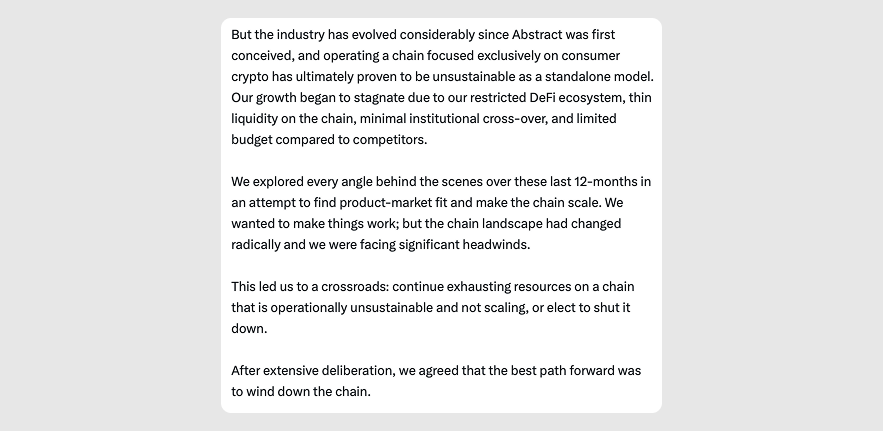
Abstract's story looks similar, just with better branding. Parent company Igloo spent about 18 months funding the chain and lost "tens of millions of dollars" doing it, according to CEO Luca Netz, who said the team considered launching a token or pursuing an ICO but ultimately decided it could no longer justify pulling resources from the Pudgy Penguins business.
The numbers don't work
On paper, Abstract looked healthy: more than 325 million transactions, $6 billion in DEX trading volume, 4 million wallets, and businesses on the network — including Disney and Red Bull Racing — generating over $40 million in revenue. But the chain itself never captured much of that. DefiLlama showed roughly $3,900 in chain fees over a recent 24-hour period, against $39,000 in application revenue — and those chain fees still have to cover operating costs before anything becomes profit.
Abstract had deliberately steered developers away from DeFi toward simpler, fun-first products, but that bet didn't pay off: thin liquidity, a small DeFi market, and limited institutional activity left the chain unable to sustain itself as a standalone business.
What this means for users
Anyone with assets on Abstract has until December 15 to move them, via the team's Migration Hub and native bridge; funds left behind after that date become inaccessible. Blast users face a tighter window, until October 26 — ETH deposited there stays safe in Ethereum's bridge contract, but the easiest withdrawal path is closing soon. The bigger risk is the BLAST token itself, already down 99% from its 2024 peak.
Two L2 shutdowns in a single week is a warning sign for the sector. The L2 boom produced dozens of networks chasing the same users, liquidity, and developer attention, and not all of them were built to last. Abstract's collapse shows that strong branding and a loyal audience aren't enough to overcome broken unit economics — and raises an uncomfortable question for the rest of Ethereum's L2 ecosystem: how many other chains are quietly burning cash while waiting for a miracle?
SEC approves first 3x Bitcoin and ether ETFs, but they're not for everyone
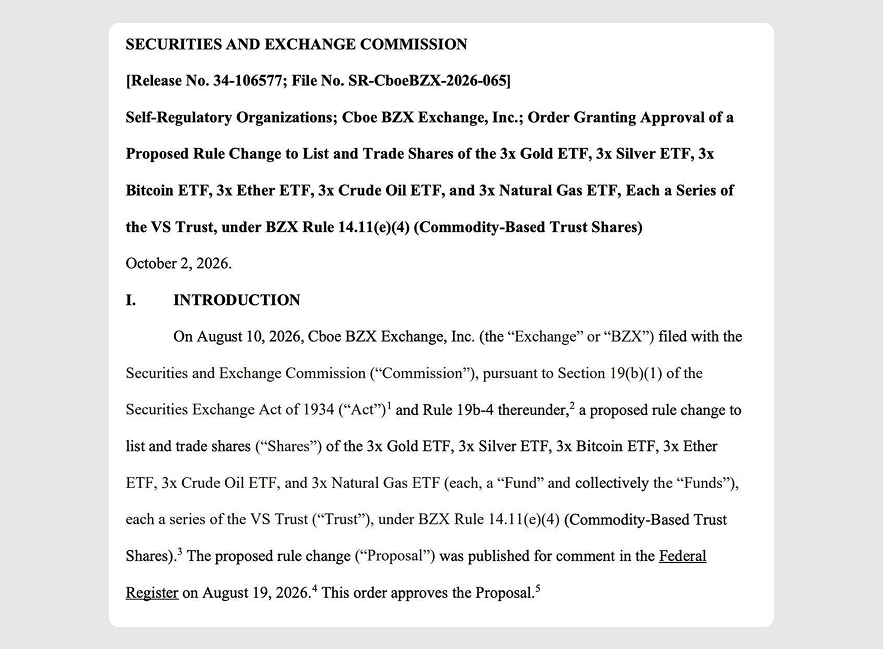
The SEC has cleared America's first triple-leveraged crypto funds. On October 2, the agency approved a Cboe BZX rule change letting Volatility Shares list six leveraged ETFs — 3x Bitcoin (BITH) and 3x Ether (ETHK), alongside funds tied to gold, silver, crude oil, and natural gas. US crypto funds had previously been capped at 2x leverage.
The funds aren't trading yet — Volatility Shares still needs its registration statements to take effect, and no launch date has been set, which at least gives investors time to read the fine print.
How they work, and why it matters
These funds don't hold actual Bitcoin or Ether; instead, they use regulated futures contracts tied to the underlying assets, and the 3x target applies only to daily returns, not monthly or annual performance.
That distinction matters because of volatility decay — the mechanical erosion of value caused by compounding daily price swings in choppy or range-bound markets. If BTC gained 10% one day and lost 10% the next (ending down roughly 1% overall), a 3x fund tracking it would gain 30%, then lose 30% — ending down about 9%. The more back-and-forth chop, the more capital the product can bleed, causing it to underperform the asset it's meant to track.
Blockstream CEO Adam Back summed up the risk bluntly: auto re-leveraging strategies bleed capital in sideways markets, especially against a volatile underlying asset like Bitcoin. Bloomberg's Eric Balchunas put it more simply still: leveraged ETFs are built for trading, not investing.

Volatility Shares' own prospectus agrees, warning the product "is not suitable for all investors," may be "deemed speculative," and should only be considered by those who can stomach "the risk of total loss."
There's also a quieter cost baked in: futures contracts expire, forcing the fund to sell and roll into later-dated contracts that often cost more — a steady drag on returns that dogged the first Bitcoin futures ETFs back when they launched in 2021.
For short-term traders, these funds are a genuinely powerful tool. For long-term holders, spot ETFs remain the safer bet. The SEC's approval is a sign that crypto is being treated more like any other asset class — but the leverage cuts both ways, and the market has a habit of reminding anyone who forgets that.