Clapp Weekly: Rebound on Fed comments, Ledger spy-chip theft, Blur shuts down

BTC price
Bitcoin climbed toward $84k after New York Fed President John Williams said he saw no need for rate hikes in 2027. The recovery followed Monday’s drop below $82k, when crypto liquidations surged past $770 million, including $685.6 million in long positions. Analysts linked the sell-off to macro headwinds, weaker institutional demand, and cautious positioning ahead of the CPI report.
Spot Bitcoin ETFs have sent mixed signals, recording $175.62 million in inflows on October 13 after $65.40 million in outflows the previous day. Meanwhile, Strive bought 3,311 BTC for $280 million, its largest acquisition since January. The purchase follows the CEO’s stated ambition to make Strive the world’s second-largest public Bitcoin holder by the end of 2026.
Bitcoin fell to $80,651.78 on October 8 before recovering over the weekend. It briefly climbed above $84k on Monday, then retreated below $82k as liquidations mounted. The price has since rebounded.

BTC is currently trading at $83,327.58, down 0.3% over the past 24 hours and 0.8% over the past week.
ETH price
Ether recovered above $2,500 after a sharp sell-off in Asian equities briefly spilled over into crypto markets. Spot Ethereum ETFs recorded their longest outflow streak since June, shedding roughly $782 million over 10 days before returning to inflows on October 13, with $24.84 million in net additions.
Derivatives data points to a weaker market backdrop. Open interest (OI), which measures the total value of outstanding contracts, fell to its lowest level since February amid the recent wave of liquidations. On the buying side, Tom Lee’s Bitmine acquired another 12,532 ETH, worth $31.67 million, last week. The firm has bought ETH every week since launching its treasury strategy in mid-2025.
ETH fell from $2.6k to $2,413.52 on October 8, then followed Bitcoin’s recovery and briefly moved above $2,500 on Monday. After rebounding from $2,419.97, it has held near the $2.5k mark.

ETH is currently trading at $2,504.89, down 0.6% over the past 24 hours and 4.1% over the past week.
Seven-day market dynamics
Bitcoin’s recovery after Fed President John Williams’ comments lifted major altcoins, with ZEC among the biggest gainers. Market sentiment returned to Greed at 63 after sliding to 56, its lowest reading since August’s pre-rally period, as rising oil prices, bond yields, and ETF outflows weighed on risk appetite. Traders are now looking to upcoming inflation data for clues about the outlook for both stocks and crypto.
Middle East escalation
Oil prices climbed again as attacks across the Middle East intensified. Iran-backed Houthi forces have been targeting energy facilities in Saudi Arabia since last week. An attack on Riyadh’s main airport on October 11 added to concerns over regional security, pushing Brent crude back above $106 a barrel. The escalation has also prompted President Trump to consider joining the Saudi-led campaign against the Houthis in Yemen.
Fed President calms markets
Fed President John Williams told Bloomberg that he expects one more rate hike this year but no further increases in 2027. He argued that policymakers should focus on “underlying trends” in inflation as energy costs and artificial intelligence add to price pressures. His comments weakened the dollar and lifted the S&P 500, helping major crypto tokens recover as risk appetite improved.
Williams’ outlook, however, differs from market pricing and the views of some other Fed officials. CME FedWatch currently puts the probability of a quarter-point hike in December at 69.3%, with roughly 40% odds of another increase in both January and March.

Thursday’s September CPI report is the next test of Williams’ outlook. The data will offer a fresh read on inflation following the Fed’s latest rate hike. Headline CPI is expected to accelerate to 0.6% month over month, up from 0.4%, and 3.6% year over year, up from 3.4%. Core CPI is forecast to ease to 0.2% month over month from 0.3%, while rising to 2.5% year over year from 2.4%.
A softer-than-expected reading could strengthen the case for pausing rate hikes and give Bitcoin more room to recover.
Solana ETFs end record streak
US-listed Solana ETFs have recorded seven consecutive days of outflows, ending a remarkable 14-week inflow streak. The funds saw $24.8 million in net outflows in the week ending October 9. Meanwhile, a Hong Kong asset manager launched the city’s second spot Solana ETF on October 13, adding another route for investors to gain exposure to SOL.
The reversal comes amid broader weakness in crypto investment products, with Ethereum ETFs also posting a prolonged run of outflows and Bitcoin funds struggling to attract sustained inflows. The trend points to a wider pullback in crypto investment demand rather than a sell-off confined to Solana.

Top weekly winners
- BTW (+115.6%) leads the weekly gains, drawing attention to Bitway’s role as a Bitcoin-compatible Layer 1 and its DeTraFi infrastructure. Binance Wallet’s “Booster Season 5” campaign, which ended in early October, may also have helped drive retail engagement.
- BDX (+20.2%) climbed steadily before extending its gains on October 12. The move appears to reflect broader rotation into mid-cap altcoins, alongside interest in Beldex’s new SDK, designed to help developers build and integrate applications into its ecosystem.
- STX (+16.1%) gained as institutional interest in Stacks’ non-custodial Bitcoin staking infrastructure continued to build. The protocol’s second Bitcoin bond, with a capacity of 500 BTC, sold out. Since participants must buy and lock STX to access native BTC yield, the mechanism can add to demand for the token.
Top weekly losers
- PUMP (-19.7%) slumped after an investigation found that Solana sandwich bots had extracted an estimated $29.7 million before costs over 11 months. Around 96% of the detected attacks occurred on Pump.fun’s launch curve and its PumpSwap exchange, putting renewed scrutiny on the ecosystem.
- M (-19.6%) fell amid thin liquidity, post-unlock selling, and persistent concerns over tokenomics and insider concentration. The decline also tracked the broader market downturn, while the token continued to work through the aftermath of its unlock.
- QNT (-15.4%) pulled back after a sharp rally, with futures deleveraging adding to the correction. Despite the weekly decline, QNT remains up roughly 242.5% over the past month, following The Clearing House’s selection of Quant to provide the interoperability, orchestration, and transaction-management layer for its US On-Chain Money Initiative.
Cryptocurrency news
Hackers hid spy chips inside Ledger wallets in $93 million theft
Covert hardware implants in Ledger wallets captured users' 24-word recovery phrases directly from the screen and transmitted them to hackers over LTE using an eSIM. The draining incident occurred on October 9, 2026 and involved devices sold through the Southeast Asia reseller CryptoBilis. On-chain researchers estimate that losses could reach $93.2 million across more than 300 wallets. Tether has frozen roughly $10 million in USDT tied to the theft.
The mechanism is almost elegant in its cruelty. During setup, the device displays the recovery phrase. When the implant’s microcontroller detects the recovery phrase on-screen, it captures the words and transmits them over a mobile network. The chip sits inside the enclosure, separate from everything else.
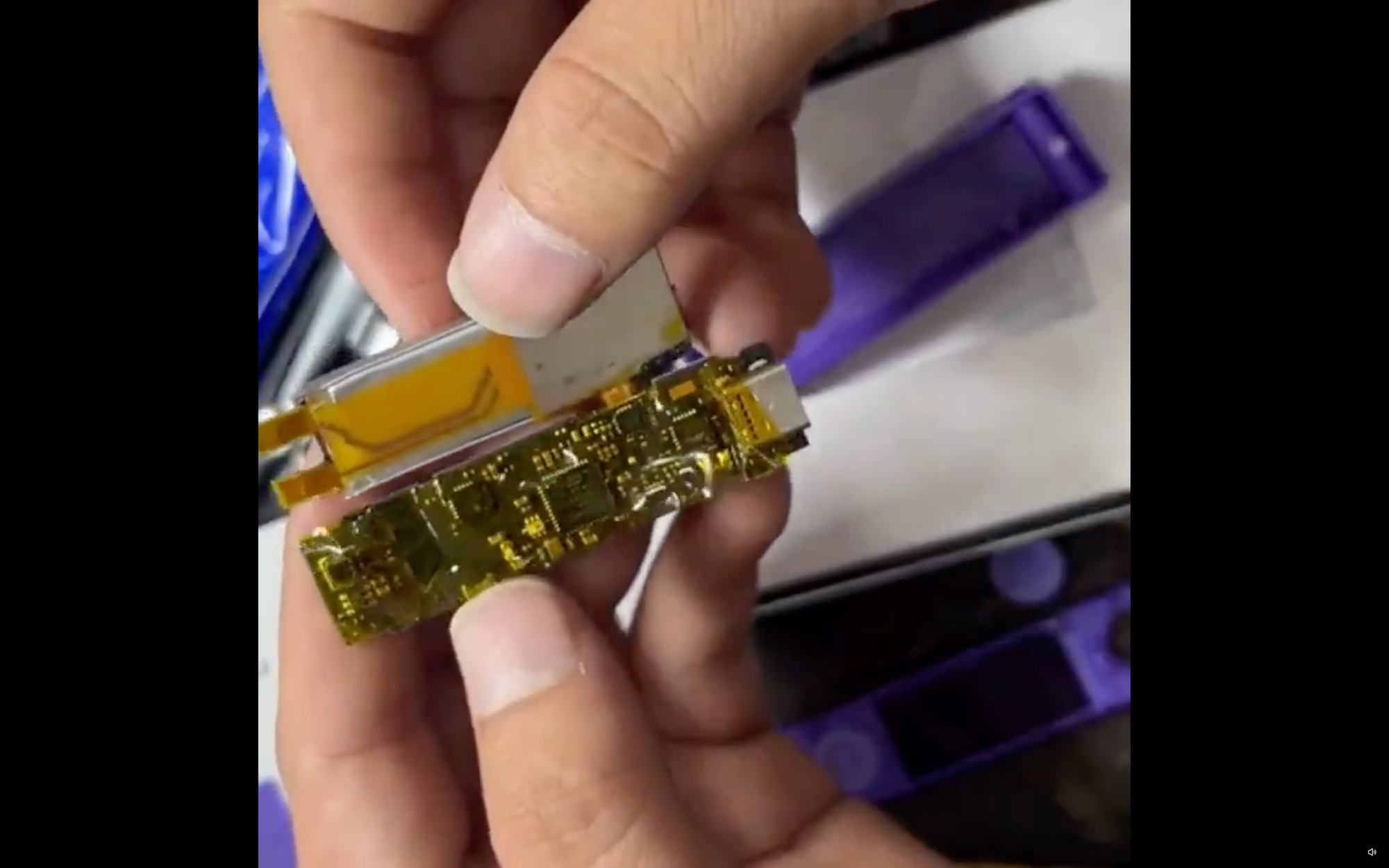
"The implant does not modify the Secure Element or the Ledger operating system, and it does not alter transactions or signatures," Ledger's Donjon security team wrote in its update.
The device worked as designed, but with an extra passenger. Its software could remain intact while the implant secretly captured the recovery phrase.
The supply chain was the attack surface
All reported losses so far have been linked to CryptoBilis, which has stopped selling Ledger devices entirely. The company has advised customers who bought devices through the reseller not to initialize them. If they already have, the advice is to move assets to a new signer with a freshly generated phrase.
Ledger is now reviewing its reseller controls and anti-tamper protections. "We invite researchers and other vendors to work with us on tamper-detection and chain-of-custody practices," CTO Charles Guillemet said.
Mt. Gox's former CEO Mark Karpelès claimed he found a spy implant in a Ledger Flex bought at Singapore Airport. Tampered devices have also been found in Europe, and Ledger confirmed that MediaMarkt Saturn stopped selling its devices in Germany after a customer report.

Trezor responds
Rival hardware wallet maker Trezor isn't waiting to see how far the damage spreads. The company is cutting its network of authorized resellers, telling partners their authorization ends January 1, 2027.
"Following recent supply-chain incidents, we decided to reduce the number of resellers so we can more effectively check those we work with," Trezor wrote on X. The company said there is "not a single piece of evidence" that Trezor devices were compromised, framing the move as preventive.
Resellers being cut can still sell existing stock through the holiday season but will receive no new inventory. Trezor hasn't disclosed how many partners are affected.
The uncomfortable question
If a recovery phrase was compromised, any wallet controlled by it is also at risk, even if the user switches devices. Ledger's total victim count and stolen value remain unconfirmed. The company says figures circulating online come from third parties.
The weakest link was not the cryptography, but the supply chain. For self-custody, this is a different kind of risk from a software bug or a remote exploit. It doesn't matter how good your firmware is if the box arrived compromised.
Blur shuts down as the NFT market keeps shrinking
Blur, once Ethereum’s largest NFT marketplace, will shut down its frontend at blur.io on November 12. Its lending service, Blend, will stop matching new loans the same day. Borrowers have until then to repay or let their loans default.
The underlying smart contracts will remain operational on Ethereum, and BLUR tokenholders keep control of the fee switch. Without a frontend, most traders will lose the usual way to access the marketplace.

A market that never recovered
At its March 2023 peak, Blur processed roughly $1.43 billion in monthly trading volume. By March 2026, that figure had fallen below $7 million — a decline of more than 99%.
The wider NFT market has also contracted sharply. Monthly NFT sales across all platforms fell to $167.2 million in September, down from $554.8 million a year earlier and $1.78 billion in December 2023. Statista projects global NFT market revenue of $318.3 million in 2026, roughly flat year over year and far below the market’s 2021–2022 peak.
Zero revenue since 2023
Blur's model was aggressive from the start. Launched in 2022, it challenged OpenSea by offering zero trading fees and token rewards to traders. The strategy paid off initially: by March 2023, Blur had captured more than 70% of Ethereum NFT trading volume.
But it never generated revenue. Token Terminal records $0 in protocol revenue over the past three years, despite billions in trades. The platform charged nothing and paid out incentives. The model depended on trading activity continuing to grow. Once volumes fell, the economics became harder to sustain.
The fallout
BLUR crashed more than 30% on the news, trading near $0.0128. Daily trading volume surged over 700% as holders rushed for the exits. The token is down roughly 35% over the past week.

The shutdown comes just ten days after Blast — the Ethereum layer-2 built by the same team — announced its own closure. Blast once held over $2 billion in deposits; by the time it called it quits, that had fallen to $32 million.
Both projects were built by Tieshun Roquerre, better known as Pacman. Two shutdowns in ten days is a brutal coda for a builder who once looked unstoppable.
What's left
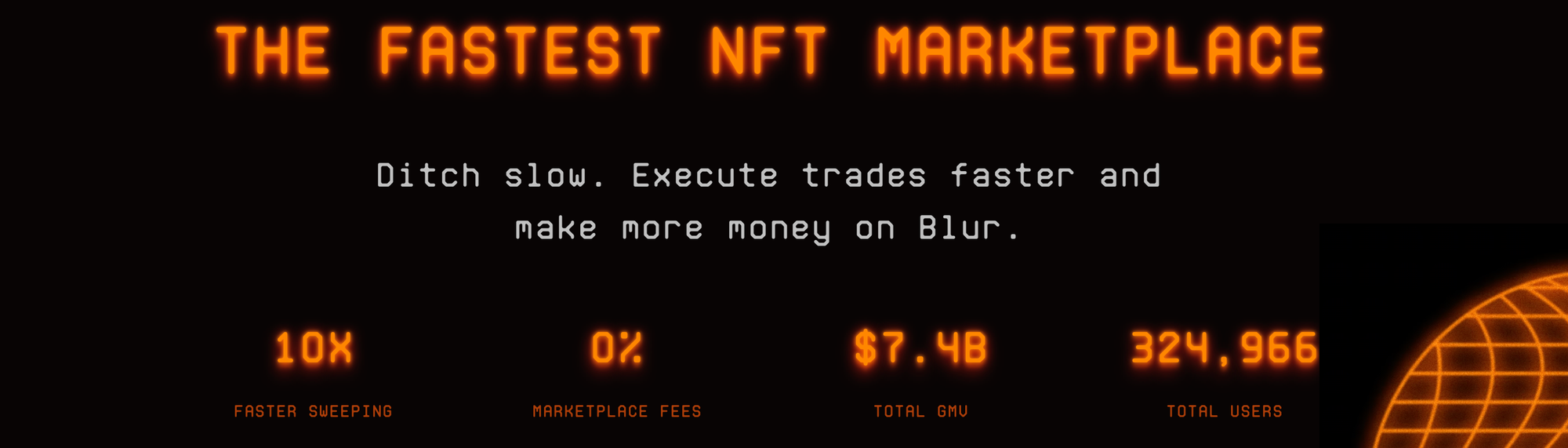
Blur's website still advertises zero fees and $7.4 billion in lifetime volume, numbers that now read like a gravestone. While the NFT market may not be dead, the era of zero-fee trading and token incentives is clearly over. That model made Blur a giant, but its decline shows how vulnerable incentive-led platforms can be when trading activity dries up.