Fixed vs. variable crypto lending rates: How to decide

Crypto loans work a lot like bank loans: you put up collateral, and the lender gives you access to liquidity in fiat, stablecoins, or another cryptocurrency. But the cost of that liquidity can vary — not just from lender to lender, but over the life of a single loan.
A Reddit user recently asked how big a risk it is for a variable rate to jump to something extreme, like 50% or even 100%, or something less dramatic but still unwelcome, like 15%. It's a fair question. A variable rate can fall when conditions are favorable, but it can also move against you.
So: fixed-rate predictability, or a variable rate in exchange for the chance of paying less? And what actually makes a crypto borrowing rate move?
TL;DR
- Fixed rates give you predictability — you know the cost for the full term, regardless of market conditions.
- Variable rates can work in your favor, falling as your LTV improves or conditions get more favorable, but they can rise too.
- LTV matters either way. A lower LTV generally means lower risk for the lender and better rates.
- Variable doesn't automatically mean expensive — on some credit lines, a low LTV can bring the APR down to 0%.
- The right choice depends on what you're borrowing for. Prioritize certainty, go fixed. Prioritize flexibility and can tolerate change, consider variable.
Core mechanics of crypto lending
Most crypto loans follow the same logic: you provide more collateral than you borrow against, creating a buffer if the collateral loses value. Credit score is irrelevant — what matters is loan-to-value (LTV), which measures loan size relative to collateral.
APR represents the annual cost of borrowing as a percentage. It reflects the interest rate but doesn't necessarily capture every cost, such as liquidation penalties or trading fees.
LTV is the biggest factor in pricing, but not the only one. Platform liquidity, market conditions, the borrowed asset, and the structure of the lending product all play a role — which is why two borrowers on the same platform can see different rates.
Consider the difference:
- Borrowing $10,000 against $50,000 in Bitcoin puts you at 20% LTV, a conservative position with a large buffer.
- Borrowing $32,500 against that same collateral puts you at 65% LTV, with much less room before the position nears its liquidation threshold — so the rate may be higher to reflect that risk.
The more exposed the lender is to a falling collateral value, the more the risk buffer matters. This covers most of the crypto lending market. Exceptions exist — unsecured flash loans, certain fixed-term structures — but they're a small slice of it.
With variable APR, the rate shifts as your LTV or market conditions change. With fixed APR, the agreed rate holds for the term, though your collateral can still be liquidated if its value falls far enough.
Fixed-rate loans
As in traditional finance, a fixed rate locks your borrowing cost at a set percentage for a defined term — a month to several years. These show up most on centralized (CeFi) platforms and some fixed-term DeFi products.
The appeal is planning.
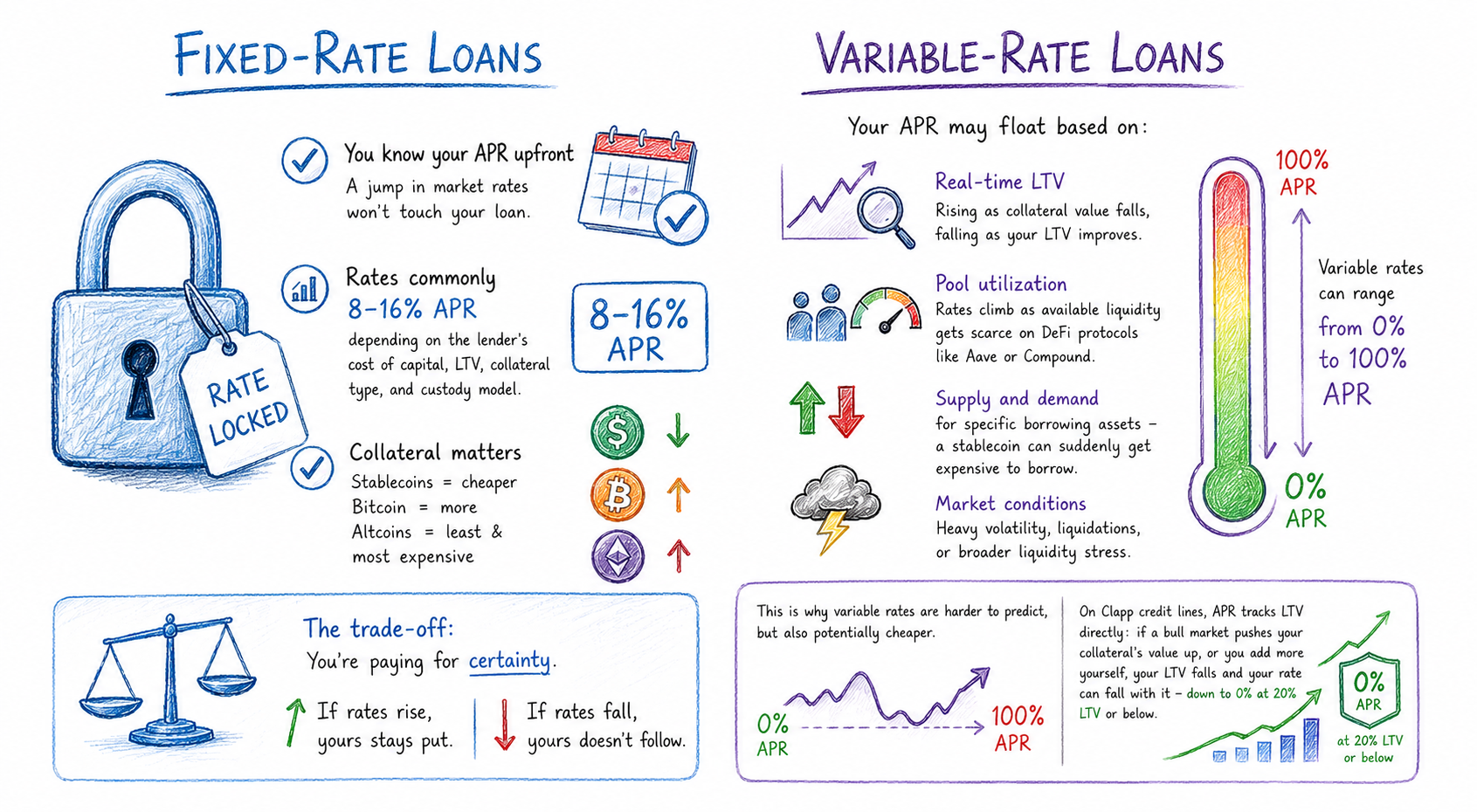
- You know your APR upfront, a jump in market rates won't touch your loan, and payment schedules and LTV requirements are usually straightforward.
- Rates commonly fall in the 8–16% APR range, depending on the lender's cost of capital, LTV, collateral type, and custody model.
- Borrowing against stablecoins is typically cheaper than borrowing against Bitcoin, and smaller altcoins tend to offer the least — and most expensive — borrowing power, largely due to volatility.
The trade-off cuts both ways. If you lock in at 8% and rates later climb to 15%, yours stays put — but if rates fall instead, yours doesn't follow. You're paying for certainty.
Variable-rate loans
What moves a variable rate depends on the lending product. Your APR may float based on:
- Real-time LTV — rising as collateral value falls, falling as your LTV improves
- Pool utilization — rates climb as available liquidity gets scarce on DeFi protocols like Aave or Compound
- Supply and demand for specific borrowing assets — a stablecoin can suddenly get expensive to borrow
- Market conditions — heavy volatility, liquidations, or broader liquidity stress
This is what makes variable rates harder to predict, but also potentially cheaper. On Clapp credit lines, for instance, APR tracks LTV directly: if a bull market pushes your collateral's value up, or you add more yourself, your LTV falls and your rate can fall with it — down to 0% at 20% LTV or below.
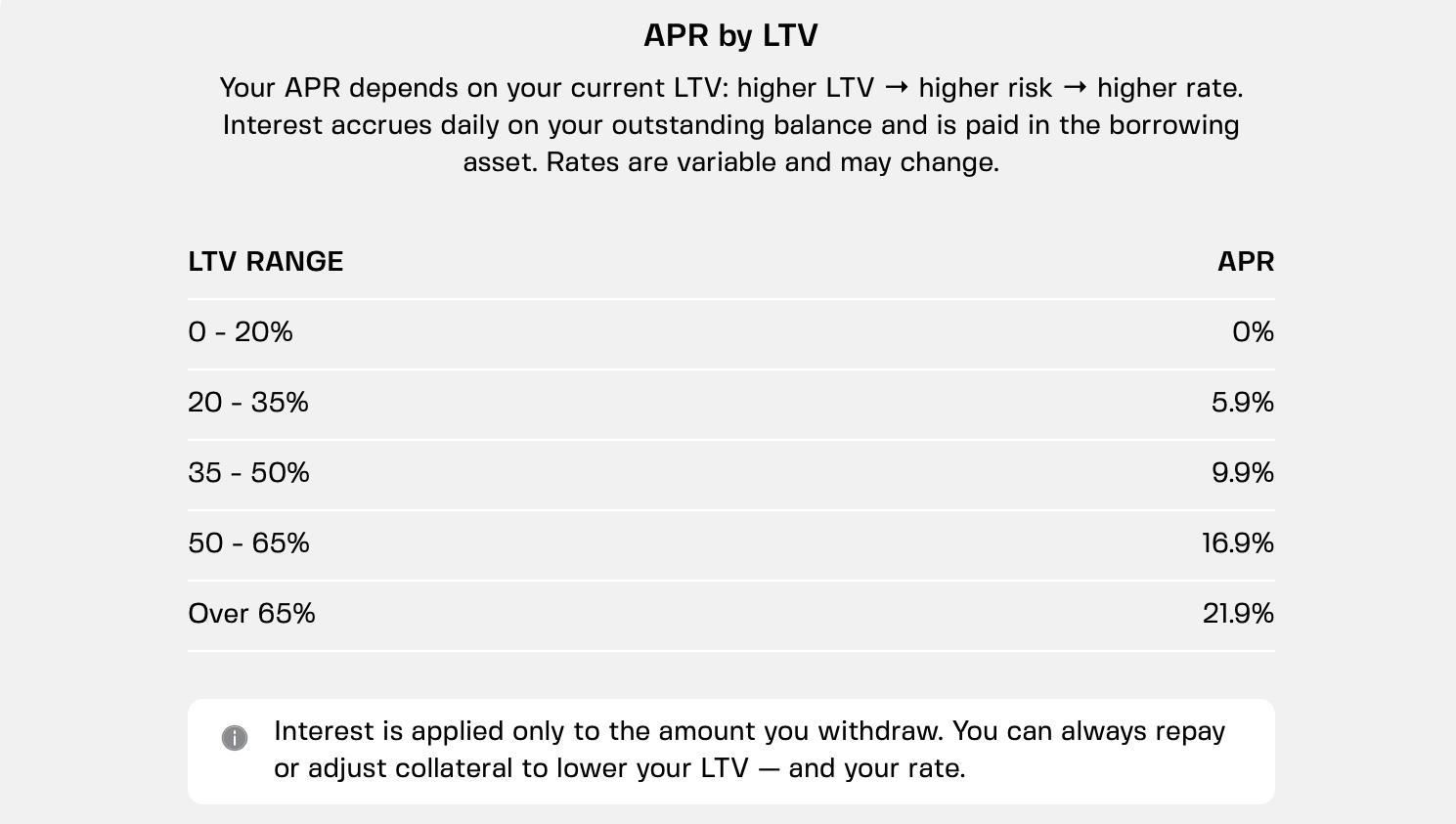
That's a meaningful difference from a fixed-rate loan: you can actively influence your borrowing cost by managing your collateral.
So, can a variable rate really spike to 50% or 100%?
It depends on the product.
- In CeFi, extreme spikes are rare when the lender uses defined LTV-based tiers like the ones above; the pricing structure caps how far the rate can move.
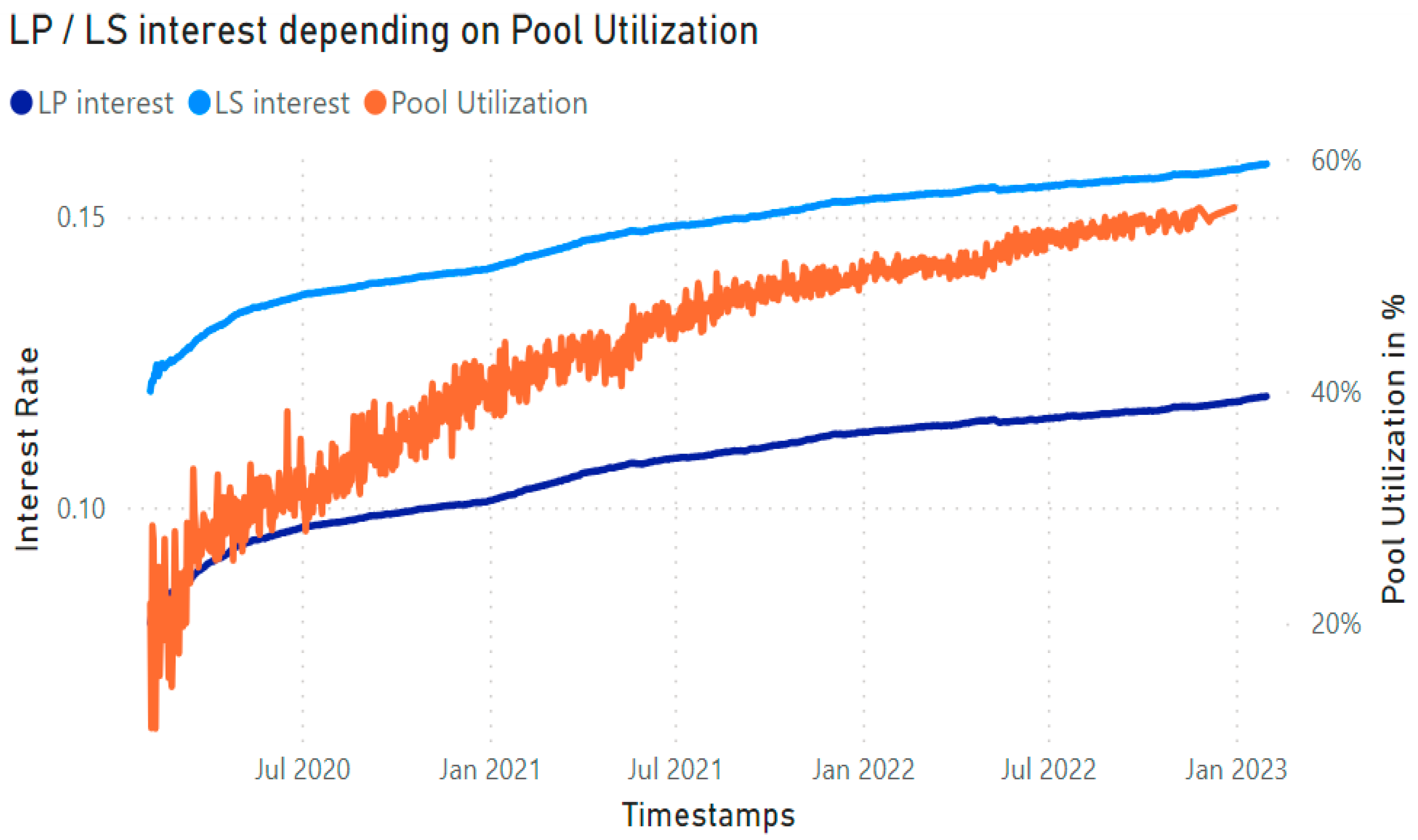
- In DeFi, it's a different story — rates can genuinely reach those levels, because many protocols price borrowing algorithmically based on pool utilization: how much of the available liquidity is currently borrowed.
When utilization is low, liquidity is plentiful and rates stay low. As more gets borrowed, rates rise to push borrowers toward repayment and pull lenders toward supplying more funds.
Most protocols follow a utilization curve with an optimal threshold — below it, rates rise gradually; above it, often around 80–90% utilization, rates can climb sharply.
Picture a lending pool with $100 million available and $80 million already borrowed — 80% utilization. Another $15 million borrowed pushes that to 95%, leaving little liquidity for anyone wanting to withdraw or borrow, so the protocol raises rates sharply to restore balance.
This tends to happen when a lot of users want the same asset at once — during a market crash, for instance, or when a DeFi incentive creates outsized demand for a token. At very high utilization, a variable rate can go from manageable to extremely expensive fast.
With variable-rate DeFi borrowing, you're carrying two risks at once: your collateral can fall, and your borrowing cost can rise.
Which one to choose?
It comes down to how much certainty you need.
Fixed rates fit better when:
- You're borrowing for a specific purpose with a clear timeline — a business expense, a planned purchase, anything where you need to know the exact cost
- You want predictable, low-hassle budgeting without worrying about rate jumps
Variable rates fit better when:
- You're comfortable with some uncertainty in exchange for the potential to pay less
- You're on a platform with LTV-based pricing you can actively manage
- You want the flexibility to add collateral and lower your rate over time
Managing your borrowing costs with a credit line
When your rate depends on LTV, the simplest lever is keeping LTV low — adding collateral or repaying part of the balance can move you into a cheaper tier. Credit lines add more flexibility on top of that:
- No fixed term or repayment schedule — you borrow and repay on your own timeline
- Add collateral anytime your LTV rises, moving back into a lower tier
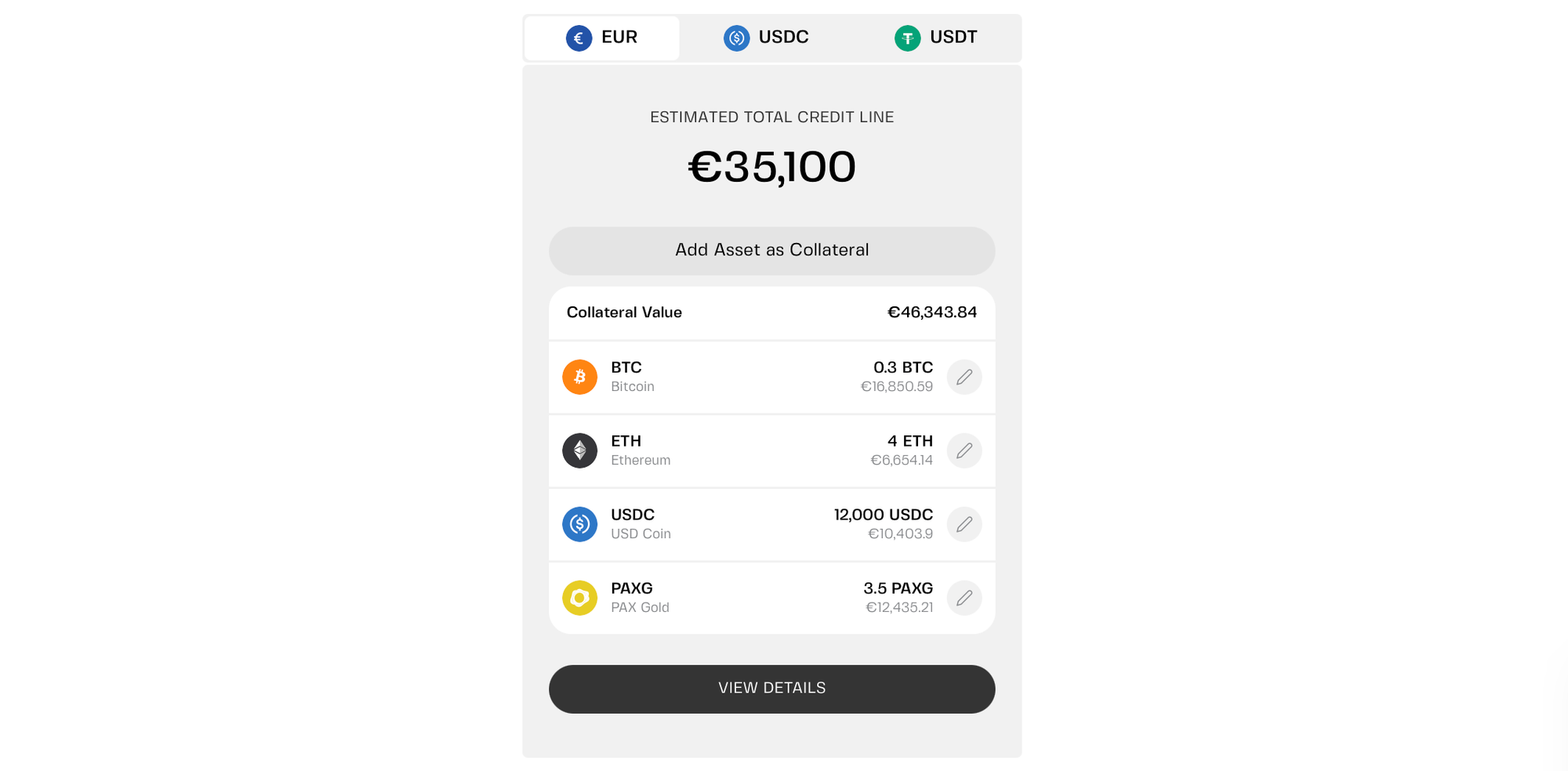
- Mix stablecoins, crypto, and fiat in one collateral pool instead of relying on a single volatile asset
- Swap collateral without closing the line — on Clapp, you can rebalance between any supported assets, for example withdrawing BTC for more market exposure and replacing it with stablecoins
That adds up to more control over what you actually pay. You're not locked into your starting collateral mix — you can adjust it as your LTV, market conditions, or strategy change.
Bottom line
Fixed gives you peace of mind. Variable gives you flexibility, and on platforms with LTV-based pricing, a low LTV can bring your rate all the way down to 0% — a strong incentive to borrow responsibly regardless of which type you choose.
Frequently asked questions
1. What's the difference between fixed and variable crypto lending rates?
A fixed rate locks your borrowing cost at a specific APR for the entire loan term. You know exactly what you'll pay. A variable rate can change over time based on factors like your LTV, market conditions, or pool utilization. Fixed gives you predictability. Variable gives you the potential to pay less — or more.
2. Can variable rates really go to 50% or 100%?
In CeFi, extreme spikes are less common because rates are usually tied to LTV tiers with defined limits. In DeFi, yes — rates can reach those levels. DeFi protocols use pool utilization to set rates algorithmically. When utilization gets very high (above 80-90%), rates can jump sharply to encourage repayment and restore liquidity.
3. Which one should I choose?
It depends on what you're borrowing for and your risk tolerance. If you need certainty and don't want to worry about rates changing, fixed is the safer choice. If you're comfortable with some uncertainty and want the possibility of lower rates — especially if you can actively manage your LTV — variable may work well. On some platforms with LTV-based pricing, keeping LTV low can even bring your rate to 0%.
4. How does LTV affect my rate?
LTV is one of the biggest factors. Lower LTV means less risk for the lender, so you often get better rates. On platforms with tiered pricing, improving your LTV can move you into a lower rate bracket. On Clapp, for example, borrowing at 20% LTV or below qualifies for 0% APR.
5. Can I switch from a variable rate to a fixed rate?
It depends on the platform and product. Some lenders offer both options and let you choose at the time of borrowing. Others may allow you to refinance or restructure your loan. Check the specific terms of your lending product.