Staking vs lending: two ways your crypto earns, compared honestly

Two popular ways to put idle tokens to work are staking and lending. Both generate yield, but they work differently under the hood and carry distinct risks.
Should you lock your coins into a proof-of-stake blockchain, or supply them to a borrowing pool? The answer depends on your assets and your goals. Here's an honest comparison — not to crown a winner, but to help you figure out which one actually fits your situation.
TL;DR
- Staking pays network rewards for helping secure proof-of-stake blockchains. Your assets are locked and subject to slashing risk.
- Lending pays interest from borrowers. Your assets are deployed as capital, not locked into a network.
- Staking yields are variable — they depend on network activity and validator performance.
- Lending yields can be fixed or variable, depending on the product and platform.
- Staking carries slashing risk — validators who misbehave can cost you part of your stake.
- Lending carries counterparty risk — the platform or borrower could default.
- Neither is risk-free, and both can work well. The trade-offs are just different.
How staking works
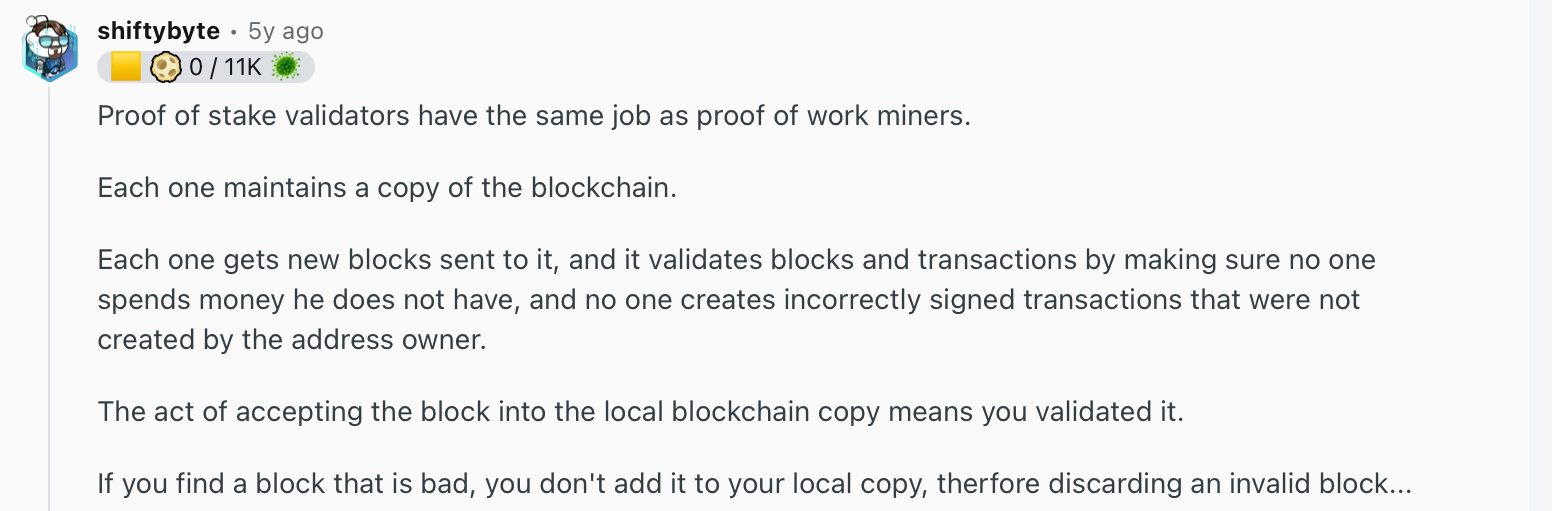
Staking is native to blockchains that use Proof of Stake, like Ethereum or Solana. You deposit crypto to help secure the network by activating a validator — a participant in the chain's consensus process. Validators propose new blocks, check the work of other validators, and attest to the correct head of the chain.
Proof of Stake uses roughly 99% less energy than the proof-of-work system that secures Bitcoin. Instead of miners burning through computing power, new blocks are verified and added by validators chosen based on how much crypto they've staked.
There are a few ways to take part:
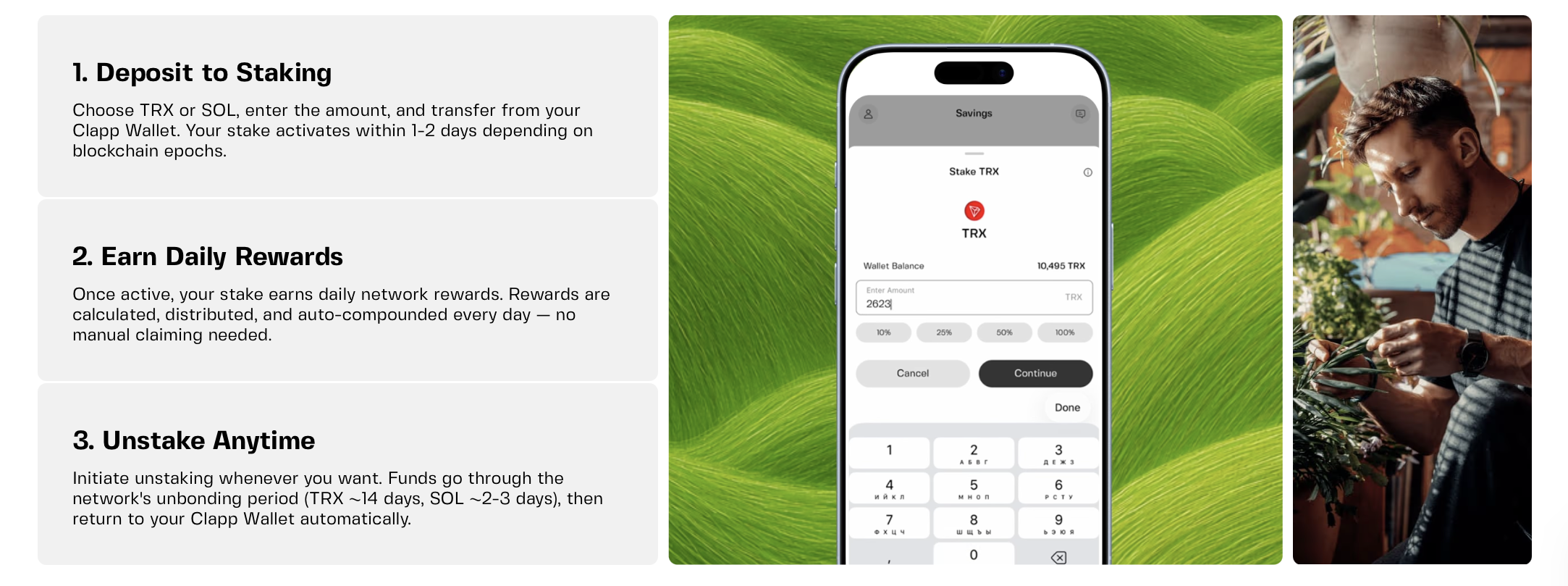
- Simple, one-click staking on CeFi platforms (TRX and SOL staking on Clapp)
- Native validator staking (running your own node, as with Ethereum home staking)
- Liquid staking through DeFi protocols (Lido, Rocket Pool)
Running validator hardware and node software is a lot to take on, both technically and financially — Ethereum alone requires at least 32 ETH to run a validator. That's why most everyday holders go through delegated or pooled staking instead, assigning their coins to an active validator and sharing in the rewards.
The delegation itself is automated, so regular token holders can support network security without ever touching node software. When you stake through a CeFi platform, the platform handles all of that technical work — you just deposit and earn.
Where do staking rewards come from?
From the network itself. The blockchain issues new tokens and distributes them to validators and stakers — protocol-level inflation, with no borrowers or trading fees involved.
The trade-off is the lock-up. Once you stake, you can't sell or move those coins until you unstake, and there's often a waiting period after that too — unbonding, warm-up, or cool-down rules meant to protect network stability. CeFi platforms follow the same timelines set by the underlying protocols; they don't get to skip them.
Some of those queues run longer than others:
- Ethereum (ETH): usually 14 hours to a few days to withdraw, depending on network queues
- Solana (SOL): roughly 2–3 days (one epoch) to unbond
- Cardano (ADA): no lock-up at all — you can move your ADA anytime while still earning rewards
- Polkadot (DOT): 48-hour unbonding period (previously 28 days)
- ETH via Lido: 1–5 days waiting, though you can skip the line by swapping stETH for ETH on a DEX like Uniswap — at the cost of slippage or an exchange-rate difference
Liquid staking protocols get around some of this by issuing a derivative token in exchange for your staked crypto, which you can trade instantly on secondary markets. But exiting the underlying protocol itself still takes time, even if the derivative token doesn't.
Biggest risk: Slashing
If the validator you're using misbehaves — goes offline, acts maliciously, or makes a technical error — the network can penalize it. You share in that penalty even if you weren't the one running the validator, and it can eat into your stake.
Delegated staking carries the same slashing risk as running a validator yourself. With CeFi staking, that risk shifts toward platform trust instead. This is exactly why using a regulated, reliable platform matters.
How lending works
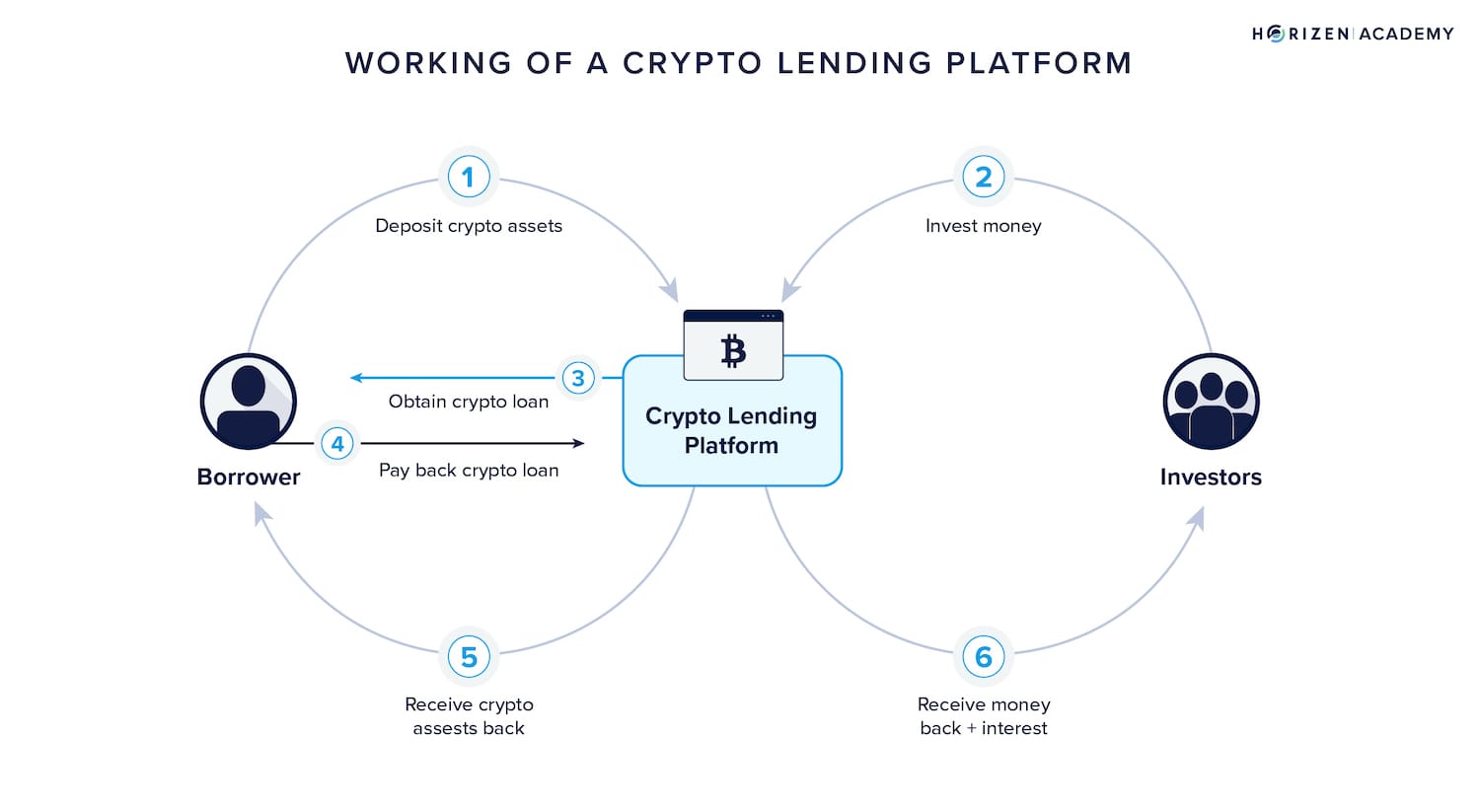
Lending works differently. You deposit your crypto into a platform, and the platform lends it out to borrowers — other users, institutional clients, market makers looking to increase their buying power. Those borrowers pay interest on what they've borrowed, and a portion of that interest flows back to you as yield.
The reward here doesn't come from a network issuing new tokens. It comes from another person, or another institution, paying to use your capital. Your yield is simply compensation for supplying that liquidity.
The trade-off
Unlike staking, your assets aren't locked into securing a blockchain — they're deployed as working capital instead. Most lending products let you withdraw on a flexible basis, so your funds stay accessible day to day.
Some platforms offer higher rates in exchange for locking funds for a fixed term, which trades that flexibility for a better rate, similar to the staking lock-ups covered above — just without the network-level unbonding queues.
Biggest risk: Counterparty risk
If a borrower defaults, your capital could be exposed. Most crypto lending is overcollateralized, meaning borrowers put up more value than they borrow, which gives you a cushion if a loan goes bad. However, platform risk is the piece overcollateralization can't solve. The core problem: something other than you controls what happens to your funds.
- CeFi lenders manage that risk through custody, underwriting, and — ideally — licensing and regulation, the same trust-based trade-off staking makes with a CeFi validator.
- DeFi lending protocols like Aave remove the platform middleman and automate lending algorithmically, which cuts out counterparty risk in the traditional sense but replaces it with smart contract risk instead — a different flavor of the same problem.
How the returns compare
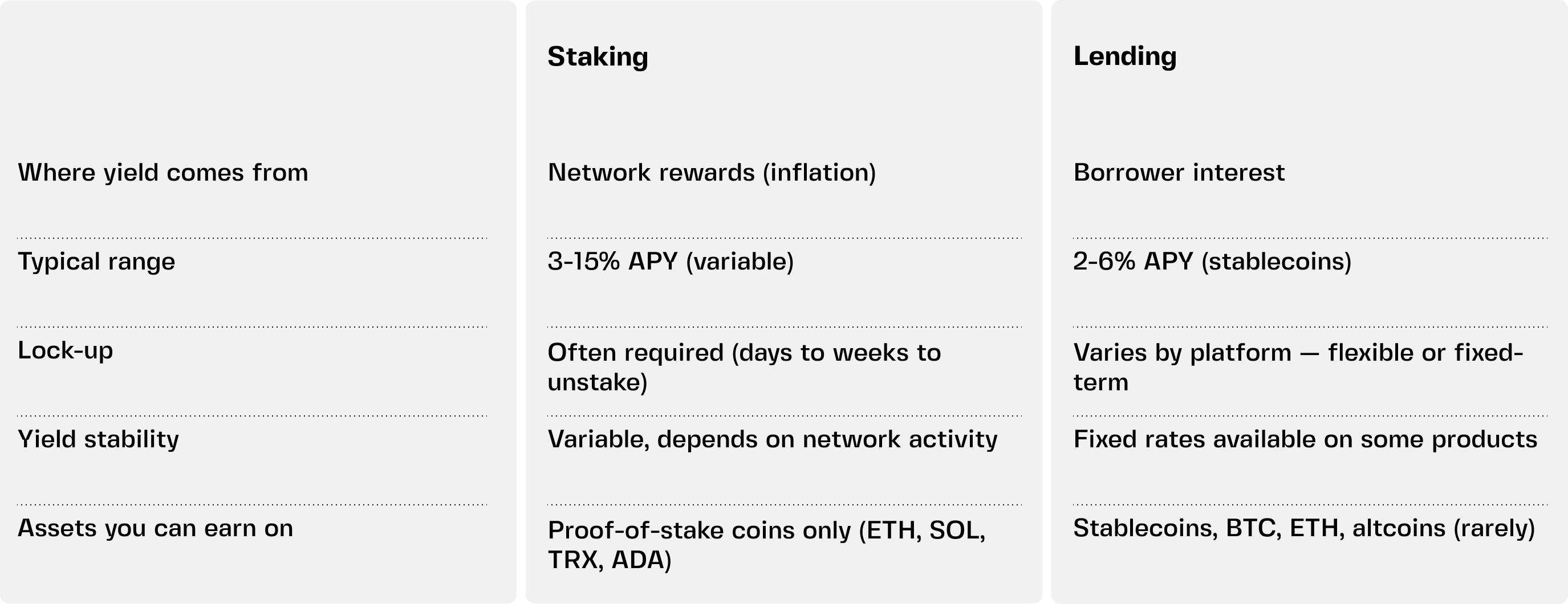
Everything below traces back to one distinction: who's on the other side of the transaction. It ripples into everything else on this table — how stable the yield is, whether your funds are locked, and what kind of risk you're actually taking on.
Risk mechanics: What you're actually exposed to
Staking risks
- Slashing. A validator makes a mistake or acts maliciously, and part of your stake gets penalized. Rare, but real.
- Lock-up. Your assets are inaccessible for the staking period — if the market drops sharply, you can't sell your way out.
- Validator performance. An underperforming validator means smaller rewards for you.
- Network risk. The blockchain itself could run into technical issues or simply lose adoption over time.
Lending risks
- Platform failure. If the platform goes bankrupt or gets hacked, your funds are at risk.
- Counterparty default. Borrowers might not repay. Overcollateralization reduces this risk, but doesn't eliminate it.
- Withdrawal delays. Platforms sometimes pause withdrawals during market stress — which can defeat the point of a "flexible" product right when you need the flexibility most.
- Stablecoin risk. If you're lending stablecoins, the coin itself could lose its peg.
Staking exposes you to risks tied to the network. Lending exposes you to risks tied to the platform. Neither is universally safer — it comes down to which kind of risk you're more comfortable holding.
Where each makes sense
Staking makes sense when:
- You hold proof-of-stake assets you don't need to touch soon
- You're comfortable with lock-ups and variable yields
- You want direct exposure to a specific network's ecosystem
- You're willing to accept slashing risk for potentially higher returns
Lending makes sense when:
- You hold stablecoins, BTC, or fiat
- Flexibility matters to you — some lending products let you withdraw anytime
- You'd rather have a predictable, fixed-rate return
- You're more comfortable with platform risk than network risk
Staking and savings, side by side
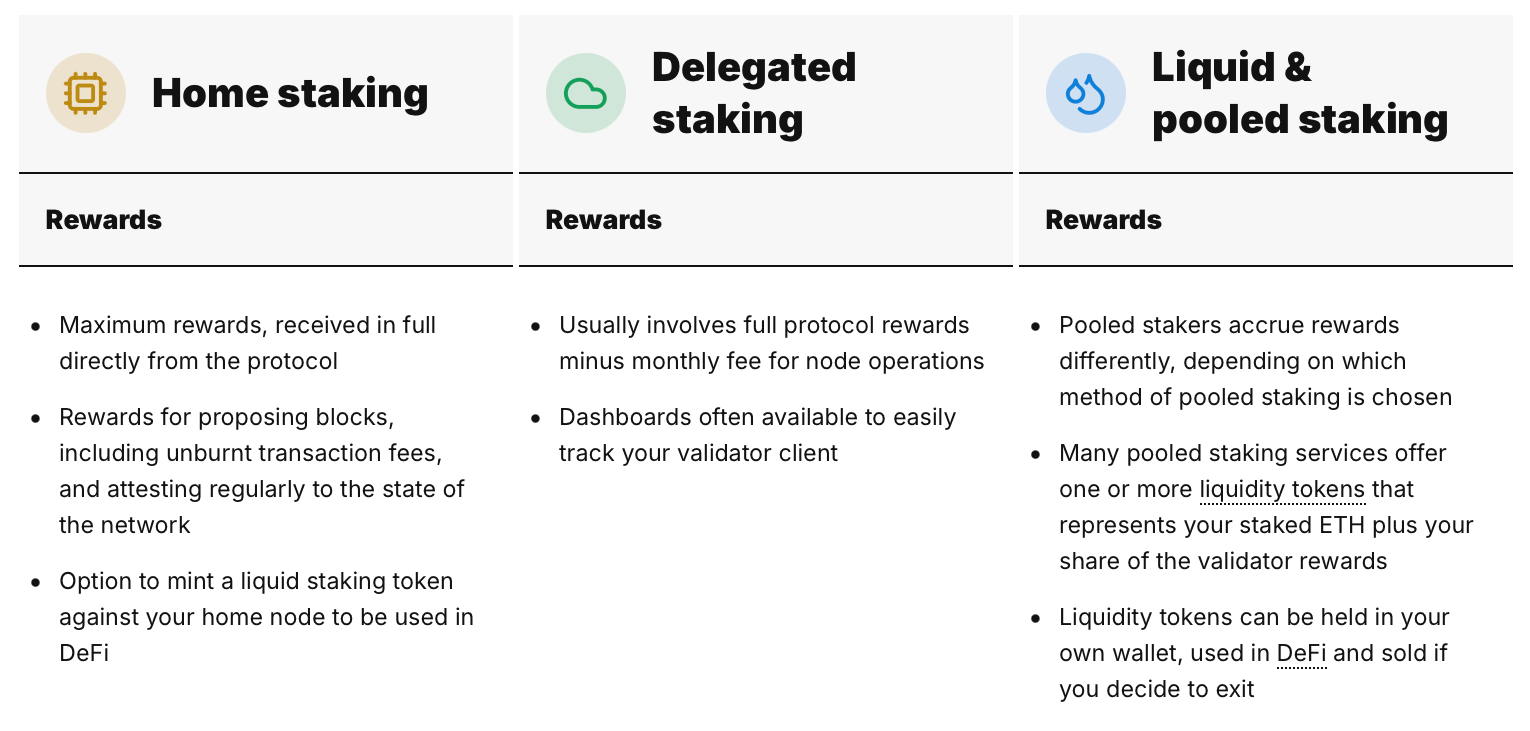
Clapp offers native TRX and SOL staking without requiring you to run a node or manage a validator yourself. Rewards compound daily and get delegated automatically to trusted validators, so there's no infrastructure to maintain or technical upkeep to worry about.
For a different way to earn just by holding, Flexible and Fixed Savings work alongside staking rather than replacing it.
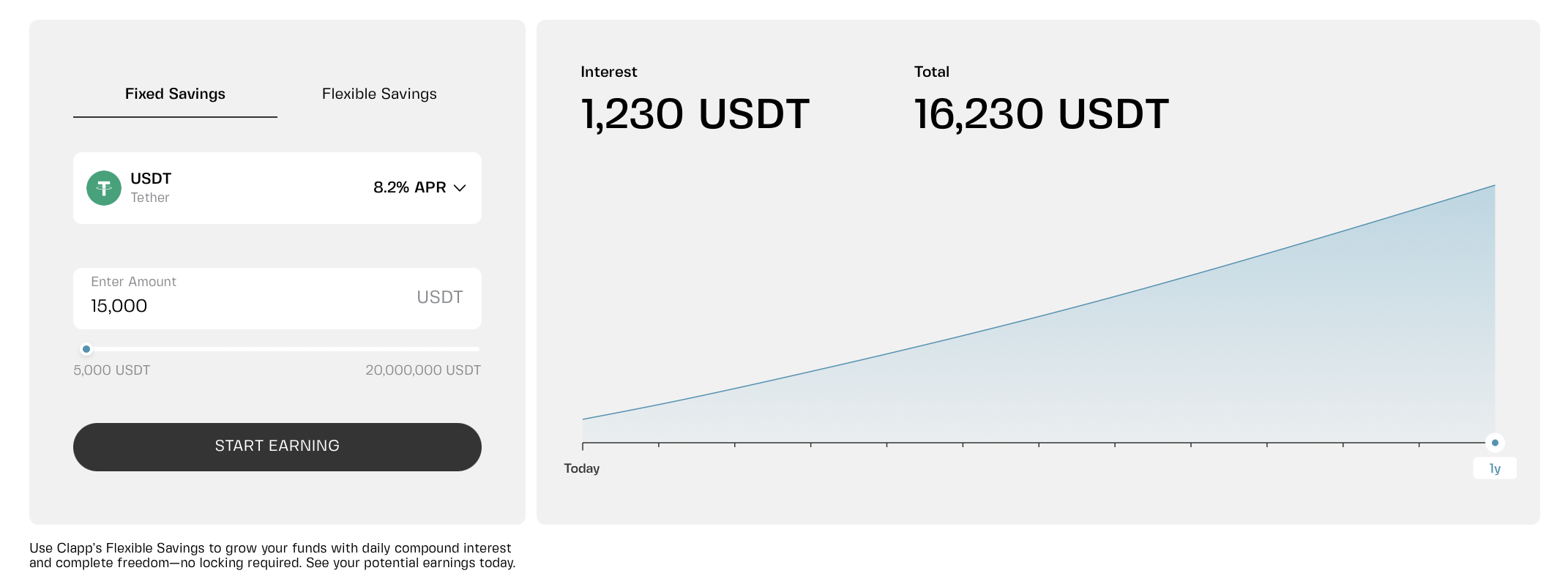
- Flexible Savings earns up to 5.2% APY with daily compounding, no lock-ups, and support for stablecoins, BTC, ETH, and EUR.
- Fixed Savings earns up to 8.2% APR in exchange for locking funds for 1–12 months — a higher rate for less access.
It comes down to who's paying you
Staking pays you for helping secure a network — the yield is variable, your assets are locked, and slashing is a real risk. Lending pays you for supplying capital — the yield can be fixed, your assets stay more flexible, and the main risk sits with the platform rather than the network.
Neither one is better across the board. They're different tools built for different goals — pick the one that actually fits your assets, your timeline, and how much risk you're willing to carry.
Frequently asked questions
Which pays more — staking or lending?
It depends on the product. Staking can offer higher yields on some networks (10–15% APY), but with more volatility and lock-ups attached. Lending on stablecoins tends to run 5–8% APY with more predictability. The highest number on paper isn't always the better deal once you account for the trade-offs behind it.
Is staking riskier than lending?
They carry different risks, not a straightforwardly higher or lower one. Staking comes with slashing and lock-up risk. Lending comes with counterparty and platform risk. Which one feels riskier to you depends on whether network penalties or platform failure worries you more.
Can I stake on Clapp?
Yes — Clapp offers staking for TRX and SOL. You earn network rewards directly from the app, with no validators to manage and no technical setup required. Another way to earn is through savings: Flexible and Fixed Savings products work with stablecoins, BTC, ETH, and EUR. Flexible Savings lets you withdraw anytime; Fixed Savings offers a higher rate in exchange for locking funds for a set term.
Should I stake or lend my Ethereum?
It depends on your goals. Staking ETH locks your funds and earns network rewards. Putting ETH into Flexible Savings instead keeps it accessible with daily compounding. If access matters most, the flexible route wins. If you're holding long-term and want direct network exposure, staking is worth considering. You don't have to pick just one, either — plenty of people split their holdings between the two.
Can I do both staking and lending at the same time?
Yes — there's no rule that says you have to pick one. A common approach is splitting holdings: stake the portion of your crypto you're comfortable locking up for network rewards, and keep the rest in something flexible like Fixed or Flexible Savings for easier access. Your mix comes down to how much of your portfolio you want locked versus liquid at any given time.