What happens after you buy crypto?

You research crypto projects, compare prices, make your first purchase — and then... nothing. Your Bitcoin sits in a wallet alongside your stablecoins. Weeks or months go by. You check the market, hope prices go up, and wait.
Once you own crypto, a different set of questions starts to matter.
Some assets are there because you believe in their long-term potential. Some are simply waiting for the next opportunity. Some exist for one reason only: to give you flexibility if life or the market surprises you.
Treating everything the same usually means missing opportunities. Experienced investors think differently. Instead of asking "What do I own?" they ask "What should this money be doing right now?"
That simple shift changes crypto from a passive investment into a system that can adapt.
TL;DR
- Buying crypto is only the first step. What you do afterwards often matters just as much.
- Stablecoins don't have to sit idle. They can earn yield while remaining available.
- Selling isn't the only source of liquidity. Credit lines let you access cash without giving up long-term holdings.
- Your portfolio will change over time. Exchange tools make it easy to rebalance as your goals or the market evolve.
- Experienced investors think less about buying and more about making every part of their capital useful.
Your long-term holdings
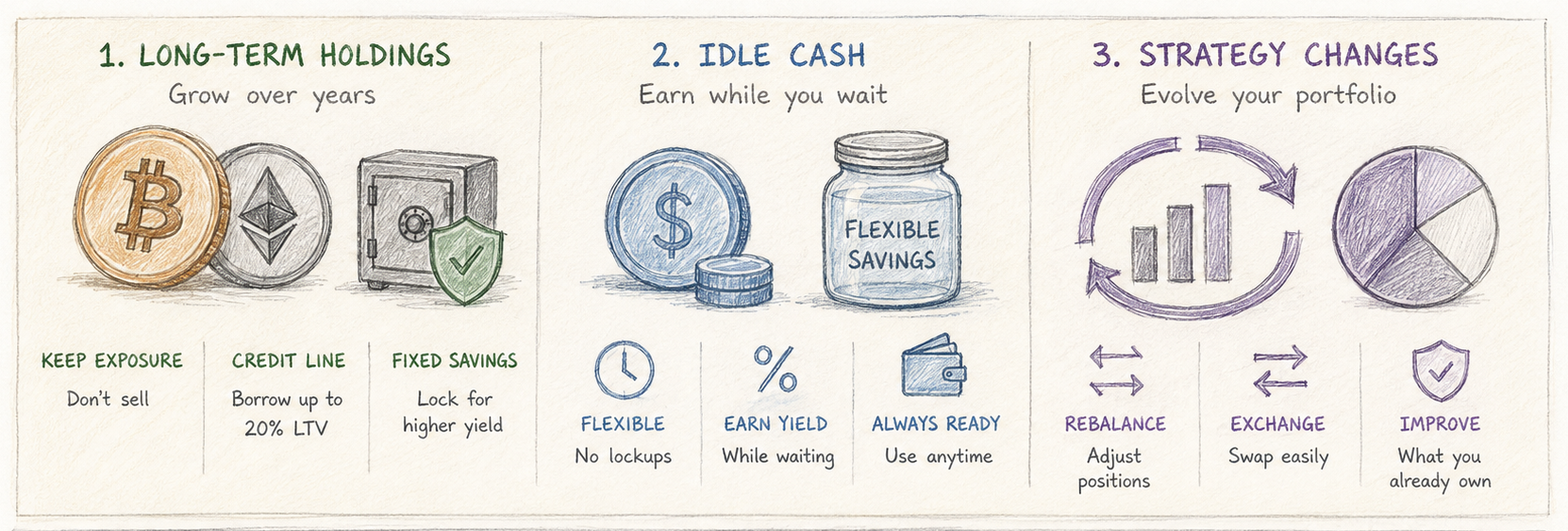
Some assets aren't meant to be touched very often. Bitcoin, Ethereum and other long-term positions are there to capture growth over years, not weeks. Selling them every time you need liquidity or want to adjust your finances often works against that goal.
However, "long-term" doesn't have to mean "untouchable." The same assets can continue working for you while still giving you access to liquidity when needed.
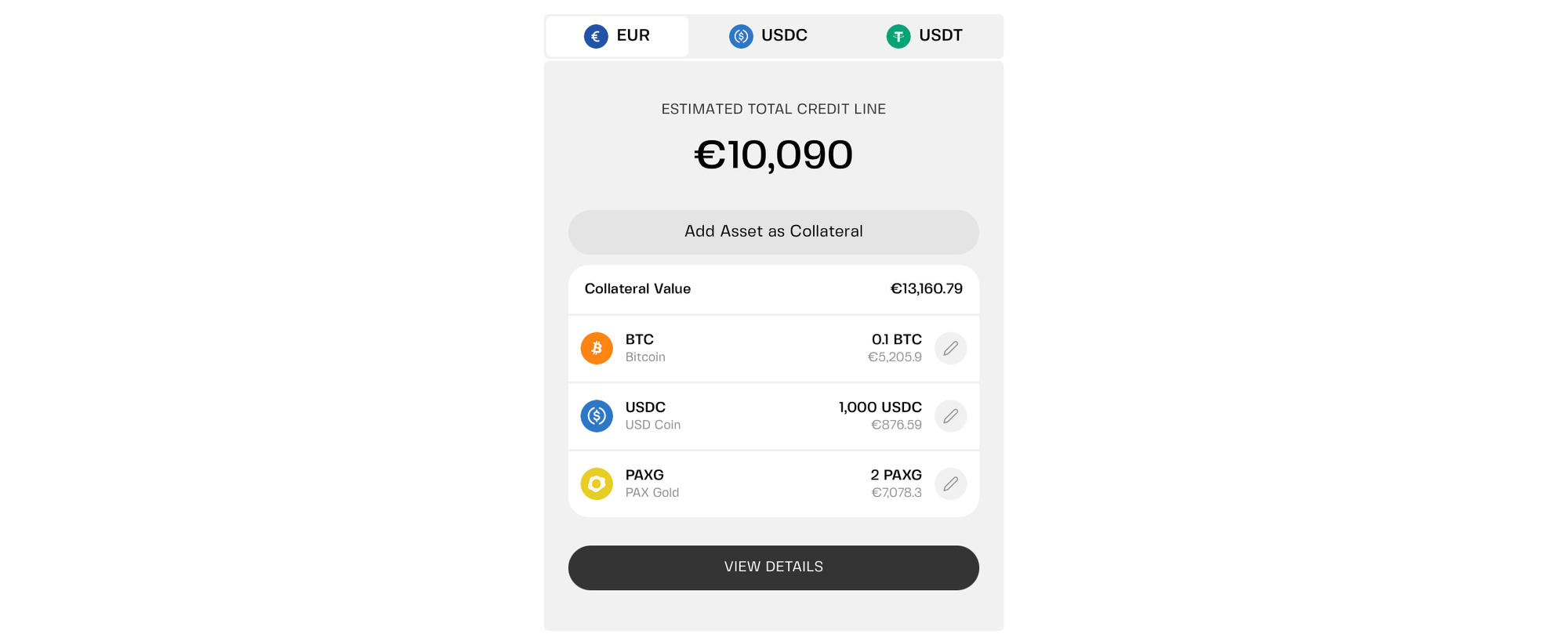
If you ever need cash, crypto-backed credit lines let you borrow against those holdings instead of selling them. You keep your market exposure while unlocking liquidity — and in many jurisdictions, avoid triggering a taxable sale.
Used conservatively, a credit line becomes less about taking on debt and more about avoiding forced decisions. You hope you won't need it, but having it available gives you options. Here's what conservatively means:
- Keep your LTV (loan-to-value) low, preferably at or under 20% – this creates a solid buffer against market declines and unlocks 0% APR on platforms like Clapp.
- For investors who prioritize simplicity, CeFi lending can offer a more straightforward experience, with notifications when LTV approaches critical levels. In DeFi, liquidation is handled automatically by smart contracts, leaving less room to react
- Go beyond single-asset collateral. A multi-collateral credit line lets you mix BTC, ETH, stablecoins, and more in one pool — spreading risk and allowing you to swap assets without closing your position.
Fixed Savings is another option for capital that already has a purpose. If you know you won't need those assets for months, locking them away can turn idle holdings into a higher-yield position.
A few things to keep in mind:
- The highest rates are usually available on less volatile assets — stablecoins like USDT or USDC (for example, 8.2% APR on Clapp, compared to roughly 5% on BTC/ETH).
- Commitment periods usually range from from one month to one year.
- Plan carefully: reserve Fixed savings for long-term holdings as they are not designed for early withdrawals.
Your idle cash
Almost every investor has money that's waiting — whether for a market correction, or because you're building an emergency reserve. Or maybe you've recently taken profits and haven't decided what comes next.
Leaving those stablecoins idle is simple, but it also means they're doing nothing. That's where savings products come in.
Flexible Savings lets that dry powder earn yield while remaining available if plans change. You're not trying to squeeze out the highest possible return here. The goal is making sure money that's waiting on the sidelines still contributes to your overall strategy.
You earn without lockups or penalties for withdrawal. Capital is always on hand.
The next opportunity may arrive tomorrow or in six months. Either way, your cash doesn't have to sit still while it waits.
When your strategy changes
No investment thesis lasts forever. Markets change, sectors rotate, and assets that once looked attractive may no longer fit your goals.
That doesn't necessarily mean trading every day. In fact, constantly chasing trends usually creates more problems than it solves.
But occasionally you'll want to rebalance — reduce one position, increase another, or simply diversify after one asset has grown to dominate your holdings.
An exchange isn't only useful when you're making short-term trades. It also allows long-term investors to gradually adjust their portfolio as circumstances change, without moving assets across multiple platforms.
Sometimes the best investment decision is simply improving what you already own.
Why these tools work better together
Each tool solves a different problem.
- Savings keep idle capital productive.
- Credit lines provide liquidity without forcing a sale.
- Exchange tools help your portfolio evolve over time.
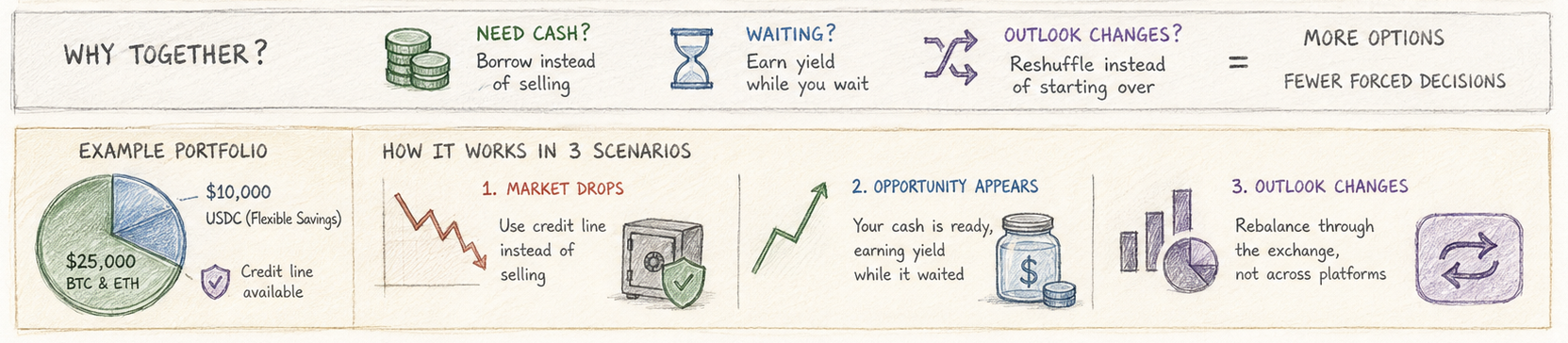
Individually, each is useful. Together, they reduce the moments when the market forces you into a decision you wouldn't have chosen.
- Need cash? Borrow instead of selling.
- Waiting for an opportunity? Earn yield while you wait.
- Changed your outlook? Reshuffle instead of starting over.
You don't have to constantly use every tool. Just have the right option available when you need it.
Example
Imagine you've built a portfolio worth $40,000.
- $25,000 in BTC and ETH for long-term growth.
- $10,000 in USDC earning yield in Flexible Savings while waiting for future opportunities.
- A credit line backed by your crypto, ready if an opportunity or unexpected expense appears.
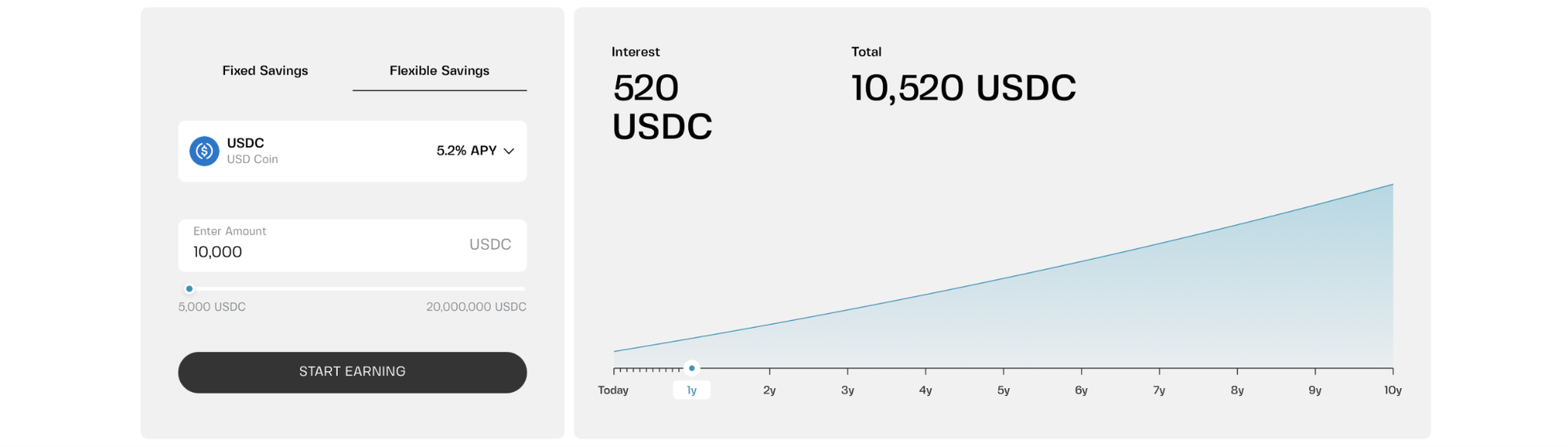
Here's how your options would work in three different situations. The important difference is not the size of the portfolio. It's that every part already has a role before anything happens.
- The market drops sharply.Instead of selling Bitcoin to raise cash, you use part of your credit line while waiting for conditions to improve.
- A project you've been watching finally reaches your target price.Your stablecoins were already there, earning yield while they waited for the right moment.
- Your investment outlook changes.Rather than withdrawing funds and moving between platforms, you simply rebalance your holdings through the exchange.
Putting it all together on Clapp
Clapp brings these pieces together in one place. When your situation changes, you can always have the right tool on hand.
- Flexible Savings helps idle stablecoins earn while remaining accessible. Fixed Savings provides premium yield on long-term holdings.
- Credit Lines unlock liquidity without requiring you to sell long-term holdings.
- Exchange lets you switch assets at top rates whenever your strategy changes.
The idea isn't to use every tool all the time.
Make better use of the crypto you already have
The hardest part of owning crypto is managing holdings after you buy. A strategy that only works when prices go up leaves you with fewer options when conditions become difficult.
Markets change. Your goals change. Your liquidity needs change.
That is why seasoned investors decide what each part of their capital should do: some assets aim for growth, some generate yield while waiting, and some provide liquidity when life or the market changes unexpectedly.
Frequently asked questions
1. Do I need to use all three tools?
Not necessarily. Many people start with just one — often Flexible Savings for idle stablecoins — and add other tools as their needs change.
2. Should I borrow instead of selling every time?
Borrowing makes the most sense when you want to keep a long-term position but temporarily need liquidity. If you no longer want to own the asset, selling may be the simpler choice.
3. Why keep stablecoins in savings instead of a wallet?
Because they can continue earning yield while remaining available for future investments or unexpected expenses.
4. How often should I rebalance my portfolio?
Only when your investment goals change or one position grows so large that it no longer reflects your intended allocation. Constant trading is rarely necessary.
5. Is this approach only for experienced investors?
No. The principles are simple: let idle money earn, avoid selling long-term investments unnecessarily, and keep enough flexibility to respond when circumstances change.