PAXG as loan collateral: How a gold-backed token behaves

Gold is often seen as the tranquil corner of the investment world, in a sense the antithesis of volatile crypto. When a token ties the two together, it’s fair to wonder how it behaves.
Each PAXG token represents one fine troy ounce of physical gold, moving on a blockchain like any other crypto asset. If you want cash without selling it, you can borrow against it. This article explains how PAXG collateral behaves: what drives its value, where it feels different from Bitcoin or ether, and what to watch while a loan or credit line is open.
TL;DR
- PAXG is a token backed 1:1 by one fine troy ounce of physical gold, so its price follows gold, not crypto sentiment.
- You can use it as collateral for a crypto credit line to get cash without selling your gold.
- Gold is usually calmer than Bitcoin, but not immune, as it has fallen about 30% since its January 2026 record.
- Your collateral’s value depends on the gold price and other factors: the euro exchange rate, weekend market closures and small gaps between PAXG and spot gold.
- The higher your LTV, the higher your APR and the closer you are to liquidation. On Clapp, keeping LTV at 20% or below puts you in the 0% APR band.
- Think strategically. Borrow less than the maximum, keep spare collateral ready, and consider adding stablecoins to your pool to cushion price swings.
Meet PAXG, a gold-backed token
PAX Gold (PAXG) is an ERC-20 token on Ethereum supporting 24/7 trading and integration with DeFi apps. By design, it differs from most cryptocurrencies, whose value hinges on supply, demand and sentiment around those specific tokens.
The price of PAXG tracks the official spot price of gold in USD/oz (XAU/USD). Each token represents a 1:1 claim on one fine troy ounce of physical London Good Delivery gold held by the issuer, Paxos Trust Company, N.A. That underlying gold is stored in secure, LBMA-accredited Brink’s vaults in London.
Three things follow from that:
- It’s a token, not a gold bar in your drawer. You hold a digital claim that follows the precious metal’s price. You can transfer it, receive it and store it in any Ethereum wallet like other tokens.
- Its price is designed to track gold, not crypto mood. When Bitcoin has a wild week, PAXG usually doesn’t move with it, unless the same forces that drove crypto also affect gold (this may happen with oil prices, geopolitical shocks, Fed rates and other macro drivers that move broader markets).
- It can still drift a little from spot gold. As it trades around the clock, PAXG’s price can sit slightly above or below the headline gold price, especially when traditional gold markets are closed.
In other words, PAXG is neither a savings account nor a stable asset. Its price still goes up and down, just usually at a different pace than most crypto. This sets it apart from USD-backed counterparts like Tether’s USDT or Circle’s USDC, which are also accepted as collateral.
Why people use gold as collateral
The basic idea of a crypto-backed credit line is simple. You post an asset you already hold and borrow against it, so you don’t have to sell. You keep your exposure and get funds for rent, a holiday, a tax bill or an unexpected repair.

For someone planning to hold gold for years, selling a slice just to cover an emergency expense is the last resort. Borrowing against it lets you keep the position while covering that financial need.
There’s also a risk-management angle. A calmer asset can give you more breathing room when you borrow. Gold’s worst peak-to-trough fall since the mid-2000s was roughly 45% (2011 to 2015), while Bitcoin has repeatedly dropped 50% to 80%.
This means your PAXG collateral value may be less likely to lurch on an ordinary day. That’s a tendency, not a guarantee, and we’ll get to the exceptions below.
How PAXG collateral works in a credit line
The mechanics follow the same pattern as other collateral on a crypto credit line. Select PAXG if it’s available in your country, and see the borrowing limit and rate that apply to it before you confirm anything.
- You choose PAXG as your collateral. Borrow against PAXG alone or combine it with other tokens if your lender allows it, which spreads the risk so a drop in gold doesn’t swing your whole LTV on its own. Clapp users can add up to 20 other assets in a collateral pool.
- You choose how much to borrow. The more you borrow compared to your collateral’s value, the higher your loan-to-value (LTV) ratio. Every lender sets its own cap.
- Your lender holds the collateral while the credit line is open. On Clapp, legal ownership of it transfers to the platform. You receive your funds, typically within minutes of confirming.
- You repay when it suits you. Once the credit line is repaid, you get an equivalent amount of PAXG back in your wallet.
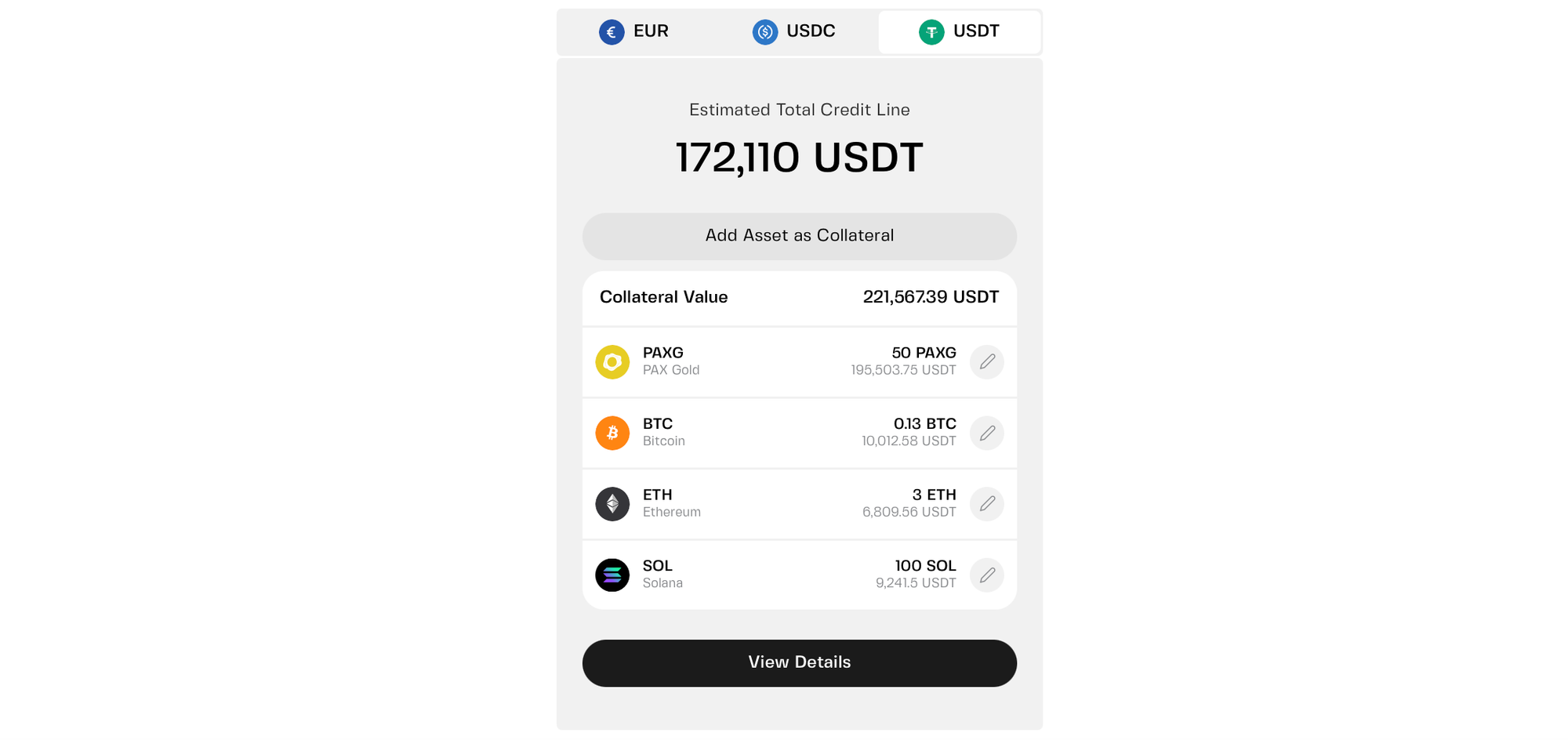
Each collateral asset has its own maximum LTV, and the rate you pay depends on where your LTV sits. Clapp lets you borrow up to roughly 80% of the PAXG value at press time. A higher LTV means more money today, but it also makes your position riskier.
When the price of gold drops sharply (like it happened in late October 2026), PAXG sheds value in unison. This pushes your LTV up and brings you closer to the liquidation threshold, which is the point at which the lender may sell part of your collateral to cover the debt (commonly between 80% and 95%).
Because gold is often calmer, some borrowers feel tempted to push their LTV higher. A bigger cushion usually serves you better than a bigger loan.
How the rate works
Your cost of borrowing isn’t one flat number. On Clapp, credit-line APR runs across a range of 0% to 21.9%, and where you land depends on your loan-to-value band. Borrow a smaller share of your collateral’s value and the cost is lower. Borrow close to the maximum and you move toward the other end. Keep your LTV at 20% or below and you land in the 0% APR band.
What moves the value of your gold collateral
When you borrow against PAXG, your loan is only as safe as the value of the gold behind it. Four things shape that value.
Gold price itself
Gold reacts to interest rate expectations, inflation worries, geopolitical news and big shifts in investor mood. It tends to rise when people feel uneasy, but it doesn’t always. Gold can fall for weeks, and it has had long flat stretches too. For example, it hit a record above $5,500 an ounce in late January 2026, then slid about 30% to roughly $3,900 by October 30.
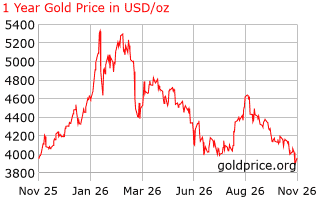
Earlier, gold went through two long droughts. After its 2011 peak of about $1,900 an ounce, set during the eurozone debt crisis, it fell by roughly 45% and didn’t reach a new high until 2020. After peaking at $850 in 1980, driven by fears of runaway US inflation, it took until 2008 to climb back above that level.
Gold’s safe-haven reputation shows when other assets slide, but long stretches of going nowhere can frustrate investors during bull runs. In the 2010s, gold’s consolidation phase contrasted with the S&P 500’s historic 190% rally. A decade earlier, in the 2000s, gold’s 280% return eclipsed the roughly negative 9% for the index.
Euro exchange rate
If you think in euros, there’s a second layer: the exchange rate. Gold can hold steady while the euro strengthens, and your collateral will still look smaller on your screen. The reverse can happen too.
Weekends and market closures
PAXG trades around the clock, while traditional gold markets close for the weekend. News landing on a weekend can move the token’s price before traditional trading venues open. You may see Saturday price action “catching up” to physical gold on Monday. If you like to check your loan once a week, know that things can change in between.
Small price gaps
Because PAXG is a token traded on its own, its price can sit a touch above or below spot gold. In calm markets, that gap is usually small. In stressed markets, gaps can widen. It’s one more reason not to run your LTV right up to the edge.
Gaps are most likely when the two markets are out of sync, such as on weekends or off-hours. PAXG then reflects crypto-native liquidity rather than live spot gold price discovery, so breaking geopolitical or macroeconomic news can push the token ahead of, or behind, the gold price.
Risks and trade-offs
PAXG is calmer than many crypto assets, but borrowing against it still carries risk. The main ones are below.
Lower volatility is not no volatility
Gold can drop sharply in a short window, pushing your LTV up. Adding USDT or USDC to your collateral pool can lower the overall risk: instead of relying on PAXG alone, you diversify, which can soften the impact of market swings.
You don’t have to do this from the get-go. Clapp’s multi-collateral pools let borrowers add, remove, or reshuffle the assets backing a credit line anytime.
What happens if your LTV climbs
If your LTV rises toward the limit, you’ll usually want to add more collateral or repay part of the loan to bring it back down. If it keeps climbing past the final threshold, liquidation happens. Check the warning levels shown for your loan in the app, and turn on notifications so you hear about changes quickly.
Your collateral may be locked
With a standard loan, the lender only releases your collateral back to you upon full repayment. If you might need to sell your gold token soon, consider multi-collateral credit lines instead: you can replace and withdraw PAXG anytime, provided your LTV stays within the permitted range.
Gold doesn't pay you anything
Gold produces no interest or income, aside from its potential price appreciation. PAXG is the same. Borrowing against PAXG makes the most sense when you have a clear reason and repayment plan.
The bigger your cushion, the more room you have to be wrong
Suppose you hold PAXG worth €10,000 and need some cash for a few months. You don’t want to sell, so you borrow €3,000 against it at 30% LTV. If gold falls and your PAXG is worth €8,000, your LTV edges up to 37.5%, still far from the liquidation threshold (95% on Clapp).
Now imagine you’d maxed out that credit line, borrowing €8,000 at 80% LTV. The same 20% dip would take your LTV to 100%, well past the liquidation threshold, so you could be liquidated before you had time to add collateral or repay. Even a dip of about 11% would put you at 90%.
Practical habits for borrowing against PAXG
- Borrow less than you could. The maximum is a ceiling, not a target.
- Keep spare funds or collateral ready. If your LTV rises, you can act quickly.
- Watch gold news and the euro. Both feed straight into your collateral value.
- Check your loan after big market moves, not only on a schedule.
- Plan how you’ll repay. Know the date and the source of the money before you borrow.
- Look at your position over weekends when traditional gold markets are closed but the token still trades.
PAXG at a glance
A gold-backed token behaves differently from most crypto as collateral. Its price follows gold, which is often calmer, but it still moves, and it moves in euros through both the gold price and the exchange rate. The things that matter most are the ones you control: how much you borrow, how much cushion you keep, and how closely you watch your loan. Treat PAXG collateral as a way to access cash without selling your gold, not as a reason to stretch your borrowing.
Frequently asked questions
Can you use PAXG as collateral for a loan?
Yes, a gold-backed token like PAXG can work as loan collateral on a crypto credit line, depending on the platform and your country. Check the collateral list in the Clapp app to see whether PAXG is available to you.
Is PAXG collateral safer than Bitcoin collateral?
Not automatically. PAXG usually moves less than Bitcoin because its price follows gold, so your LTV may swing less on a normal day. But gold can still fall, and a loan against any collateral carries risk. What keeps you safe is how much you borrow, not which asset you collateralize.
What happens to my PAXG while the loan is open?
Legal ownership of it transfers to Clapp while the credit line is open, and you keep a contractual right to an equivalent amount of PAXG back. Once you repay in full, that amount is returned to your wallet.
What happens if the gold price falls?
Your collateral becomes worth less, so your LTV rises. You can add more collateral or repay part of the loan to bring it down. If LTV keeps rising past the final threshold, the position can be liquidated. Credit-line APR sits in a range of 0%-21.9% depending on your loan-to-value band, so a higher LTV can also affect your cost.
Does PAXG track the gold price exactly?
Very closely, but not perfectly. Because the token trades around the clock, its price can sit slightly above or below the traditional gold price, especially when gold markets are closed.