USDT to USDC: When does a stablecoin swap make sense?

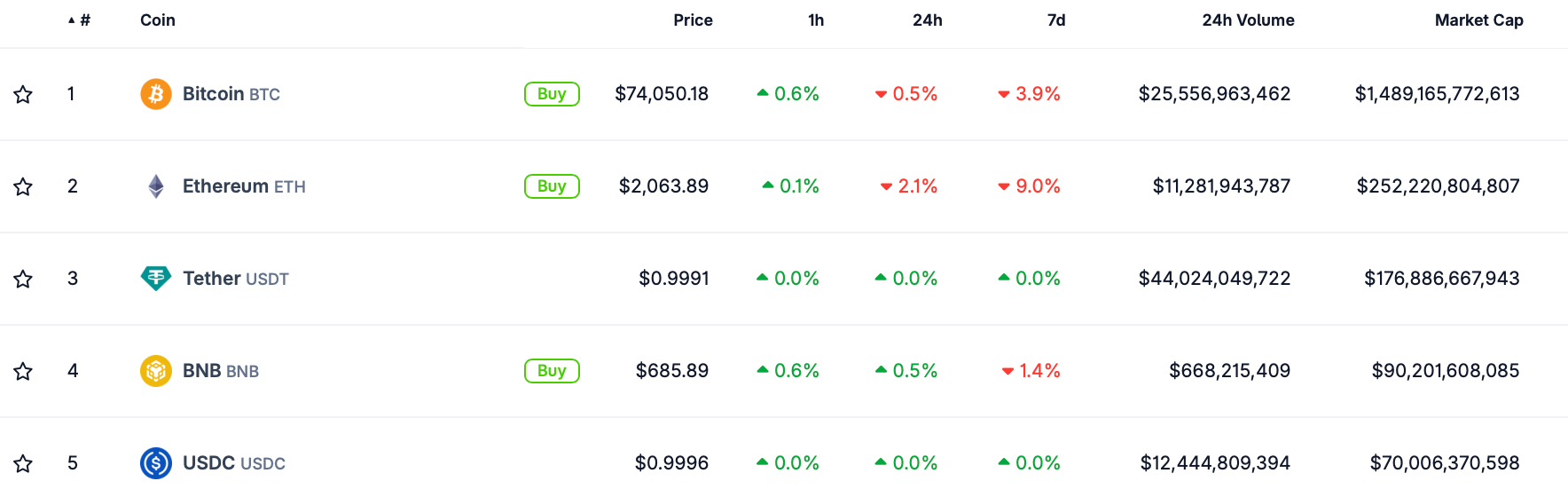
USDT is the most widely used stablecoin, powering trades and payments around the globe every second. Yet it’s not as regulated or institution-friendly as its more transparent rival, USDC.
Both assets aim to track one US dollar, but sometimes a USDT to USDC swap is justified. Some platforms and products only support one of the tokens, and sometimes switching to another issuer makes sense.
Here’s when to change one dollar token for another, and how to make the most of your stablecoin holdings.
TL;DR
- USDT and USDC aren't interchangeable in every situation. They have different issuers, reserves and regulatory approaches.
- A swap can be useful when a platform only supports USDC, you prefer Circle, or you want to bring scattered balances together.
- Sometimes there's no reason to switch. If you have nowhere to use the other token, the fees may not be worth it.
- Check five things first. The network, minimum amount, exchange rate, market conditions and tax rules.
- USDC has several uses after the swap. You can keep it available, earn interest on it or use it as collateral for a crypto loan or credit line.
Why people move from USDT to USDC
Both stablecoins are built to hold a steady value ensured by their 1:1 fiat peg. Instead of swinging like Bitcoin, they keep close to the US dollar, routinely moving by just a fraction of a cent.
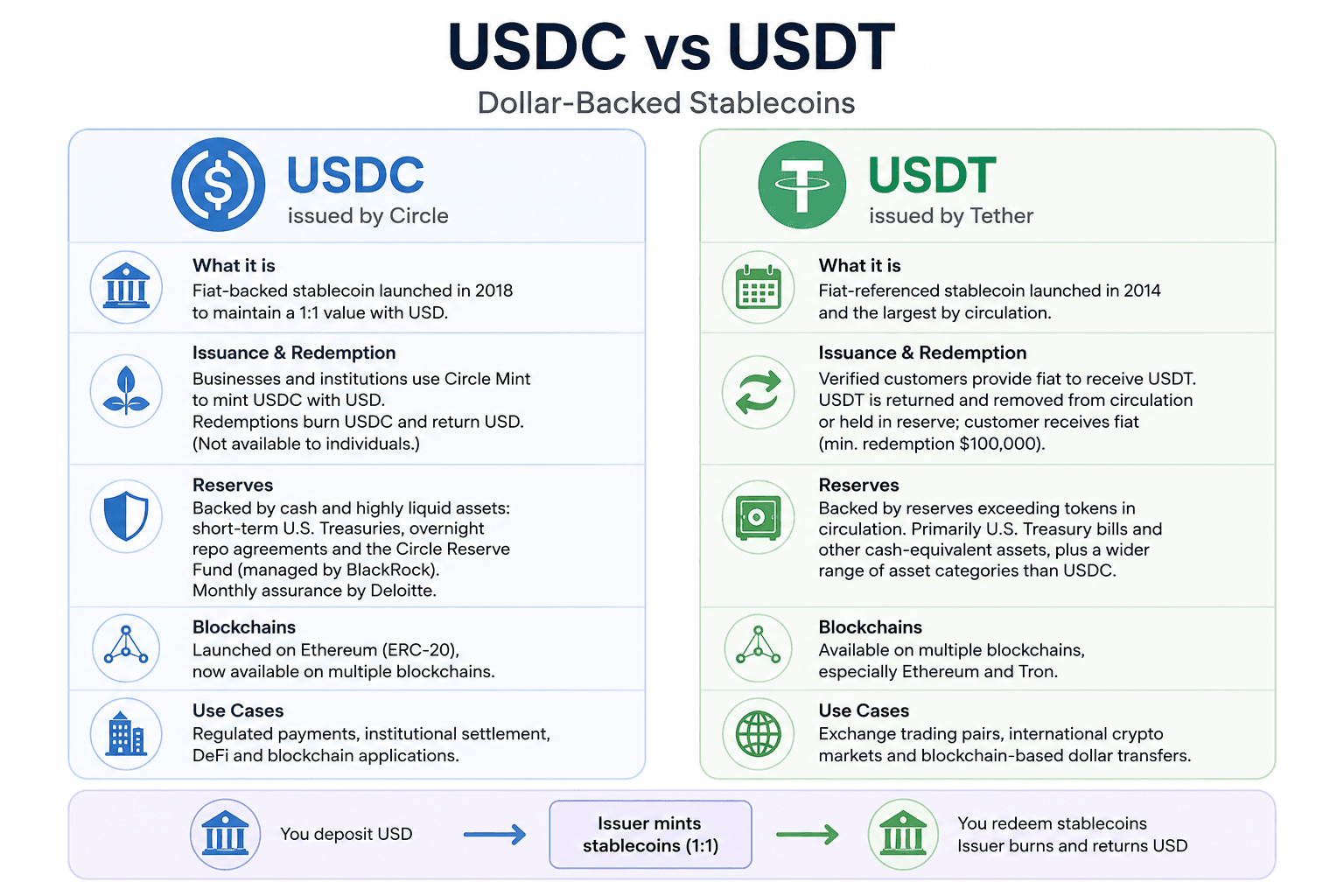
However, the Tether-issued USDT and Circle’s USDC aren’t identical in practice. The differences cover issuer management, reserve composition, regulation, audits, and use cases.
Here are the main reasons people make the switch.
You want a different issuer
Each stablecoin is backed by reserves, such as cash and short-term government debt, held by its issuer. Both Tether and Circle publish reserve reports and attestations, but the format, frequency, auditors, and level of detail differ. The tokens are also backed by different underlying assets.
Tether publishes quarterly reserve reports attested by BDO Italia. An attestation confirms the reported figures on a given date, but it isn’t a full audit. Tether's portfolio includes US T-bills, reverse repos, and volatile assets like Bitcoin, gold, public stocks, and secured loans.
Circle releases monthly attestations verified by independent accounting firms. Its reserves are held in cash, short-term US Treasuries and overnight Treasury repo agreements, which minimizes exposure to non-cash asset volatility.
Regulation is another point where the companies’ paths diverge. Circle follows a compliance-first approach, aligned with frameworks like the US GENIUS Act and the EU’s MiCA. Its primary reserve vehicle, the Circle Reserve Fund, is an SEC-registered money market fund managed by BlackRock. Tether, based in El Salvador, maintains an offshore focus, with a compliance model that is still evolving.
Some holders prefer spreading their holdings across issuers. Others simply trust one more than the other. It’s a personal call about your own risk tolerance.
Your platform or plan needs USDC
This is the most practical reason to move USDT to USDC. A service, wallet or savings option might support USDC and not USDT, or the other way around. For instance, MiCA has led EU-regulated exchanges to delist USDT, with the final deadline on July 1, 2026. Tether had not applied for the e-money token (EMT) authorization the rules require. USDT isn’t banned for individuals to hold, but licensed EU platforms can no longer list it.
You want to earn on your stablecoins
Some users may swap into USDC to use a savings product that pays interest only on this stablecoin. Rates differ by asset, term and platform, and they change over time. Before you swap for yield, it helps to know where stablecoin yield comes from, as a higher number always comes from somewhere.
You're tidying up
Perhaps you hold small balances of both USDT and USDC across several wallets and platforms and want one clean, consolidated balance. This makes it easier to see what you have and what you can spend.
When a swap doesn't make sense
A stablecoin swap has costs, even small ones. Before going ahead, ask whether you’d actually gain something.
- You have no next step. Swapping will just add a fee and a click for no benefit.
- The amount is tiny. On a small balance, fees or a slightly worse rate can eat a visible slice of the total.
- You’re chasing a rate you haven’t checked. Rates change.
- You’re hoping to profit from the swap itself. At best you end up with about the same value.
What to check before you swap
Most swap mistakes come from rushing. Five quick checks cover nearly all of them.
1. The network
Both stablecoins exist on several blockchains. Currently, USDT is more widely used on Tron, while USDC is more common on Ethereum and Solana.
If the swap happens entirely inside an app, you usually won’t choose a network for the swap itself. The network decision comes when you move USDC or USDT in or out. Funds sent over the wrong network will not arrive, and blockchain transactions can’t be reversed.
When you do move assets, the receiving wallet or service must support the right network — the one used by the address you’re sending from, such as ERC-20 for Ethereum or TRC-20 for Tron.
Two habits help:
- Read the network label next to every address, not just the coin name.
- Send a small test amount first if the sum is large. It costs a little extra, but it’s cheap insurance.
2. The minimum amount
Most apps set a minimum amount for a swap. If your balance is below it, the swap button may stay grey or show a message. The same goes for sending funds out afterward. Top up first if needed, and remember that limits change, so rely on the figure in the app rather than any article.
3. The rate shown in the app
Even between two tokens that both aim for one dollar, the price is rarely exactly one-to-one. The market can nudge it a fraction either way, and the app may add a spread or a fee on top. Look at the rate shown in the app before you confirm.
What to look for:
- How many USDC you'll receive for the USDT you're sending. If the screen doesn't show the amount, stop and find out why.
- Whether fees are shown separately or built into the rate. Either is fine as long as the final amount is clear.
- Whether the rate is a quote or an estimate. A quote holds for a short time, while an estimate can move while you wait.
Feature names and the way the rate is shown differ between apps, so it helps to know what swap and convert buttons do.
4. Market conditions
Sometimes stablecoins can still wobble, so you may get a poor deal swapping in or out of them. Minor fluctuations are normal due to exchange liquidity, but the stablecoins that never regained their pegs have mostly been algorithmic or synthetic ones, like TerraUSD in 2022 or IRON in 2021.
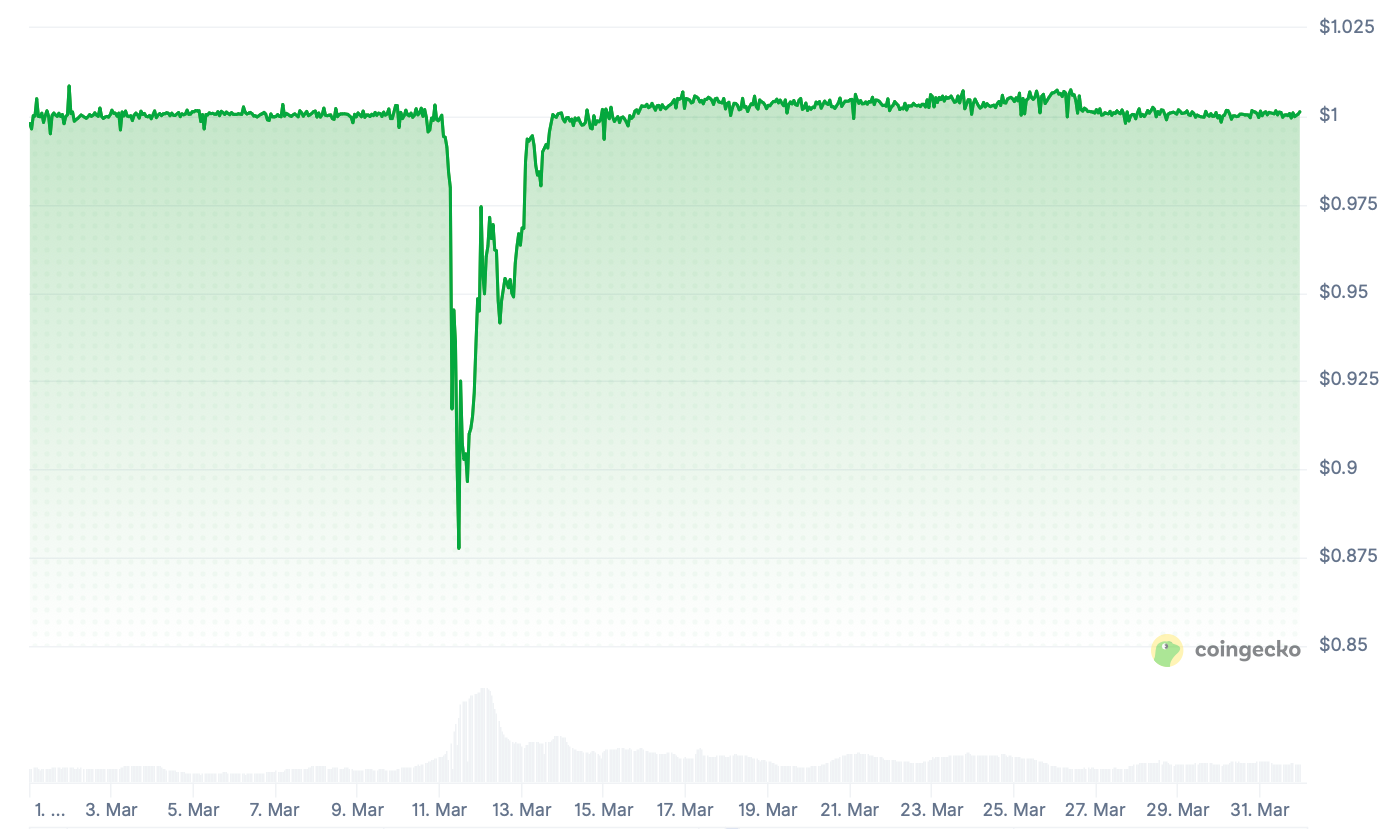
For USDC, the biggest test to date came in March 2023, when Circle disclosed that $3.3 billion of its cash reserves were trapped inside Silicon Valley Bank right as regulators shuttered it. The price plunged to a low of about $0.87, but recovered within three days after the US government guaranteed that all depositors would be made whole.
USDT dipped to about $0.945 on secondary exchanges in May 2022, amid the panic spread by the TerraUSD collapse. It was back near parity within a day, thanks to a fully operational redemption window: large market participants could still redeem USDT for real dollars 1:1.
You don’t need to watch charts daily. Just glance at the rate before you swap, and if the numbers look odd, wait and double-check.
5. Tax
In many countries a swap between two crypto assets counts as a taxable event, even if the coins are both pegged to a dollar. The gain or loss may be tiny, but you might still need to record it. Rules differ widely by country, so it's worth reading up on the tax rules for crypto-to-crypto swaps and keeping a record of the date, amounts and rate. Consult a qualified tax professional in your country for advice on your own situation.
After the swap: where to hold your USDC
Where your USDC will live once the swap is done depends on your priorities.
- Keep it ready to use. Leave it in your balance to spend or move it soon.
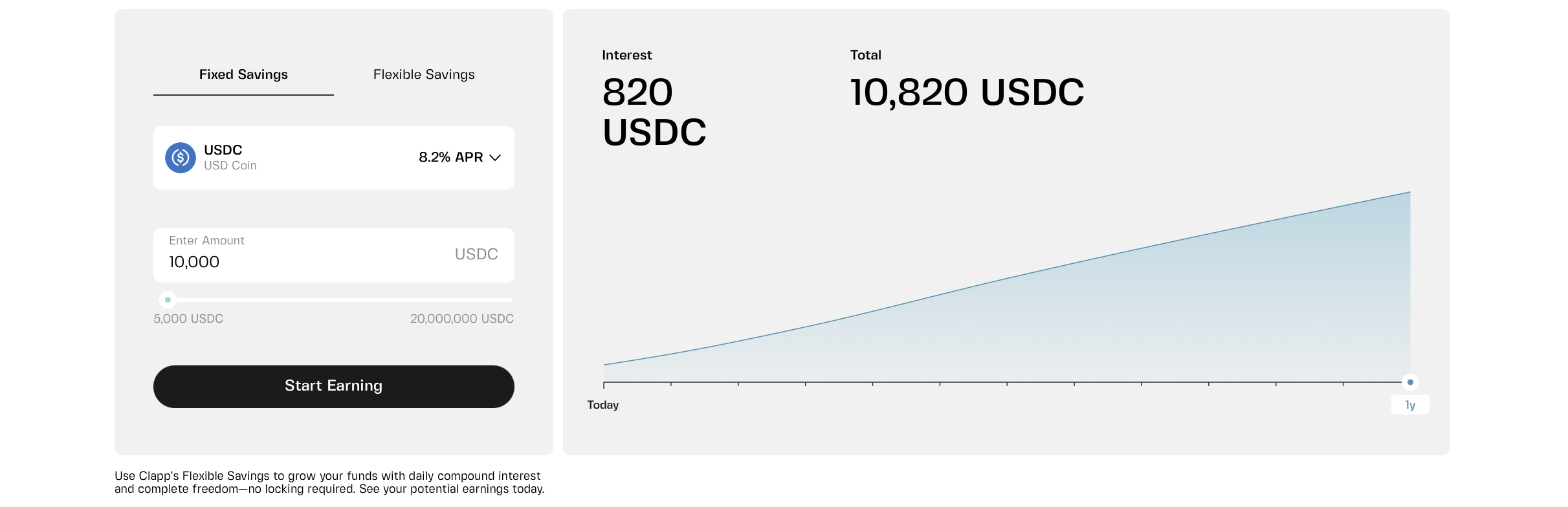
- Let it earn. Some platforms offer savings on stablecoins. On Clapp, both USDT and USDC can go into flexible or fixed-term savings, where balances earn interest and come back to you on withdrawal (flexible) or at the end of the term (fixed). Availability depends on your country.
- Use it as collateral for crypto loans and credit lines. You may borrow a share of the collateral value. That can be useful when you want cash for real-world expenses but would rather not sell, which in many jurisdictions can trigger a tax event. Keeping your LTV (loan-to-value ratio) at 20% or below also puts you in the 0% APR tier on Clapp. Stablecoin collateral is designed to hold steady, so your LTV is less likely to jump when the market swings, though it isn’t risk-free.

Before parking funds anywhere, go through what to check before parking stablecoins. A quick read can save you a headache.
Three cases for a USDT to USDC swap
Moving USDT to USDC isn’t complicated, and it isn’t always necessary. It makes sense when a service needs USDC, when you prefer a different issuer, or when you’re consolidating your balances. It makes less sense when you have no next step or the amount is tiny.
Before you confirm, check the network, the minimum amount, the rate shown in the app, the market, and your tax position. If everything lines up, the swap takes minutes.
Frequently asked questions
Is USDC safer than USDT?
Neither is safe in an absolute sense. Both depend on their issuer and the reserves behind them, and both can drift from one dollar in stressful markets. Many people prefer USDC for its reporting style, while others prefer USDT for its wide use. Pick based on your own comfort and where you plan to use the coin.
Will I get exactly the same amount of USDC as I send in USDT?
Usually it will be very close, but not always exact. The market price, any spread and any fee can make the amount slightly different. Always look at the figure the app shows you before you confirm.
Does the network matter if I'm swapping inside an app?
For the swap itself, usually not. The network matters when you send coins in or out. Check that the network on both sides matches, and test with a small amount if the sum is large.
Is swapping USDT for USDC taxable?
In many countries it can be, because a swap between two crypto assets is often treated as a disposal. Rules vary, so keep records and consult a qualified tax professional in your country.
Why can't I swap a small amount?
Most apps set a minimum amount for swaps. If your balance is below it, you may need to add more first. The swap screen shows the current limit.