Earning on idle stablecoins: Six things to check before you park them

Stablecoins are where many traders wait out the volatility. They let you sit on the sidelines until the next trade without flinching at every dip, though holding them can feel passive. Yield products promise to put that cash to work, and the advertised rate makes the choice look easy. The terms underneath are what separate one product from another.
Here are six questions to ask before depositing your stablecoins with a centralized platform, so your decision rests on how the product works rather than on the headline number.
TL;DR
- There is no single best place to park stablecoins. The right platform depends on how soon you might need the money, how much uncertainty you accept, and how clearly the terms are written.
- Know which company provides the product and what its registrations or licenses cover. A status for one activity doesn’t extend to others.
- Find out what happens to your coins while they earn, including whether you keep ownership or hold a claim.
- Check the exit before you deposit: lock-ups, limits, speed and fees.
- Read the rate wording (fixed or variable), and look for a plain statement of what isn’t protected.
This stablecoin yield checklist is written for centralized (CeFi) platforms, where a company runs the product and holds your coins. DeFi works differently. Protocols usually have no company or licensed provider behind them, so the registrations, complaint routes and terms this guide asks you to look for often don’t exist.
Other risks, such as smart contract bugs, come first instead. Where a check below has no answer for a DeFi product, that gap is itself information.
1. Who is behind the platform?
Behind every savings screen is a company, often part of a larger group. Check which company the terms name as the provider and where it’s established. You should be able to see that in the app or on the product page without digging through forum threads. If it’s hard to pin down, treat that as a red flag.
For Clapp Savings, the Savings Terms and Conditions name Clapp Group as the provider, and state that the company is established outside the EEA.
2. How does the platform describe itself?
Status words like “registered,” “licensed” and “authorized” sound reassuring, but on their own they say little. Each is granted by a specific authority for a specific activity, and a status for one activity doesn’t carry over to another. Our guide to registered, licensed and authorized explains the differences.
Context helps. Regulation (EU) 2023/1114 (MiCA) is the EU rulebook for crypto-asset service providers (CASPs), and its authorization covers specific services. Lending-based products sit outside it (see how MiCA treats crypto lending). MiCA also bars issuers of regulated stablecoins, and the CASPs serving them, from paying interest on those tokens. It defines interest broadly, to include any benefit tied to how long you hold them.
In practice, MiCA-authorized platforms generally don’t offer yield on stablecoins. Providers outside MiCA’s scope may offer it, but they don’t benefit from the same safeguards. This includes lending-based yield products like Clapp Savings, whose terms and conditions make this clear.
Other countries have their own registers and categories, and product availability depends on where you live. Look for platforms that:
- Name the company that provides each product
- Point to a register entry or partner authorization you can verify
- Say plainly what a status does and doesn’t cover
3. What happens to your coins while they earn?
When you start earning, your coins either lock for a set term (fixed) or stay available for withdrawal (flexible). Either way, they usually move out of your spendable balance. What matters is how clearly the platform explains what happens to them. Before you commit funds, check:
- Will the coins still show in your balance, and will you see interest building up?
- Can you move them, or are they set aside until the term ends or you withdraw?
- Do the terms clearly explain the legal status of the assets you deposit?
Platforms answer that last question in different ways. Some structure savings as lending: ownership of the coins transfers to the provider, and you hold a contractual claim to an equivalent amount back, plus interest. Clapp’s Savings Terms and Conditions set this out. Flexible Savings balances come back when you withdraw. Fixed Savings balances come back at the end of the term, unless Auto-Prolongation, which is on by default, renews them first.
That makes the provider’s ability to pay you back part of the risk, which is why the first two checks matter.
4. How do you get out?
Getting in is usually easy. Exits are where products differ. Find out:
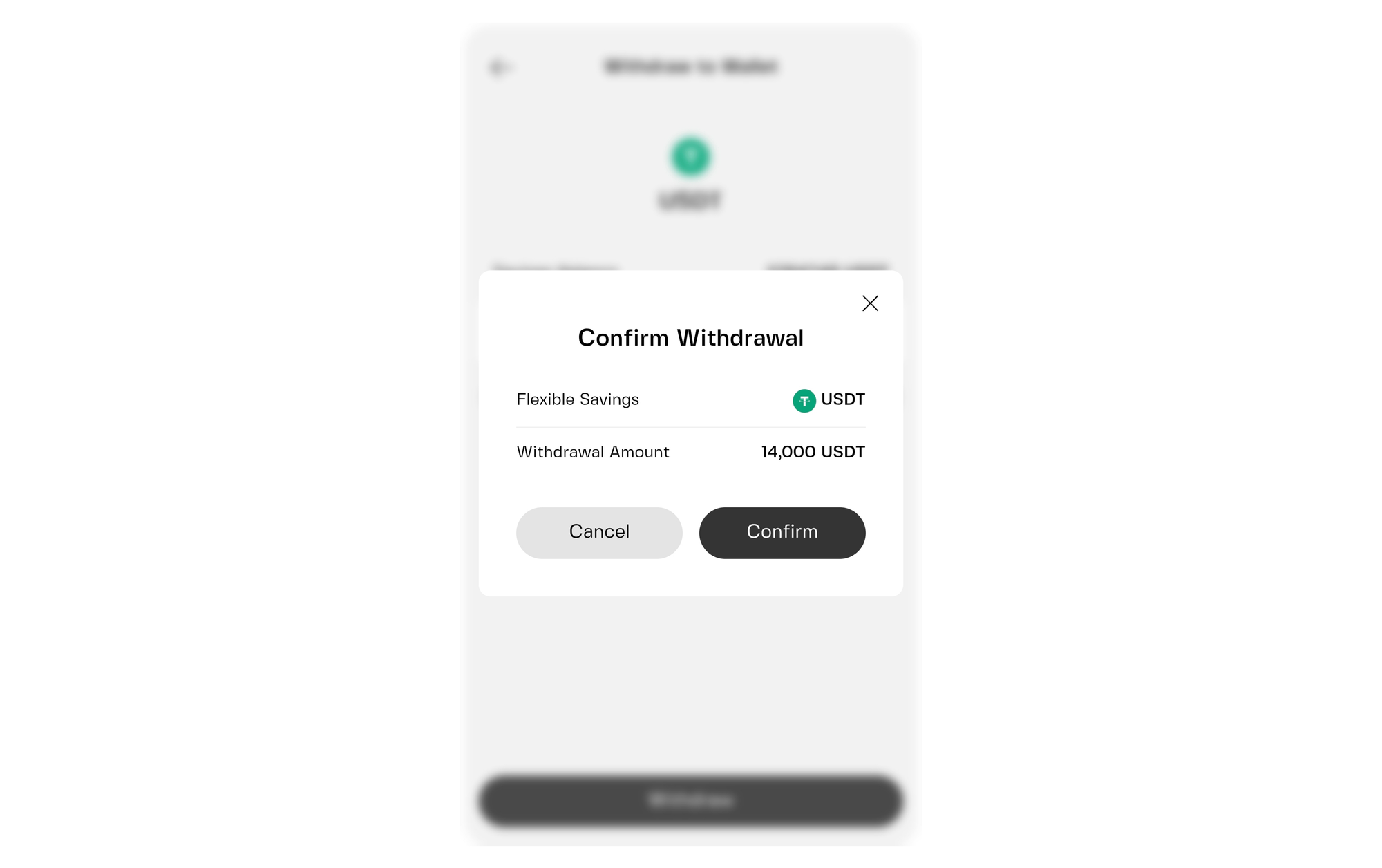
- Is there a lock-up? Fixed-term products tie up your coins for a set period. At Clapp, Fixed Savings terms run 1, 3, 6 or 12 months.
- Are there withdrawal limits? Daily caps or minimum amounts can matter if you need a particular sum.
- How long does it take? “Within minutes” and “up to several days” are very different when a bill is due.
- Are there fees? You want fees you can see before you confirm, not ones you discover afterward.
Say you’re setting money aside for rent due in three months. Flexible Savings, where you can take coins out when you need them, covers you if the date moves. A 3-month fixed term can also work, if it ends before the rent is due. A 12-month lock wouldn’t fit, even though longer terms pay more. Fixed terms are meant to be held to the end, so match the term to when you’ll need the money.
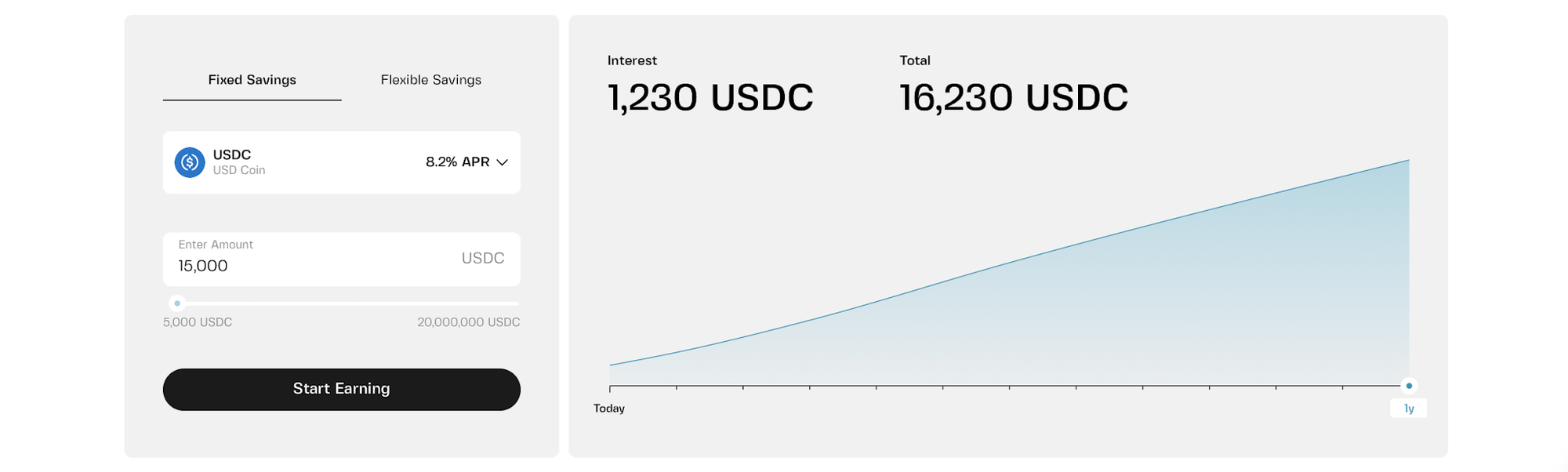
The reverse also holds: if you won’t touch the money for a year, a longer term can make sense, since fixed products generally pay more for longer commitments (Clapp offers up to 8.2% annually on stablecoins).
For the details, see how Flexible Savings work and what “locked” means in Fixed Savings.
5. Can the rate change?
A rate you see today is a snapshot unless the platform says it’s fixed for a stated period. Read the wording around the number.
- Variable rates can move up or down while you earn. Flexible products usually work this way.
- Fixed rates stay the same for the term you pick, so you know your rate for that period.
Clapp advertises up to 5.2% annually on Flexible Savings for stablecoins, with interest accruing daily. As with any variable rate, that tells you what the platform pays now, not what it will pay next month. The terms say the Flexible rate can change with notice where feasible, so advance notice isn’t guaranteed. Fixed rates are locked for the term, but if Auto-Prolongation is on, the renewal uses whatever rate is published at that moment.
Wording like “guaranteed” deserves a closer look too. Our guide to fixed vs. guaranteed rates covers what that word does and doesn’t promise. Rates can also shift for reasons beyond market demand, including new rules (why stablecoin yield can change).
6. What protections do you have?
When you keep money in a bank account, deposit protection schemes in many countries cover it up to a limit. Crypto savings products don’t automatically work that way, and a clear platform says so.
In plain terms: your savings earn interest, but they don’t come with the safety net of a bank account, so only put in what you can afford to see at risk. Clapp’s Savings Terms say this directly: balances aren’t bank deposits and aren’t covered by any deposit guarantee or investor compensation scheme.
That kind of direct statement is what to look for everywhere. A platform that tells you what isn’t covered is giving you something useful. One that talks only about security features and never mentions the limits leaves you to fill in the gap.
Security is a separate question from protection schemes. It covers how coins are held and who can move them. To judge it, start with how the platform describes custody and account safeguards, and see our crypto app security checklist for the settings on your side.
Putting the list to work
Open the platform’s pages and try to answer each of the six questions in your own words. If you can’t answer one, that’s a gap worth closing before you move money. A few habits help:
- Start small. Deposit a modest amount first and test a withdrawal before you commit more.
- Spread things out. Putting everything in one product, or one platform, concentrates your risk.
- Write down your answers. Two lines per check is enough, and it makes comparing platforms much easier.
- Re-check now and then. Rates and terms change, so what held when you started may not hold six months later.
If tax is on your mind, interest on crypto can be treated differently depending on where you live. Consult a qualified tax professional in your country.
Your one-page stablecoin yield checklist:
- ☐ I know which company provides the product
- ☐ I know what its registrations or licenses cover
- ☐ I know what happens to my coins while they earn
- ☐ I know the lock-up, limits, speed and fees for withdrawals
- ☐ I know whether the rate is fixed or variable
- ☐ I know what isn’t protected
Yield is easy to see and hard to judge
The six checks turn a vague feeling into questions you can answer: who provides the product, how the platform describes its status, what happens to your coins, how you get out, what the rate wording says, and which protections apply. Keep this stablecoin yield checklist handy and use it whichever platform you’re looking at. To see how those answers look in practice, you can explore the savings options in the Clapp app.
Frequently asked questions
What should I check before earning interest on stablecoins?
Check who provides the product, how the platform describes its status, what happens to your coins while they earn, how and how fast you can withdraw, what the wording says about rates changing, and which protections apply. A stablecoin yield checklist like this works for any platform.
Is there one best place to park stablecoins?
No. The best place depends on how soon you may need the money, how much risk you accept, and how clearly the platform explains what is and isn’t protected.
Is stablecoin yield safe?
It carries risk. A stablecoin can lose its peg, a platform can run into trouble, and rates can fall. Protections vary a lot between products, and many crypto savings products aren’t covered by the deposit schemes that apply to bank accounts.
What’s the difference between flexible and fixed rates?
A flexible rate can change while your coins earn, and you can usually withdraw when you need to. A fixed rate stays the same for the term you pick, and your coins come back at the end of that term, unless the product renews automatically.
Why do some platforms pay much more than others?
Higher payouts usually come from higher risk, a temporary subsidy, or a different way of generating yield. If a platform can’t explain the difference clearly, treat the gap as a warning rather than a bargain.
Does a status word like “regulated” mean my savings are protected?
Not necessarily. A status can apply to one activity and not another, and it doesn’t always mean a deposit protection scheme covers you. Ask which company holds the status, for which product, and what it does and doesn’t cover.
Does this checklist apply to DeFi?
Only partly. DeFi protocols usually have no company, license or complaint route to check, so questions 1 and 2 often have no answer. Smart contract risk and how the protocol is governed matter more there.