Crypto credit line: How to cover a big expense without selling your crypto

Say your kitchen needs a full renovation, or the car you’ve been eyeing finally comes up for sale. Your crypto could cover the bill if you sold it, but that would mean giving up future gains and an asset you believe in.
A crypto-backed credit line is one way around that. In four steps, you add collateral, open the line, draw what you need, then repay and get your collateral back. This guide also covers what to watch while the line is open.
TL;DR
- A credit line lets you get cash without selling crypto. You borrow against it, keeping your market exposure while taking on interest and liquidation risk.
- There are four steps: add collateral, open the line, draw what you need, repay.
- Interest accrues only on what you draw. On Clapp, the rate depends on your LTV band, and it’s 0% at up to 20% LTV.
- LTV moves with the market. If it crosses the liquidation threshold, your collateral may be sold without prior notice, so keep a buffer.
- Set up alerts, and decide in advance whether you’ll add collateral or repay part of the loan.
Borrow or sell?
Selling is simple but final. Borrowing keeps your position, with a few rules to follow.
With a credit line, you add some of your holdings as collateral and get room to borrow against their value. You keep your market exposure while taking on a bill to repay and a price level to watch.
Borrowing tends to make sense when:
- You expect to repay in a reasonable time, from a salary, a bonus or a planned sale
- You want to hold your crypto for the longer term
- You’d rather not trigger a sale, which is taxable in many jurisdictions
- You have spare funds or collateral to add if prices fall
It makes less sense if you aren’t sure you can repay, or if you’d be uncomfortable watching the market while a loan is open. In that case, selling a small part may be the calmer choice.
A short note on taxes: how selling or borrowing against crypto is treated differs from country to country. Please consult a qualified tax professional in your country before deciding.
Crypto credit line: How it works
Step 1. Choose and add your collateral
Pick which crypto to put behind the line. Each asset has its own maximum LTV, and a more volatile coin usually allows less borrowing than a steadier one.
You can borrow against a single asset, but a collateral pool is more flexible, because your LTV no longer hinges on one coin’s price. Adding stablecoins or fiat to the mix (up to 21 assets on Clapp) can make your line less sensitive to market swings.
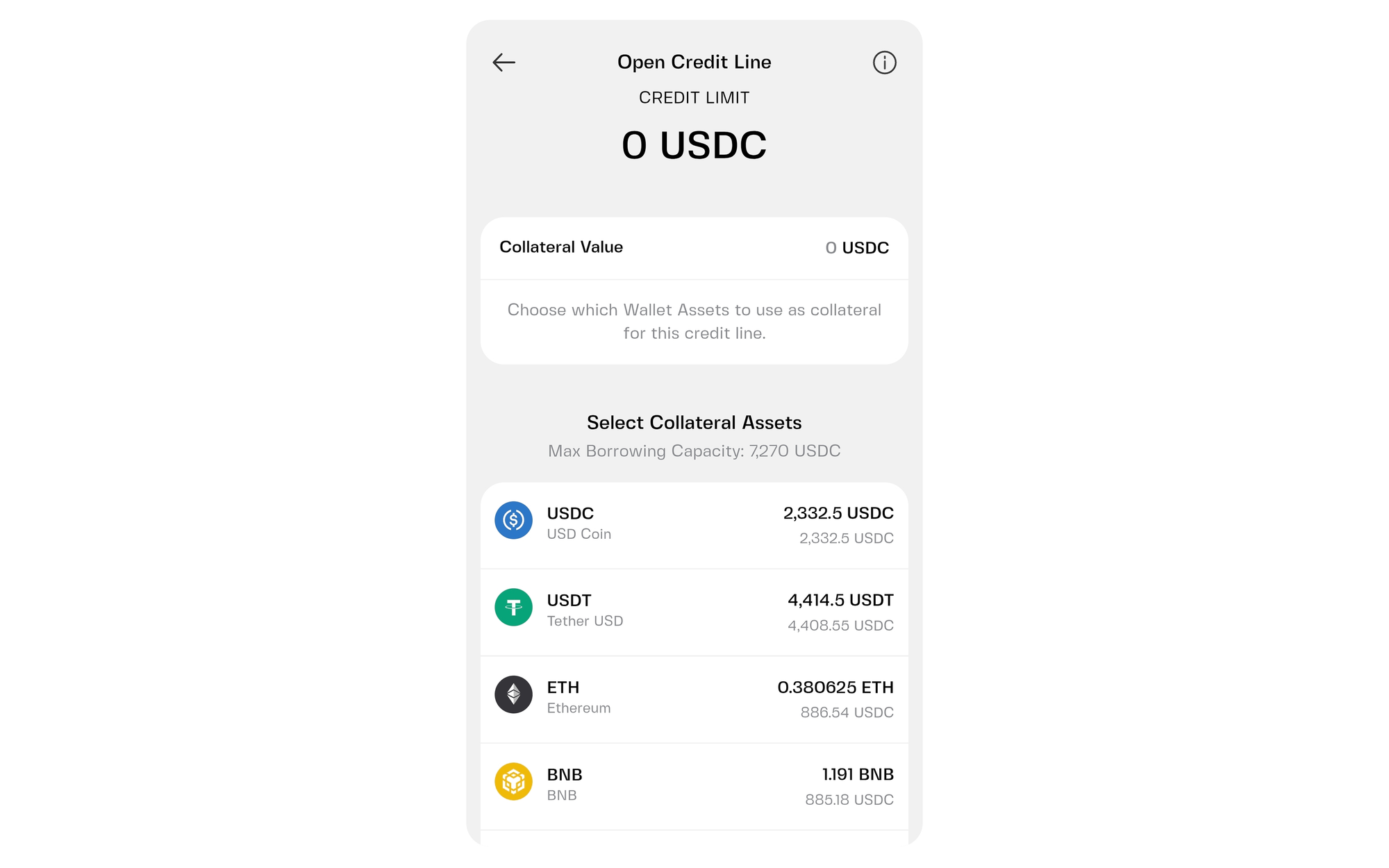
Transfer the crypto in, either from your Clapp wallet or from an outside wallet. While the loan is open, the collateral is transferred to the provider and shown in the app as collateral. Our explainer on what happens to your collateral has the full picture.
Two practical tips:
- Add collateral you’re comfortable leaving untouched for a while. On Clapp, you can also swap or reshuffle assets in the pool while the line is open.
- Add a bit more than the minimum. A bigger cushion gives you more breathing room if prices move.
Step 2. Open the line and understand your LTV
Once your collateral is in, your line is ready. The number to know is loan-to-value (LTV), which compares what you owe with what your collateral is worth.
If your collateral is worth €20,000 and you’ve drawn €6,000, your LTV is 30% (€6,000 ÷ €20,000). Draw €10,000 instead, and it’s 50%: you’ve borrowed half of what your collateral is currently worth.
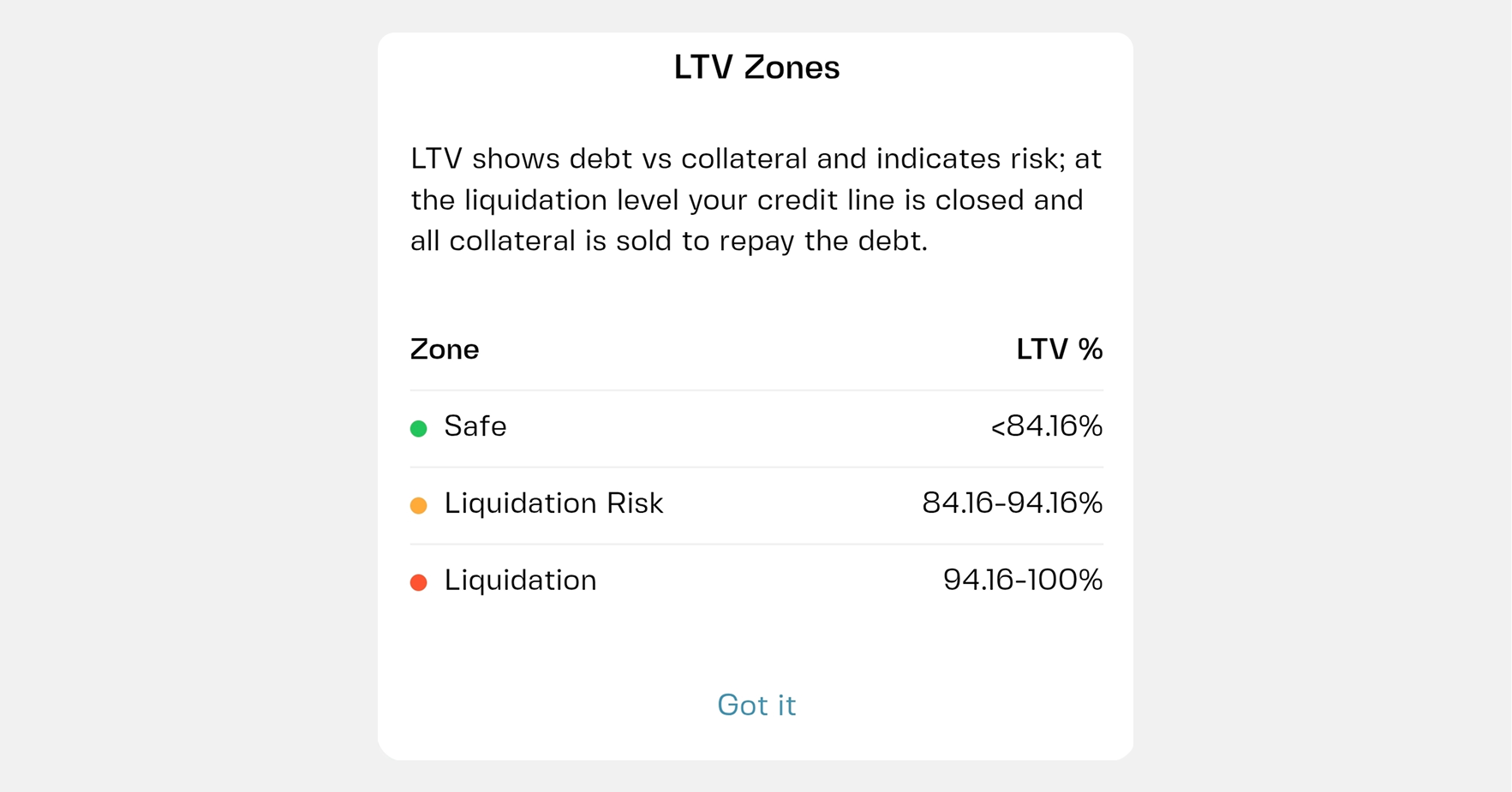
Crypto is volatile, so LTV moves too, rising when collateral value dips. That brings you closer to the liquidation threshold, the point where the platform may sell your collateral to repay the debt (typically, between 70% and 90%).
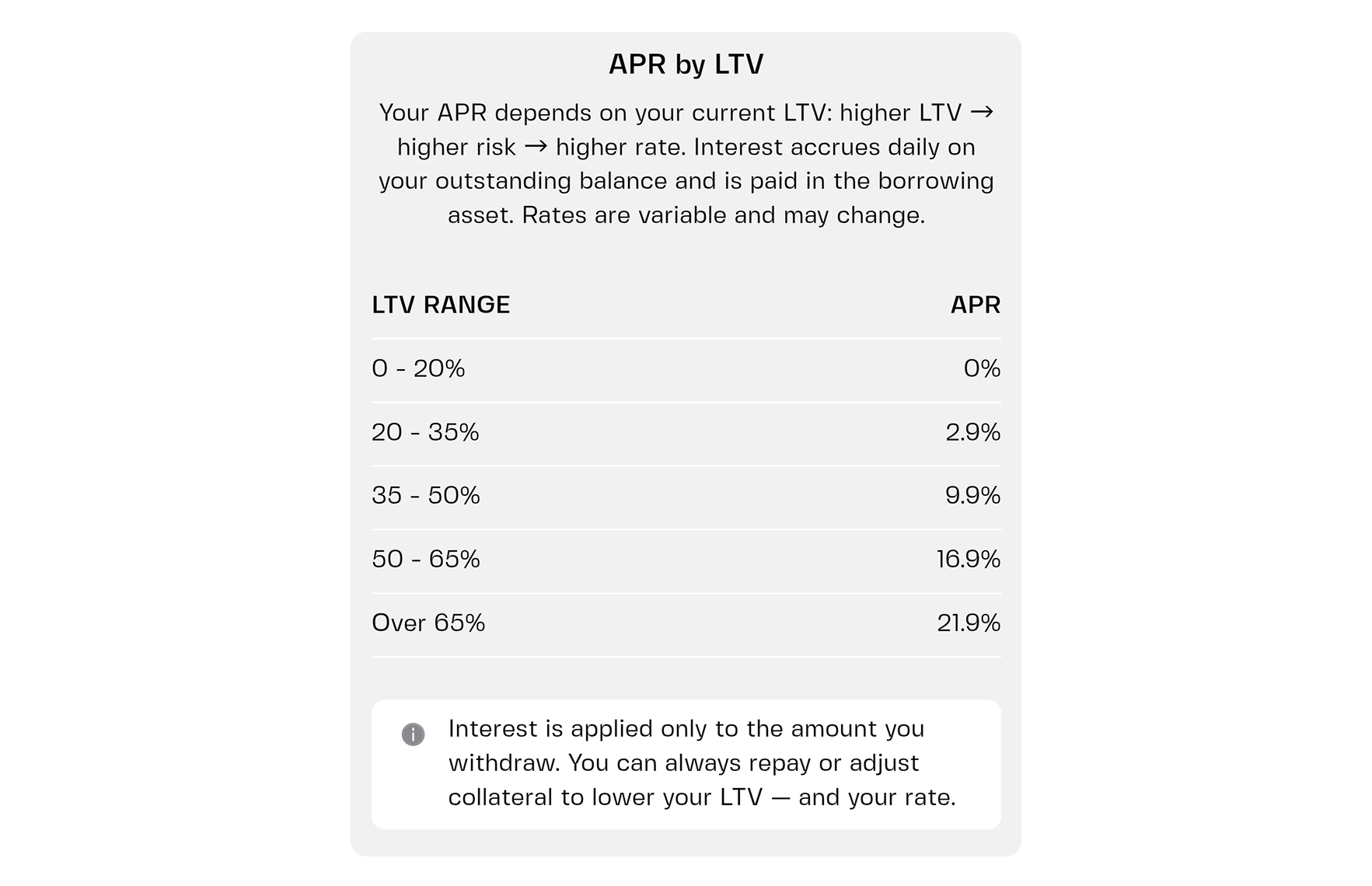
A lower LTV means a bigger safety margin and cheaper borrowing. The APR on a Clapp credit line depends on your LTV band, from 0% at up to 20% LTV to 21.9% at the highest band. In general, borrowing less against your collateral keeps you in a more comfortable band.
Step 3. Draw only what you need
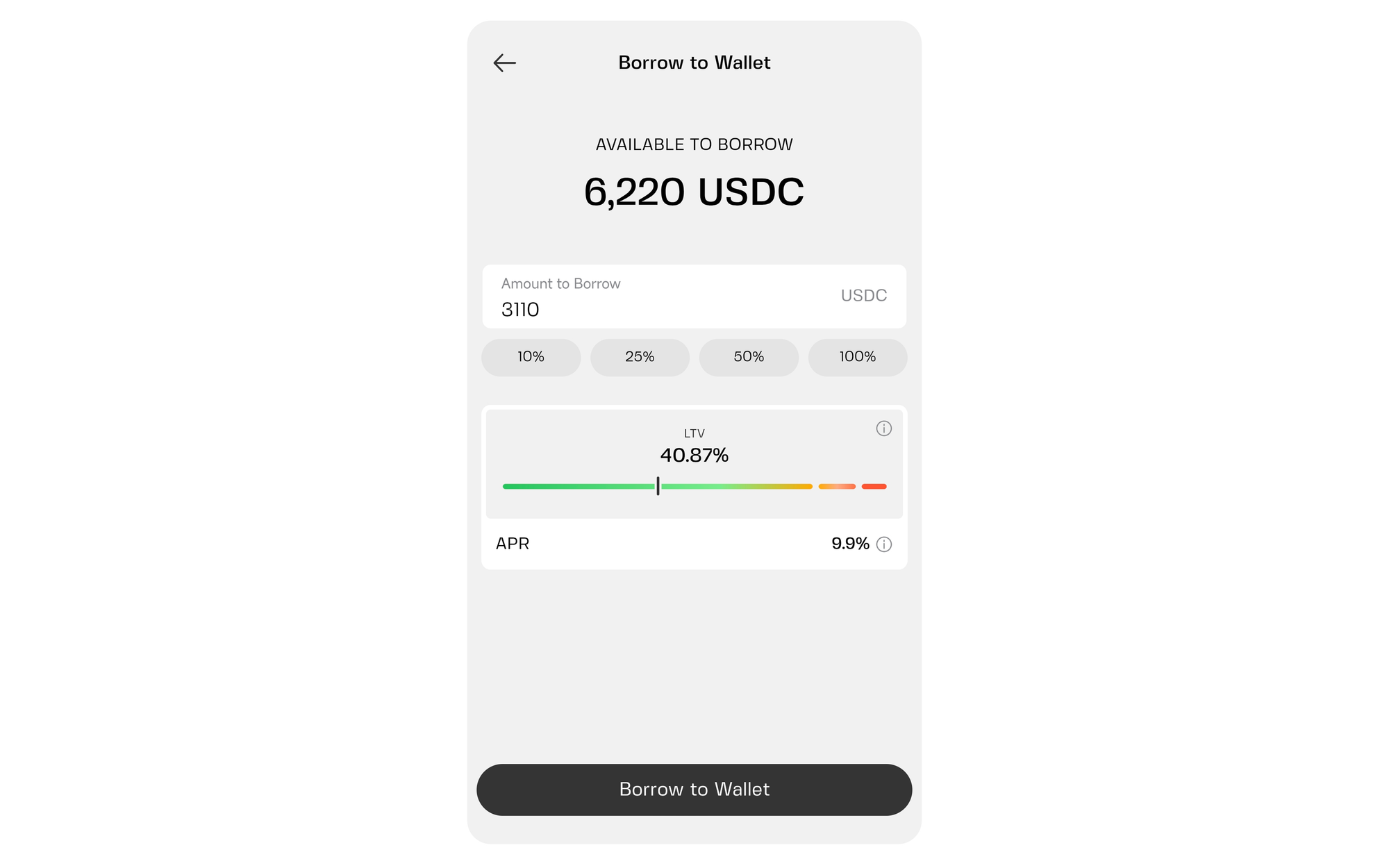
Opening a line doesn’t mean you have to take all of it. You draw funds when you need them, at once or in stages. A renovation, for instance, is typically paid step by step: a deposit to the builder, then materials, then the final invoice.
Interest accrues only on the funds you’ve drawn, not on the full size of your line, so the less you draw, the less it costs. You can repay and draw again, as with any revolving credit line. That’s the main cost difference from a fixed-term loan, and our comparison of a revolving credit line vs a loan shows it in numbers.
Step 4. Repay and get your collateral back
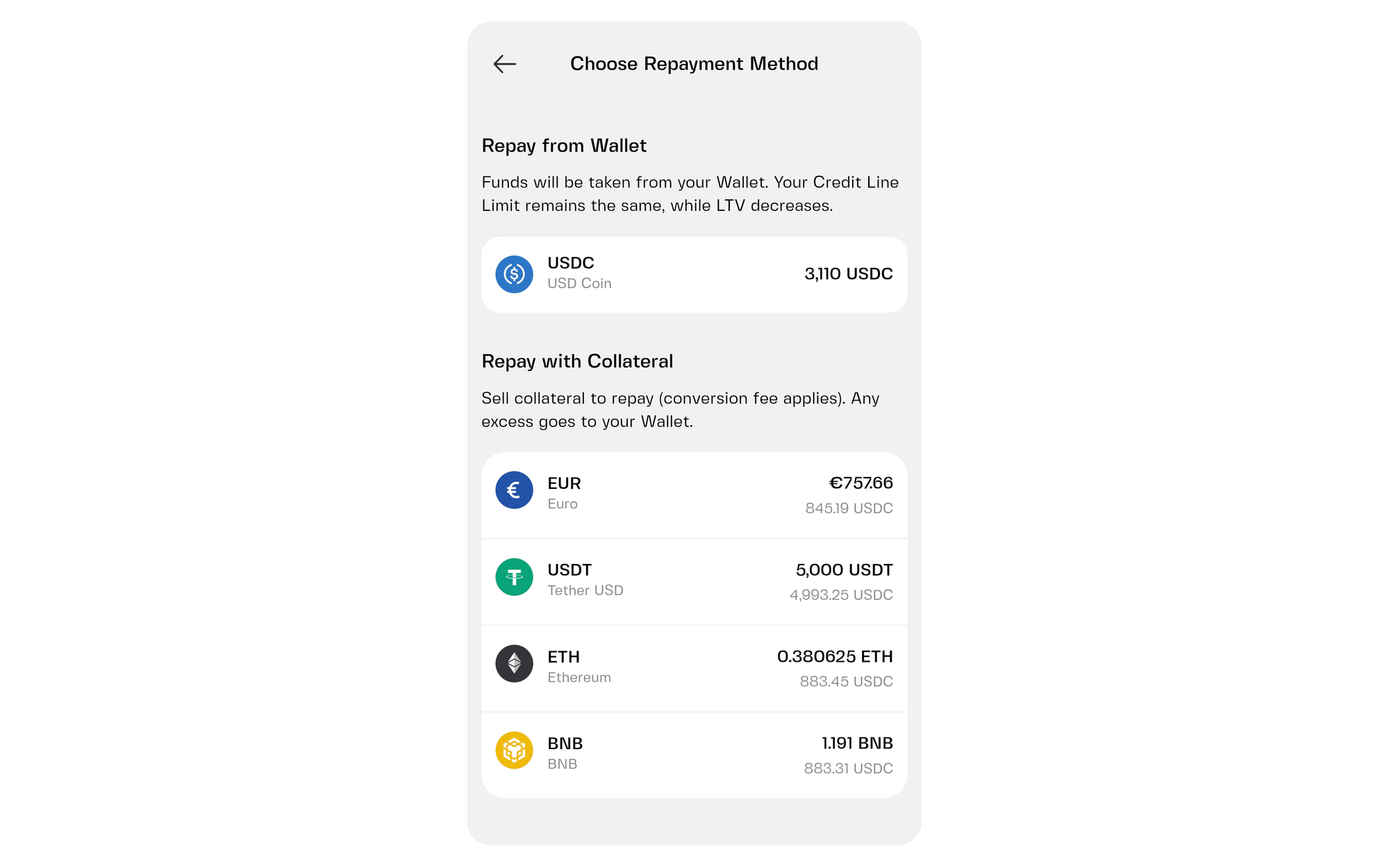
You repay when it suits your plan, in one go when a bonus lands or in parts over time. Paying back sooner usually means less interest, but you may prefer to keep your cash for other things.
Once the loan is repaid, an equivalent amount of your collateral returns to your wallet. Under the Credit Line Terms, collateral is transferred to the provider for the life of the loan, and you have a contractual right to an equivalent amount back when you repay.
Example: renovation
A fixed-term loan releases a lump sum, often charging interest on the entire amount from day one. With a crypto credit line, how it works gives you more leeway: you can split one big expense into smaller draws, keep your crypto position, and repay on your own timeline.
Suppose Marta is renovating her kitchen. The budget is about €8,000, paid in three stages, and she expects her annual bonus in six months.
- She adds collateral. She transfers crypto worth €24,000.
- She opens the line. With nothing drawn, her LTV is 0% and no interest accrues.
- She draws in stages. The first €3,000 puts her LTV at 12.5%, still inside Clapp’s 0% tier (up to 20% LTV). A month later she draws €3,000 more (25% LTV), and later the last €2,000 (about 33%).
- She pays interest only once her LTV leaves the 0% zone. Her LTV moves above 20% once she draws the second €3,000, so interest starts accruing on her outstanding drawn balance at the applicable APR.
- She repays when the bonus arrives. She clears the loan, and her collateral returns to her wallet.
Because she drew in stages, interest built up on the growing amount rather than on a big lump from day one. Her LTV also peaked at about a third, which left her room if the market dipped.
What can go wrong, and how to stay ahead of it
Like any crypto product, a credit line carries risks tied to market volatility and to the platform itself.
Prices move, and so does your LTV
If your collateral’s value falls, your LTV rises, even if you haven’t borrowed another cent. If it climbs too high, you have two options: add more collateral or repay part of the loan. Some platforms send an alert as LTV nears the danger zone, but alerts aren’t guaranteed.
If you don’t act in time and LTV crosses the liquidation threshold, part of your collateral may be sold to cover what you owe, without prior notice. That’s the main reason to borrow conservatively: a lower starting LTV gives the market more room to move before anything becomes urgent.
A simple habit that helps
Set up alerts, and decide in advance what you’ll do if LTV climbs. Will you top up collateral, repay part of the loan, or both? A plan made on a calm day beats a decision made in the middle of a sharp drop. Our five-minute LTV alert setup walks you through it.
Other things to keep in mind
- Interest adds up while your drawn amount is outstanding, so plan how you’ll repay.
- Platform risk. The provider holds your collateral while the loan is open, so you rely on its security and terms.
- Don’t borrow against money you can’t afford to lose. Crypto can drop fast.
- Keep some buffer. Unused room on your line gives you more space than borrowing to the limit.
Keep the coins, plan the repayment
Covering a big expense doesn’t always mean selling the crypto you’ve been holding. A credit line gives you another path: add collateral, open the line, draw what you need, and repay on your own timeline. The key is to borrow with a cushion, keep an eye on your LTV, and have a repayment plan before you draw.
To walk through these steps with your own numbers, open the Credit Line in the Clapp app and check what’s available in your country.
Frequently asked questions
How does a crypto credit line work?
You add crypto as collateral, which opens a line you can draw from when you need money. You pay interest only on what you draw, and when you repay, an equivalent amount of your collateral returns to your wallet. Your LTV, the amount owed compared with your collateral’s value, shows how much room you have.
Can I get cash without selling my crypto?
Yes. That’s the point of a credit line: you use your crypto as collateral instead of selling it. You keep your market exposure, but you take on a loan you need to repay and a price level to watch.
How much does a credit line cost?
You pay interest on the funds you draw. The APR depends on your loan-to-value band: it’s 0% at up to 20% LTV and rises at higher bands, up to roughly 22%. A lower LTV generally means a cheaper band.
What happens if the price of my crypto drops?
Your LTV goes up because your collateral is worth less. You can add more collateral or repay part of the loan to bring it back down. If LTV crosses the liquidation threshold and you haven’t acted, part of your collateral may be sold to cover the loan, and this can happen without prior notice.
Is there a repayment schedule?
No fixed schedule. You repay when it suits you, as long as your LTV stays within the permitted range.
When do I get my collateral back?
Once you repay the loan in full, an equivalent amount of your collateral returns to your wallet. You can also withdraw part of it earlier, as long as your LTV stays within the permitted range.