Is crypto lending regulated under MiCA? What the rules actually cover

MiCA (Markets in Crypto-Assets Regulation) is the biggest change to Europe’s crypto rules so far, but it leaves out some very common products, including crypto lending. That matters if you lend coins for yield or borrow against them. Here’s what MiCA covers, and what the gap means for user protections.
TL;DR
- MiCA doesn’t regulate crypto lending and borrowing. Recital 94 leaves them to national law pending further assessment.
- Lending is generally legal in the EU, but what applies depends on the country and on how the product is structured.
- MiCA’s safeguarding and complaint rules don’t cover lending products, so the platform’s own terms matter more.
- The EU is reviewing the gap. The Commission consulted on it this year, and the EBA has recommended bringing lending into MiCA.
- Check how a platform handles collateral, liquidation, and disclosure before you lend or borrow.
What MiCA is trying to fix
MiCA is the EU’s attempt to bring a common set of rules to crypto markets after years of patchwork laws. Previously, each member state had its own regulation, if any. Some countries only required registration for anti-money-laundering (AML) purposes, and others ran their own licensing regimes, so a business operating in several countries had to go through multiple procedures.
Now, instead of 27 national systems, MiCA applies directly in every member state. As an EU regulation, it doesn’t need to be transposed into national law.
MiCA is a rulebook for specific businesses: exchanges, custodial wallet providers, and token issuers. Lending isn’t covered, which is why “is crypto lending legal in the EU?” comes up so often. Whether a particular product can be offered, and under what conditions, depends on its structure and the applicable national laws.
What MiCA does regulate
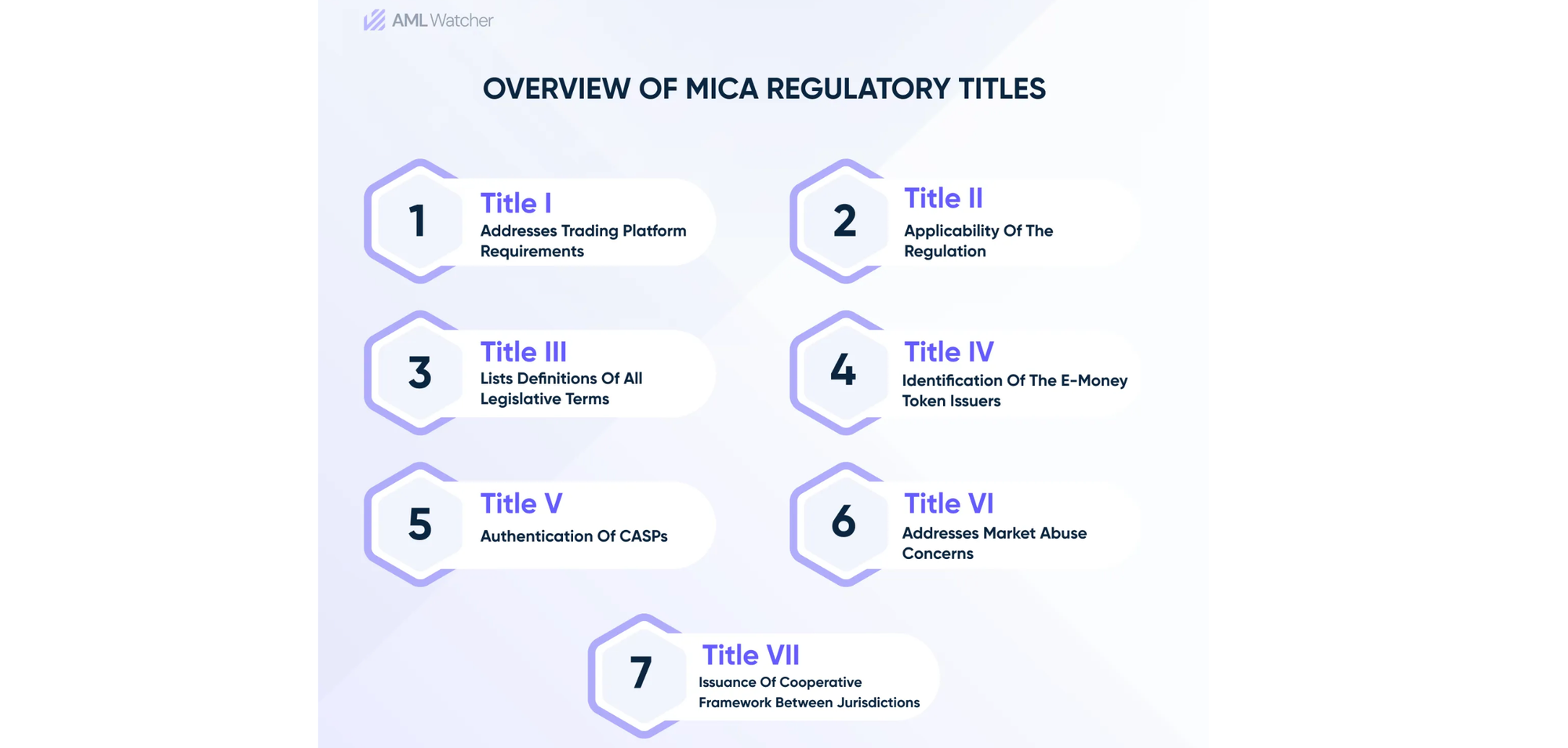
MiCA sets out who can operate as a CASP (Crypto-Asset Service Provider), and what disclosures stablecoin issuers need to make. It also lays out how custody of client assets should work when a platform holds crypto on your behalf. Here's what it does cover:
- CASP authorization. Platforms offering exchange, custody, or trading execution services get a single "passport" from one national EU regulator if they meet capital, governance, and conduct requirements. They can then serve clients in every member state.
- Stablecoin rules. Issuers of asset-referenced tokens and e-money tokens face reserve, redemption, and transparency requirements designed to prevent a repeat of past stablecoin blowups.
- Custody standards. When a licensed platform holds your crypto, MiCA sets rules for how client assets should be segregated and accounted for.
- Market conduct. Rules against market abuse and misleading marketing apply to crypto assets much like they already do in traditional securities markets. Insider trading is also within the MiCA scope.
Our guide provides a fuller picture of how crypto compliance works. But notice what's missing from that list: nothing about loans, credit lines, or interest-bearing products where you hand over crypto and get either cash or more crypto back.
MiCA leaves out lending and borrowing
MiCA doesn’t regulate either service. Recital 94 of Regulation (EU) 2023/1114 says so directly:
"This Regulation should not address the lending and borrowing of crypto-assets, including e-money tokens, and therefore should not prejudice applicable national law. The feasibility and necessity of regulating such activities should be further assessed."
In plain terms: when you lend your crypto to earn interest, or borrow against it to get cash without selling, you’re stepping outside what MiCA was built to police. Its safeguarding rules and complaint-handling requirements do not automatically extend to a lending product simply because it uses crypto assets. Other obligations may still apply to the entities involved, depending on the services they provide and the applicable law.
In practice, you’re largely relying on the platform’s own terms and risk controls. This is true across the market. Whether you're using a well-known CeFi lender or a smaller platform you found last week, the crypto lending MiCA gap remains.
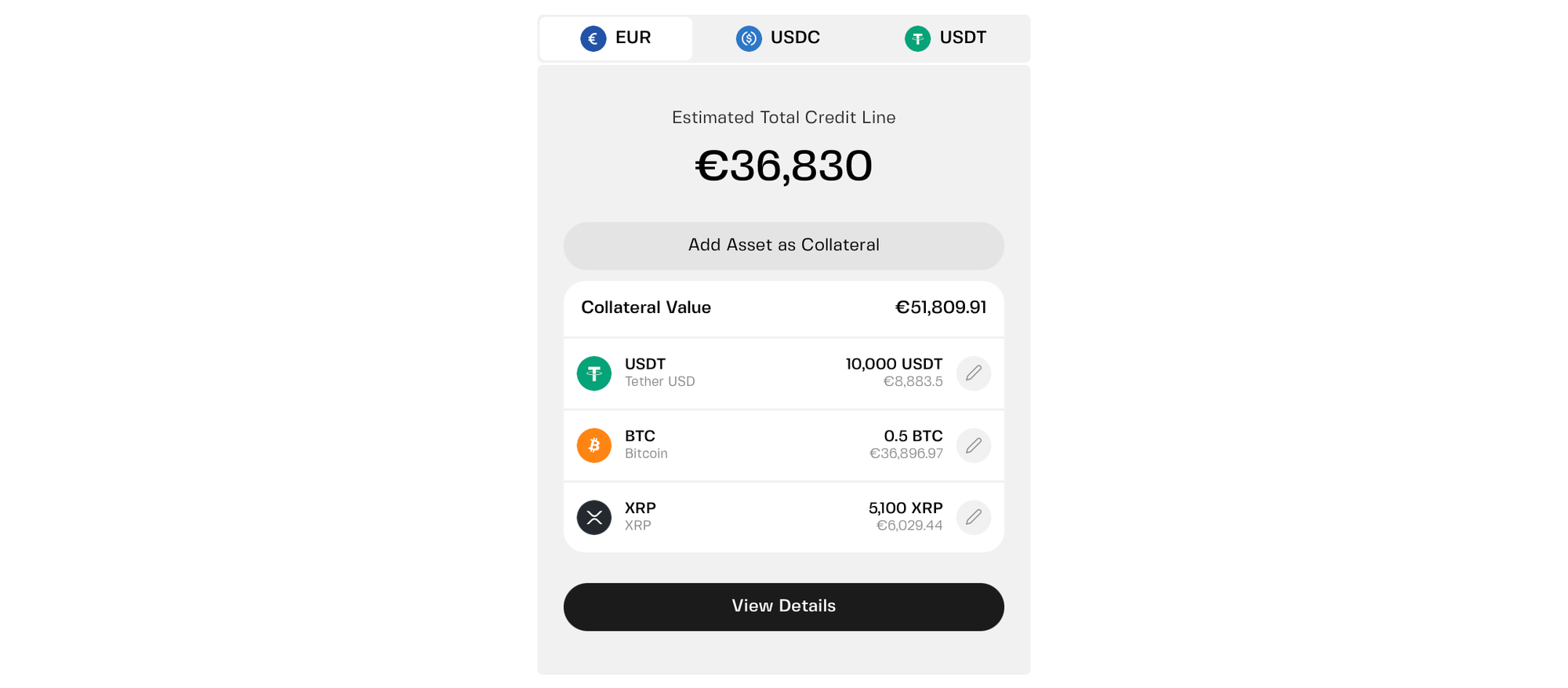
Clapp’s Credit Line is a case in point. It’s provided by a Clapp group entity based outside the EEA, so the lending product itself falls outside MiCA’s crypto-asset service framework. When you take out a Credit Line, ownership of your collateral transfers to the provider. Once you repay the loan in full, you’re entitled under the agreement to receive an equivalent amount of the same type of asset back. For more on how this works, see what actually happens to your collateral during a crypto-backed loan.
Clapp also relies on third-party infrastructure, including Fireblocks for wallets and partner institutions for EEA IBANs and SEPA payments. Those partners carry their own obligations, but that doesn’t bring the Credit Line under MiCA or extend their protections to it.
Why lending was left out
Recital 94 says the question needed further assessment, and Article 142 required the Commission to report on whether regulating lending and borrowing is necessary and feasible. Lending also resembles credit more than a market service, so it may sit more naturally with consumer credit and banking rules than with MiCA’s framework.
The review is now under way. The European Commission’s consultation on MiCA ran from May to August 2026. In its response, published on 24 September, the EBA recommended regulating crypto-asset lending and borrowing, including activities linked to DeFi. That is a recommendation, not a change to the rules: lending and borrowing remain outside MiCA’s specific framework for now.
Is crypto lending legal in the EU?
There is no single EU-wide MiCA framework for crypto lending. Whether a particular product can be offered, and under what conditions, depends on the applicable national laws and how the product is structured.
What the crypto lending MiCA gap means in practice
- No automatic MiCA safeguarding for the loan. MiCA sets specific requirements for crypto-asset custody services within its scope. Those requirements do not automatically extend to assets held under a separate lending arrangement. If a platform also provides regulated services, its obligations for those services still apply.
- No MiCA complaint channel. If a MiCA-authorized CASP mishandles your account, there's a formal complaint and escalation path built into the regulation. Lending platforms outside MiCA's scope don't come with that same built-in route, so any dispute resolution depends on what the platform itself offers.
- Liquidation risk sits with the platform's own rules, not a regulator's. If your collateral value drops and you get liquidated, the timing, notice, and process depend largely on how that platform is built, not on an EU-wide standard. Gaps like this show up when things move fast, and liquidation without notice walks through it.
- Your risk assessment has to do more work. Since you can't lean on "it's regulated, so it's safe" logic, you end up needing to look harder at things like how collateral is handled, what happens during high volatility, and how transparent the platform is about its own limits. The hidden risks of crypto borrowing is a useful checklist for this kind of due diligence.
How to judge any lending platform
Since the regulatory backstop isn't there in the way it is for exchanges and custodians, the job of vetting a lending platform falls more heavily on you. A few practical angles:
Read the mechanics, not just the headline rate. Before you compare offers, understand how crypto lending works: what collateral does, how loan-to-value bands affect your rate, and what triggers a margin call. Then read the actual terms, not the marketing copy.
Compare structures. Some platforms run centralized (CeFi) lending books, while others run on-chain (DeFi) protocols with different transparency trade-offs. Comparing CeFi and DeFi borrowing is worth doing before you commit funds.
Look at more than one platform. Rates, loan-to-value limits, and liquidation policies vary widely, and comparing crypto lending platforms side by side surfaces differences a single landing page won’t show.
Check your own timing and risk tolerance. Borrowing against a volatile asset in a calm market feels very different from doing it in a downturn. A short gut-check like assessing your borrowing readiness can tell you whether now is a good time for you.
Within that gap, a credit line can still be a practical tool. Clapp’s Credit Line lets you borrow against BTC, ETH, or USDC without selling, and you pay interest only on what you draw. The APR depends on your loan-to-value band, and it's 0% at up to 20% LTV. You can mix assets into one collateral pool, swap them as your plans change, and repay on your own schedule.
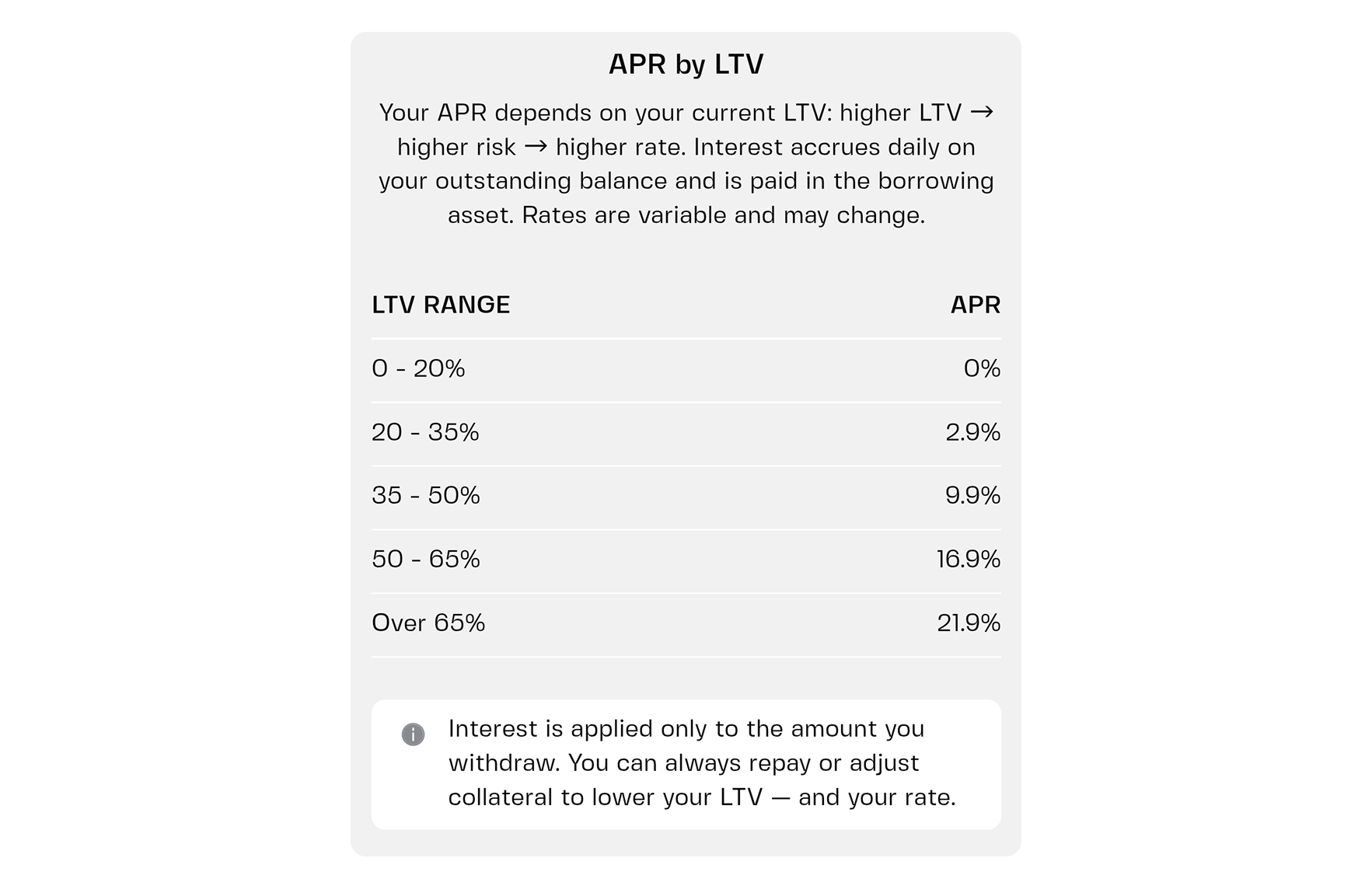
Liquidation can happen without prior notice if your LTV crosses the threshold. Since the product is provided from outside the EEA and MiCA doesn’t cover it, the provider’s terms matter, and availability depends on your country.
Bottom line: Outside MiCA, so the terms matter
MiCA brought common rules to exchanges, custody, and stablecoins, but there are still no crypto lending MiCA provisions. Lending and borrowing stay with national law and each platform’s own terms, and the EU’s review may change that. Until then, check how collateral is handled, what can trigger liquidation, and what happens if something goes wrong.
Frequently asked questions
Is crypto lending regulated under MiCA?
No. MiCA doesn’t address lending and borrowing as an activity (Recital 94). A platform that is also a MiCA-authorized provider for other services still has to follow MiCA for those services.
Is crypto lending legal in the EU?
Generally yes, though there’s no single EU-wide answer. MiCA doesn’t govern lending, so whether a product can be offered, and on what terms, depends on national rules and on how the product is structured.
What does MiCA cover if not lending?
MiCA covers CASP authorization for exchanges and custodians, conduct rules against market abuse, and requirements for stablecoin issuers around reserves and redemption. Lending and borrowing fall outside that perimeter.
Does that mean crypto lending platforms are unsafe?
Not necessarily. It means the safety of a lending platform depends on its own practices and terms rather than a MiCA-mandated standard, so due diligence matters more than it would with a MiCA-licensed exchange.
What happens if something goes wrong with a crypto loan in the EU?
Because lending sits outside MiCA, there’s no built-in MiCA complaint route. Any dispute process depends mainly on the platform’s own terms, plus whatever national consumer law applies.
Will MiCA eventually cover crypto lending?
Possibly. The Commission consulted on a MiCA review between May and August 2026, including whether lending and borrowing should be regulated, and the EBA has recommended bringing them in. Nothing has changed yet, so check the current rules before you assume otherwise.