Virtual crypto card: what it can and can’t do

Paying with stablecoins at checkout has become much easier. You can tap your phone to pay, without waiting for a plastic card to arrive. The appeal of a virtual crypto card is straightforward: quick access to spending, with the convenience of a familiar payment tool.
But “virtual” also comes with limitations. The gap between what cardholders expect and what actually happens at the checkout can be frustrating. Before relying on a stablecoin card for rent or a last-minute booking, it helps to know exactly what it can and can’t do.
TL; DR
- A virtual crypto card gives you card details in an app and lets you pay online or through a mobile wallet.
- You can use it for online purchases and contactless payments wherever the relevant card network is accepted.
- You can freeze the card and manage it through the app, without having to contact support.
- You can withdraw cash at compatible contactless ATMs, provided the card supports this feature.
- Clapp Card comes with Visa Platinum benefits, including purchase protection, price protection, extended warranty, and rental car insurance.
- You won't have a physical card for older payment terminals, and if your phone is lost, damaged, or out of battery, you may temporarily lose access to contactless payments.
- A virtual card can cover most everyday payments, but a physical card or another payment method can still be useful as a backup.
What a virtual crypto card is
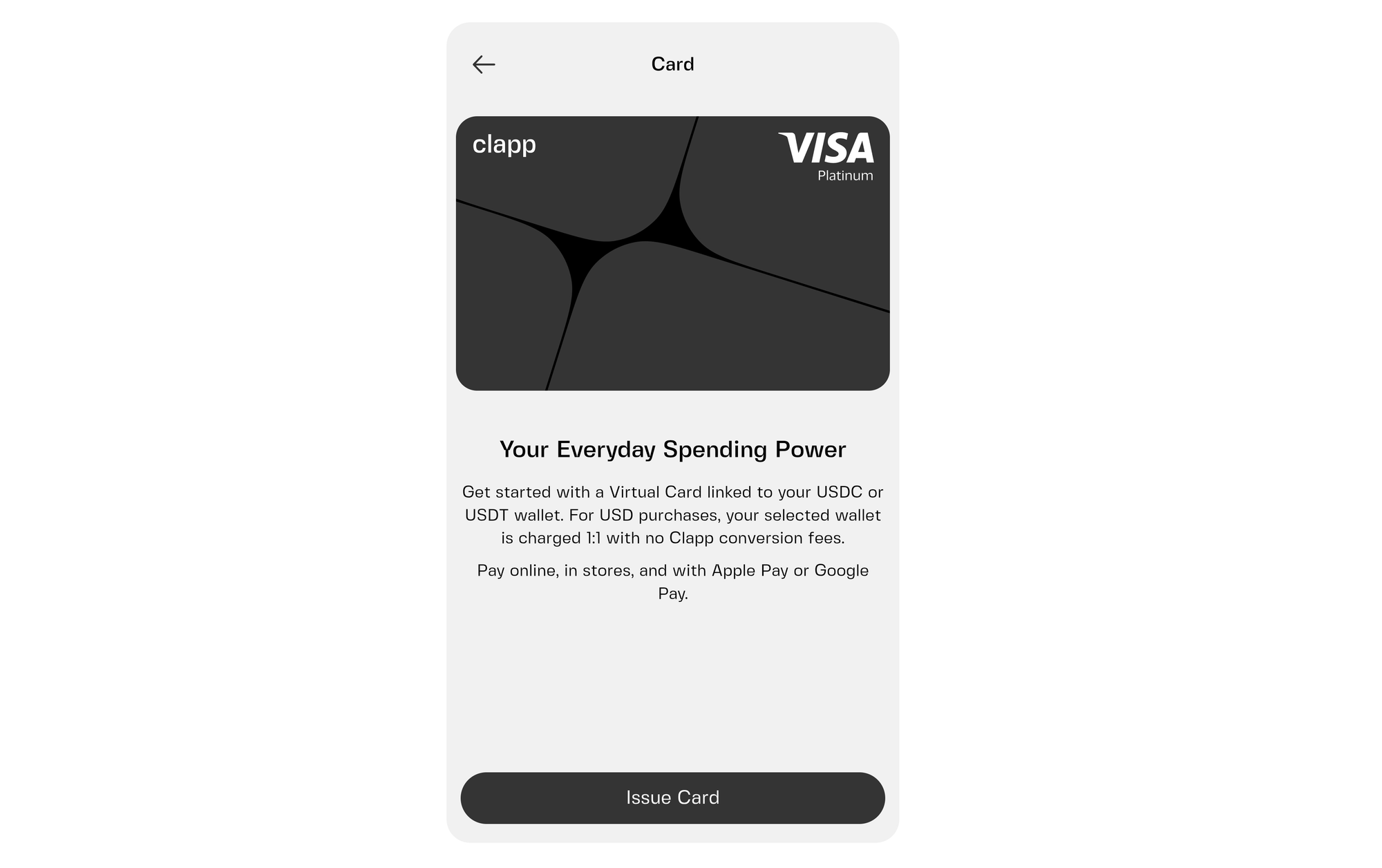
A virtual crypto card comes with a card number, expiry date, and security code, all generated inside an app. It's linked to a crypto-backed spending source rather than a traditional bank balance and uses the same payment networks as other Visa or Mastercard products. The main difference is where the money comes from and where the card is stored: on your phone rather than in your wallet.
Once the card is issued, you can add it to Apple Pay or Google Pay and use your phone to pay in stores. You can also enter the card details directly when shopping online, just as you would with a physical card. This is part of a broader shift in which crypto super apps handling payments are moving beyond trading and making it possible to spend crypto without relying on a separate bank account for every transaction.
What you can do with it
Pay online, anywhere a card is accepted
Subscriptions, online shopping, food delivery, flight bookings — a virtual crypto card can be used wherever a website accepts its card network. You enter the number from the app, along with the expiry date and security code, and complete the purchase as you would with any other card.
Tap to pay in physical stores
Add the card to your phone's wallet app and use it at checkout counters, on public transport, or in cafés — anywhere contactless payments are accepted. There's no need to carry the physical card. Your phone handles the payment.
Access Visa Platinum benefits
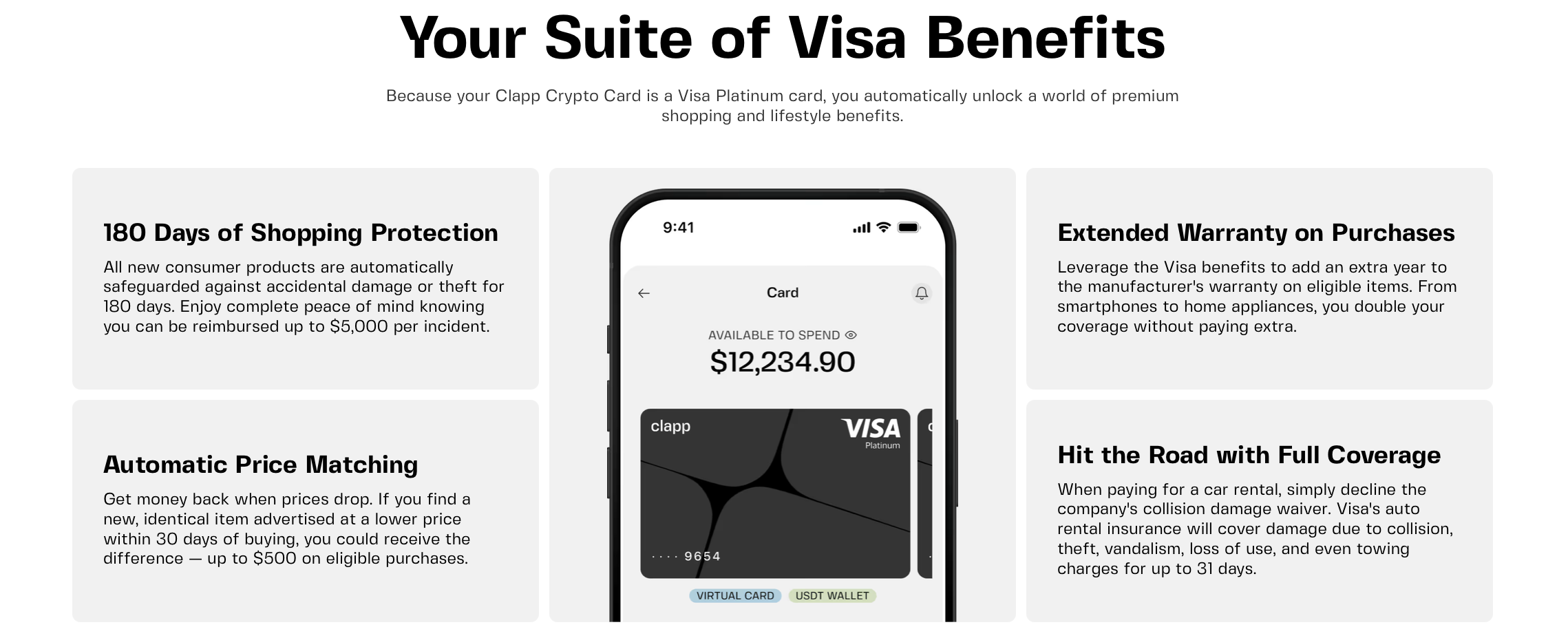
Clapp Card is a Visa Platinum card, which comes with additional protection for eligible purchases and car rentals:
- Purchase protection. Covers eligible items against accidental damage or theft for 180 days after purchase.
- Price protection. May reimburse the difference if you find the same product advertised for less within 30 days.
- Extended warranty. Adds up to one year to the manufacturer's original warranty on eligible purchases.
- Car rental insurance. Covers collision damage and theft for eligible rentals of up to 31 days, subject to the policy conditions.
These benefits come with conditions, and coverage is provided by third parties under Visa's terms.
Freeze it when something feels off
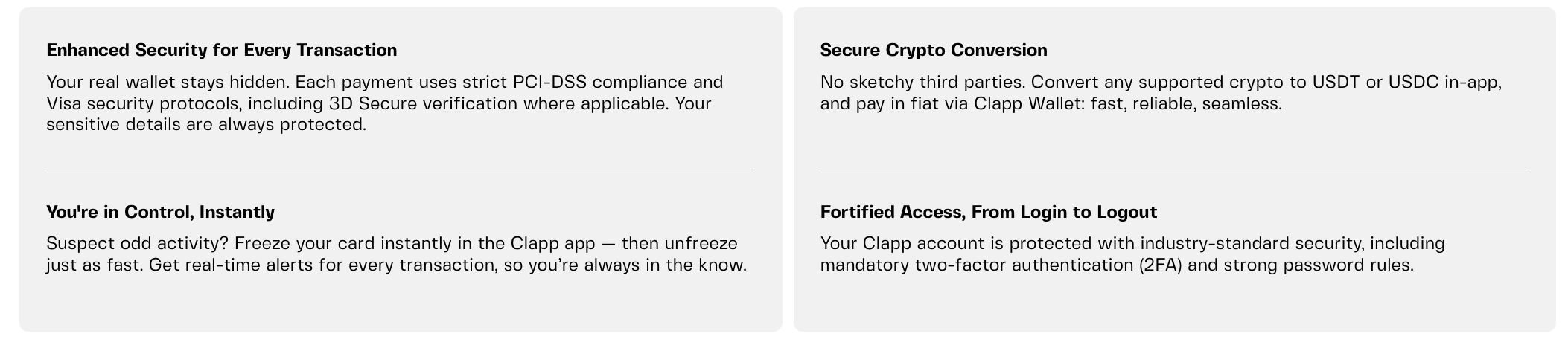
Lost your phone, spotted a charge you don't recognize, or simply want to pause spending? You can freeze the card directly in the app. There's no need to call a support line or wait for someone to process the request. A few taps are enough to stop further card payments until you're ready to use it again.
Get one issued almost immediately
There's no printing or shipping involved. You request the card in the app, and it can be ready to use within minutes. That can be particularly handy if you need a payment method at short notice, whether you're booking a trip or making an online purchase.
What you can't do with it (at least not yet)
A virtual crypto card has no physical form, and that comes with a few practical limitations.
No card slot, swipe, or chip-and-PIN payments. Some older payment terminals, particularly outside major cities, still require a physical card to be inserted or swiped. If a terminal doesn't support contactless payments through a phone, a virtual card won't work there.
No physical backup if your phone is unavailable. Your virtual card is stored in your phone's wallet. If your phone is lost, damaged, or out of battery, you won't be able to use it for contactless payments until you regain access to your mobile wallet. Having another payment method available can help avoid an awkward situation.
Virtual vs physical crypto card: the real trade-offs
The virtual vs physical crypto card question isn't really about which one is better. It comes down to how you spend and what you need from a card.
A virtual card has the edge when it comes to:
- Speed. It can be issued and ready to use without waiting for delivery.
- Convenience. There's no physical card to lose, forget in a taxi, or leave behind.
- Control. You can freeze the card, check transactions, and manage spending through the app.
- Mobile payments. You can pay with your phone wherever contactless payments are accepted.
A physical card is more useful for:
- Older payment terminals. It works with readers that require a physical card to be inserted or swiped.
- A backup payment method. You can still pay if your phone is unavailable.
Neither option is better in every situation. If you mostly shop online and pay by phone, you may rarely miss having a physical card. But if you travel to places with older payment infrastructure, having a physical backup can be useful.
Is a virtual card enough for me?
Before relying on a virtual crypto card as your main payment method, consider a few things:
- Do you mostly shop online or pay by tapping your phone, rather than inserting or swiping a card?
- Do the places you visit and shop generally accept contactless payments?
- Are there contactless Visa ATMs where you can withdraw cash if necessary?
- Is your phone usually charged and with you when you're out?
- Would you rather manage your card through an app than carry another piece of plastic?
If you answered yes to most of these questions, a virtual card will probably cover much of your day-to-day spending. If you regularly visit places with older payment terminals, consider keeping another payment method as a backup.
Where the spending money actually comes from
It's worth distinguishing the card from the funds used to pay with it. A virtual crypto card doesn't necessarily require you to sell your crypto before making a purchase. On Clapp, it draws from the USDT or USDC balance in your Wallet. The card converts stablecoins into fiat at checkout, so the merchant is always paid in local currency.
You can top up Clapp Wallet directly or use funds borrowed through a crypto-backed credit line. Drawing stablecoins from a credit line follows the same principle as borrowing against your portfolio instead of selling. You get access to funds for a purchase without having to close a position you'd prefer to keep.
It can also be a practical way to build a cash buffer without selling in a market dip, provided you keep in mind that borrowed funds still need to be repaid and the collateral remains subject to the credit line's terms. For those who don't want to manage active trades or make constant portfolio decisions, a card paired with a straightforward credit line is one of several hands-off ways to use crypto.
Convenience has its limits
A virtual crypto card can handle a large share of everyday payments. It's quick to get, easy to manage, and fits naturally into a world where your phone is already in your hand at checkout. It also offers something that isn't always associated with crypto spending: additional purchase protections and travel-related benefits through Visa Platinum.
But it won't work with every payment terminal, and you'll still need a charged phone to make contactless payments. Knowing those limits in advance makes it easier to decide whether a virtual card is enough or whether you need a physical backup.
If you'd like to see how a virtual card can work alongside a crypto-backed credit line, check the Clapp options available in your country.
Frequently asked questions
What is a virtual crypto card?
A virtual crypto card is a payment card whose number, expiry date, and security code are generated in an app. It's linked to a crypto-backed spending source and can be used for online purchases and contactless payments through a mobile wallet, without a physical card.
Can I withdraw cash from a virtual crypto card?
No. A virtual card can't be inserted into an ATM, so it doesn't support cash withdrawals. You need a physical card for that.
Can I use a virtual crypto card in physical stores?
Yes, provided the store accepts contactless payments through the card's payment network. Add the card to Apple Pay or Google Pay and tap your phone at checkout.
Is a virtual card safer than a physical one?
It has different risks, rather than being automatically safer. You can't lose a virtual card in the physical sense, and you can freeze it through the app. However, access depends on your phone, so losing it or running out of battery can leave you without a way to pay.
Does a virtual crypto card cost anything to get?
Clapp uses transparent fees, and any costs associated with issuing or using a card are shown in the app before you commit, rather than being hidden in the fine print.
Do I need a physical card as well?
That depends on how you spend. If you rarely need cash and mostly shop online or pay by phone, a virtual card may be enough for everyday use. If you regularly withdraw cash or visit places with older payment terminals, a physical card can fill the gaps.